REVIEW · BODY WORLDS AMSTERDAM
Body Worlds Amsterdam: The Happiness Project Ticket
Book on GetYourGuide →Operated by Tours & Tickets · Bookable on GetYourGuide
Your senses will recalibrate fast. Body Worlds Amsterdam The Happiness Project uses real human specimens to explain how happiness connects to the body. It is science first, not a horror show, and it plays out right in the middle of Amsterdam.
I especially like the clear focus on happiness and health instead of just anatomy trivia. I also like the built-in InBody scan that gives you a plain-language snapshot of your body composition.
One thing to consider: the ending includes a section about pregnancy stages that can be emotional if you have personal reasons to find that hard.
In This Review
- Key takeaways before you go
- Damrak arrival and the InBody scan first step
- Inside The Happiness Project: more than 200 specimens, organized for real reading
- Plastinated humans and interactive stations that make it stick
- The science of happiness: what you can actually take home
- How long it takes, pacing tips, and when to slow down
- Where this fits in your Amsterdam day (and where it doesn’t)
- Price and value: is $26 the right deal?
- Practical tips: how to make the ticket feel smooth
- Should you book Body Worlds Amsterdam The Happiness Project?
- FAQ
- What is included in the Body Worlds Amsterdam ticket?
- Is an audio guide included?
- How many anatomical specimens will I see?
- How long does the visit take?
- Do I need to enter at a specific time?
- Is this exhibition suitable for children?
- Is the museum wheelchair accessible?
Key takeaways before you go
- Damrak location + skip-the-line entry keeps this from feeling like a hassle in the city
- 200+ real anatomical specimens give you a full, visual argument for how the body is built
- Free InBody scan reports fat percentage, protein, minerals, and water
- Interactive stops (including body analysis and blood pressure-style experiences you can try) make the science stick
- Self-paced layout works well if you like to read slowly or speed through the visual parts
- End section on pregnancy development may be upsetting for some people, and you can move past it
Damrak arrival and the InBody scan first step

I love an attraction that respects your time. This one is timed to your chosen entry slot, and you start at Body Worlds Amsterdam at Damrak 66. The upside: you can go in and get oriented without hunting for staff or waiting around.
Your ticket time slot matters. The museum is only accessible at that chosen time, so build your Amsterdam day around it. If you’re planning museum-hopping, I’d put this near the front end of your schedule, when you’re fresh and can stay patient with lots of reading.
The big “wow” opener is the free InBody Scan included with your entrance ticket. You present your voucher for scanning, and you get a full report on your body composition—specifically fat percentage, protein, minerals, and water. That’s not just a gimmick. It’s a useful way to link the exhibition’s message back to you, because the happiness-health theme lands harder when you’re thinking about your own body data.
Inside The Happiness Project: more than 200 specimens, organized for real reading

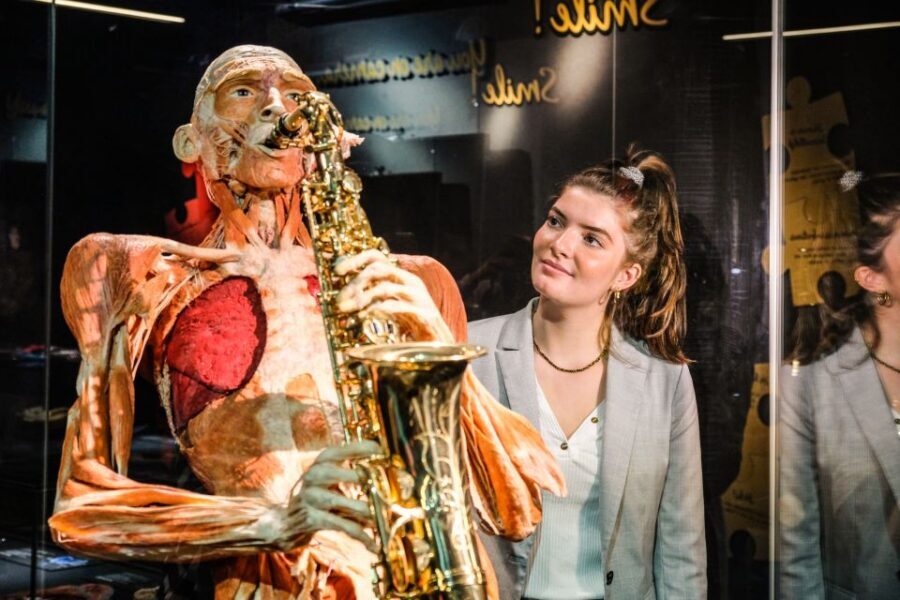
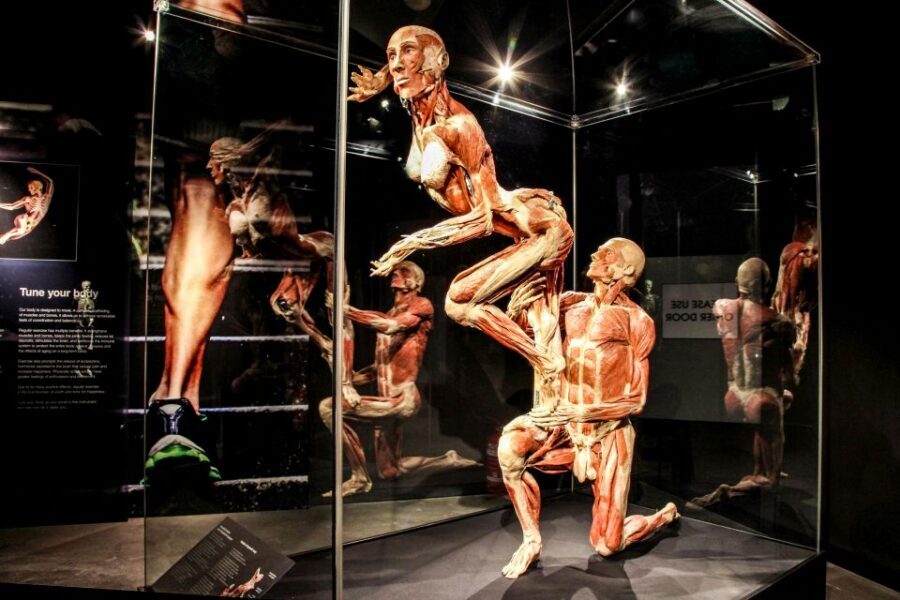
The exhibition is built around the human form using more than 200 authentic anatomical specimens. This is based on plastination, the process that makes long-lasting displays from real bodies. The result is detailed, stable, and designed for you to study without the rush you get at typical medical demonstrations.
The exhibition’s theme is how happiness influences health. You’ll see the anatomy side of the argument—structures, systems, and body resilience—plus the behavioral and emotional side. That pairing matters because most people can name the basics of anatomy but still struggle to connect feelings, stress, and daily habits to how they feel over time.
The museum layout is designed to move you through the story in a readable sequence. One tip that helps a lot: plan on starting upstairs and working downward. The flow is set up so you can get your bearings fast and then follow the progression without backtracking.
Plastinated humans and interactive stations that make it stick

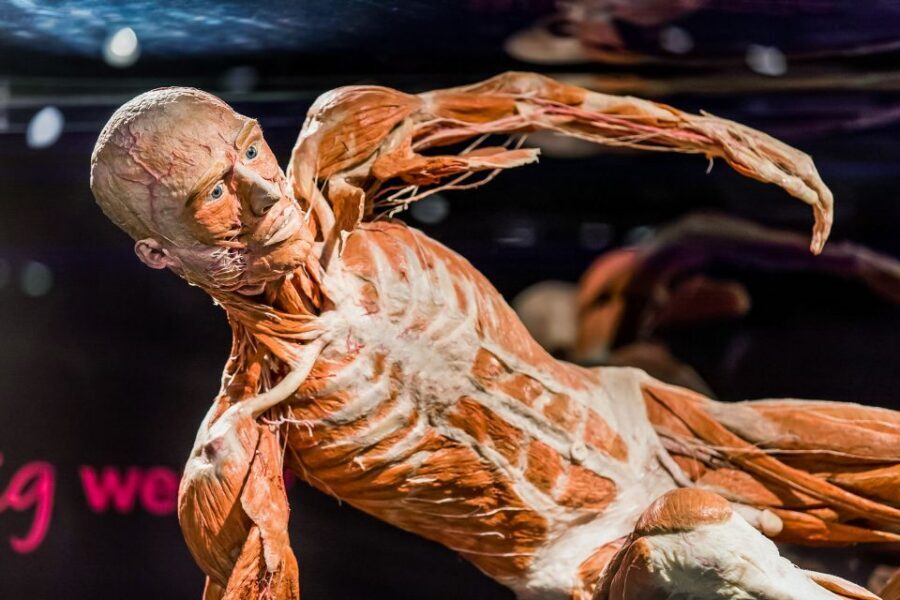
Yes, you’ll see plastinated human forms—some visitors describe them as creepy at first glance. But the experience tends to settle into something more clinical once you start reading. The displays aren’t just shock-value. They’re there to show how the body changes, copes, and carries the effects of living.
What I like most is that you don’t have to treat the exhibition like a textbook you’re forced to finish. There are interactive elements that break the pattern, including experiences tied to body analysis and blood pressure-style testing. You also get prompts for reflection that connect the theme back to lifestyle choices and wellbeing.
There’s also a consistent use of text and visuals. Signs are in both English and Dutch, which reduces the chance you’ll miss key points. If you prefer deeper explanations, there is an audio guide option available for rental, though it isn’t included with the ticket. Some people find it worth it, especially if you like hearing the science explained in a calmer way while you look at the specimens.
If you’re the type who likes to touch only screens, note that the museum does include opportunities to interact with plastinated humans. The exact nature of every interaction station can vary by exhibit, but the overall vibe is hands-on science—guided by displays, not by games.
The science of happiness: what you can actually take home

The core message is simple: happiness isn’t just emotional weather. The exhibition tries to show how happiness and wellbeing affect the body’s systems, and why your mental state can shape health outcomes.
You’ll see how the exhibition links the body’s complexity and vulnerability to everyday choices. That can include things like lifestyle and daily behaviors that influence health. The good part is that it doesn’t feel preachy; it feels like an argument supported by anatomy and body systems.
You may also come away thinking differently about external triggers—stress, mood changes, and how you respond to the world. Some visitors highlight that the exhibit helps them understand their own body more clearly, especially the relationship between feelings and physical health.
And the InBody scan acts like a “mirror” for the message. Even if you can’t change your biology overnight, having a snapshot of body composition makes the theme feel more practical than motivational posters.
How long it takes, pacing tips, and when to slow down
A realistic time expectation helps you enjoy the day. Most visitors manage this in about 1.5 to 2 hours, and you can adjust based on how much you like to read. The exhibition is self-paced, so you’re not stuck with a group that moves on without you.
I recommend a two-speed approach:
- Move at a steady pace through the early sections, just to get the structure of the story.
- Then slow down where a display clearly links happiness, wellbeing, and a specific body system.
Because there’s a lot of information, the “slow down” part is where the attraction earns its keep. It’s not about seeing everything equally. It’s about seeing enough of the right sections to connect the theme.
One pacing warning: plan extra patience for the end area. The museum includes a section about pregnancy development stages, featuring babies at different stages donated to the museum. It can be upsetting for people who have experienced miscarriage or stillbirth. The good news is you can simply pass through at your own speed and not linger if you need distance from that content.
Where this fits in your Amsterdam day (and where it doesn’t)
This is a strong fit if you like:
- Human biology and health topics
- Science that uses visuals instead of just diagrams
- An activity you can do alone, as a couple, or as a family with older kids
It can also work as a “shared curiosity” trip. Some people who aren’t thrilled by anatomy often find the health and happiness angle keeps them engaged. And if you bring a child, the exhibit has enough interactive moments and signs in multiple languages that it can hold attention.
What might not be a great fit:
- If you’re extremely squeamish about human body displays, you may find the opening sections hard at first.
- If pregnancy-related themes would hit a sensitive spot, you may want to mentally prepare for that final area.
As a practical matter, avoid going during heavy school visit waves if you can. A calmer crowd makes the reading easier and helps you enjoy the interactive sections without feeling crowded.
Price and value: is $26 the right deal?
At $26 per person for a 1-day ticket, the value depends on how you like to learn. If you’re coming for “one more museum” because it’s famous, you might feel it’s pricey for the time spent. But if you enjoy science exhibits with detailed interpretation, it tends to feel like good value.
Here’s the balancing act:
- The exhibition includes 200+ authentic specimens
- Your ticket includes the free InBody scan
- You get a self-paced walkthrough, not a short, scripted experience
Audio guides aren’t included, but they are available as a paid add-on. Some visitors recommend renting one because it adds information while you look.
If you’re comparing to other Amsterdam indoor attractions, Body Worlds competes well when you care about health, anatomy, or wellbeing. If you want pure entertainment, it may not be the best use of your day.
Practical tips: how to make the ticket feel smooth
A few details make a real difference when your day is already full of Amsterdam walking.
Go to Damrak 66 and use your time slot. Present your voucher for scanning and expect access only at your chosen time. That means you should avoid last-minute changes if your schedule tends to drift.
Give yourself about 2 hours. Even if you’re a fast reader, you’ll likely want time for the InBody scan and a calmer pace through the interactive areas.
Read first, then look. Some signs are dense, and the displays make more sense when you catch the point of each section before you stare at the specimens.
Audio guide is optional, but it can help. If you like explanations beyond what the signs say, consider renting it. It’s been described as worth the small extra cost.
Be ready for the end content. If pregnancy development content isn’t for you, plan how you’ll handle that section so you don’t feel trapped.
Should you book Body Worlds Amsterdam The Happiness Project?

Book it if you want an Amsterdam attraction that mixes real anatomy displays with a wellbeing theme you can think about long after you leave. The free InBody scan is a strong add-on, and the mix of English and Dutch signage helps you actually understand what you’re looking at.
Skip it (or choose carefully) if you know you’ll struggle with human body displays, or if pregnancy-related imagery would be difficult. In that case, you might still enjoy parts of the museum, but you should go in with a clear plan for pacing yourself through the final section.
If you like science that has a point—and you don’t mind that it can be emotionally and visually powerful—this one is worth making time for.
FAQ
What is included in the Body Worlds Amsterdam ticket?
Your ticket includes entrance to the Body Worlds Amsterdam exhibition plus a free InBody Scan health check.
Is an audio guide included?
No. An audio guide is not included with the ticket.
How many anatomical specimens will I see?
The Happiness Project features more than 200 authentic anatomical specimens.
How long does the visit take?
The ticket is valid for 1 day, and the exhibition is commonly planned for around 1.5 to 2 hours, depending on how much you read.
Do I need to enter at a specific time?
Yes. You can access the museum only at your chosen time-slot.
Is this exhibition suitable for children?
Children aged 4 years or younger enter free of charge. Child tickets are for ages 6–17.
Is the museum wheelchair accessible?
Yes, the attraction is wheelchair accessible.