REVIEW · AMSTERDAM
Amsterdam Cheese and Wine Canal Cruise
Book on Viator →Operated by Boat Amsterdam · Bookable on Viator
Amsterdam canals taste better with cheese.
This cruise works because it blends canal-belt sightseeing with an easy food-and-drink setup, so you’re not just watching bridges—you’re sampling local flavors while a guide talks you through what you’re seeing. I especially like the live commentary (guides like Ronald, Lex, and Tom are specifically called out) and the way the route keeps the big landmarks in view without turning the trip into a long haul.
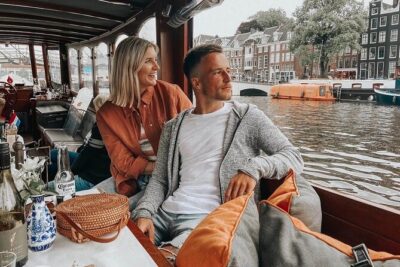
The main thing to consider: the boat can vary. A few people noted open-air seating (or a boat layout that didn’t match their expectations), so plan for sun or cool wind depending on the day.
In This Review
- Key things to know before you go
- One hour, lots of Amsterdam: the Herengracht-to-Jordaan flow
- What you’re really paying for: cheese + drinks included
- How the tasting affects your trip
- The best photo moments: seven bridges, churches, and canal-belt scale
- Churches you pass (not just buildings you read about)
- Anne Frank’s neighborhood: context from Prinsengracht and beyond
- Skinny Bridge and Blauwbrug: why these bridges matter
- Magere Brug (Skinny Bridge)
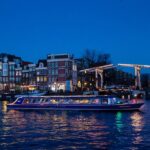
- Blauwbrug (Blue Bridge)
- Hermitage Museum stop: a nursing-home-to-art detour
- The boat reality check: what to expect with comfort and layout
- When to go: evening calm and the taste-friendly timing
- Who this cruise is best for (and who should pick something else)
- Guides: the human difference on a guided cruise
- Should you book this Amsterdam Cheese and Wine Canal Cruise?
- FAQ
- How long is the Amsterdam Cheese and Wine Canal Cruise?
- Where does the cruise start?
- What’s included in the cheese and drink experience?
- Will there be live commentary?
- Is the tour offered in English?
- What group size should I expect?
- Can I get a full refund if I cancel?
Key things to know before you go
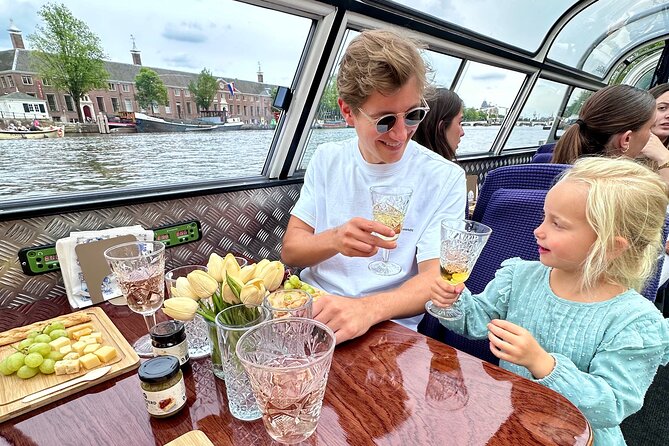
- Cheese and drinks are included with the cruise, including Dutch cheese and alcohol plus coffee/tea and soda.
- You’ll get commentary live in English from an in-person guide, not a recorded audio track.
- The “canal belt” route is the point, with classic waterways like Herengracht and Prinsengracht.
- Seven Bridges is a standout view, where you can see Reguliersgracht’s famous cluster in one sweep.
- Anne Frank’s area and major churches are passed from the water, so you get context fast without queue time.
- Boat setup may differ, so bring layers and sunglasses if you’re sensitive to glare or cold.
One hour, lots of Amsterdam: the Herengracht-to-Jordaan flow
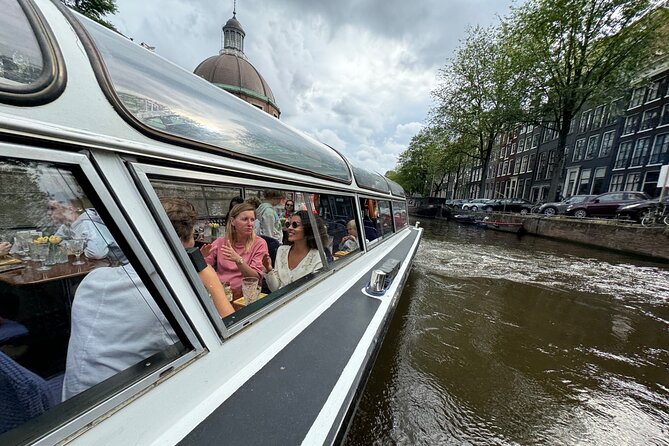
Amsterdam is a city you can walk all day, but you’ll cover fewer “wow” moments per hour than you think. This cruise is built for that problem. In about an hour, you float through key sections of the canal belt and get a guided story attached to the scenery. It’s the kind of tour that helps you get your bearings fast—and it doesn’t require museum stamina.
The route starts with a cruise through the Herengracht, one of the great parade streets of Amsterdam’s canal belt. Herengracht is known for the grander, upper-class canal homes. From the water, you can actually see why the canal belt mattered: the canal wasn’t just decoration. It was transport, prestige, and a front row seat to trade and wealth.
Then the cruise moves toward the Jordaan area. Here, Leliegracht leads you toward what locals often think of as Amsterdam’s more neighborly pocket. The Jordaan is tied to the city’s working-class growth, and you’ll notice the difference in how buildings and streets feel—smaller houses and streets that follow an older ditch pattern. Even if you’ve never heard that “French word jardin = garden” connection before, you’ll understand it just by watching how the city changed from canal to neighborhood.
This is also where the live guide helps. Without commentary, it can look like “pretty houses + pretty water.” With it, you start spotting patterns: which canals were for wealth, which were more transitional, and how the city organized itself as it expanded.
You can also read our reviews of more boat tours in Amsterdam


What you’re really paying for: cheese + drinks included
At $45.01 per person for about an hour, you’re paying for a short canal cruise and getting the food-and-drink part thrown in. That’s the value equation here: you’re not stuck buying cheese plates or drinks à la carte while trying to enjoy the view.
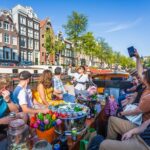
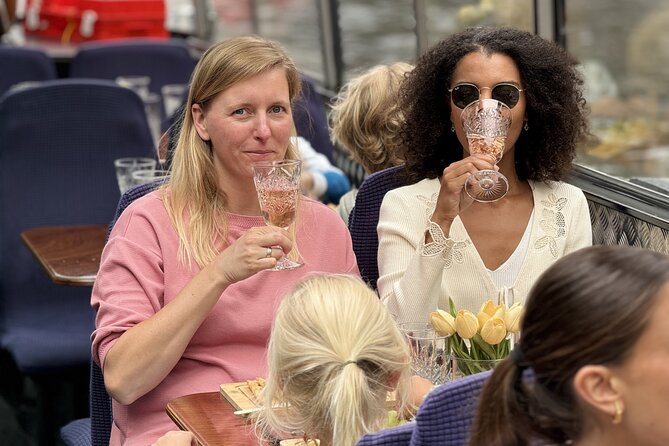
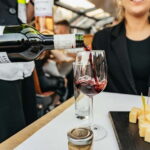
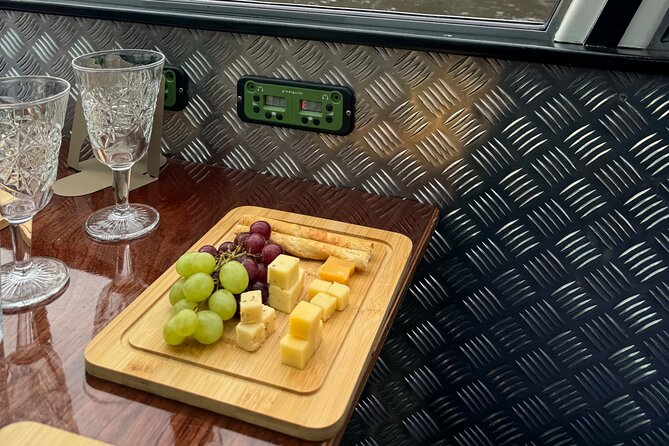
Included tastings are Dutch cheese plus Heineken beer, wine, soda, and coffee/tea. In practice, people describe the cheese-and-wine setup as more than a token bite. One reviewer specifically said the cheese portions and grapes felt generous, while another noted the cheese and crackers were just enough. That range tells you something useful: the tour doesn’t aim to turn the boat into a full meal. It aims for a relaxed tasting that keeps you moving through the sights.
One more practical upside: alcohol is included, but the cruise is short. For many first-time visitors, that matters. You can treat it like an easy first evening activity rather than a half-day project.
How the tasting affects your trip
Because the cruise is only about an hour, you should sip and taste at a natural pace. Don’t wait until the last 10 minutes to try everything. The best experience is usually: have your first drink soon after boarding, take a few bites while your guide points out a landmark, then settle into the rhythm of the route.
The best photo moments: seven bridges, churches, and canal-belt scale
Amsterdam’s canal belt is famous, but it’s one thing to see it from a street corner and another to watch the city’s geometry unfold in motion.
A highlight called out on this route is Reguliersgracht, with the famous seven bridges view. This is the one place (on the canal network you’ll be sailing) where you can see seven bridges lined up in sequence from a single vantage. That’s a big deal for photographers, yes—but it’s also just plain satisfying for your brain. You stop thinking of canals as random waterways and start seeing them as an engineered system.
You also get a helpful dose of scale. The canal belt has been a UNESCO World Heritage List site since 2008. There are 165 canals totaling about 100 km and roughly 1680 bridges. You won’t have time to count them on the boat, but you’ll feel the “bridge density” immediately once you’re cruising under them. It’s why the city feels so connected and why you can hop between neighborhoods without ever losing your sense of direction.
Churches you pass (not just buildings you read about)
This cruise is strong on “landmarks you can place on a map.” You get views of churches and towers that are part of Amsterdam’s identity.
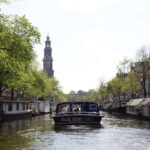
- The Westerkerk (Westerchurch): built between 1620–1631 in a Renaissance style. The tower rises to 87 meters, and the imperial crown on top dates from 1637. People connect this church to Anne Frank’s diary, but even without that layer, it’s a striking visual marker.
- Amstel Church (Amstelkerk): dating from 1668. The tour explanation notes it started as a wooden, temporary church for the newly built canal belt residents—plans for permanent stone church apparently didn’t happen, so the structure remained for nearly 350 years. Today it hosts cultural events, but on your cruise you mostly take it in from the water.
From the water, towers feel taller and bridges feel tighter. It’s one of the reasons a cruise can beat a walking route for first-time orientation.
You can also read our reviews of more wine tours in Amsterdam

Anne Frank’s neighborhood: context from Prinsengracht and beyond
If you’re visiting Amsterdam for the first time, you’ll probably end up hearing about Anne Frank at some point. On this cruise, the story comes with a physical address: Prinsengracht #263, listed as the former home of the Frank family, tied to her diary Het Achterhuis.
Important note: this doesn’t read like a museum stop where you’d go inside and spend hours. Instead, you get the location and the background while you’re floating past. That matters because it gives you context in seconds. When later you decide to see a museum, you’ll already have a clearer mental image of what area you’re looking at.
The cruise also contrasts canal “personality.” Prinsengracht is described as more modest compared to the grandeur of Herengracht. It acts as a transitional canal between the wealthy canal belt and the working-class neighborhoods around it, like the Jordaan. The houses on Prinsengracht are described as more sober: narrower and with fewer decorations. You can literally see the social shift in the architecture from the water—no textbook needed.
Skinny Bridge and Blauwbrug: why these bridges matter
Amsterdam has plenty of bridges, but this route spotlights two that are famous for being a little weird—in a good way.
Magere Brug (Skinny Bridge)
The Skinny Bridge is described as the oldest still-working drawbridge in Amsterdam, partly wooden and a national monument. It was built in the 17th century when city council funds were tight, so they went for a cheaper solution: wood instead of stone and a narrow, “skinny” design. The bridge became famous partly because of how narrow it was—people could hardly pass each other and needed to be, well, skinny.
The current bridge dates from 1934, and car traffic has been banned since 2003. It’s also been used as a film setting, including James Bond. From the water, this bridge doesn’t just look old; it looks like it has personality.
Blauwbrug (Blue Bridge)
Blauwbrug is the Blue Bridge, named for its predecessor-style drawbridge with blue railings. The current bridge dates from 1883 and is said to have been inspired by Paris’s Pont Neuf. The World Exhibition in Amsterdam in 1883 is mentioned as a reason for a more grand appearance.
Like the Westerkerk, Blauwbrug’s crown details connect to the imperial theme: the tour notes these are imperial crowns tied to Maximilian I and Amsterdam’s historical permission to use the crown in its arms. Again, you probably won’t memorize the full story mid-cruise—but you’ll remember the bridge, because the guide is tying it to the city’s identity.
Hermitage Museum stop: a nursing-home-to-art detour
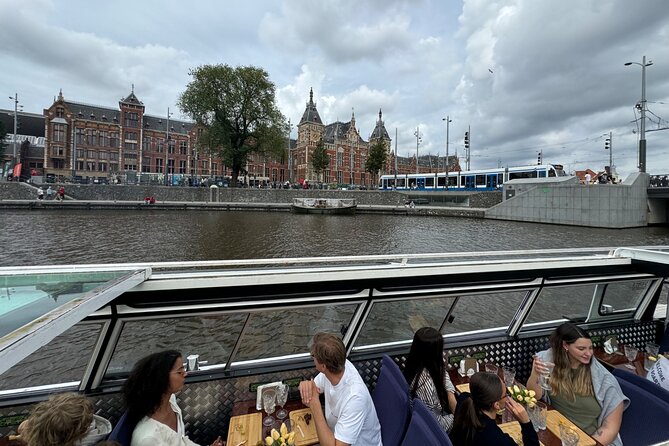
One of the more “wait, what?” parts of the route is the pass by Hermitage Museum in the Amstelhof building. The tour description notes the building dates from 1681 and served as a nursing home for about 300 years before converting to a museum in 2007. Some rooms were maintained and restored.
Even if you don’t plan to enter, this is a useful thing to learn on a cruise. It reminds you Amsterdam’s historic buildings aren’t frozen in time—they get reused. And it gives you an easy “maybe we should come back” reason if art museum time is something you’ll enjoy later.
The boat reality check: what to expect with comfort and layout
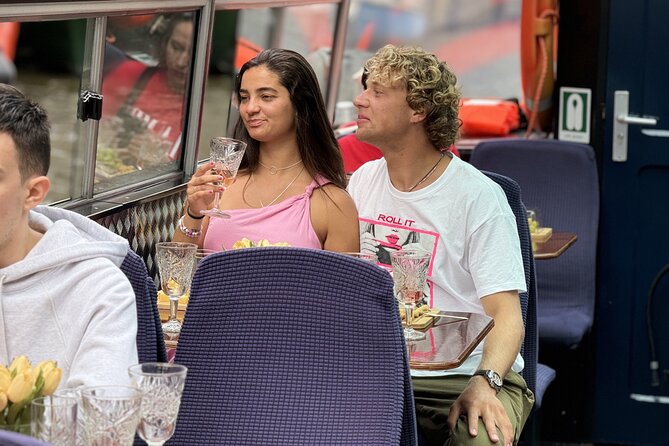
Not every cruise experience is identical in how it feels on the water. The information you have points to a max group size of 36, and you may find the trip feels calm and friendly rather than packed.
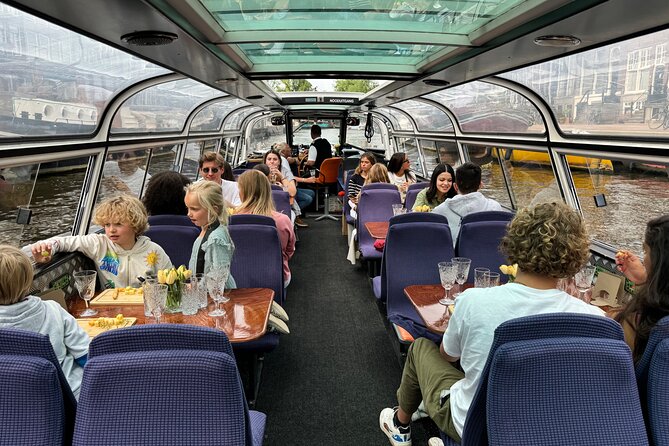
But there’s a clear caution from real-world experiences: boat types can differ. Some people mention an electric-boat feel and a quieter ride, while others mention an open-air setup and that the boat layout didn’t match pictures they expected (for example, no glass roof for sun protection and limited reach to the cheese setup).
So here’s my practical advice for protecting your comfort:
- Bring a light layer even in decent weather. Canals = wind.
- Use sunglasses and consider sunscreen if you’re sensitive to glare. If you specifically need shade or a UV-blocking roof, ask ahead which boat will be used.
- If you’re traveling with mobility or reach limitations, consider asking whether there will be tables or how the food is arranged for group access.
This isn’t meant to scare you off. It just helps you avoid the classic “I booked for feature X but got feature Y” disappointment.
When to go: evening calm and the taste-friendly timing
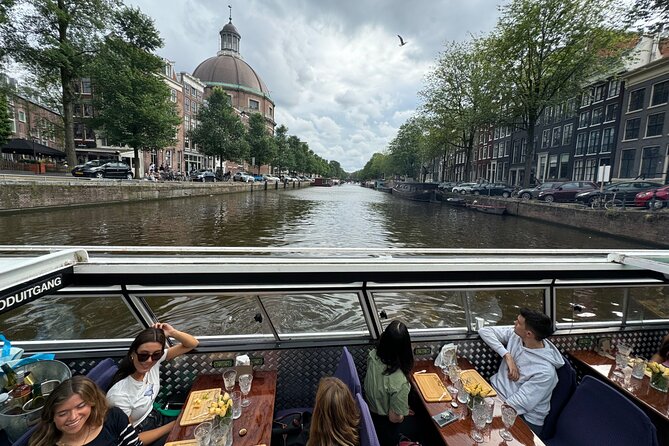
This cruise is only about an hour, so timing mostly affects atmosphere.
If you can choose, consider an evening slot. One review highlighted a quiet evening on the canals, with a relaxing pace and wine and cheese in a calmer setting. Evening also often makes the bridge-and-building details look softer and easier to photograph.
If you’re the type who likes your city day packed, fit this cruise as either:
- your first night activity to learn the city’s structure, or
- a low-effort follow-up after museums or neighborhoods that made your feet tired.
Because the tour includes coffee/tea and soda too, it also works if you want the tasting experience without committing to alcohol the whole time.
Who this cruise is best for (and who should pick something else)
This experience is a great match if you want a first-time Amsterdam overview that doesn’t require a huge time block or complicated planning. It’s especially good for you if you like:
- a short, scenic trip
- eating on the go without it being a restaurant ordeal
- a guide who points out why buildings and bridges matter
It can be less ideal if you have strict expectations about boat style or enclosed viewing. If you’re very particular about covered seating (or table setup), confirm what boat you’ll be on.
Guides: the human difference on a guided cruise
One reason the ratings are strong is the guide factor. Named guides in the feedback include Floris and Robbie, Lex, Ronald, Tom, Pippin, Berent, and Michel. People consistently describe guides as lively, efficient, and funny—plus willing to talk beyond the script.
That last part matters. A good guide doesn’t just list facts; they help you connect what you see to what you care about. Some comments even mention a light festival topic, which tells you the guides will usually adapt to what’s happening in Amsterdam that day.
Should you book this Amsterdam Cheese and Wine Canal Cruise?
If you want a one-hour, low-effort introduction to Amsterdam’s canal belt with included Dutch cheese and drinks, I’d say yes. The price feels fair for what’s bundled, and the route hits several high-meaning sights: the seven-bridges view, Anne Frank’s area, major churches, and famous bridges like the Skinny Bridge.
But book with eyes open. The biggest possible miss is boat layout and coverage, which can affect comfort and how easily everyone can reach the food. If you’re sensitive to sun or cold, or if you need a specific viewing setup, ask ahead.
If you do that, this cruise is an easy way to turn Amsterdam’s canals into something you can taste, not just see.
FAQ
How long is the Amsterdam Cheese and Wine Canal Cruise?
It lasts about 1 hour.
Where does the cruise start?
The meeting point is Amstel 51F, 1018 EJ Amsterdam, Netherlands.
What’s included in the cheese and drink experience?
A selection of Dutch cheeses and alcoholic beverages like Heineken beer and wine are included, along with soda, coffee, and tea.
Will there be live commentary?
Yes. The tour includes an in-person guide providing live commentary in English.
Is the tour offered in English?
Yes, English is offered.
What group size should I expect?
The tour has a maximum of 36 travelers.
Can I get a full refund if I cancel?
Yes. You can cancel up to 24 hours in advance for a full refund.
If you want, tell me your travel month and time of day (morning vs evening), and I’ll suggest the best slot to match the vibe you’re after.