REVIEW · AMSTERDAM
Amsterdam Red Light District: Serene and Other!
Book on Viator →Operated by Herzblut - Amsterdam Stadtführungen mit Herz & Seele! · Bookable on Viator
Amsterdam’s Red Light District is not what it seems.
This 90-minute walk pairs cheerful storytelling with a critical lens, so you get more than a quick photo stop. I like the tone because it treats the topic with a straight face and a light touch at the same time.
Two things I really like: the pacing and the practical context. The guide helps you understand how this area fits into Amsterdam’s older city fabric, including its history with prostitution and homosexuality, without hand-waving. The one drawback is that this is a frank topic in a real neighborhood, so if you’re easily shocked or bringing younger kids, you’ll want to think it through first.
In This Review
- Key takeaways before you go
- Why this Amsterdam Red Light District tour feels different
- When to start: evening timing and meeting point at Beursplein 9
- The 90 minutes: what you actually get for $25.45
- The story thread: city history and frank context on prostitution
- Cheerful stopover: how the guide sets the tone fast
- Schreierstoren: a landmark used to anchor the district’s past
- Window streets and Chinatown-style lanes: seeing the district with respect
- Old Libra and the historical notes that add texture
- Heiteres and more: the guide’s tone is the real attraction
- Price and logistics: simple, but plan around the evening
- Who should book this tour, and who should consider something else
- Should you book this Amsterdam Red Light District walk?
- FAQ
- How long is the Amsterdam Red Light District tour?
- Where does the tour start and end?
- How much does the tour cost?
- What time does the tour run?
- Is it a small group tour?
- Do I need to print anything, or is it a mobile ticket?
- Is the tour suitable for people with service animals?
- Can young people under 18 join?
- What if I have restricted walking abilities?
- Is free cancellation available?
Key takeaways before you go
- 90 minutes focused on the oldest district, with stops that explain the streets you see
- Cheerful but critical framing, so you get atmosphere and context together
- Schreierstoren and other landmarks used as anchor points for the story
- Window streets and narrow lanes near the Chinatown-style area, plus nightlife nearby
- Small group (max 10), which makes questions easier and the mood less hectic
- Mobile ticket and a set evening schedule (two daily time slots)
Why this Amsterdam Red Light District tour feels different
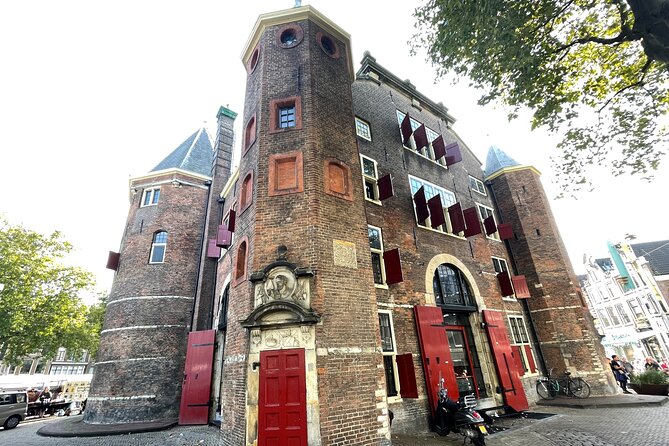
The Red Light District in Amsterdam has a reputation. Some of it is accurate. Some of it is exaggerated. What I like about this kind of guided walk is that it doesn’t pretend the area is normal, and it doesn’t turn it into a circus either.
You’re in the city’s oldest district, where the streets look like they’ve always been here and the details feel close-up. The tour leans into that feeling of place. And it also pushes back on the easy myths, using a Dutch approach described as tolerant and open, without fear of contact. You’ll also hear a critical viewpoint, because the oldest trade in the world is still the oldest trade in the world.
Expect a guided stroll that aims to be cheerful while staying honest. It’s not about dodging the topic. It’s about understanding it in context.
You can also read our reviews of more tours and experiences in Amsterdam.



When to start: evening timing and meeting point at Beursplein 9
This walk runs in the early evening, with two published start windows each day: 5:00 PM for a 1 hour 30 minutes slot ending around 6:30 PM, and 7:00 PM ending around 8:30 PM. You meet at Beursplein 9, 1012 JW Amsterdam, and it ends back at the same place.
That timing matters. You’ll be moving through a neighborhood that’s active, but not late-night chaotic. It also means you’re not doing this in daylight haze when you’re tired from a full day of museums.
You’ll also want to plan around the group size. This experience has a maximum of 10 travelers, and that small number changes the whole vibe. You’re more likely to get direct answers and less likely to get swept along like a line in an airport.
The 90 minutes: what you actually get for $25.45
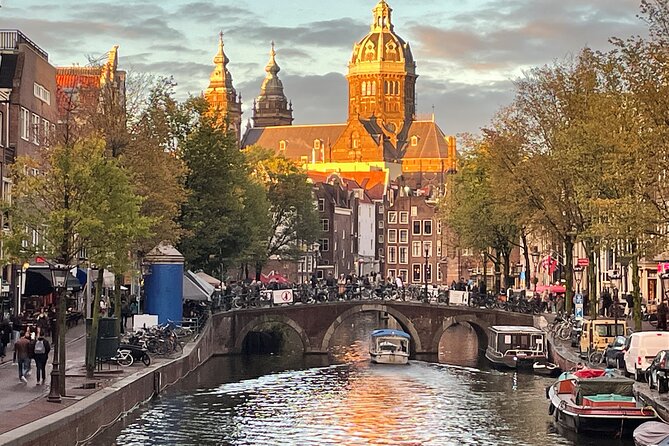
Price is $25.45 per person for about 1 hour 30 minutes, with a mobile ticket included. That’s not a big splurge, and it’s not a long commitment either. For this area, the value comes from guidance and framing more than from any single view.
What’s included is a guided city walk through the district, described as Heiteres and more. What’s not included is tips, snacks, drinks, and any entrance fees. So think of this as a conversation-led walking tour, not a party with drinks bundled in.
Also, booking demand can be high. The average booking time listed is about 15 days in advance, so if you have a tight travel window, it’s smart to lock in your slot early.
The story thread: city history and frank context on prostitution
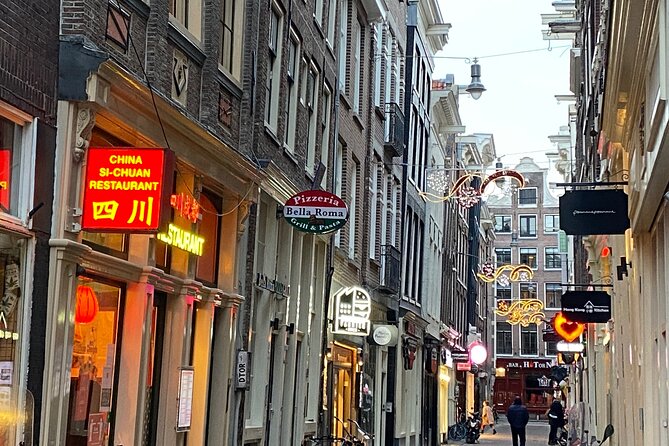
One of the biggest strengths here is that the walk is built around city history and real-world handling of sensitive subjects. You’ll get a history segment that’s not just dates on a plaque. Then you’ll connect that to how the district dealt with prostitution and also with homosexuality.
That matters because the Red Light District is not just about what you see at eye level. It’s about what the city decided to tolerate, regulate, ignore, argue over, or reshape over time. The tour’s approach is described as open and tolerant in the Dutch way, but it’s also critical, meaning it doesn’t paint everything as harmless.
For you, this is the part that turns a street tour into a meaning tour. You stop walking through and start understanding why Amsterdam’s oldest quarter earned this particular reputation.
A consideration: this is not written to be squeamish. The guide uses plain talk. If you’d rather avoid adult topics entirely, you might find this uncomfortable.
Cheerful stopover: how the guide sets the tone fast
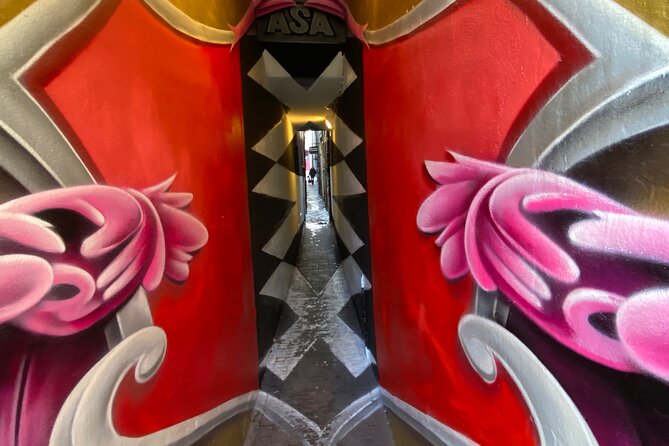
Before you get to the major landmarks, you start with what’s described as a cheerful stopover. That early segment is key. It’s where you get bearings and learn how to read what you’re seeing without turning every corner into a shock moment.
You’ll also notice the tour tries to keep humor alive while still treating the subject carefully. That’s a skill. Humor can help people relax, which makes it easier to ask questions. It can also keep the pace steady when the topic would otherwise slow the group down.
If you’re the type who likes your tours to feel friendly rather than stiff, this “cheerful start” is the first sign you’re in the right place.



Schreierstoren: a landmark used to anchor the district’s past
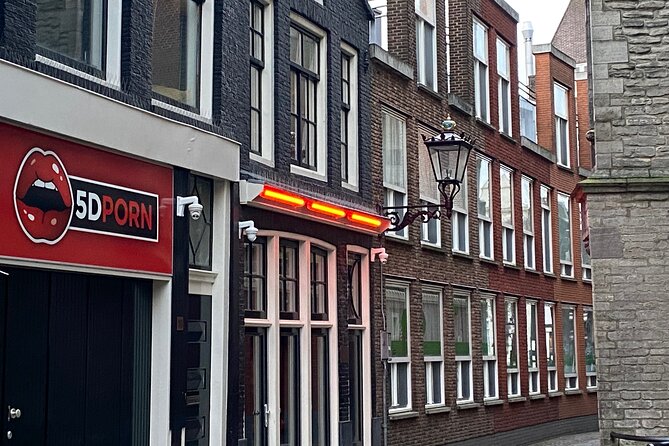
One of the named stops is Schreierstoren. Even if you’ve never heard the name before, you’ll recognize it as a landmark anchor for the walk. The tour uses it as a place to connect street-level impressions with broader historical context.
I like these kinds of stops because they give you a mental map. Amsterdam is full of streets that look similar if you’re rushing. A named landmark helps you remember where you are and what you just learned.
This is also a practical moment. It gives you a short pause in the flow, which helps if you’re trying to process what you’re hearing. With a small group, you can usually ask a follow-up without feeling like you’re interrupting a whole busload of people.
Window streets and Chinatown-style lanes: seeing the district with respect
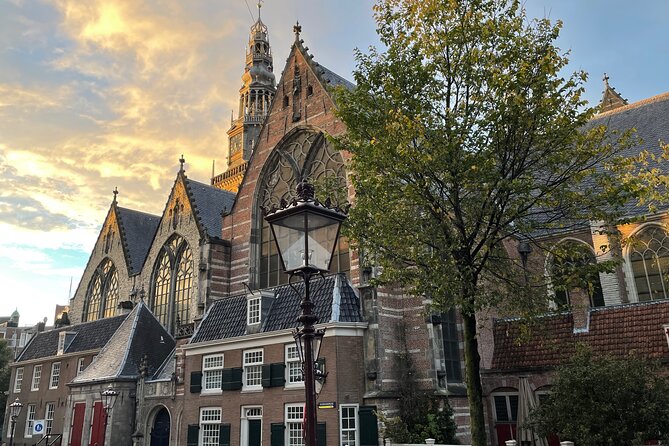
Next comes the area described as Chinatown, with narrow streets and the famous windows. This is the part most people are curious about, and it’s also the part that can feel awkward if you don’t have the right mindset.
Here’s how to approach it so it stays respectful and not just gawking: slow your pace, keep your distance, and treat it like a real neighborhood, not a stage. The tour frame matters. Because the walk has history plus critical context, you’re not being encouraged to turn this into entertainment. You’re being asked to look and understand.
In the same stretch, you’ll also pass Buddhist temples, plus establishments and bars and nightlife. That mix is important. It shows the district is not a single-note caricature. It’s a patchwork of Amsterdam life—religion, commerce, nightlife, and controversy all close together.
You’ll leave that section with a clearer sense of how multiple worlds coexist in a small area.
Old Libra and the historical notes that add texture
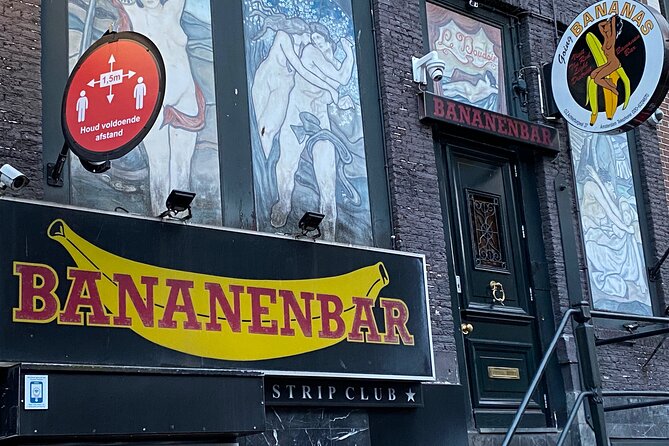
The walk includes a stop called Old Libra, described as historical. I like that the tour doesn’t only focus on the loudest headline sights. It adds in these older points that help you feel how the district has changed over time.
This kind of stop is where you usually get the “oh, that’s why” moment. After you’ve seen the windows and the narrow lanes, you’re ready for context that explains the bigger picture. Old Libra is used to add texture to the story so it doesn’t feel like a single-topic march.
Even if you’re not the kind of person who loves history, these named stops help you stay connected. You’re not just walking and listening. You’re collecting landmarks that make the neighborhood easier to recall later.
Heiteres and more: the guide’s tone is the real attraction
The tour’s subtitle is basically a promise: cheerful and more. And based on what’s been praised, the guide experience is a standout. One named guide, Anne, has been described as super nice and funny. That combination is exactly what makes a sensitive walking tour work.
I don’t need a guide to act serious all the time. But I do want them to be in control. When the humor is done right, you feel comfortable enough to listen closely. When the seriousness is done right, you feel respected rather than marketed to.
This also explains why the group size matters. With up to 10 people, the guide can keep the conversation feeling human. You’re not just receiving facts. You’re getting a tour that responds to how the group is reacting in the moment.
That’s a big reason the vibe can feel both engaging and thoughtful.
Price and logistics: simple, but plan around the evening
Let’s be real. You’re paying $25.45 for a guided 90-minute walk. No snacks, no drinks, no entrance fees. You should show up ready to listen, and you should budget for your own water or small bites after if you need them.
The logistics are straightforward: start and end at the same place (Beursplein 9), and you’ll carry a mobile ticket. Because this runs in two set evening slots, you’ll want to choose the one that fits your day best, not just whichever is available first.
One more practical note: the district is active at night. Wear shoes that work for city walking. This isn’t a museum where you can stop whenever you want.
Who should book this tour, and who should consider something else
This tour fits best if you:
- want history and honest commentary along with the atmosphere
- like a small-group walk where you can ask questions
- can handle frank discussion of adult topics without turning it into a spectacle
You might want to rethink if you’re not comfortable with the subject matter. The tour specifically covers prostitution and homosexuality history, and it’s described as well-known and controversial.
Age matters too. If you’re under 18, you can only join when accompanied by a legal guardian. That’s worth honoring, because the whole point is learning in context—not treating it like a playground.
For people with walking difficulties, the tour guidance says to inform the provider in advance so they can adjust, and they recommend a private tour instead if mobility is an issue. That’s a smart safety and comfort approach.
Should you book this Amsterdam Red Light District walk?
I’d book it if you want a guided, respectful understanding of Amsterdam’s oldest district, not a drive-by photo quest. The combination of cheerful storytelling plus critical context makes it feel more useful than most “see the sights” tours.
Choose it if you’ll appreciate frank history and if you’re okay walking in a real adult neighborhood. Skip it if you want a quiet, purely cultural city stroll or you know the subject will make you shut down.
One last tip: pick an evening slot that matches your energy. This is a topic-heavy walk. You’ll enjoy it more when you’re not running on fumes from an all-day schedule.
FAQ
How long is the Amsterdam Red Light District tour?
It’s approximately 1 hour 30 minutes.
Where does the tour start and end?
It starts at Beursplein 9, 1012 JW Amsterdam and ends back at the meeting point.
How much does the tour cost?
The price is $25.45 per person.
What time does the tour run?
The published time slots are 5:00 PM to 6:30 PM and 7:00 PM to 8:30 PM (Monday through Sunday).
Is it a small group tour?
Yes. The tour has a maximum of 10 travelers.
Do I need to print anything, or is it a mobile ticket?
It uses a mobile ticket.
Is the tour suitable for people with service animals?
Yes. Service animals are allowed.
Can young people under 18 join?
Yes, but young people up to 18 only join if accompanied by a legal guardian.
What if I have restricted walking abilities?
If you have walking difficulties, you should inform the provider in advance so they can adjust. They recommend a private tour if walking restrictions are a concern.
Is free cancellation available?
Yes. You can cancel for a full refund up to 24 hours before the experience’s start time. The tour may also be canceled if a minimum number of travelers isn’t met, with an offer of another date/experience or a full refund.