REVIEW · AMSTERDAM
Financial History Tour
Book on Viator →Operated by Historical Amsterdam Tours · Bookable on Viator
Money left footprints across Amsterdam. This financial history tour has a clear theme and a super engaging guide, with Tijs de Boer bringing the stories to life, plus practical local tips. One thing to consider: it’s still a walk, and the pace can feel steady if your legs prefer slower plans.
I like that it starts at a real exchange landmark and ends on the other side of the Dam, so you’re not just hearing theory. You’ll also get photo stops at major sightlines, and the format is genuinely private and flexible, with your group of up to 10 moving at a pace that works for you.
In This Review
- Key highlights you’ll actually care about
- Money Has a Map in Amsterdam: how the tour tells the story
- Stop 1 at Beurs van Berlage: starting at Amsterdam’s exchange mindset
- Stadsarchief Amsterdam: the basement archives that make finance feel real
- The missing pieces in between: merchants, money tricks, and market bubbles
- Private group format: why up to 10 people can actually feel calm
- Price and value: what $390.50 per group really buys you
- Timing, walking, and where you’ll start and end
- How far ahead to book (and how to plan your day)
- Who should book this tour, and who might not love it
- Should you book the Financial History Tour of Amsterdam?
- FAQ
- How long is the Financial History Tour in Amsterdam?
- What does the tour cost?
- Is the tour private?
- What language is the tour offered in?
- Do I need to buy admission tickets for the stops?
- Where does the tour start and end?
- How far is the ending point from the starting point?
- Do I get a mobile ticket?
- How much physical activity is involved?
- What is the cancellation policy?
- Is it easy to reach by public transportation?
- When should I book?
Key highlights you’ll actually care about
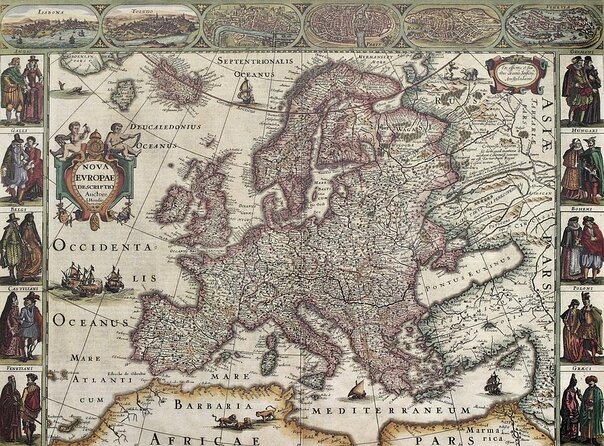
- Beurs van Berlage as the first anchor point to understand how Amsterdam’s banking and trade mindset took shape
- Stadsarchief Amsterdam’s basement archives add a hands-on feeling to the story of money and records
- Tulip Mania and early bubbles connect local events to global ideas about speculation
- Photo-friendly stops near iconic locations without turning the walk into a slow line
- Private group (up to 10) keeps questions possible and the pace more comfortable
- English guide with a mobile ticket makes it easier to plan and show up ready
Money Has a Map in Amsterdam: how the tour tells the story
Amsterdam’s famous canals can make you think it’s all arts, houses, and bicycles. This experience flips that view. It frames the city as a place where money ideas, risk, and trade decisions shaped culture and everyday life.
I like that the tour doesn’t treat finance like a dry lecture. You get the why behind Amsterdam’s system: who had the money, how trade fueled innovation, and how communities organized trust when goods and payments traveled far. The goal is simple—help you read Amsterdam with a sharper financial lens.
And yes, there’s a human side. When you hear how merchants built wealth and how public excitement can spread around markets, the city starts to feel like it’s telling you its own story. It’s the kind of context that makes the sights make sense.
You can also read our reviews of more historical tours in Amsterdam



Stop 1 at Beurs van Berlage: starting at Amsterdam’s exchange mindset
You begin at Bistro Berlage, right near Beursplein 1. From there, the first major stop is the Beurs van Berlage. Think of this as your visual warm-up: a place that signals Amsterdam’s exchange culture and its role as a trading hub.
What makes this start work is that it gives you a mental reference point. You’re not walking into a story halfway through. You’re starting with an exchange building tied to how finance and commerce took form in the city. Even though the stop itself is short, it sets the tone for everything after.
You’ll also appreciate the timing. At around 10 minutes with free admission, it’s not a time sink. It’s enough time to orient your brain and connect what you’re about to hear with a real landmark.
Good to know: if you’re the type who hates standing around, this first stop is quick and focused.
Stadsarchief Amsterdam: the basement archives that make finance feel real
Next is Stadsarchief Amsterdam. This is where the tour turns from concept to evidence.
You spend about 10 minutes here, and admission is included. The key detail is the setting: the basement reveals part of the city’s archive world. That matters because it makes the financial story feel grounded in records, not just anecdotes. It’s one of those moments where you can almost picture how documents, lists, and reports helped make deals and manage trust.
The way this stop is framed also helps you connect money to culture and heritage. Archives aren’t just about the past; they’re about how a society keeps track of what it valued. When finance is part of everyday life, the documentation tells you that story too.
Potential drawback: if you’re expecting a hands-on museum with lots of exhibits, this segment is brief. The value here is the context and the narrative thread.
The missing pieces in between: merchants, money tricks, and market bubbles
Between the two named stops, the guide weaves the wider story of how Amsterdam’s wealth worked—and how it could go sideways.
Here’s what this part of the tour is aiming for:
- Who the rich merchants were and how they made their money
- How Amsterdam’s first economic bubble formed—with Tulip Mania as the key example
- How these events shaped the city’s identity and heritage
This is the section I think you’ll remember later. Tulip Mania is often mentioned as trivia, but on a walk like this you can connect the idea to human behavior—speculation, rumor, and the social nature of markets. It turns a headline event into something you can picture in a city setting.
It also gives you a better way to interpret what you see afterward. If you’ve ever wondered why some places in Amsterdam feel built for trade and deal-making, this is where you learn the pattern.
And if you care about photos, this stretch includes opportunities at some of the most iconic Amsterdam locations. The tour isn’t only about looking at buildings; it’s about framing the city so you can take home images that match the story you heard.
Private group format: why up to 10 people can actually feel calm
This is a private tour/activity, and only your group participates. The group size is up to 10, which is a sweet spot. Big enough to feel social, small enough to keep questions from getting lost.
The private part also means the guide can adjust the flow to how your group likes to move—more photos, more questions, or a quicker pace when you’ve had your fill. That flexibility matters in Amsterdam, where weather and energy can change fast.
It’s also a value play. You’re paying per group, not per person. If you’re traveling as a family or with a few friends, this is one of the more budget-smart ways to get a tailored walking experience instead of splitting into a crowd.






Price and value: what $390.50 per group really buys you
The price is $390.50 per group (up to 10) for about 2 hours 30 minutes. On paper, that can look high if you’re calculating per person with just one traveler.
But here’s the practical way to judge value: ask how many people are in your group. If you’re two to four people, it can be a reasonable trade for a focused, English-guided walk that covers multiple meaningful stops plus context you’d struggle to piece together on your own.
The tour also includes at least one admission fee in the planned route—Stadsarchief Amsterdam is included, and Beurs van Berlage is free. That doesn’t make the price cheap, but it helps offset the cost compared to a fully paid museum-heavy plan.
What you’re really paying for is the story connection: the guide makes Amsterdam’s finance feel like city life, not a textbook. And the strongest signal here is the consistency of praise for the guide’s insight level and local hints.
Timing, walking, and where you’ll start and end
The tour runs about 2 hours 30 minutes. The meeting point is Bistro Berlage, Beursplein 1, 1012 JW Amsterdam. You end at Rokin 24HS, 1012 KS Amsterdam, and it’s described as about 500 meters from the starting point, on the other side of the Dam.
That layout is helpful. You don’t have to worry about being stranded across the city. You finish in a central spot near key streets, which makes it easier to continue your day—whether that means more sightseeing, a meal, or grabbing transit.
It’s also marked as near public transportation, which is a big deal in Amsterdam when your schedule is tight.
The physical note is moderate fitness. That’s common for city walking tours, but it’s still worth taking seriously. If your legs need breaks often, plan on a slower walking pace or consider doing a shorter day after.
Also, since the tour is described with mobile tickets, you won’t be scrambling for paper directions.
How far ahead to book (and how to plan your day)
On average, this tour is booked about 28 days in advance. That’s not an emergency, but it’s also not the kind of thing I’d treat as last-minute. If you’re traveling in a busy season or on a popular day, booking early helps you lock in your time.
Another reason to book early: it’s English and private. Those tend to be easier to schedule when you plan ahead rather than hoping for an opening.
If your plans are uncertain, the experience offers free cancellation up to 24 hours before the start time, with refunds only when canceled at least that far in advance. Just watch the cutoff based on local time.
Who should book this tour, and who might not love it
This tour is a great match if:
- You like city history that’s tied to real systems—trade, markets, and decision-making
- You enjoy walking with a guide who can answer questions, not just follow a script
- You want photo moments at major sights while still learning something new
- You’re traveling as a group that can share the group price
You might want to skip it (or adjust expectations) if:
- You only want big museum time, not a guided walk with shorter stops
- You’re extremely sensitive to walking time or steady pacing
- You dislike finance themes entirely and prefer purely cultural or art-focused routes
Should you book the Financial History Tour of Amsterdam?
If you’re the type of traveler who likes to understand what makes a place tick, I think you’ll get real value from this one. The combination of Beurs van Berlage, Stadsarchief Amsterdam, and the big market story threads like Tulip Mania gives you context that makes Amsterdam feel less like a postcard and more like a system people built.
I’d especially recommend booking if you can share the group cost. With a private format up to 10, it tends to feel more personal and more responsive than a standard large-group walk.
Just go in knowing it’s about learning through a guided route, not a long indoor museum crawl. If that fits your style, this is a smart, memorable way to see Amsterdam through the lens of money.
FAQ
How long is the Financial History Tour in Amsterdam?
The tour lasts about 2 hours 30 minutes.
What does the tour cost?
The price is $390.50 per group (up to 10 people).
Is the tour private?
Yes. It’s a private tour/activity, and only your group participates.
What language is the tour offered in?
The tour is offered in English.
Do I need to buy admission tickets for the stops?
Admission for Stadsarchief Amsterdam is included. Beurs van Berlage is listed as free.
Where does the tour start and end?
It starts at Bistro Berlage, Beursplein 1, 1012 JW Amsterdam, and ends at Rokin 24HS, 1012 KS Amsterdam.
How far is the ending point from the starting point?
The end point is about 500 meters from the starting point, on the other side of the Dam.
Do I get a mobile ticket?
Yes, the tour includes a mobile ticket.
How much physical activity is involved?
Travelers should have a moderate physical fitness level.
What is the cancellation policy?
You can cancel for a full refund up to 24 hours before the experience’s start time, based on local time.
Is it easy to reach by public transportation?
Yes, it’s noted as near public transportation.
When should I book?
On average, it’s booked about 28 days in advance.