REVIEW · AMSTERDAM
Amsterdam: Fabrique des Lumières Dutch Masters Ticket
Book on GetYourGuide →Operated by Fabrique des Lumières · Bookable on GetYourGuide
Big paintings become theater in a light show. At Fabrique des Lumières, Dutch Masters artwork turns into room-filling scenes across 3,800m², matched to a carefully made soundtrack. I love how the projections make famous artists feel close and moving, and I love the practical flow of rooms and pacing. One thing to watch: the exhibition runs only once per your timed slot, so arriving late can mean missing the start.
In Amsterdam’s Westergas Park, this ticket gets you into a tall, industrial hall (walls reach up to 17 meters) with locker access, so you can go hands-free. The whole plan is simple: show up directly at Fabrique des Lumières, check what you need, and then follow the show at your exact booked time.
In This Review
- Key points to know before you go
- Fabrique des Lumières and the Dutch Masters idea (what you’re really buying)
- Getting there in Westergas Park and getting inside on time
- Your pre-show setup: lockers, rules, and staying comfortable
- The main room: Vermeer, van Gogh, Rembrandt, and Mondriaan in motion
- What the different artists feel like (without needing art training)
- Expect multiple “rooms” or scene changes
- How the show’s pacing works (and why timing matters)
- The Mondriaan short program: the follow-up you don’t want to skip
- Photo moments, nearby perks, and pairing it with Amsterdam plans
- Who this ticket fits best (and who might want a different plan)
- Price and value: $21 for tech, time, and scale
- Should you book the Amsterdam Fabrique des Lumières Dutch Masters ticket?
- FAQ
- What ticket do I need for the Dutch Masters show at Fabrique des Lumières?
- Where is Fabrique des Lumières located?
- How much does the ticket cost?
- When is the Dutch Masters exhibition available?
- When do the doors open?
- Does the exhibition run more than once per day?
- Is locker use included?
- Is a guide included with the ticket?
- Are pets, strollers, or large luggage allowed?
Key points to know before you go
- Timed-slot timing is strict: the show starts exactly at your booked time and is shown only once.
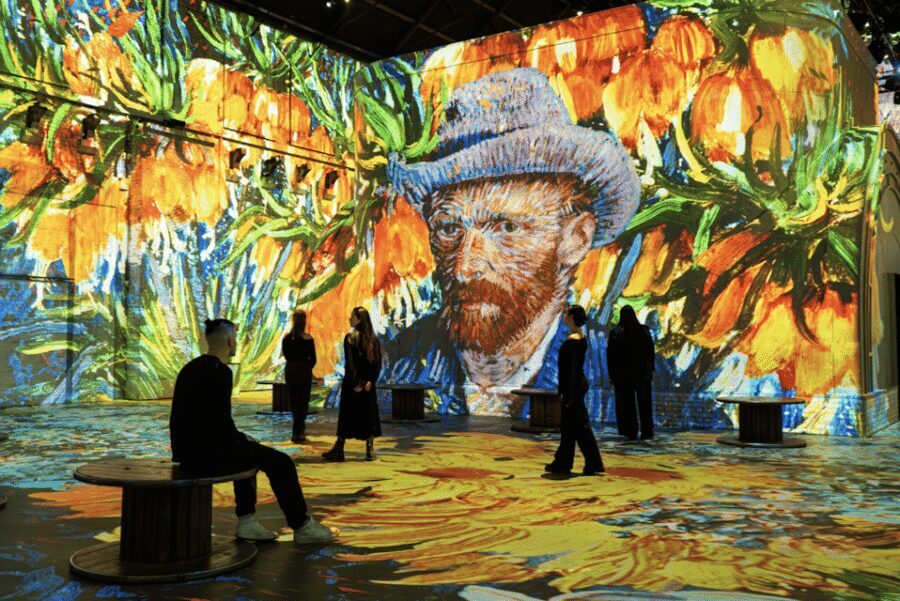
- Huge projection canvas: you’ll experience art across 3,800m² in rooms inside a warehouse-like space.
- Light and music are the main event: the visuals are built to move with the soundtrack.
- Dutch Masters line-up: Vermeer, van Gogh, Rembrandt, and Mondriaan are part of the main program.
- Short Mondriaan follow-up: after Dutch Masters, there’s a shorter program focused on his evolution toward neoplasticism.
- Keep your hands free: luggage/large bags aren’t allowed, but locker use is included.
Fabrique des Lumières and the Dutch Masters idea (what you’re really buying)
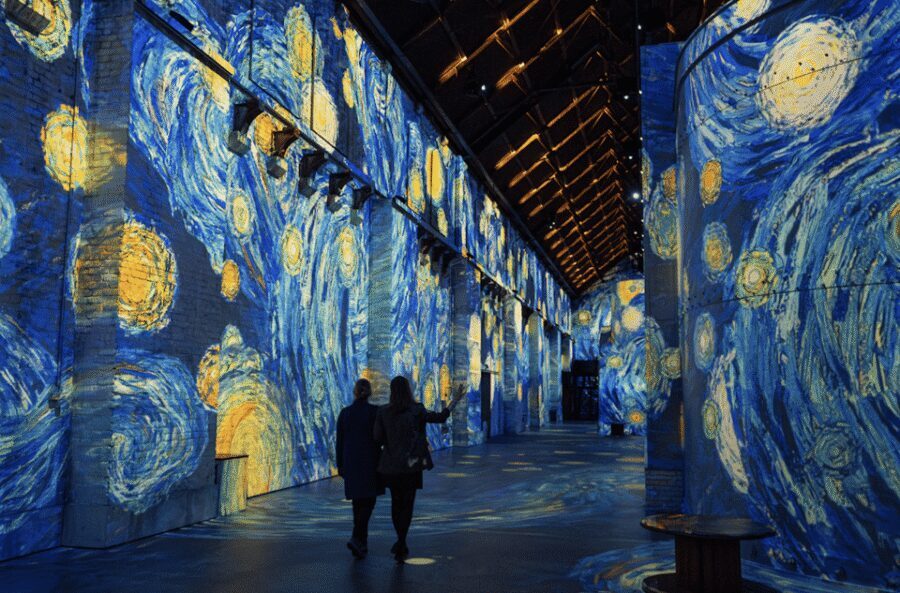
This is not your typical museum visit. You’re not studying paintings behind glass. You’re buying a ticket to a full-room, light-and-music presentation of Dutch Masters—projected at a scale that makes small details feel like they’re in the same space as you.
For I-love-art-but-not-always-the-museum reasons, that matters. The show helps you experience familiar names (Vermeer, Rembrandt, van Gogh) without needing to already know every technique. And for people who enjoy art history, it’s a fun entry point because it connects the work to emotion, mood, and atmosphere—something a wall label can’t do well.
The value question is simple: you’re paying for a time-limited show in a big technical venue. At about $21 per person, it’s priced like an attraction, not like a multi-day museum membership. If the idea of art moving with music clicks for you, it’s a strong deal. If you prefer quiet close-up looking, it may feel like less “art reading” and more “art performance.”
You can also read our reviews of more tours and experiences in Amsterdam


Getting there in Westergas Park and getting inside on time
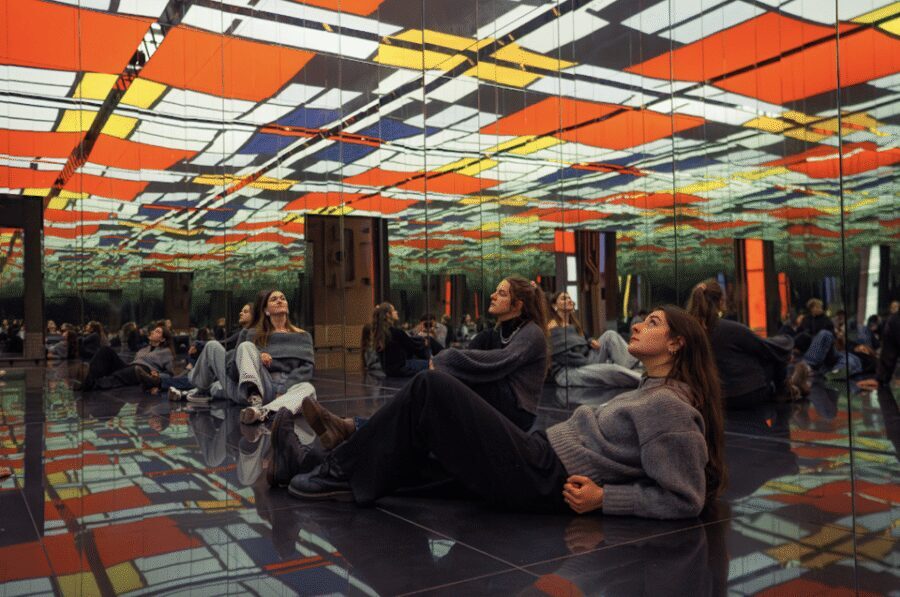
Fabrique des Lumières sits in Westergas Park, and the venue is in a larger park area—so I recommend treating it like an event, not like a random stop you can wander into whenever.
Here’s the practical catch: the Dutch Masters exhibition is only available during the first and last time slot of the day. And once you pick your slot, the show runs like clockwork:
- Doors open 15 minutes before your time.
- The exhibition starts exactly at your booked slot.
- The exhibition is shown only once and then the venue closes afterwards.
That means your best strategy is to arrive early enough to get through security/entry calmly, store what you need, and settle before the lights shift. If you arrive late, you don’t get to “catch up” inside.
Also, keep your bag situation in mind. The show does not allow pets, baby strollers, or luggage/large bags. Locker use is included, which helps a lot, but it also means you should think through what you’re bringing.
A small but important move: use your locker early. One review notes you may not be able to return to lockers once you’re inside, so get everything done before the show starts.
Your pre-show setup: lockers, rules, and staying comfortable
Your ticket includes a timed-entry entry ticket plus locker use. No guide is included, so you’re not relying on staff to narrate the art in the way a museum docent might.
That’s part of the show’s charm. You’re given a path and a soundtrack, and you let the projections do the storytelling. But it also means you should plan your comfort.
Two comfort points show up repeatedly in feedback:
- Seating can be limited because a lot of viewers sit on the floor.
- The space can feel cold, especially during longer viewing.
So if you run cold easily, wear layers. Bring a light item you can tuck into your clothing before you lock your bag. And if you want a better viewing angle, pay attention to where people settle before the first projection sequence begins.
There’s also a note about language: one review suggests you need to know where to sit to catch the English portion. The lesson for you is simple—don’t assume every row hears everything equally. If you’re relying on the spoken elements, choose your spot thoughtfully during the pre-show minutes.
The main room: Vermeer, van Gogh, Rembrandt, and Mondriaan in motion
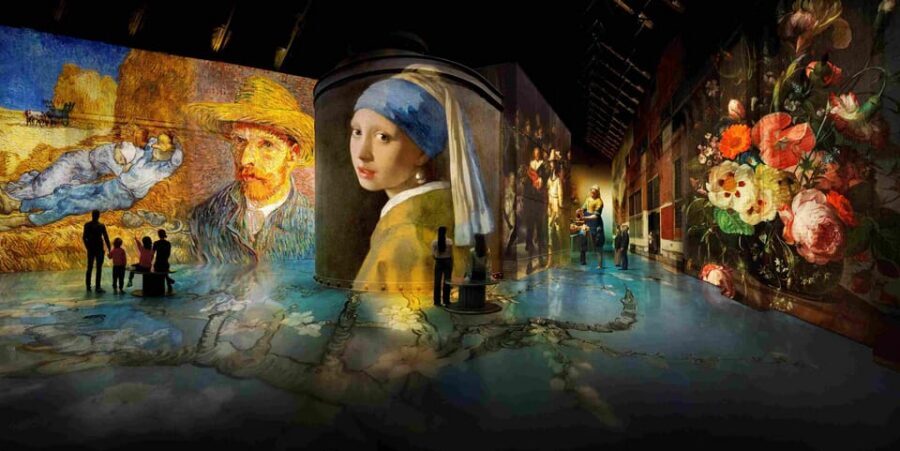
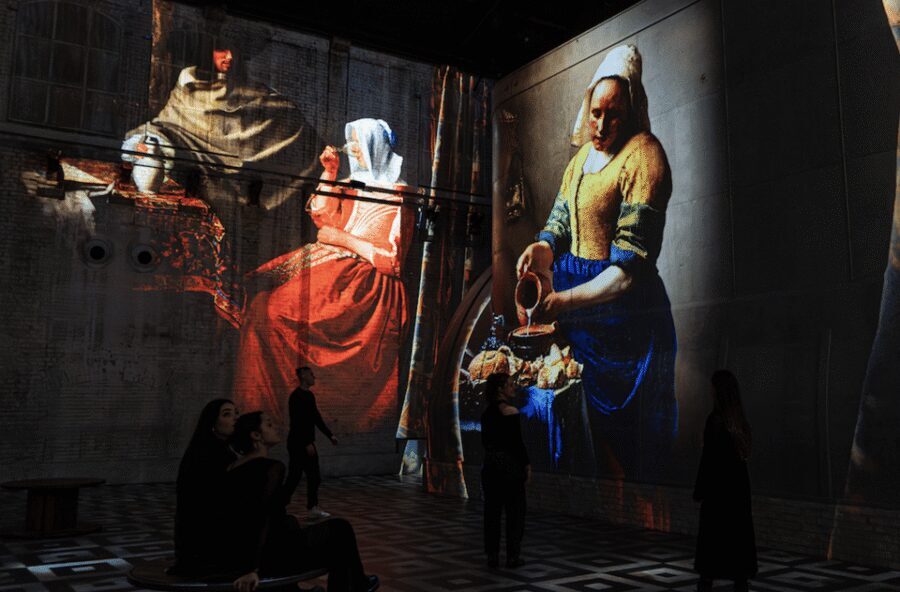
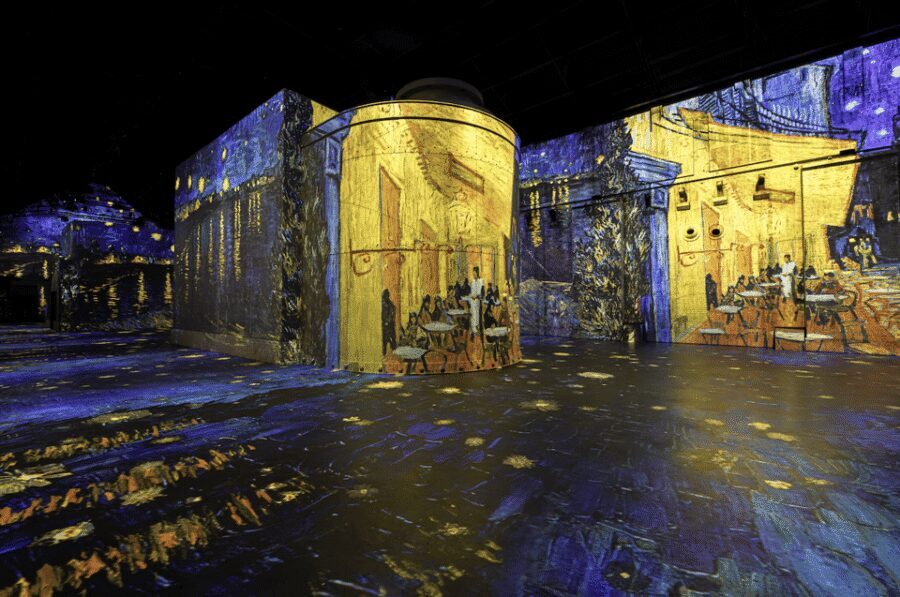
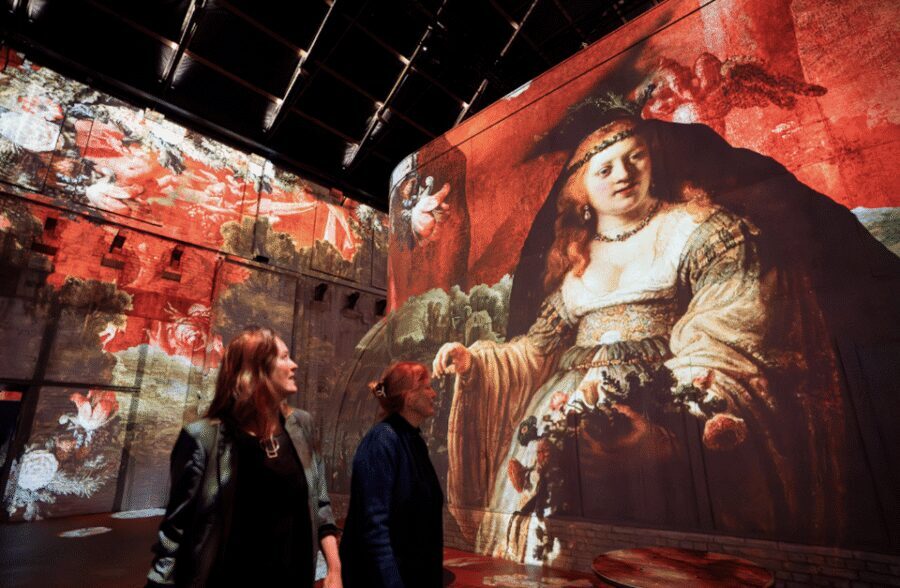
Once the show begins, the building itself becomes part of the art. You’re inside a very tall industrial space with walls up to 17 meters high, and the projections spread across 3,800m². The effect is less like watching screens and more like standing inside moving scenes.
The core concept is that you experience Dutch Masters through synchronized light projections and accompanying music. The projection tech changes how the painting reads. Brushstrokes, lighting, and composition stop being fixed images and start behaving like shifting weather. That’s why the show can feel surprisingly emotional: the music and timing push you into the mood of the work, even if you’re not doing formal analysis.
What the different artists feel like (without needing art training)
The show’s lineup includes:
- Vermeer (known for quiet light and interior mood)
- van Gogh (color energy and emotional intensity)
- Rembrandt (drama of light and face)
- Mondriaan (structure and the road toward abstraction)
Even if you’ve seen these works in museums, the projection format changes the scale and pacing. Reviews highlight that the show can feel like stepping into the painting itself. It’s a good reminder that this attraction isn’t trying to replace museum viewing. It’s offering a different way to feel the same art.


Expect multiple “rooms” or scene changes
Feedback frequently mentions separate areas and distinct themes per room. A couple of people specifically call out a mirror room, which fits the show’s style: you don’t just watch projections—you sometimes see yourself become part of the visual world.
The pacing is also part of the value. People report it lasts a very enjoyable amount of time and often describe a show around an hour. That’s long enough to feel like an event, but short enough that it doesn’t require a whole day commitment.
How the show’s pacing works (and why timing matters)
Because the exhibition is shown only once, it’s built for a clean start-to-finish experience. That affects your choices before you go.
You’ll want to:
- Be early enough to be seated/positioned before the exact start time.
- Avoid plans right before the slot that could run late.
- Know that after the exhibition, Fabrique des Lumières closes—so don’t plan to linger like you would at a museum café.
One review mentions missing the first portion due to traffic. That’s your hint: build in cushion time. Westergas Park is not “hard” to reach, but Amsterdam traffic and transit can still surprise you when you’re rushing.
The Mondriaan short program: the follow-up you don’t want to skip
After the main Dutch Masters sequence, there’s a short program dedicated to Mondriaan. It traces his evolution toward neoplasticism, focusing on how he moved away from traditional painting constraints and toward a more visionary style.
This is a smart addition because it gives you a payoff beyond the name recognition. You get a chance to see the “why” of Mondriaan’s direction, not just the final look.
If you’re a Mondriaan fan, treat this as part of the reason to book. If you’re not, it can still help you make sense of his style in a way that feels more emotional than textbook.
Photo moments, nearby perks, and pairing it with Amsterdam plans
At the end of the experience, there’s often a chance to grab a keepsake photo. One review mentions a photo booth at the end of the hall, so if you like souvenirs, set aside a couple minutes instead of speed-walking out.
Also, there’s a practical “where next” advantage. Since this is a timed attraction, you can pair it with museum time nearby—or use it as your art fix when you don’t have energy for another gallery crawl.
One review mentions coffee next door and the venue’s park setting, which is useful if you want to cool down after sitting and watching projections. Westergas Park itself is a nice way to stretch your legs if your schedule allows it.
Who this ticket fits best (and who might want a different plan)
This show is great for you if:
- You like art, but you also like sound, lighting, and story pacing.
- You’ve seen some Dutch Masters already and want a fresh angle.
- You’re traveling with friends who might not want a full museum day but will enjoy a “made for your senses” experience.
- You want an easy win: one ticket, one location, one timed show.
It may be less ideal if:
- You want a quiet, research-heavy experience with lots of time to read labels and study brushwork.
- Cold floors and limited seating bother you.
- You’re sensitive to noisy crowds. One review calls out children running around loudly and breaking the fantasy for them. If you’re noise-sensitive, consider choosing a time slot when you expect fewer families.
And if you have epilepsy, the attraction is noted as not suitable.
Price and value: $21 for tech, time, and scale
$21 might sound low compared with some big-name museum attractions in Europe. And in terms of value, that’s the key: you’re paying for large-scale projection tech and a complete, self-contained experience in about an hour.
The value improves further because your ticket includes locker use and gets you skip-the-ticket-line with timed entry. That means less waiting and more time inside the show—exactly what you want in Amsterdam, where queues can eat your day.
Is it expensive if you want unlimited art reading? Maybe. Is it a fair price for a well-produced hour of art in motion with music? For many people, yes.
Should you book the Amsterdam Fabrique des Lumières Dutch Masters ticket?
Book this ticket if you want Dutch Masters presented as a sensory, room-scale show, not a quiet gallery lesson. The combination of huge projection walls, tightly timed pacing, and music-matched storytelling is the reason people rate it so high.
Skip or consider a different option if you’re uncomfortable sitting on the floor, get cold easily, hate noise, or you dislike strict timing. Because the exhibition runs only once at your slot, arriving late can be the only real “deal-breaker.”
My advice: pick the first or last eligible slot for the day (since that’s when this Dutch Masters exhibition runs), arrive early enough to get settled, and treat it like an event with a beginning and an end. You’ll get more out of it—and you won’t waste your one shot at the start.
FAQ
What ticket do I need for the Dutch Masters show at Fabrique des Lumières?
You need a timed-entry ticket specifically for the Dutch Masters exhibition at Fabrique des Lumières.
Where is Fabrique des Lumières located?
It’s in Westergas Park in Amsterdam, North Holland, Netherlands.
How much does the ticket cost?
The price is $21 per person.
When is the Dutch Masters exhibition available?
The Dutch Masters exhibition is only available during the first and last time slot of the day.
When do the doors open?
Doors open 15 minutes before the exhibition starts.
Does the exhibition run more than once per day?
No. The exhibition is shown only once and starts exactly at your booked time slot.
Is locker use included?
Yes. Locker use is included with your ticket.
Is a guide included with the ticket?
No. A guide is not included.
Are pets, strollers, or large luggage allowed?
No. Pets, baby strollers, and luggage or large bags are not allowed.