REVIEW · AMSTERDAM
Amsterdam City Center Guided Walking Tour – 12 guests 2,5h
Book on GetYourGuide →Operated by Babylon Tours Amsterdam · Bookable on GetYourGuide
Amsterdam clicks when you walk it. This 2.5-hour guided orientation through the historic center and Canal Belt helps you understand what you’re seeing, fast, from bridges and canals to merchant-story details. I like the small feel with a private guide dynamic (even in a compact group), and I like the way the guide turns landmarks into practical choices for your day. The main drawback to plan for is simple: it’s a lot of walking and it’s not set up for wheelchair users.
You’ll start near St Nicholas Church by Central Station area, then work through Dam Square and beyond into neighborhoods where the city texture changes. The tour is designed as an efficient “get your bearings” route, with short photo stops and guided commentary, so you don’t spend your first day wandering in circles.
In This Review
- Quick reasons this 2.5-hour orientation walk works
- Starting near Central Station: a clean entry to the historic core
- Saint Nicholas and the Weeping Tower: the first clues to Amsterdam’s character
- Zeedijk and Ons’ Lieve Heer op Solder: street life plus odd history
- Oude Kerk and Nieuwmarkt: old stone and a living neighborhood feel
- The De Waag area and Het Trippenhuis: merchant-era landmarks you can picture
- Jewish Quarter: atmosphere changes, and the guide keeps it grounded
- Dutch National Opera & Ballet and Zuiderkerk: landmarks that also help you navigate
- Dam Square: Royal Palace and Nieuwe Kirk with context
- From Prinsengracht to Westerkerk: Canal Belt views with meaning
- Magere Brug and Blauwbrug: bridges as photo targets and orientation tools
- Begijnhof: the calm shock of an inner court
- Begijnhof to the edges: Chinatown and artist squats along the way
- Amsterdam Museum area and Prinsengracht: wrapping the map in your head
- Westerkerk and Dam Square again in your mental map: why the order matters
- Watching the guide work: Monique’s style (and what you should look for)
- Walking logistics and timing: how to stay comfortable in 2.5 hours
- Price and value: why $61 can feel like a bargain if you use it right
- Who this tour suits best (and who should rethink)
- Should you book this Amsterdam City Center Guided Walking Tour?
- FAQ
- Where do I meet the guide?
- How long is the tour?
- What’s included in the price?
- What language is the guide available in?
- What should I bring?
- Can I bring luggage or large bags?
- Is this tour wheelchair accessible?
Quick reasons this 2.5-hour orientation walk works
- Small-group energy: You get guidance without the big-bus chaos.
- Canals + trade history together: Bridges and housefronts come with a reason, not just a view.
- Dam Square in context: Royal Palace and Nieuwe Kirk make more sense when you understand the city’s evolution.
- A real local perspective: You’ll get tips for how to spend your time in Amsterdam, not just facts.
- Leaning merchant houses and canal-belt streets: The route highlights Amsterdam’s “look closer” details.
- Courtyards and quieter pockets: Tree-lined squares and inner courtyards break up the busy center.
Starting near Central Station: a clean entry to the historic core
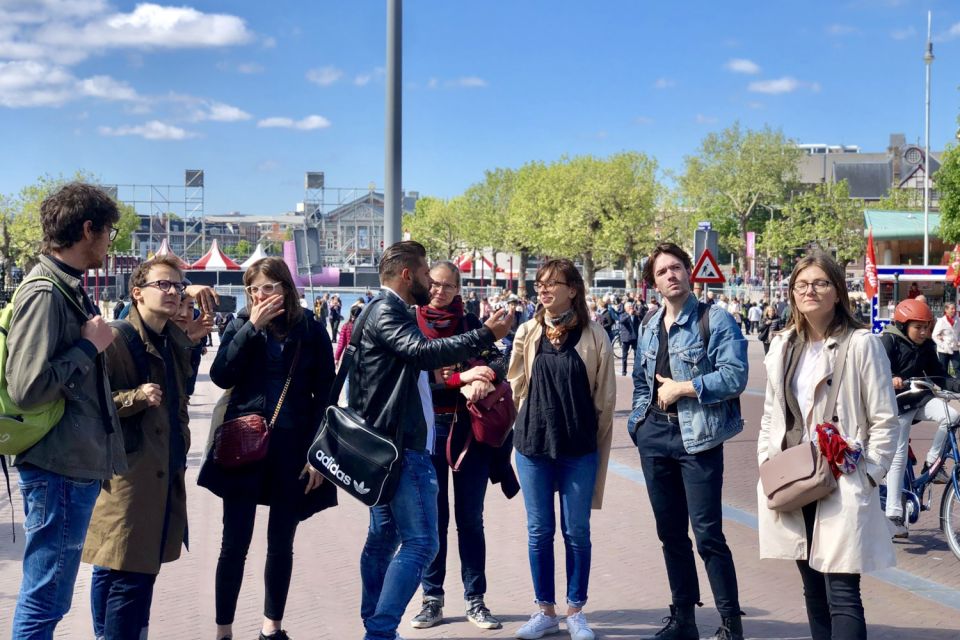
I like how the meeting point puts you in the right mental zone for day one. You meet outside the entrance of St Nicholas Church, opposite Central Station, which means you’re close to major transit and not forced into a long commute before the tour even starts.
From there, you’re set up to move on foot through central Amsterdam at a pace that feels manageable. This tour is built around short guided segments and photo stops, so you can keep your eyes up and still absorb what the guide is saying.
You can also read our reviews of more walking tours in Amsterdam



Saint Nicholas and the Weeping Tower: the first clues to Amsterdam’s character
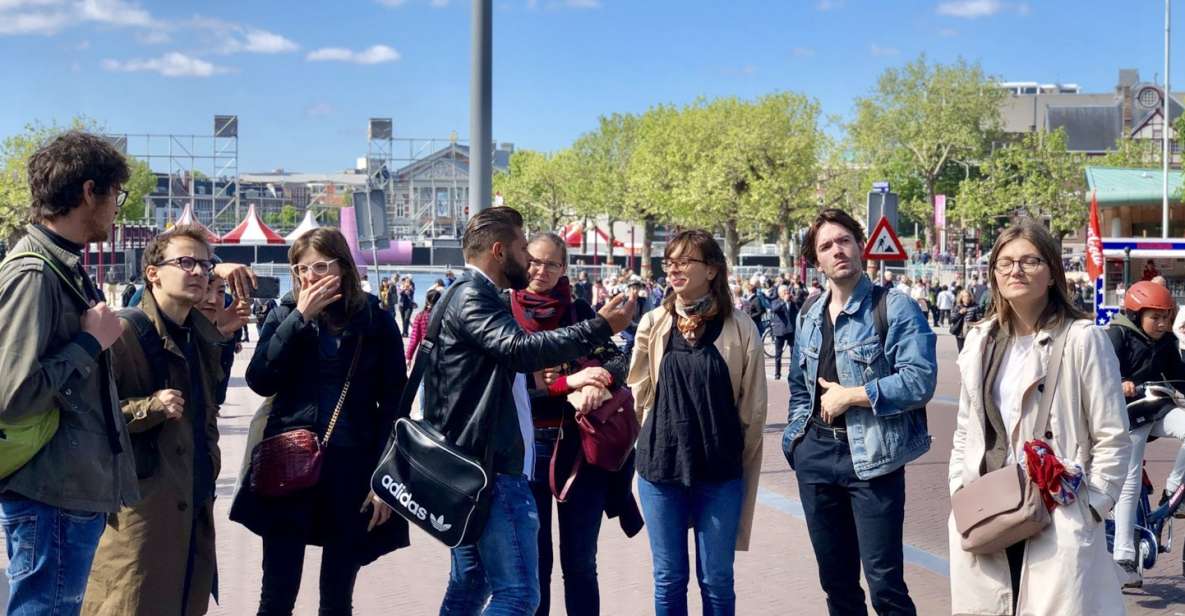
One of the best parts of an orientation walk is how it teaches you what to notice right away. You’ll see the Basilica of Saint Nicholas early, which acts like a visual anchor as the city’s old-world shapes close in around you.
Then you get the Weeping Tower. Even if you’re not studying architecture, this kind of stop trains your eye to spot the city’s distinctive vertical details and how Amsterdam’s historic structures sit in the street fabric.
Zeedijk and Ons’ Lieve Heer op Solder: street life plus odd history
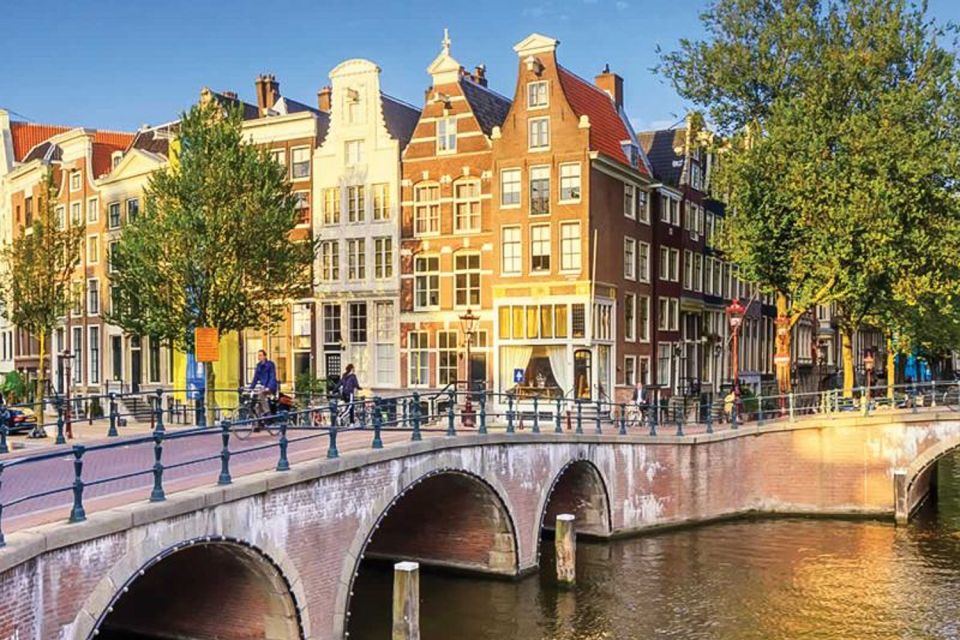
Zeedijk Street adds contrast. It’s the kind of place where you can feel the everyday rhythm of the city while still staying on track with the guide’s story.
Next comes Ons’ Lieve Heer op Solder (Our Lord in the Attic Museum). An attic museum can sound like a random detour, but on a first visit it’s a smart kind of detour: it signals that Amsterdam’s history isn’t just on big squares. It’s also tucked into smaller spaces where the city’s past shows up in unusual ways.
Practical tip: this is a good moment to ask the guide about what you should see later in your trip. Because the tour is designed for orientation, the guide can help you choose priorities without you needing to figure it all out alone.
Oude Kerk and Nieuwmarkt: old stone and a living neighborhood feel
Oude Kerk is next up, and it gives you another “historic center” anchor while you’re still learning how neighborhoods connect. This is the part of the walk where you’ll start to feel the route stitching together, instead of bouncing between disconnected sights.
Then you land at Nieuwmarkt Square. Nieuwmarkt matters on an orientation walk because it’s where the energy of the city becomes easier to sense in real time. You’re also set up for nearby contrasts—commercial streets, daily life, and the shifting feel of Amsterdam as you move outward.
The De Waag area and Het Trippenhuis: merchant-era landmarks you can picture
At De Waag Restaurant, the guide keeps the focus on why these places show up where they do. You’re not just looking at a building—you’re learning how Amsterdam’s mercantile history shaped the streets you walk.
Het Trippenhuis works the same way. On a first visit, I find it helpful when a guide points out “street logic,” like why certain corners feel important and how old wealth and trade left footprints beyond museums.
If you like architecture and street details, this middle stretch is where the tour starts paying off. You’ll likely catch yourself looking for more symbolism in doorways, facades, and the way buildings face the canals and squares.
You can also read our reviews of more guided tours in Amsterdam



Jewish Quarter: atmosphere changes, and the guide keeps it grounded
The Jewish Quarter stop gives you a different emotional texture. You’re still in the central zone, but the streets feel less like a single sightseeing loop and more like a neighborhood you could wander through on a free afternoon.
You’ll also pass by Museum Rembrandthuis. Even without going inside on this tour, it helps you connect Rembrandt-related sights with where they sit in the city map. If you plan museums later, having the guide show you how these sites relate to each other saves time.
Dutch National Opera & Ballet and Zuiderkerk: landmarks that also help you navigate
You’ll see Dutch National Opera & Ballet and Zuiderkerk as you continue. On an orientation walk, these stops are more than highlights: they help you understand the geography of Amsterdam’s center so you can reroute yourself later.
This also matters because Amsterdam changes every few blocks. The guide’s job here is to keep you from getting lost in your own excitement. You get a sense of direction, not just a list of famous names.
Dam Square: Royal Palace and Nieuwe Kirk with context
Dam Square is the big draw, but what makes it worth doing on a guided walk is how the guide frames it. You’ll see the Royal Palace and Nieuwe Kirk, and the commentary helps connect these monuments to Amsterdam’s evolution from the Amstel River in the 12th century.
In practice, this is where I’d say the tour gives you the most “head-and-heels” payoff. You can stand in the square, look around, and actually understand why this place became a magnet for power, commerce, and movement.
If you’re the kind of person who wants photos, take a couple at Dam Square. But don’t stay parked there for too long—your best photos and best learning come when you keep walking and let the city keep talking.
From Prinsengracht to Westerkerk: Canal Belt views with meaning
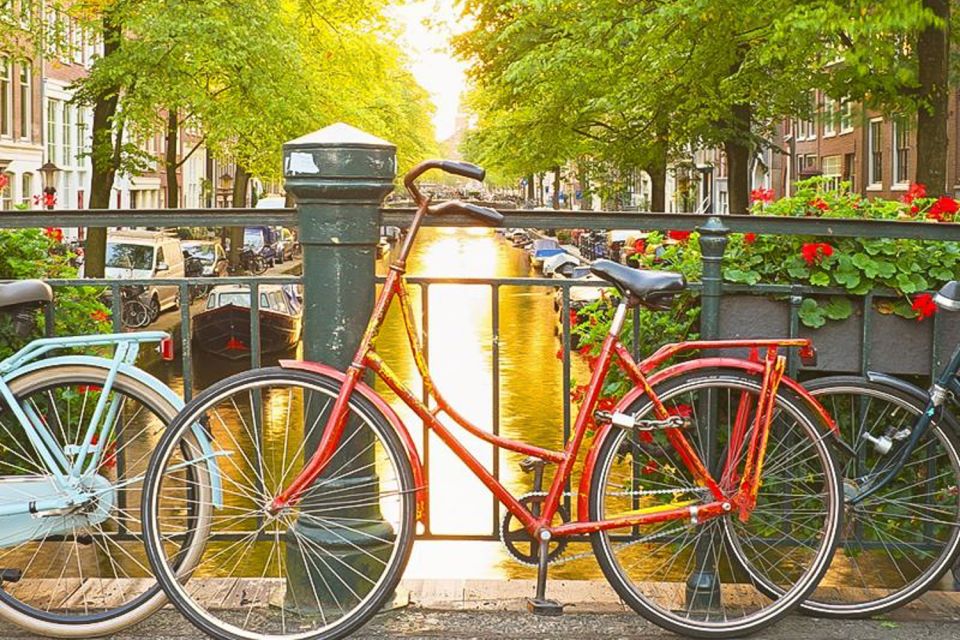
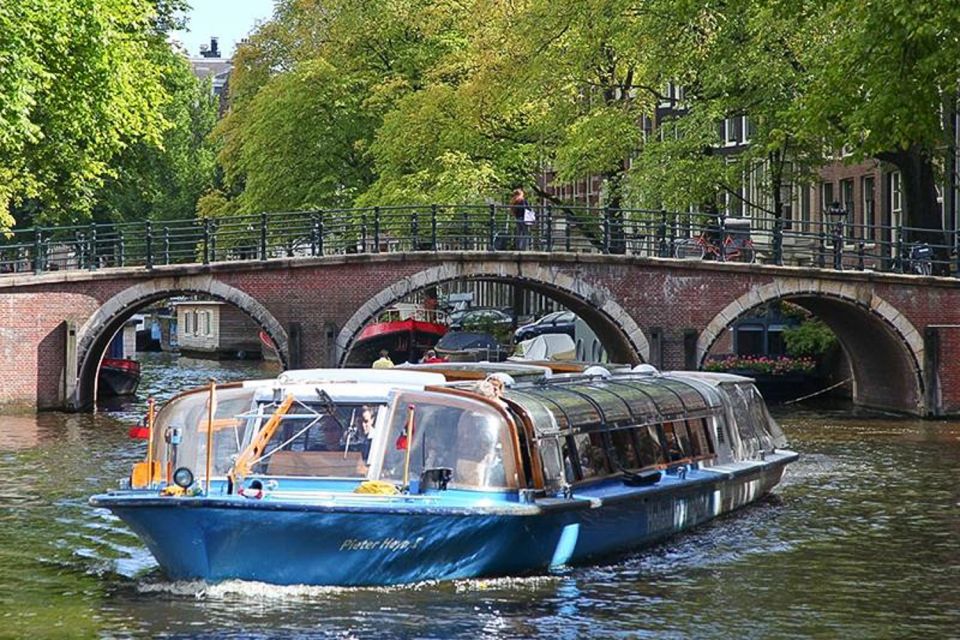
Now you transition into the Canal Belt energy. You’ll move along Prinsengracht, and the guide ties the canals to the city’s mercantile history—so the water stops being just pretty scenery.
Westerkerk brings another landmark moment. Like the earlier church stops, it helps you understand scale and sightlines: where big structures rise, and how your walking route is shaped by canals and bridges.
Practical note: canal routes can be windy and colder than the streets behind you. Bring weather-appropriate layers, because a 2.5-hour walk adds up quickly when the breeze hits.
Magere Brug and Blauwbrug: bridges as photo targets and orientation tools
The route includes Magere Brug and Blauwbrug. These are the kinds of places where you can tell Amsterdam is a “bridge city,” not just a canal city.
What I like about adding bridge moments is that they give you crisp visual waypoints. Later, when you’re walking on your own, you’ll remember these as reference points, not just images from your camera roll.
Try to time your photos with the guide’s prompts. They often help you avoid standing in the worst crowds or angles, without making you feel rushed.
Begijnhof: the calm shock of an inner court
Begijnhof is the kind of stop you didn’t know you needed until you’re there. It’s described as one of the oldest inner courts of the city, and that already hints at the mood shift waiting for you.
The value on a guided walk is that you don’t just notice a quieter space—you understand why the city protects pockets like this. The guide also connects this area to the idea of hidden, private courtyards and tree-lined squares that break up the busy center.
This is also a good reset moment. Take a slow breath here, then keep moving with fresh attention for the next neighborhood texture change.
Begijnhof to the edges: Chinatown and artist squats along the way
The tour heads into Chinatown and also includes a street full of artists’ squats. That combination may sound random, but it’s actually smart for first-time orientation.
You’ll see that Amsterdam isn’t one single “museum mode.” It’s historic, sure, but it also keeps making space for new kinds of communities—different street energy, different styles of life, and different reasons people choose where to set up.
Nieuwmarkt Square connects well to this part of the walk, too. If you love street scenes, this stretch is where you’ll feel like the guide is showing you what real daily life looks like near the famous landmarks.
Amsterdam Museum area and Prinsengracht: wrapping the map in your head
You’ll pass by Amsterdam Museum as well, which helps you see the city’s cultural timeline beyond just churches and palaces. Even if you don’t go inside on the same day, the guide’s route turns the museum area into a navigational clue.
Then you swing back through canal-side streets like Prinsengracht again, which helps your brain lock in the shape of the center. Repeated exposure on a short walk is surprisingly effective for memory—especially in a city with lots of similar-looking canal facades.
Westerkerk and Dam Square again in your mental map: why the order matters
The order of stops is part of what makes this feel like orientation rather than sightseeing theater. You see key landmarks, then you move into the neighborhoods and back to the big squares in a way that helps you understand how Amsterdam’s pieces connect.
The guide also points out the leaning merchant houses of Amsterdam along the way. That single detail becomes a mental marker: you’ll remember the “unusual architecture” aspect when you start comparing neighborhoods later in your trip.
Watching the guide work: Monique’s style (and what you should look for)
One thing I love when a walking tour delivers value is how the guide handles questions. In one experience with Monique, she answered questions across art, history, architecture, and food while staying attentive and friendly.
That matters because your interests aren’t one topic. You’ll likely wonder what to do next, what fits your time, and what you should skip. A guide who can connect what you’re seeing to practical choices turns a tour like this into a planning tool, not just a stroll.
So when you’re on the walk, don’t be shy about asking. If there’s a topic you care about—buildings, city planning, what to eat—this tour format is built for that back-and-forth.
Walking logistics and timing: how to stay comfortable in 2.5 hours
This is a 2.5-hour walking tour, so comfort is the whole game. You should wear comfortable, weather-appropriate clothes, and plan for steady foot time even though there are photo stops.
Avoid bringing luggage or large bags. You’ll be happier if you travel light and keep your hands free for photos and quick stops.
Also, be ready for a route that can include a lot of corners, canal edges, and small street segments. It’s not a sit-and-watch tour, so build in that energy.
Price and value: why $61 can feel like a bargain if you use it right
At $61 per person for 2.5 hours with a private guide, the value comes from the planning help. You’re not just paying for seeing things—you’re paying for someone to connect the city’s mercantile story, landmarks, and neighborhoods into a route you can remember.
This price becomes especially reasonable if you’re new to Amsterdam and want a fast start. One good orientation tour can reduce decision fatigue later, because you’ll know what each area feels like and what kind of vibe you want to return to.
One more point: the group size is kept compact—this experience is described as small, and the tour is offered as private or semi-private (with semi-private capped at a maximum of 8 guests and a minimum of 2 for it to run). That smaller feel is part of what keeps the guide’s attention helpful instead of rushed.
Who this tour suits best (and who should rethink)
This tour is a strong match if you:
- Want to get your bearings quickly in the historic center and Canal Belt
- Like architecture and city stories tied to places you can point to
- Want a local’s tips for how to spend your remaining time
It may not be your best fit if:
- You need wheelchair accessibility on your tour day (this tour is marked not suitable for wheelchair users, though wheelchair-accessible tours are said to be available by request)
- You dislike walking or have limited mobility
- You’re hoping for a long museum deep dive (this is about orientation, not extended indoor time)
Should you book this Amsterdam City Center Guided Walking Tour?
If you want an efficient first day that helps you navigate and understand Amsterdam’s famous center, I’d book it. The mix of Dam Square monuments, canal-belt walking, market squares, and the quieter inner-court feel makes it more useful than a generic checklist tour.
Book it especially if you like asking questions. With a guide who can answer across art, history, architecture, and even what to eat, you’ll leave with more than memories—you’ll leave with a plan.
FAQ
Where do I meet the guide?
You meet your guide outside the entrance of St Nicholas Church on the opposite side of Central Station.
How long is the tour?
The tour lasts about 2.5 hours.
What’s included in the price?
A private guide is included. Food and drinks are not included, and gratuity is optional.
What language is the guide available in?
Guides are available in Portuguese, Spanish, Dutch, French, English, and Italian.
What should I bring?
Bring a passport or ID card, and wear comfortable, weather-appropriate clothes.
Can I bring luggage or large bags?
No. Luggage or large bags are not allowed.
Is this tour wheelchair accessible?
This tour is marked not suitable for wheelchair users, but wheelchair-accessible tours are only available by request.