REVIEW · AMSTERDAM
Diamond Museum Amsterdam Admission Ticket
Book on Viator →Operated by Royal Coster Diamonds · Bookable on Viator
Royal jewels and real process, in one small space. I like the way Diamond Museum Amsterdam tells the diamond story from formation to finished jewelry, with royal crowns as the big payoff and live craft-style moments like watching stone polishers at work. One thing to weigh: the museum is compact, and some audio-visual setups (and certain devices) have been reported as glitchy.
Located on Museumplein—between the Rijksmuseum and the Van Gogh Museum—this is an easy add-on when you’re already in the center of the museum district. You’re looking at about 1 to 2 hours, daily from 9am to 5pm, so it fits well if you want something that’s more specific than the bigger art halls. The ticket price is $72 (entrance only), so it’s best when you genuinely enjoy gems, jewelry-making, or the history of how Amsterdam became a diamond hub.
In This Review
- Key things I’d circle before you go
- What Diamond Museum Amsterdam is really about
- Your 1–2 hour route through the museum
- The short film that sets the tone
- Galleries of diamonds, valuation, and “what makes them special”
- The “smallest cut” and the wow-factor moments
- Royal crowns and the Amsterdam diamond story
- Watching stone polishers and goldsmiths at work
- The diamond heist game and interactive energy
- Small museum realities: what can disappoint
- Price and value: is $72 a good deal?
- Where to fit it on your Museumplein day
- Should you book the Diamond Museum Amsterdam admission ticket?
- FAQ
- How long does the Diamond Museum Amsterdam visit take?
- Where is the Diamond Museum Amsterdam located?
- What is the price of the admission ticket?
- What are the museum opening hours?
- Is the entrance ticket included in the price?
- Are food and drinks included?
- Is hotel pickup and drop-off included?
- Is confirmation provided after booking?
- Can I get a full refund if I cancel?
- FAQ
- Is the museum near public transportation?
- Can most travelers participate in the experience?
- What should I bring if I’m worried about audio devices?
- Is there any interactive element?
- Do they show diamond polishing and goldsmith work?
Key things I’d circle before you go
- You start with origins: diamond formation is framed as happening hundreds of kilometers underground over billions of years
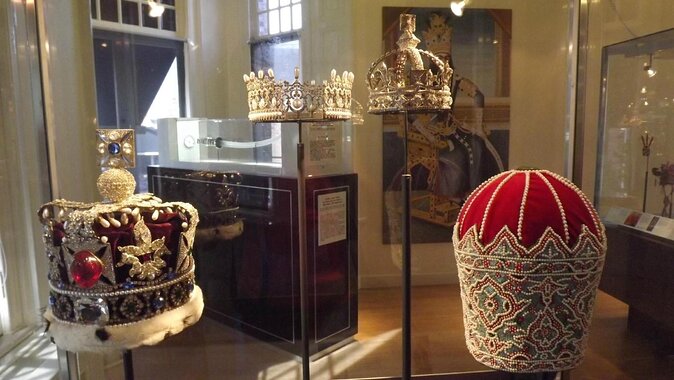
- Royal crowns are a headline attraction: the display focuses on famous jewel history tied to Amsterdam cutting
- Coster Diamonds names show up: the Cullinan and the Koh-i-Noor are highlighted as diamonds linked to Amsterdam polishers
- You’ll see craft in motion: watching stone polishing and goldsmith work is part of the experience flow
- A game adds energy: there’s a diamond heist-style activity some visitors really enjoyed
- The visit may feel short or crowded: the building is small, and a few exhibits use replicas or screens
What Diamond Museum Amsterdam is really about
This isn’t a long museum marathon. Diamond Museum Amsterdam is built around a single theme: how diamonds go from geology to artistry to status symbols. The story is told in a way that mixes science basics (how diamonds form) with the practical world of cutting, valuing, and setting stones.
I like that the museum gives you a clear narrative arc. You get the “deep Earth” idea—diamonds forming about 200 kilometers below the surface—then you move toward what happens after that: how people judge quality, how diamonds are categorized, and why some stones end up reserved for royal jewelry and landmark pieces.
The other reason this works is that the setting isn’t abstract. You’re not just looking at diamonds behind glass all day; the experience includes moments showing the work behind the sparkle—polishing and goldsmith skills used to create finished, high-carat jewelry.
You can also read our reviews of more tours and experiences in Amsterdam



Your 1–2 hour route through the museum
Most tickets are designed for a relaxed walk-through, and the museum content feels paced for that. Plan on about 1 to 2 hours if you stop for photos and read the key panels. If you skim, you can likely do it faster; if you slow down for craft details, you might stretch it.
A typical flow goes like this:
The short film that sets the tone
You can expect a brief film at the start. It’s meant to orient you quickly: where diamonds come from, how they’re assessed, and why Amsterdam cutters became so influential. This works best if you like getting the big picture first and then confirming it in the galleries.
Galleries of diamonds, valuation, and “what makes them special”
After the film, you’ll move through displays that explain what makes a diamond valuable. The museum’s messaging is structured around things like:
- origins and formation
- different types of diamonds
- attributes used in valuation
This is one of the most useful parts for you, because it turns the word diamond from a simple purchase category into something more like a system. You’ll walk away with more sense of what to look for—especially if you ever browse jewelry stores in Europe and want to understand the language.
The “smallest cut” and the wow-factor moments
There’s a display of the smallest diamond ever cut, plus artifacts that emphasize workmanship. These are the pieces that tend to create that “wait, really?” reaction—because tiny details can take massive effort to perfect.
And yes, there’s also a diamond-encrusted art crossover: the museum features a diamond-studded version of van Gogh’s Starry Starry Night. If you’re the type who likes how museums connect famous names to unusual materials, this kind of exhibit is a strong stop.
You can also read our reviews of more museum experiences in Amsterdam






Royal crowns and the Amsterdam diamond story
If you only do one part slowly, make it the crown-focused section. This is where the museum gets its most theatrical power, and it’s also the part that tends to earn the highest satisfaction.
The crown displays are framed as more than decoration. They’re used to explain why diamonds became a tool for power and prestige—and why certain European cities, including Amsterdam, built reputations around diamond cutting and polishing.
You’ll see direct references to famous historic stones connected to Amsterdam cutters—especially Coster Diamonds. Two of the headline diamonds mentioned are:
- Cullinan, described as the largest diamond ever found
- Koh-i-Noor, described as the mountain of light
Even if you’re not a hardcore jewelry fan, those names give you a shortcut to understanding why Amsterdam mattered. This is the museum’s way of linking the science and craft to famous results.
Watching stone polishers and goldsmiths at work
This is one of the best reasons to choose this ticket instead of skipping it.
The museum includes viewing opportunities for professional craft work. Expect to see stone polishers and goldsmiths at work creating modern, high-carat pieces. The value here isn’t only the spectacle. It’s that you’re seeing how the “final sparkle” is the outcome of deliberate steps—work that’s hard to picture from a store window.
I also like that the museum doesn’t treat polishing as magic. It frames it as skill plus process: you can understand why cutting and polishing affect how light travels through the stone. If you’ve ever wondered why two diamonds can look different even when they’re both described as high quality, this portion helps you connect the dots.
The diamond heist game and interactive energy
Some museums feel like lectures with lighting. This one adds play.
There’s a diamond heist game on top of the museum experience that visitors have described as genuinely fun. It’s not the same as a full guided workshop, but it gives you a reason to stay engaged between display rooms—especially if you’re visiting with kids or anyone who doesn’t love reading every label.
The museum’s interactive vibe also includes craft-focused add-ons in nearby spaces. One review notes access to a diamond factory two doors down, connected to diamond polishing. I can’t promise you’ll always get that same extra pass with your ticket, but it’s worth watching for what’s currently offered on the day you go.
Small museum realities: what can disappoint
I’ll be honest so you don’t waste your time.
Several issues show up in feedback, and they point to the same general theme: this is a compact experience, and a few parts are more functional than polished (literally, in one case).
Here are the main considerations:
- Limited space: the building can feel small and cramped, which may be uncomfortable if you need more room to move
- Audio-visual tech problems: some visitors report broken listening devices and outdated audio-visual content
- Replicas vs originals: parts of the display use reproductions or glass imitations rather than all real artifacts
- Not a live cutting show: if you expect an in-depth live demonstration of cutting or setting, you may find it’s presented through film and explanations instead
Also, one point that comes up: the crown collection can steal the show, while other parts might feel less exciting if you’re hunting for lots of major stones in every room.
Price and value: is $72 a good deal?
At $72, this ticket isn’t a bargain. It’s more like a “special interest” purchase. So the real question is what you’ll take away.
For the best value, you should be someone who enjoys at least one of these:
- learning how diamonds are valued and categorized
- watching craft work like polishing and goldsmithing
- being interested in Amsterdam’s role in diamond cutting history
- wanting a story-driven museum that’s more focused than general art museums
If that’s you, the 1–2 hour format can feel efficient. You’re not paying for a whole day of content you won’t absorb. And the combination of crown displays plus craft demonstrations is a strong pairing.
If your main goal is simply seeing the biggest and rarest diamonds, be aware that some exhibits may use replicas, and the overall collection can feel limited in size.
My practical take: this is best as a smart add-on during a Museumplein day, not as the only plan in Amsterdam unless you’re strongly into jewelry and diamonds.
Where to fit it on your Museumplein day
Because it sits right between the Rijksmuseum and the Van Gogh Museum, you can build your day around it without transit headaches. The museum runs daily from 9am to 5pm, and it’s near public transportation, which helps if you’re juggling timed entry tickets elsewhere.
Here’s an easy way to plan:
- Visit the bigger art museums first, when you’re still fresh
- Use Diamond Museum Amsterdam as a focused change of pace
- Then end with a stroll around Museumplein before dinner
That sequence works well because the diamond museum is specific. After hours of broader art, you’ll appreciate the tighter theme—and the crown section becomes a clean “final act” moment.
Should you book the Diamond Museum Amsterdam admission ticket?
Book it if you want a compact, story-led museum about diamonds, and you’ll enjoy the craft side (polishing and goldsmith work) plus the royal crowns emphasis. It’s a great fit for couples, jewelry-curious adults, and families who like games and short films in museum settings.
Skip or lower your expectations if you’re looking for hours of hands-on jewelry making, or if you depend heavily on audio devices and prefer fully tech-reliable exhibits. Also, if $72 feels steep for you, treat it as a “maybe once” experience rather than something you’ll want to repeat.
FAQ
How long does the Diamond Museum Amsterdam visit take?
The experience runs about 1 to 2 hours.
Where is the Diamond Museum Amsterdam located?
It’s located on Museum Square (Museumplein), between the Rijksmuseum and the Van Gogh Museum.
What is the price of the admission ticket?
The price is listed as $72.
What are the museum opening hours?
The museum is open daily from 9am to 5pm, including weekends and holidays.
Is the entrance ticket included in the price?
Yes. The entrance ticket is included.
Are food and drinks included?
No. Food and drinks are not included.
Is hotel pickup and drop-off included?
No. Hotel pickup and drop-off are not included.
Is confirmation provided after booking?
Yes. Confirmation is received at the time of booking.
Can I get a full refund if I cancel?
Yes, free cancellation is available up to 24 hours in advance for a full refund.
FAQ
Is the museum near public transportation?
Yes, it’s near public transportation.
Can most travelers participate in the experience?
Most travelers can participate.
What should I bring if I’m worried about audio devices?
The info doesn’t specify what devices you’ll use, so if audio matters to you, plan extra time in case something doesn’t work smoothly on the day.
Is there any interactive element?
There is a diamond heist game as part of the experience.
Do they show diamond polishing and goldsmith work?
Yes. The experience includes watching stone polishers and goldsmiths at work.