Amsterdam has a second face. This 2.5-hour walk is a practical way to get your bearings and then slip into less-touristy streets of central Amsterdam, led in English by a local guide. Expect a small group (up to 10) and a route that mixes major landmarks with side streets you’d miss alone.
I really like how the tour starts big and then gets intimate. You learn how Amsterdam grew into a trading powerhouse, including the area tied to the world’s first stock market, and you also slow down for places with real human stories, like Karthuizerhof, built in 1650 for widows. It’s history told in everyday language, not a lecture.
One catch: you’ll walk about 2.5 miles (4 km) over roughly 2.5 hours, so comfortable shoes matter. And the tour starts near Beursplein and ends around Elandsgracht, so plan your return transport ahead.
In This Review
- Key Things You’ll Notice on This Hidden Streets Walk
- Getting Your Bearings: Beursplein and Dam Square Without the Head-Scratching
- The Canal Ring Crossing That Explains Amsterdam’s Medieval Expansion
- Nine Streets: A Cozier Shopping Zone Away From the Loud Parts
- Jordaan’s Hidden Streets and Squares, Plus Real Stories in Courtyards
- The Church for the Poor: Why It’s Built Right Here
- Karthuizerhof (1650): Social Housing Before the Term Existed
- Anne Frank House: You’ll Pass It, Not Queue It
- Westerkerk and Merchant Amsterdam: Where Rembrandt Is Buried
- Guides Michael and Christian: Conversational Storytelling That Keeps Moving
- How Much Walking Is Involved (and What to Wear)
- Price and Value: Why $52.81 Can Feel Fair for This Route
- Who This Tour Is Best For (and Who Might Want Something Else)
- Should You Book This Hidden Streets Tour?
- FAQ
- How long is the tour?
- Where does the tour start and end?
- What walking distance should I expect?
- What’s the maximum group size?
- Is the tour offered in English?
- Are admissions required for the stops?
- What does the itinerary include?
- Are service animals allowed?
- Is cancellation free?
- What if the minimum number of travelers isn’t met?
Key Things You’ll Notice on This Hidden Streets Walk
- World’s first stock market, explained on the street so you understand Amsterdam’s rise fast
- Canal Ring crossing gives you the medieval city-growth picture, not just a pretty view
- Nine Streets and Jordaan detour shifts you away from the worst crowd lanes
- Karthuizerhof courtyard connects architecture to social housing history
- Westerkerk and Rembrandt’s burial add a strong ending note to your walk
Getting Your Bearings: Beursplein and Dam Square Without the Head-Scratching
The tour begins at Beursplein 1-3 (1012 JW). If you’re arriving from central stations, this is an easy “kickoff point” for making Amsterdam feel logical instead of chaotic. You start with origins and the city’s rise as a trading center, including the story connected to the world’s first stock market—an idea that sounds grand, but the guide makes it concrete by placing it in the city’s layout.
From there, you move into the central square area and get the background on why it became so important. The guide also points out the history of a major building that originally served as Amsterdam’s town hall. Even if you’ve seen photos of these sites, you’ll likely feel you finally understand how they fit into daily life and power in the city.
What makes this section work is the pacing. You’re not asked to memorize dates. You’re guided to notice cause-and-effect: trade leads to growth, growth reshapes streets, and streets change how people live.
You can also read our reviews of more tours and experiences in Amsterdam.
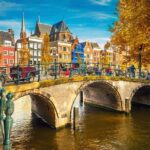


The Canal Ring Crossing That Explains Amsterdam’s Medieval Expansion
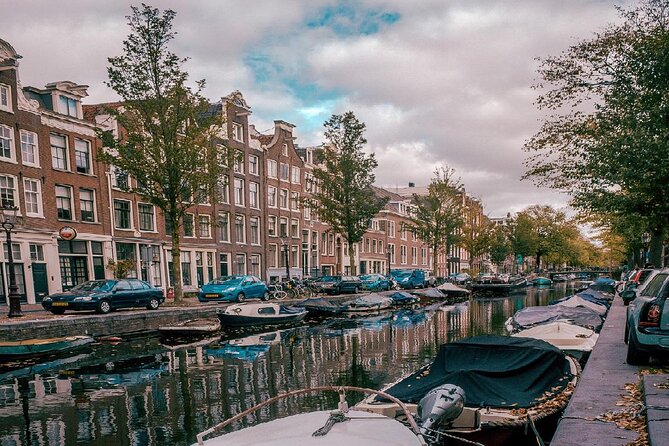
At around the one-hour mark, you cross the Canal Ring of Amsterdam and learn about the city’s extension during the medieval period. This is where Amsterdam stops being “a postcard” and starts behaving like a city plan.
The guide’s focus is on how the canal belt relates to expansion and development. You’re essentially walking a timeline in real space. You’ll see the canals you came for, but you’ll also get the logic behind why they were built and how they helped the city grow.
If you like architecture and city structure, this segment is a strong payoff. If you only want dramatic canal scenery and don’t care about planning history, you might still enjoy it, but it may feel a bit more story-heavy than you expected.
Nine Streets: A Cozier Shopping Zone Away From the Loud Parts
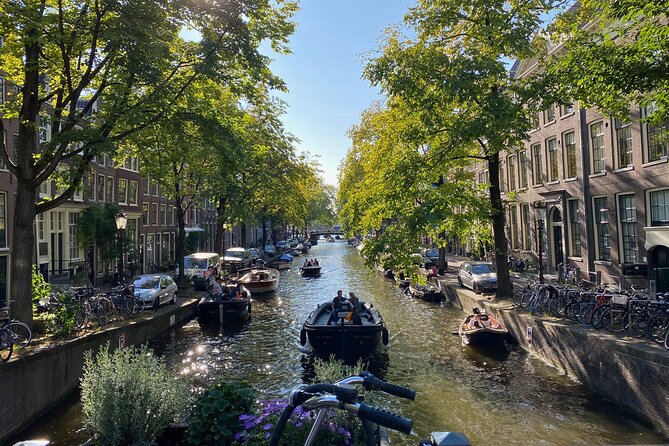
Next comes a shift from big landmarks to smaller streets. The tour brings you through the Nine Streets area, described as a cozy shopping zone away from the main tourist pressure. This matters because Amsterdam’s center can feel like you’re walking inside a human bottleneck.
Here, you get a different rhythm. The guide helps you spot what locals do with these lanes—shops, small cafés, and the kind of street life that isn’t built for tour buses. And yes, the route includes an antique market stop, which adds a fun “wander-and-look” element without turning the tour into dead time.
This is one of those moments where you can either move fast and keep your eyes open, or slow down and soak up details. Either way, it’s a good palate cleanser after central-square intensity.
Jordaan’s Hidden Streets and Squares, Plus Real Stories in Courtyards
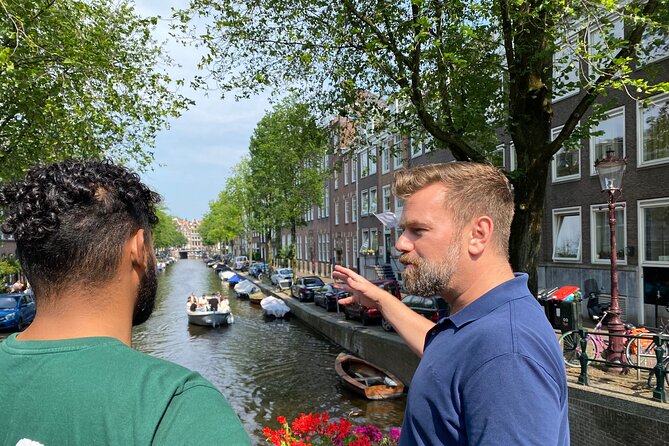
The Jordaan segment is where the tour earns its name. You spend about 1 hour 20 minutes exploring hidden streets and squares and learning why this neighborhood remained more “authentic” compared to the busiest parts of the city center.
You’ll feel the difference quickly: side alleys open into small squares, courtyards appear where you don’t expect them, and buildings reveal layers of Amsterdam living. The guide also connects what you’re seeing to how the neighborhood developed and endured.
The Church for the Poor: Why It’s Built Right Here
One stop is a church for the poor. The tour explains why it was constructed exactly at this point. You’re not just reading a sign; you’re learning how charity, religion, and city planning intersected in real neighborhoods.
If you’re sensitive to how history includes hardship, this can land emotionally. The key is that it’s integrated into the walk instead of treated like a separate, heavy detour.



Karthuizerhof (1650): Social Housing Before the Term Existed
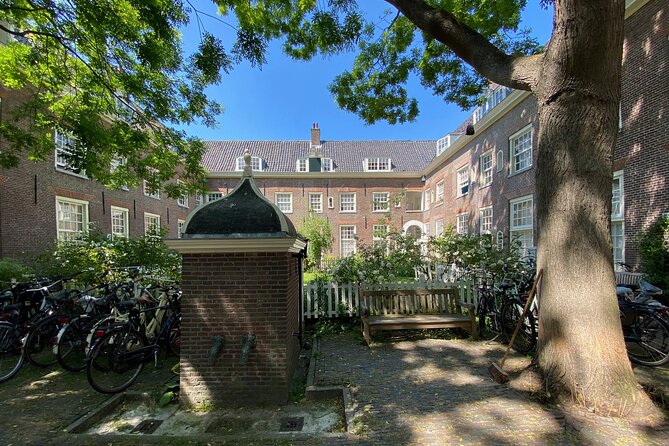
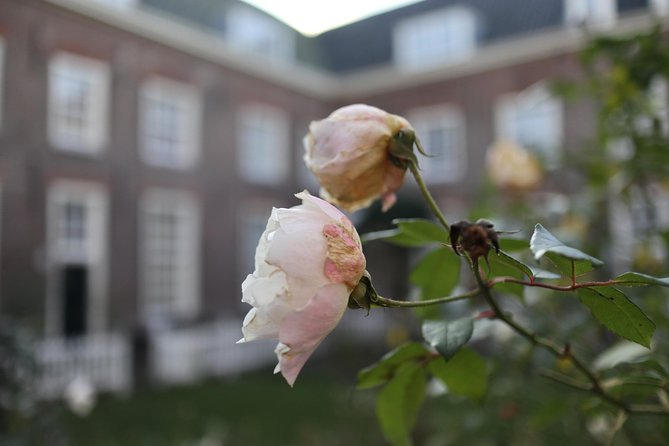
Then you reach Karthuizerhof, a courtyard built in 1650 for widows. The tour frames it as one of the first social housing projects in the world. That’s the kind of statement that can sound too big until you stand in a courtyard like this and realize it was designed for daily life, not grand symbolism.
This is a short stop—about 10 minutes—but it’s one of the most memorable points on the route because it ties architecture to a specific group of people and a specific purpose. You’ll likely leave thinking about Amsterdam differently: not just as wealth and canals, but as a city that tried to manage social needs.
Anne Frank House: You’ll Pass It, Not Queue It
During the Jordaan stroll, you pass by the Anne Frank house. The tour is a walk-through on the route, not an entry included in the time listed. Plan your day accordingly if you want to go inside—this tour won’t replace that.
Even without entering, the guide’s approach helps you understand why the site has such gravity and how it fits into the surrounding neighborhood story.
Westerkerk and Merchant Amsterdam: Where Rembrandt Is Buried
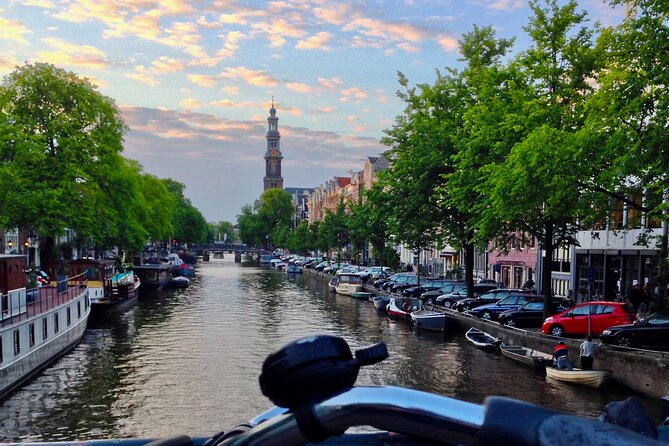
The ending highlight is the Westerkerk. The guide explains it as a marvel of a church built by the rich merchants of Amsterdam. And then comes the detail that many people remember: Rembrandt was buried here.
This works as a satisfying finale because it wraps earlier themes—trade, wealth, power, and city growth—into one strong landmark. You finish with a sense of how Amsterdam’s prosperity turned into stone and skyline.
You’ll end the walk around Elandsgracht. If you’re hungry or thirsty after 2.5 hours, you’ll be in a good area to keep moving on foot.
Guides Michael and Christian: Conversational Storytelling That Keeps Moving
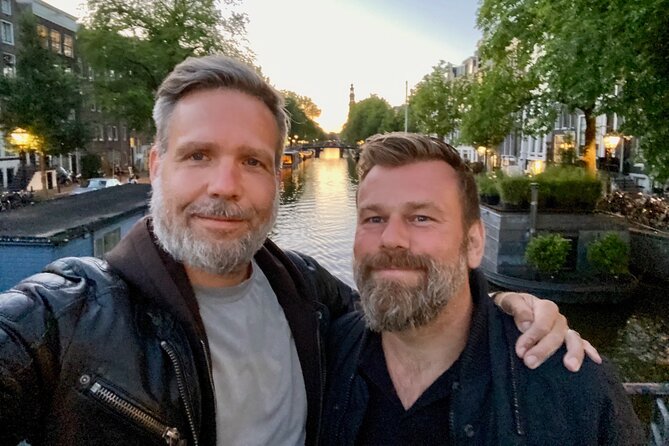
What consistently hits from the tour experience is the tone: informal, conversational, and packed with specific details. In English groups, guides like Michael and Christian have led walks with a calm, friendly style that makes you feel like you’re chatting while learning.
Michael, in particular, is described as having a calm presence and answering lots of questions, including what it’s like living and working in Amsterdam. Christian is praised for taking people to areas not mentioned in guidebooks and for being flexible if questions pulled the conversation off the planned script.
That flexibility is more than personality. It means if you’re curious—about canals, architecture, neighborhood life, or why something looks the way it does—you’re not left stuck guessing. The guide adjusts in real time, without turning the tour into chaos.
And you won’t feel rushed. The pacing matters on walking tours, because your brain needs a chance to connect the story to the street scene.
How Much Walking Is Involved (and What to Wear)
The tour is about 2 hours 30 minutes total, and it covers around 2.5 miles / 4 km on foot. The listing says most people can participate, but it’s still a steady walking pace for half a day.
My practical advice is simple:
- Wear shoes that handle brick and uneven sidewalks.
- Bring water if you’re touring in warm weather.
- If you tire easily, plan to slow down right after the busiest central-square area.
Also remember the route end point is different from the start. Even if you’re staying central, you might want to map your return before you go, just so you’re not sprinting for trams at the end.
Price and Value: Why $52.81 Can Feel Fair for This Route
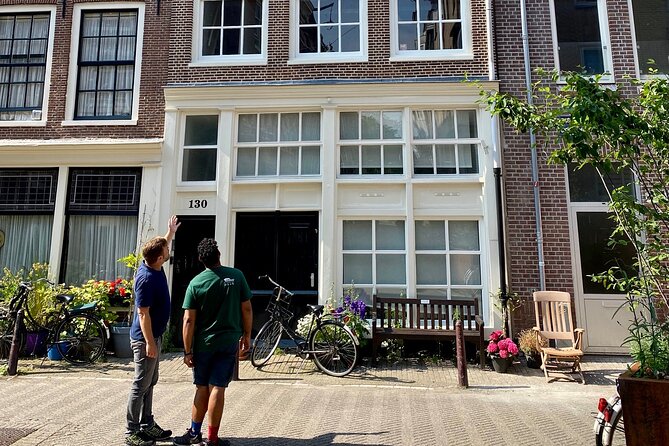
At $52.81 per person, this isn’t a bargain-by-default kind of tour. The value comes from three things you actually use:
- Small group size (max 10) means you’re not lost in a crowd.
- Guided context turns landmarks into meaning, especially in the origins/stock-market segment and the canal-ring expansion explanation.
- Several stops are listed as admission ticket free, so you’re not constantly paying extra during the walk.
You also get a mobile ticket and a group-discount setup, which can matter if you’re going with friends. If you’re planning ahead, note the tour is commonly booked about 65 days in advance. That doesn’t mean you can’t find availability, but it does suggest it’s a popular way to see Amsterdam in a single focused outing.
Who This Tour Is Best For (and Who Might Want Something Else)
You’ll likely love this tour if you’re:
- In Amsterdam for the first time and want quick orientation
- Interested in canals and architecture but also want the neighborhood human stories
- Traveling with friends and want a route that mixes big sights and quiet streets
- The type who enjoys asking questions and getting real answers on the spot
You might want a different option if you:
- Want mostly museum-style time and indoor entry stops
- Hate walking (even short-to-medium distances can feel long if you’re not used to city foot travel)
- Prefer a purely self-guided day, where you control every stop with no guide-led narrative
This walk sits in a good middle ground: it gives you structure, but it still lets streets and courtyards do the talking.
Should You Book This Hidden Streets Tour?
Yes, I’d book it if you want Amsterdam to feel navigable and personal, not just photographed. The best reason is the mix: origins and power in the center, then a move into the Jordaan’s quieter streets and courtyards, ending at Westerkerk with the Rembrandt connection.
If you’re okay with 2.5 hours of walking and you like stories tied to the exact spot you’re standing in, this tour is a smart use of time—especially with a small group cap of 10. It’s one of those experiences that makes the city click, and it sets you up to explore on your own afterward with better instincts for where to go.
FAQ
How long is the tour?
It lasts about 2 hours 30 minutes (approx.).
Where does the tour start and end?
It starts at Beursplein 1-3, 1012 JW Amsterdam, Netherlands and ends at Elandsgracht, Amsterdam.
What walking distance should I expect?
You should be able to walk about 2.5 miles / 4 km over roughly 2.5 hours.
What’s the maximum group size?
The tour has a maximum of 10 travelers.
Is the tour offered in English?
Yes, it is offered in English.
Are admissions required for the stops?
The tour details list several stops as Admission Ticket Free, so you usually won’t need extra entry fees for those parts. (The walking tour does still include major sights where you may only view from outside.)
What does the itinerary include?
You’ll cover Amsterdam’s origins and the area tied to the world’s first stock market, the central square and a town-hall building, the Canal Ring, the Nine Streets shopping area, the Jordaan neighborhood with hidden streets and squares, Karthuizerhof courtyard, a pass-by of the Anne Frank house, and the Westerkerk church with the Rembrandt burial connection.
Are service animals allowed?
Yes, service animals are allowed.
Is cancellation free?
Yes. You can cancel for free up to 24 hours in advance for a full refund.
What if the minimum number of travelers isn’t met?
If the tour is canceled because the minimum isn’t met, you’ll be offered another date or a full refund.