REVIEW · AMSTERDAM
Amsterdam: Self-Guided Food Tour in De Pijp Neighbourhood
Book on GetYourGuide →Operated by Who Is Amsterdam Tours · Bookable on GetYourGuide
Amsterdam’s best food mission is self-paced.
This De Pijp route is interesting because it’s built around family-owned stops and a simple PDF map so you can eat first, wander second, and keep control of your timing. You begin at FEBO on Ferdinand Bolstraat, then work your way through Dutch classics and international snacks with directions to each spot.
I also like that you get discounts and tastings at 7 of 8 locations, so the money goes farther than a random snack crawl. The main drawback is real-life logistics: not every stop is open every day, and missing/closed spots can shrink the number of bites you actually get—so your plan needs a little wiggle room.
In This Review
- Key highlights that make this food crawl worth it
- De Pijp street food: why this route feels more local than a checklist
- Money math: what you pay and what you actually eat
- Getting started at FEBO: the fast-track way to begin
- Stop-by-stop: what to expect from each bite
- 1) Traditional Dutch croquette to kick things off
- 2) Suriname pom: chicken, root veg, and hot sauce
- 3) Israeli bite set with smoked beef brisket and chicken roulade
- 4) Fish stall: fresh Dutch herring and kibbeling
- 5) Poffertjes: tiny pancakes that bubble
- 6) Stroopwafel from a maker with 45+ years of history
- 7) Takoyaki balls, Osaka style, paired with ramen expertise
- 8) Patatje Oorlog: hand-cut fries with peanut sauce, mayo, and onions
- Timing reality: closures, missing stops, and how to protect your value
- Vegetarian needs and the limits you should know before booking
- Navigation and what to bring so discounts actually work
- Is this worth it for you? Best-fit traveler types
- Should you book this Amsterdam street food self-guided tour?
- FAQ
- Where does the self-guided tour start?
- How long is the tour experience?
- What’s included in the price?
- Do I get food tastings included, or do I pay for food?
- Is the tour good for vegetarians?
- Is it suitable for gluten intolerance?
- How do I get the discounts and special tastings?
- Does the tour run in bad weather?
Key highlights that make this food crawl worth it
- FEBO on Ferdinand Bolstraat as a clear starting pin so you’re not hunting in the first five minutes
- Albert Cuyp Market included, with the feel of Europe’s biggest outdoor day market
- 7 discounts + tastings out of 8 stops, which helps you turn a small budget into a big bite list
- De Pijp mix of countries in one route (Dutch, Suriname, Israel, and even Osaka-style takoyaki)
- Good vegetarian coverage at many stops, though it’s not vegan-friendly
- Share-to-stretch strategy works well because you can get full fast
De Pijp street food: why this route feels more local than a checklist
De Pijp is where Amsterdam shops, markets, and food stalls stop performing for tourists and start serving regular people. This self-guided tour leans into that. Instead of waiting around for a group, you follow a PDF with turn-by-turn help and Google Map links, then show up at each family business for your next bite.
The practical win is the mix. You’re not stuck on only one style of food. You’ll hit classic Dutch street fare (like croquettes, poffertjes, and stroopwafel), but you’ll also taste foods tied to Suriname, Israel, and Japanese street snacks. That matters because Amsterdam’s food story isn’t one single cuisine—it’s a city built from migrations, markets, and neighborhood favorites.
You’ll also get a free 3-day Amsterdam itinerary and restaurant recommendations. I like this because it saves you time once the tour ends and you still want plans for the rest of your days.
You can also read our reviews of more food & drink experiences in Amsterdam


Money math: what you pay and what you actually eat
The booking price is listed as $15 per group up to 1. That’s the fee for the self-guided experience, the PDF route, and the promise of discounted tastings at most stops—not for unlimited food.
The important number is food cost: the total cost of food is around 20 euros per person. When I evaluate value, I think about how many chances you get to try different specialties. With 6 to 8 stops and exclusive deals at 7 locations, you’re buying options. If you only end up reaching a smaller set of locations due to closures, your value shrinks.
Also note a detail that affects your budget: food tastings and drinks are listed as not included. So expect this to be a “you’ll buy some food, and some places will offer smaller tastes or discounts” kind of experience, not a fully hosted tasting menu.
Getting started at FEBO: the fast-track way to begin
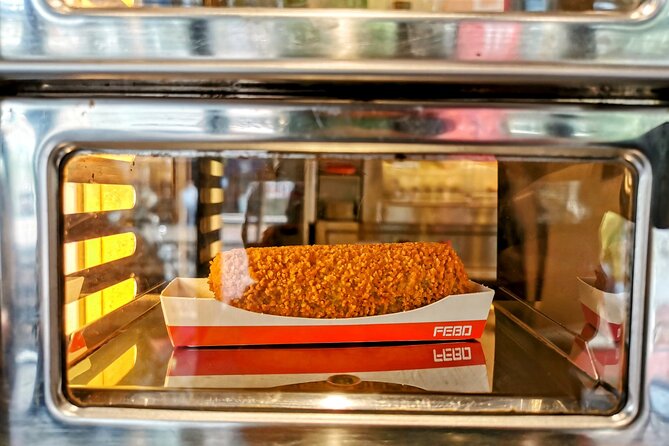
Your tour starts at FEBO on Ferdinand Bolstraat. FEBO is a recognizable Amsterdam stop if you’ve seen vending-style snack culture before. Even if you’re not a big snack person, it’s a smart starting place because it’s easy to find and it puts you in the right neighborhood flow immediately.
From there, you’re using your smartphone (internet access needed) plus the PDF guide to navigate each next destination. Bring both a charged phone and internet access, plus cash and a credit card. This matters because small family businesses can be flexible with payment methods, but they’re not a giant chain that always takes every card type.
Rain or shine: the tour runs outdoors, so pack for weather and expect you’ll walk.
Stop-by-stop: what to expect from each bite
The route is built around 8 stops, with the idea that at least 6 will be open. What follows is what you should be ready for, in the order the tour highlights them.
1) Traditional Dutch croquette to kick things off
You begin with a traditional Dutch croquette. This is one of those foods that makes sense as a first bite: savory, filling, and easy to understand. It also helps you gear up for the snacks that follow, because after this you’ll be tasting multiple countries instead of switching into dessert-only mode.
You can also read our reviews of more tours and experiences in Amsterdam


2) Suriname pom: chicken, root veg, and hot sauce
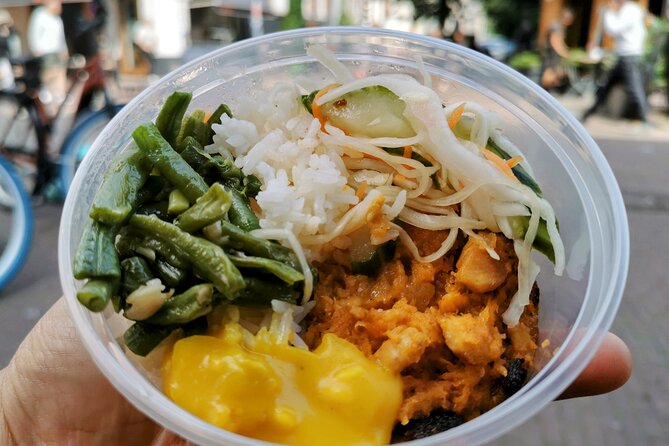
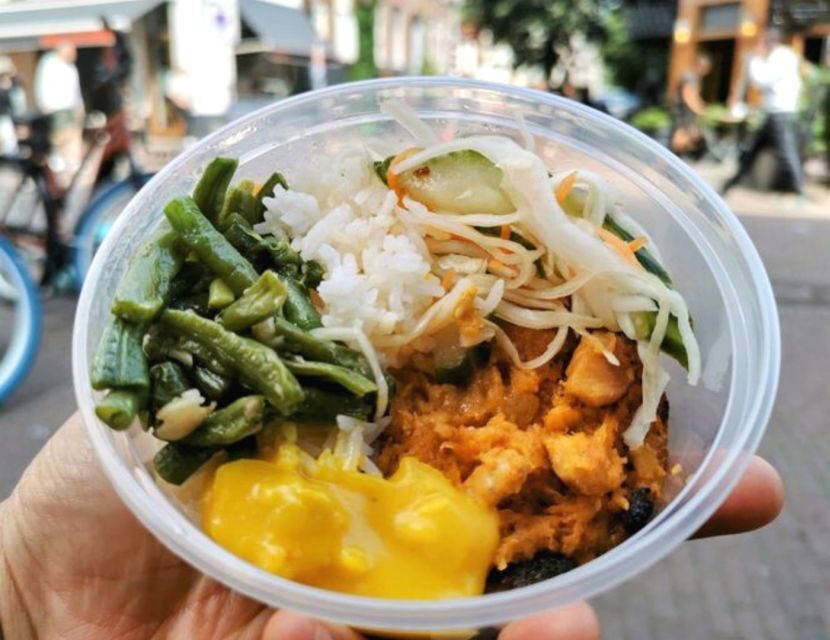
Next is Suriname flavors at a beloved spot famous for pom, Suriname’s national dish. You’re looking for a combo that includes pom (oven-baked root plant with chicken), long beans, rice, homemade pickles, and hot sauce.
Why this stop is special in practice: pom is comfort food with a “street meal” delivery. Even if you’re not hunting Surinamese cuisine at home, it’s a meal you can recognize as warm, hearty, and built to satisfy. Also, you’ll likely understand Suriname food culture better because the tasting is built around the full plate profile, not just one ingredient.
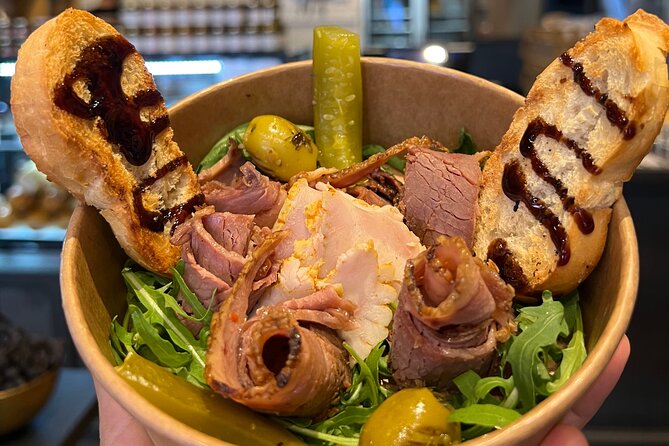
3) Israeli bite set with smoked beef brisket and chicken roulade
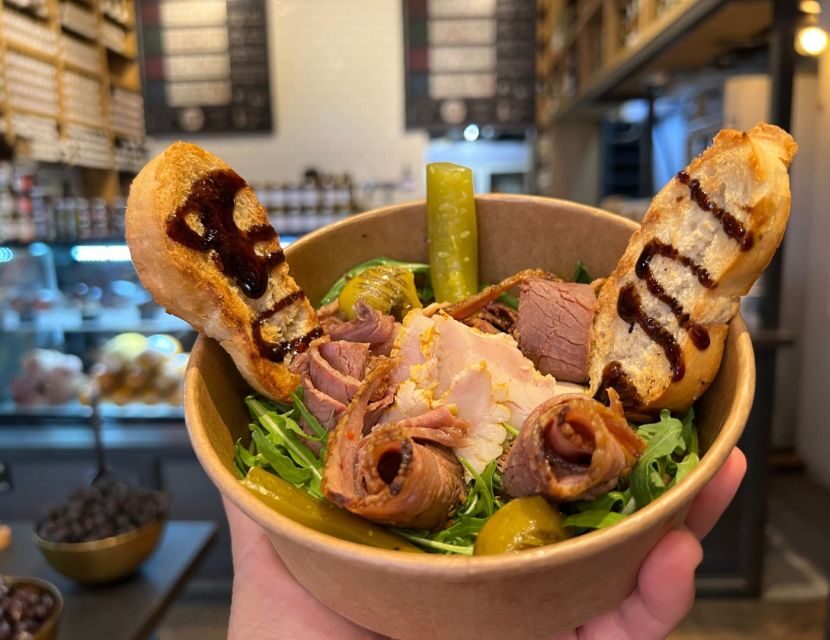
After that comes Israel, with smoked beef brisket and chicken roulade. You’re also served Israeli pickle, olives, and bread with balsamic vinaigrette.
This is a good counterpoint to Suriname. The flavor direction shifts from rich, saucy comfort to something more tangy and punchy, with pickles and olives bringing the bright edge.
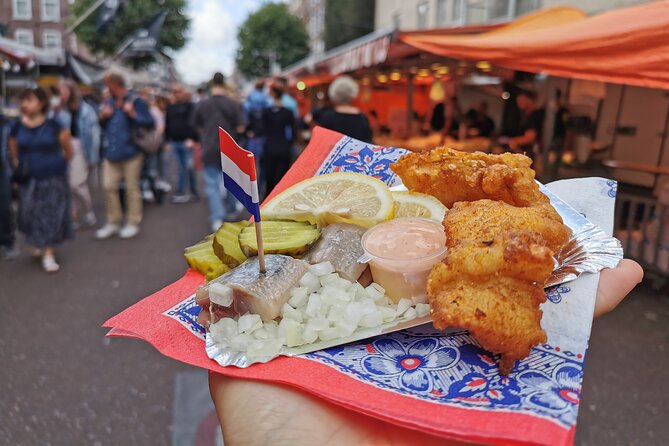
4) Fish stall: fresh Dutch herring and kibbeling
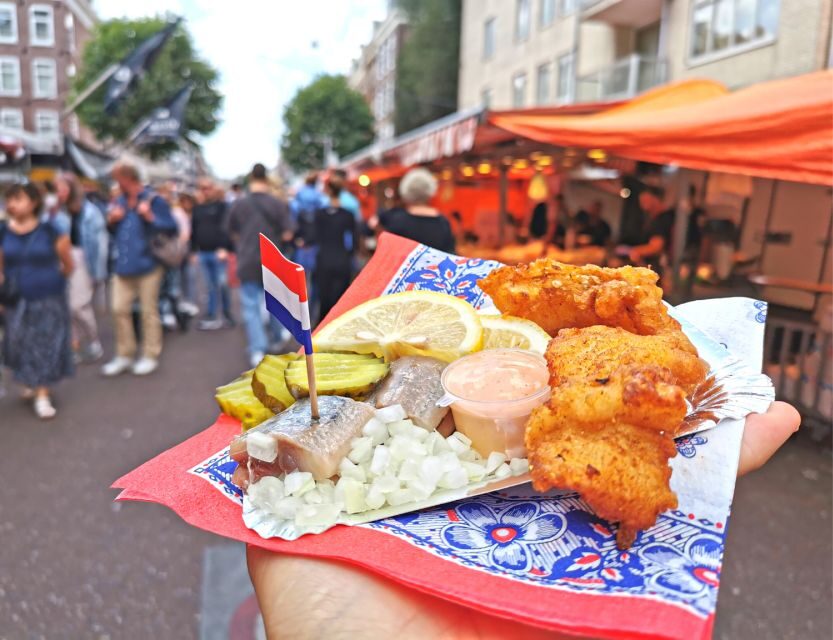
Then it’s Dutch fish: fresh Dutch herring and kibbeling (fried cod).
This is where you’ll either fall in love instantly or carefully pace yourself. Fried fish is great street food because it’s quick, warm, and easy to eat while walking. If you’re sensitive to strong smells, you might want to plan a small breather between bites and not stack every salty item back-to-back.
5) Poffertjes: tiny pancakes that bubble
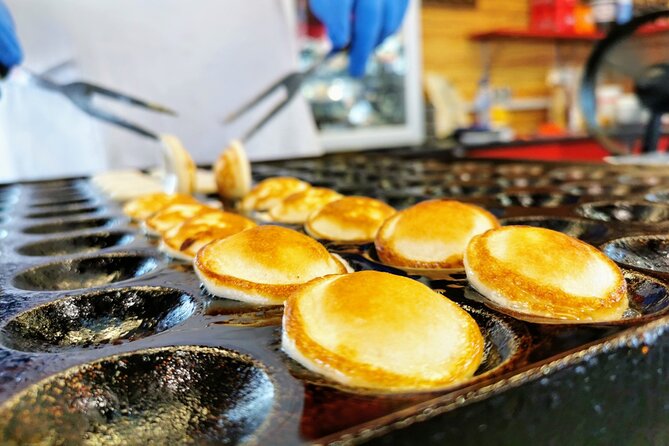
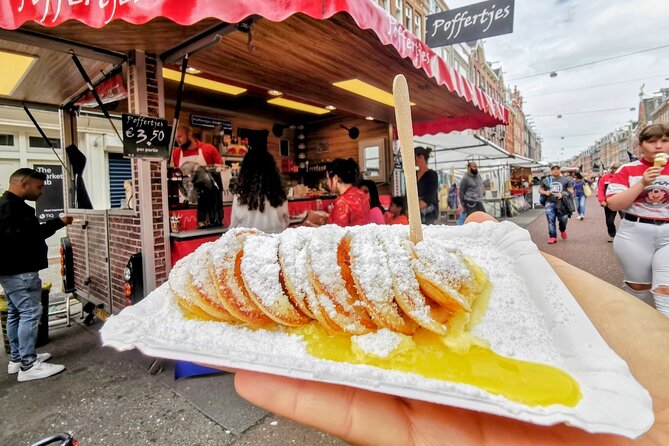
Sweet time: Amsterdam poffertjes, the tiny pancakes that bubble as they cook. This is a classic because it’s both fun and practical. You can watch them cook without stopping your pace, and you get a sweet finish that isn’t a full dessert meltdown.
6) Stroopwafel from a maker with 45+ years of history
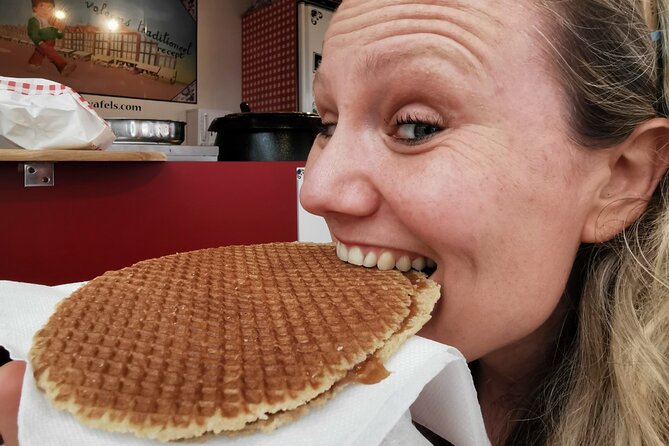
Next is one of the Netherlands’ most famous snacks: Gouda stroopwafels. Expect syrup waffles, and the tour highlights that it’s from a family making them for more than 45 years.
I like this stop because stroopwafel is one of those foods where freshness matters. When it’s made well, it’s warm, fragrant, and syrupy without tasting like pure sugar. Also, it’s a “take-a-bite-and-keep-moving” dessert, not something that forces you to sit for an hour.
7) Takoyaki balls, Osaka style, paired with ramen expertise
Then the route adds a Japan flavor twist: takoyaki balls made by a takoyaki chef from Osaka, with a ramen specialist from Tokyo.
This is the kind of stop that can feel different from everything else on the list. Takoyaki is typically savory, with a sauce profile that’s bold enough to stand on its own. The ramen connection signals a place that knows how to season and build flavor depth, not just fry batter.
8) Patatje Oorlog: hand-cut fries with peanut sauce, mayo, and onions
Finally, you end strong with award-winning hand-cut fries—and a very Dutch sauce combo: peanut sauce, mayonnaise, and onions, known as Patatje Oorlog.
If you do this route with any strategy at all, save your appetite energy for this last stop. Fries are comforting, salty, and a little messy in the best way. It’s also the easiest item to share if you find you’re getting full too early.
Timing reality: closures, missing stops, and how to protect your value
Here’s the truth that can make or break a self-guided food tour: opening hours are not always predictable. The tour itself says not every stop is open daily, though at least 6 will be.
In real use, that means you should plan your day like a food athlete. Start at your scheduled beginning time so you’re hitting places earlier rather than later. If your first few stops run long, you risk reaching the later ones after they’ve closed.
I’d also recommend building in a “Plan B bite.” Have one or two backup snacks in your pocket so if a stop is closed, you don’t walk away feeling like the day fell apart.
And one more tip that helps: share when you can. One common lesson from these kinds of routes is that portion sizes add up fast—especially once you’re combining fried fish, pancakes, syrup waffles, and fries.
Vegetarian needs and the limits you should know before booking
Vegetarian options are available at 7 stops, and that’s a meaningful plus if you’re traveling with plant-forward needs. Still, the tour is listed as not suitable for vegans.
So what does that mean for you practically? You may find vegetarian bites, but you should not assume vegan-friendly ingredients. If vegan is your requirement, this tour isn’t the right fit based on the stated suitability.
Also flagged: people with gluten intolerance. The tour is not suitable for that, so if gluten sensitivity is serious for you, choose another food plan where you can confirm each ingredient and cross-contamination practices.
Navigation and what to bring so discounts actually work
This tour depends on your phone and your PDF. You’ll receive a booking confirmation message with links to download your guide and a free itinerary within 24 hours.
The key rule: each person joining must have their own copy of the PDF guide on their phone to be eligible for the discounts and special tastings. So don’t assume one phone can cover multiple people. Bring your own device, keep it charged, and make sure you can access the guide offline or with stable internet.
Bring a charged smartphone, internet access, cash, and a credit card. That combination keeps you flexible if a spot prefers one payment method.
Is this worth it for you? Best-fit traveler types
This self-guided format suits you if you like control:
- You want to set your own pace and stop for photos or market browsing
- You’re comfortable walking between stops and reading a PDF route
- You want a food checklist that doesn’t feel like a factory assembly line
It’s less ideal if:
- You need a guaranteed number of open stops every single day
- You’re strict about dietary rules like vegan or gluten intolerance
- You get stressed when plans don’t match the schedule perfectly
Should you book this Amsterdam street food self-guided tour?
Book it if you want a neighborhood food route that mixes Dutch classics with international street snacks, and you like the idea of using a PDF map instead of a group tour. The route hits several “Amsterdam must-eats” like stroopwafel and poffertjes, then adds meaningful variety with Suriname pom, Israeli flavors, and takoyaki.
Skip it if you’re vegan or gluten-intolerant, because the tour is explicitly not suitable for those needs. Also skip (or be cautious) if you hate last-minute changes, because opening hours can reduce the number of stops you actually reach.
If you do book, the way to get your money’s worth is simple: start early, follow the guide closely, and share bites when it feels like you’re stacking too many salty items in a row. With that mindset, you’ll end the route with a serious payoff: a final plate of Patatje Oorlog fries that tastes like Amsterdam street food should.
FAQ
Where does the self-guided tour start?
It starts at FEBO on Ferdinand Bolstraat.
How long is the tour experience?
The activity is listed as valid for 7 days. You’ll check availability to see starting times.
What’s included in the price?
You get a self-guided Amsterdam foodie tour, stops at 6 to 8 family-owned businesses, exclusive discounts and tastings at 7 out of the 8 locations, directions to each tasting stop, a free 3-day Amsterdam itinerary, and restaurant recommendations.
Do I get food tastings included, or do I pay for food?
Food tastings and drinks are listed as not included, but the tour also states you’ll get exclusive discounts and tastings at 7 locations. You should also budget about 20 euros per person for food.
Is the tour good for vegetarians?
Vegetarian options are available at 7 stops. However, the tour is not suitable for vegans.
Is it suitable for gluten intolerance?
No. The tour is listed as not suitable for people with gluten intolerance.
How do I get the discounts and special tastings?
You must have your own copy of the PDF guide on your smartphone to be eligible for the discounts and tastings.
Does the tour run in bad weather?
Yes. It runs rain or shine.