Cracks become gold in Amsterdam. This hands-on kintsugi workshop turns fractured pottery into art using golden-leaf glue, with a calm, step-by-step process you can actually copy at home. You’ll start with a serene intro, then do the ritual-style break, and finally reassemble the shards into a repair that looks intentional.
I love the focus on patience and careful hands, not speed or talent. I also like the clear link to the philosophy of wabi-sabi—imperfection isn’t a mistake, it’s part of the beauty. One thing to consider: coffee/tea isn’t included, so plan to grab a drink before you go.
In a small group setting (max 6 people), you get enough attention to feel confident while you work. The workshop is in English and runs about two hours, so it’s long enough to learn the technique, short enough to fit into a busy day in Amsterdam. If you’re traveling with kids under 10, this one isn’t suitable.
In This Review
- Key things to know before you go
- Kintsugi in Amsterdam: what you’re really learning
- Entering the workshop: what your first minutes feel like
- The 2-hour flow: symbolic break to golden repair
- Step 1: The fresh-start ritual
- Step 2: Reassembling the shards
- Step 3: The golden leaf glue transformation
- Golden leaf glue: the technique you can actually repeat
- Bringing your own item?
- Wabi-sabi in your hands: why the philosophy sticks
- Price and value: is $90.11 a fair deal?
- Logistics that actually matter in Amsterdam
- Food and timing
- Who should book this workshop (and who should skip it)
- The instructor factor: what you should look for
- Should you book Kintsugi The Art of Imperfection?
- FAQ
- What is the duration of the workshop?
- Where is the meeting point?
- Is the workshop offered in English?
- What is the price per person?
- Are materials provided?
- Is coffee or tea included?
- How big are the groups?
- Is it suitable for children?
- Can I cancel for a full refund?
- Is the workshop accessible for people with mobility limitations?
Key things to know before you go
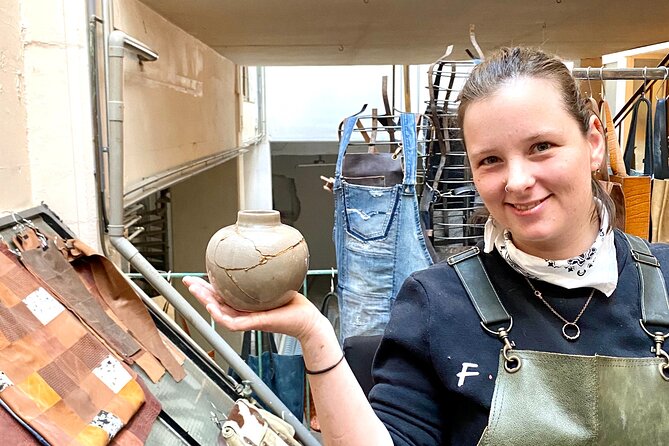
- Small group work (up to 6): easier questions, more hands-on time, less waiting.
- Symbolic plate break: you learn the method, but also the mindset behind it.
- Golden-leaf glue effect: the repairs are meant to be visible and decorative.
- Materials provided: you don’t need to source tools or supplies.
- English instruction: straightforward guidance throughout, no translation stress.
Kintsugi in Amsterdam: what you’re really learning
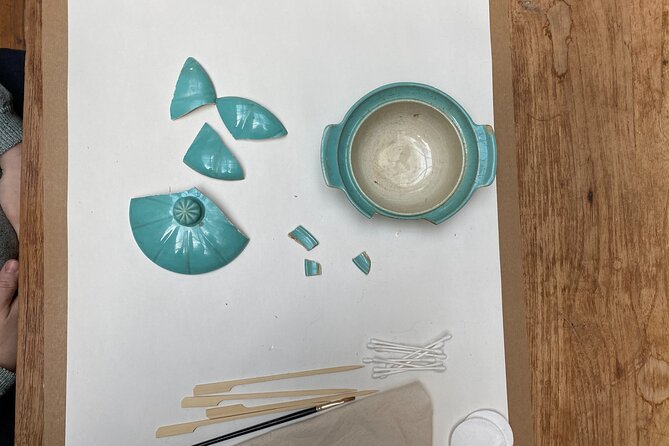
Kintsugi is often described as “repairing pottery,” but that’s only the surface. The point is turning damage into something you would never get from a brand-new object. Instead of hiding cracks, you emphasize them—sometimes with gold leaf, sometimes with a different kind of shine that marks the repair as part of the object’s life.
In this workshop in Amsterdam, you’re doing more than making a craft project. You’re practicing a way of working slowly and deliberately. That matters because most people learn kintsugi by watching videos later and realizing the hard part isn’t the glue—it’s the steady attention. Here, you get that attention built into the session.
You’ll also pick up the wabi-sabi idea in a practical way: the “flaw” isn’t erased, it’s recognized. The repair becomes a visible record of breaking, fixing, and moving forward. You can carry that mindset to daily life, like letting go of perfection pressure or accepting that something imperfect can still be useful and beautiful.
You can also read our reviews of more tours and experiences in Amsterdam


Entering the workshop: what your first minutes feel like
The session starts with a serene introduction. Expect a tone that’s quiet and focused, not noisy or rushed. That first stretch matters because kintsugi asks you to slow down and handle materials carefully. If you walk in stressed, the philosophy helps—but you’ll also want to be mentally ready to concentrate.
You’ll get oriented to what you’ll do next, including the symbolic portion of the process. Then you’ll move into the hands-on part where the work becomes physical: positioning pieces, aligning edges, and taking your time with the order of steps. Even if you’ve never done anything like this before, the structure is built for beginners.
If you’re the type who likes clear instructions, you’ll likely feel comfortable here. One past participant specifically noted the instructor, Annelies, as welcoming, which is a good sign for anyone who worries they’ll feel clumsy at the start. A calm guide helps the technique stick.
The 2-hour flow: symbolic break to golden repair
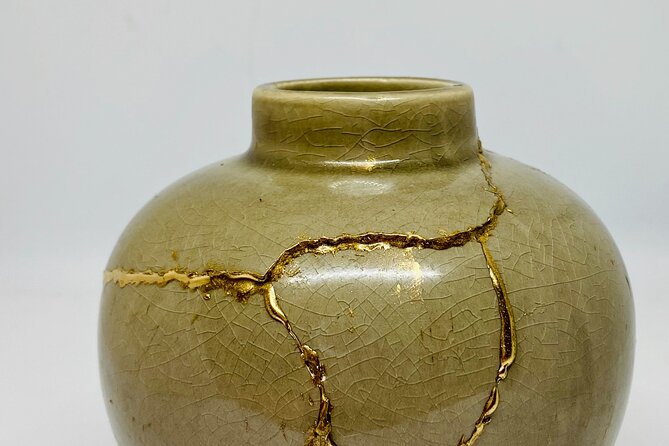
The workshop’s arc is simple, and that’s a strength. In about two hours, you go from break to repair to a finished, intentional-looking result.
Step 1: The fresh-start ritual
You’ll break a plate symbolically as part of the experience. This isn’t just theater. It sets the tone that cracks don’t mean failure. It also nudges you into the right frame of mind: you’re not trying to prevent damage—you’re learning what to do after damage happens.
Even if your life doesn’t revolve around ceramic repairs, this part clicks because it’s a repeatable mental shift. You learn to treat a problem like a transition, not an ending.
Step 2: Reassembling the shards
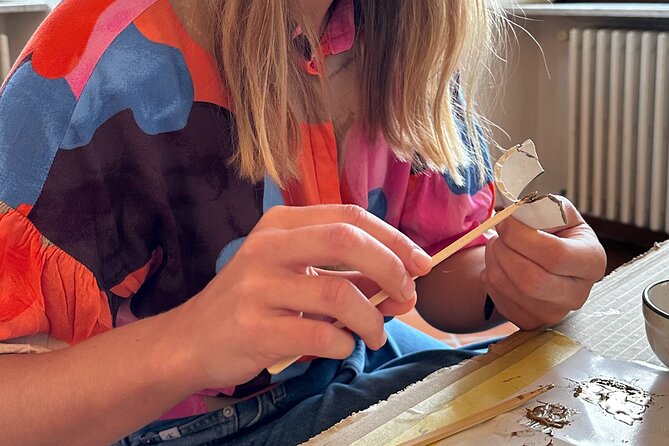
Next comes the patient work: you reassemble shards piece by piece. This is the craft portion where hand control matters. You’re paying attention to edges, fit, and alignment—because if pieces don’t sit right, the repair won’t look clean.
This is also where you’ll feel the value of the small group size. With a maximum of 6 people, it’s easier to get help quickly if something doesn’t align the way you expect.






Step 3: The golden leaf glue transformation
Finally, the gold-leaf-glue element turns the repair into “kintsugi art” instead of “casual mending.” The golden lines are meant to be visible. That’s a big difference from regular restoration, where the goal is disappearance.
The result isn’t subtle. It’s meant to show the story. And because the workshop’s theme is embracing imperfection, you’re not expected to aim for invisible perfection—you’re aiming for meaningful repair.
Golden leaf glue: the technique you can actually repeat
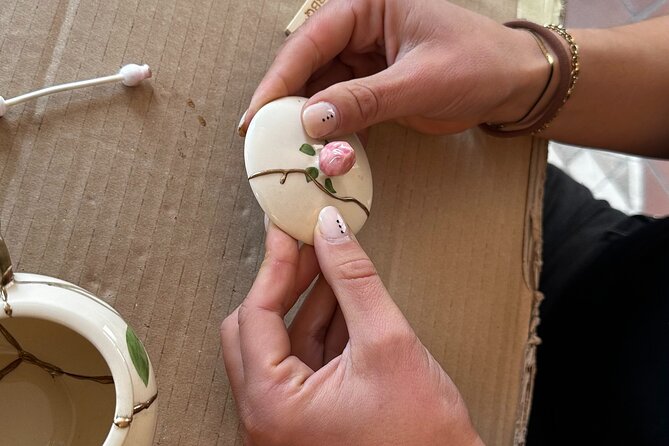
What makes kintsugi so addictive is that the process is both tactile and symbolic. You’re using materials that behave in a specific way, and your job is to work with that reality instead of fighting it.
In this workshop, all materials are provided, so you can focus on the technique. That’s important if you don’t already own ceramic repair supplies or specialty tools. It’s also a practical way to reduce risk: you learn the method in a controlled setting with the right materials available.
Here’s the practical takeaway you’ll likely want to keep: the order of steps matters. The careful part isn’t just where the glue goes. It’s how you position pieces, how you handle the time it takes for the repair to settle, and how you think about the final look.
Also, the gold-leaf effect is what makes the repair feel like design. It turns the crack path into a line you can read. Once you see that visually, it’s easier to understand why kintsugi has endured since traditional origins in the 15th century—and why it fits modern taste for natural materials and craftsmanship.
Bringing your own item?
One participant said it probably would have been fun to bring an item to fix. The workshop provides pieces for the activity, so you shouldn’t assume your own object is allowed without checking. If you have a meaningful broken plate or bowl at home, it’s worth asking in advance whether personal pieces can be used. Even if the answer is no, the lesson you’ll learn will still help you approach a future repair more confidently.
Wabi-sabi in your hands: why the philosophy sticks
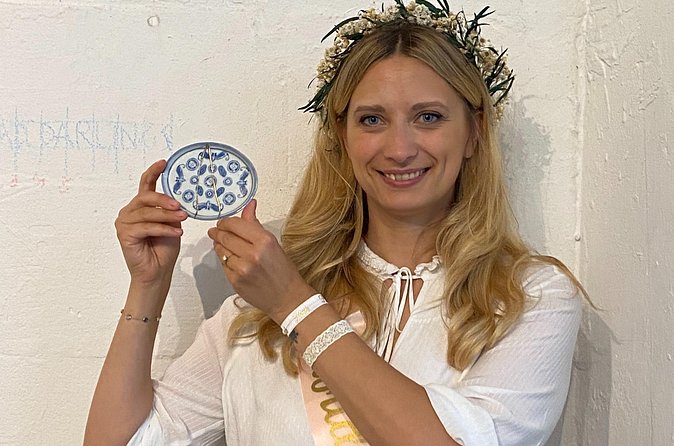
This workshop doesn’t treat philosophy as a lecture. It ties ideas to actions you repeat: breaking, aligning, repairing, and finishing with gold. That’s why the meaning tends to stick.
The experience is framed around wabi-sabi, which focuses on the beauty of natural imperfections. In practice, that means you’re not trying to make the object “as if nothing happened.” You’re marking the moment something changed—and showing that the object can still have purpose.
If you like design that doesn’t pretend everything is new, you’ll appreciate the contemporary angle too. Kintsugi fits modern aesthetics because it celebrates visible repair, texture, and craftsmanship—especially when the repair is done thoughtfully.
And beyond art, there’s a psychological payoff. The session’s metaphor is simple: let go, start again, and find beauty in resilience. You might notice that during the repair process you naturally slow down. That calmer attention is the real “take-home” skill, even if you never end up repairing anything else.
Price and value: is $90.11 a fair deal?
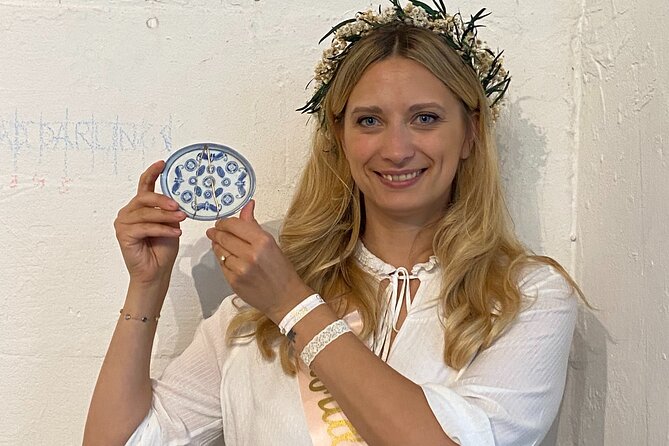
At $90.11 per person for about two hours, this isn’t a bargain-basement craft class. But it can be good value if you look at what’s included and what you’re getting access to.
You’re paying for:
- Instruction in English
- A guided, step-by-step process
- All materials included
- A small group size (max 6), which usually means more direct help
The short duration also matters. Two hours is enough to experience the method and finish a visible result without eating an entire afternoon. That’s valuable in Amsterdam, where time is often more expensive than money.
If you’ve ever tried to learn a craft at home with missing supplies, unclear steps, and trial-and-error costs, you know the hidden price tag. Here, the workshop reduces that uncertainty. You’re not guessing what materials to buy or how the repair should look. You’re learning the technique in a way that makes repetition at home more realistic.
My bottom line: if you like hands-on learning, and you want a meaningful craft outcome (not just a souvenir), the price feels fair.
Logistics that actually matter in Amsterdam
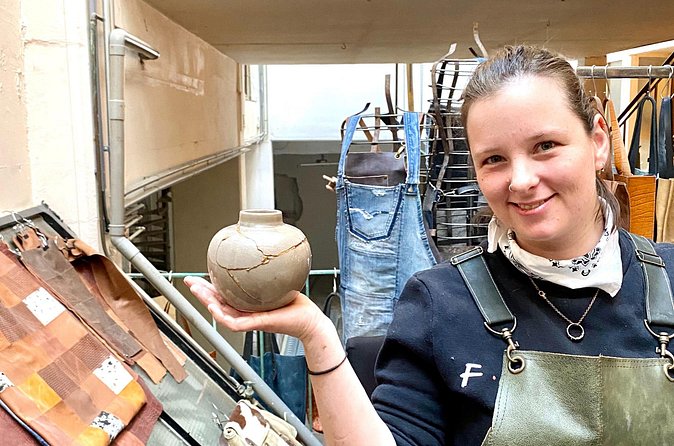
This one has a clear meeting point: Paleisstraat 107, 1012 ZL Amsterdam. The activity ends back at the meeting point, so you’re not wondering where your way back is.
It’s offered in English, uses a mobile ticket, and is near public transportation. That’s helpful because Amsterdam transit is usually simple, but location-specific details still save time.
Time-wise, the workshop runs on Wednesdays from 2:00 PM to 4:00 PM during the listed seasons. If you’re planning a trip around that window, don’t wait until the last moment. The workshop is booked about 90 days in advance on average, which suggests it’s popular and has limited capacity.
Food and timing
Coffee and/or tea are not included. If you want a drink, plan to stop nearby before you arrive. Also, because this is a focused craft session, I recommend eating beforehand so you’re not thinking about hunger while your hands are doing precision work.
Who should book this workshop (and who should skip it)
This experience is best for:
- Adults or teens who enjoy crafts and want something more thoughtful than a basic DIY
- People who like design tied to meaning—especially the idea that repairs can be beautiful
- Travelers who enjoy calm, hands-on activities in a small group
It’s not suitable for children under 10, and it lists a moderate physical fitness level. Since the workshop is hands-on, you should consider your comfort with fine-motor work and sitting/standing as required.
If you’re traveling with someone who only wants entertainment, this might feel slow. But if you’re after learning a craft technique with a strong mindset, you’ll probably find it satisfying.
The instructor factor: what you should look for
One review highlighted Annelies as very welcoming and friendly, and described the session as fun and focused. That kind of teaching style matters because kintsugi can feel intimidating at first—until you realize the steps are manageable when someone explains what you’re looking for.
A good instructor also helps with timing and alignment, especially when you’re reassembling shards. If you’re hoping to leave with a result you feel proud of, keep an eye out for guides who explain the why behind each step, not just the how.
Should you book Kintsugi The Art of Imperfection?
Book it if you want a hands-on workshop with a meaningful outcome. The combination of symbolic breaking, careful reassembly, and the gold-leaf glue look gives you something you can point to later and say, I learned this technique.
Skip it (or at least reconsider) if you want an activity with lots of sightseeing, or if you’re not interested in spending two hours focusing on detail. Also, remember there’s no coffee/tea included, and children under 10 can’t join.
If you’re visiting Amsterdam on a Wednesday, plan ahead. With a small maximum group size and strong demand, booking early is the easiest way to avoid disappointment.
FAQ
What is the duration of the workshop?
The workshop lasts about 2 hours.
Where is the meeting point?
The meeting point is Paleisstraat 107, 1012 ZL Amsterdam, Netherlands.
Is the workshop offered in English?
Yes, it’s offered in English.
What is the price per person?
The price is $90.11 per person.
Are materials provided?
Yes, all materials needed for the workshop are provided.
Is coffee or tea included?
No, coffee and/or tea are not included.
How big are the groups?
The workshop has a maximum of 6 travelers.
Is it suitable for children?
It’s not suitable for children under age 10.
Can I cancel for a full refund?
Yes. You can cancel up to 24 hours in advance for a full refund. If you cancel less than 24 hours before the start time, the amount paid isn’t refunded.
Is the workshop accessible for people with mobility limitations?
It lists a moderate physical fitness level requirement, so you should consider your comfort with the hands-on work before booking.