REVIEW · AMSTERDAM
Amsterdam: Traditional Dutch Syrup Waffle Making Workshop
Book on GetYourGuide →Operated by We Are Amsterdam · Bookable on GetYourGuide
Caramel in the air beats any bakery stop. In this hands-on workshop in central Amsterdam, you learn the classic stroopwafel method using a traditional iron and warm syrup.
I love how fast it feels: 45 minutes from intro to your own first bite, with enough structure that beginners still finish strong. I also like that you get one big waffle to eat there and a second XL one to take home.
One thing to keep in mind: it’s not set up for wheelchair access, and if you’re seated farther back you might find it harder to hear the instructor.
In This Review
- Why This Stroopwafel Workshop Feels Like Real Dutch Life
- Key moments that make it worth your time and money
- Stroopwafels 101: what you learn beyond the sweet smell
- Finding the workshop behind the Albert Cuyp Market stands
- Inside the kitchen: what happens from apron on to first bite
- The hands-on part: dough, iron, and the syrup seal
- 1) Roll and prep the dough
- 2) Cook on the traditional stroopwafel iron
- 3) Assemble with warm “stroop”
- A quick reality check on group size and pace
- The coffee break, chatting, and your XL waffle moment
- Why the history chat is actually useful
- Price and value: what $23 buys you in Amsterdam terms
- Who should book this stroopwafel workshop
- Small things to watch for before you go
- Should you book this workshop?
Why This Stroopwafel Workshop Feels Like Real Dutch Life
Key moments that make it worth your time and money
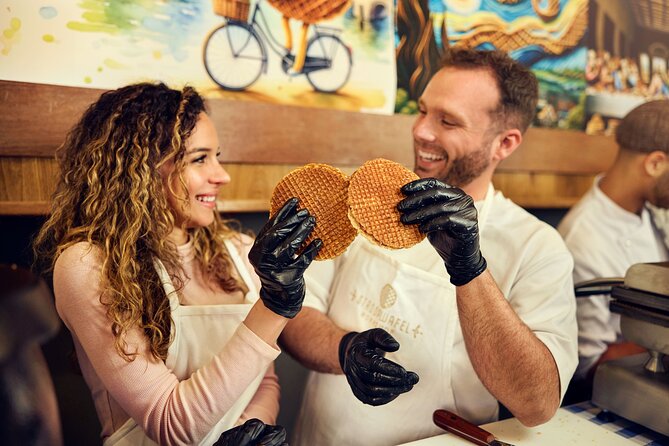
You bake XL stroopwafels and keep one
You eat one during the session and take an extra XL waffle home.
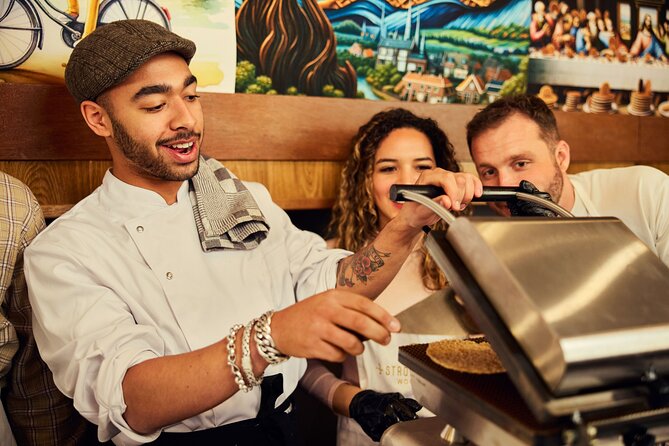
You work with a real traditional iron
You don’t just watch. You roll dough and cook it properly on the iron.
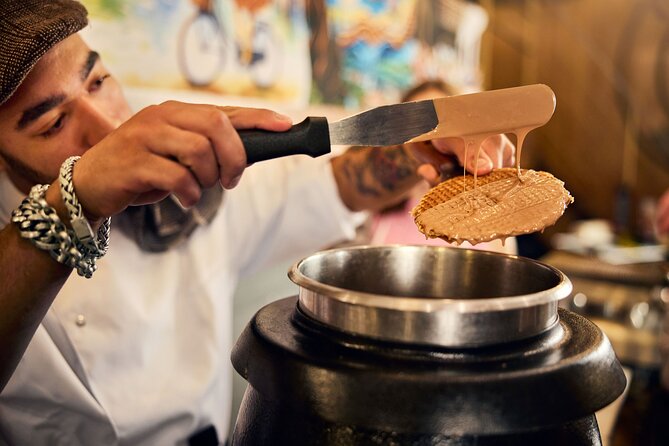
The “stroop” is part science, part hand skill
Warm caramel syrup goes between layers, and you’ll learn how to get that gooey-sweet seal.
You get coffee or tea and a short social break
While your waffles cool, you’ll sit down, sip something hot, and chat with your group.
You leave with a certificate (and little extras)
Many people mention a certificate, branded sticker, and a bag, which makes it feel like more than a quick snack stop.
You can also read our reviews of more tours and experiences in Amsterdam


Stroopwafels 101: what you learn beyond the sweet smell

This workshop is built around one goal: helping you understand what makes a stroopwafel a stroopwafel. Yes, it’s caramel-sweet and waffle-crisp. But the real trick is texture and timing.
You’ll start with the basics of the dough and the cooking method. Then you’ll move to the part people love most: assembling with warm, gooey syrup. That syrup is the “stroop,” and you’ll learn how to place it so the waffle layers stay crisp while the center turns soft and sticky.
I also like the pacing. In about 45 minutes, you’re not stuck in a long classroom lecture. You’re hands-on early, then you get a short coffee or tea break while things cool.
Finding the workshop behind the Albert Cuyp Market stands

Location matters in Amsterdam, and this one is practical. The workshop is in a homey space behind the market stands. The door opens about 5 minutes before the start time, so you’re not left wandering for long.
If you’re early, you can walk the Albert Cuyp Market area and get your bearings before you go inside. It’s a nice way to turn “waiting” into something useful, especially if the weather is doing that Amsterdam thing where it can change fast.
Two logistics notes from what people report:
- Signs can be easy to miss once the market is busy, so if you’re unsure, use the phone number on your voucher.
- Parking can be difficult in this area. If you drive, plan for extra buffer time to find a spot.
Inside the kitchen: what happens from apron on to first bite
Your session starts with an instructor-led intro. They explain the history of stroopwafel and how the technique became part of Dutch food culture going back to the 18th century. You’ll hear the story in plain language, not as a distant food lecture.
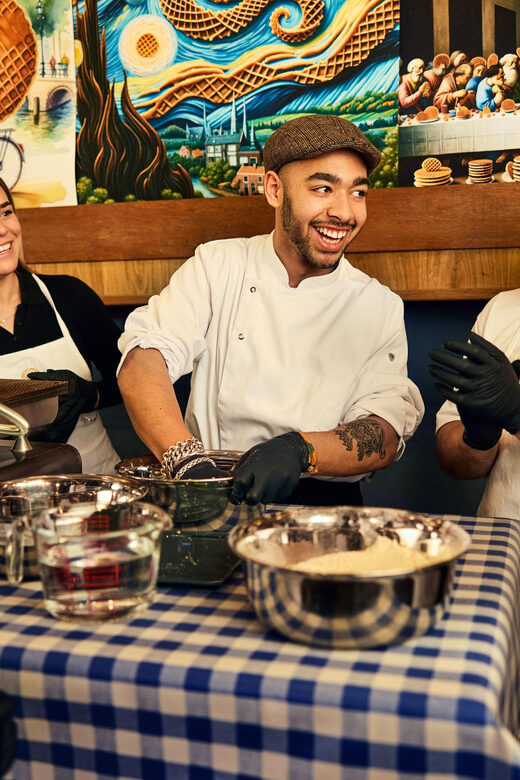
Then the apron goes on and the group forms up. You’ll get a clear demonstration first, typically covering:
- how the dough is mixed and handled
- how the iron is used for the right cooking texture
- where the syrup goes and how it should look warm and smooth
From the reviews you’ll see a pattern in the teaching style. Instructors like Vince, Lisa, Jay, Julia, Franziska, Morris, Jack, Roza, and Nicola (names vary by session) are repeatedly described as friendly, organized, and willing to help one-on-one.
In other words, you’re not just following steps. You’re being coached while you work.
The hands-on part: dough, iron, and the syrup seal
This is where the workshop earns its keep.






1) Roll and prep the dough
You’ll learn how to handle the dough so it cooks evenly. Even if you’ve never baked before, the process is structured. People repeatedly say it feels doable, not like a fancy chef bootcamp.
2) Cook on the traditional stroopwafel iron
Using the iron matters because it shapes the waffle layers and drives the crisp texture. You’ll cook your pieces until they’re properly golden. Too light and they won’t hold up. Too dark and the waffle gets brittle.
You’ll also see why timing is part of the craft. The workshop is short, so you won’t get hours to experiment. Instead, you get guidance to hit the right result quickly.
3) Assemble with warm “stroop”
Once your waffle layers are ready, comes the sticky centerpiece. Warm, gooey syrup goes between the thin layers, and you’ll learn how to seal it so you get that classic contrast: crisp outside, tender inside.
This step also explains why people love stroopwafels with a hot drink. The warm beverage softens the center just enough to make it extra satisfying.
A quick reality check on group size and pace
One caution: some people mention waiting if a session has a larger group and the iron time is shared. It’s usually not a disaster, but it can slow the rhythm a bit. If you’re the type who gets impatient, plan your Amsterdam schedule with a little wiggle room before or after.
The coffee break, chatting, and your XL waffle moment

While your waffles cool, you’ll get a break with coffee or tea. This is the sweet spot where the workshop shifts from kitchen work to social time.
I like that the hot drink isn’t just an add-on. It gives you something warm right when the waffle is about to be eaten, so you can notice how stroopwafels behave with heat.
Then comes the best part: you eat one of the waffles you made. Expect a crisp yet tender bite, exactly the contrast stroopwafel is famous for.
Before you leave, you’ll pack up the second XL stroopwafel to take home. That’s a big deal for value. One waffle can cost around €15 in some Amsterdam shops (based on a real comment people made), so having two made-to-order waffles in one $23 session is easier to justify.
Also, there are small extras people mention:
- a certificate after you finish
- a branded sticker and a bag
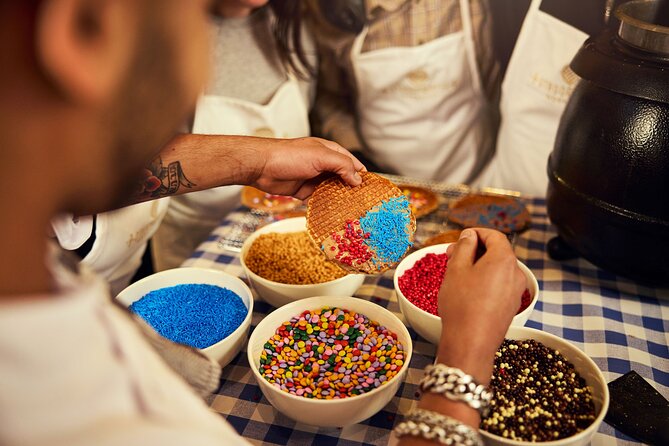
- options for decorations or toppings (varies by session)
Why the history chat is actually useful

The workshop doesn’t treat history like a sidebar. It connects to the technique.
You’ll hear that stroopwafel has been around since the 18th century, and you’ll get the sense that this wasn’t invented as a modern food trend. It’s a practical Dutch treat: stores well, feeds a crowd, and uses simple ingredients with a technique that rewards practice.
That matters because once you understand the “why,” your results improve. You’re not just copying movements. You’re learning what the texture should be and why the syrup placement changes the eating experience.
Even if you mostly care about eating, you’ll leave knowing how to explain what you did. That turns the snack into a story.
Price and value: what $23 buys you in Amsterdam terms
At $23 per person for a 45-minute workshop, you’re paying for three things at once:
- instruction and coaching
- hands-on use of the traditional iron and supplies
- two big XL stroopwafels (one eaten on-site, one taken home)
If you compare it to buying stroopwafels individually, the math usually starts to make sense fast. People specifically point out that stroopwafels can be expensive when bought ready-made at popular shops. Here, you’re not just purchasing a pastry. You’re getting the skill plus the product.
The coffee or tea also helps. It turns the workshop into a real experience, not a “quick demo then go” stop.
Who should book this stroopwafel workshop

This is a strong fit if you want:
- a hands-on Amsterdam activity that doesn’t require baking experience
- something fun for couples, families, and friend groups
- a classic Dutch food moment that feels more personal than buying from a counter
- a short time commitment that won’t eat your whole day
People also mention it works well for teens and that kids can enjoy it too. If you’re traveling with a group that has mixed interests, the food is the common language.
One note: it’s not suitable for wheelchair users, so plan something else if mobility access is a concern.
Small things to watch for before you go
A few practical tips based on what people report:
- If you’re sensitive to sound, try not to aim for the farthest spot in the room. One comment notes it can be harder to hear from the back.
- Wear clothes you don’t mind getting a little food close. Aprons are provided, but syrup and caramel live in the air.
- Go with a flexible mindset. You’ll be working with hot tools, timing, and other people. The pace is usually smooth, but shared waffle-making can create small delays in busier sessions.
Should you book this workshop?
Book it if you want a fun, structured Amsterdam food activity where you make stroopwafels from scratch, eat one warm on-site, and take an XL waffle home. At $23 for instruction plus two waffles, it’s a solid value for anyone who plans to eat stroopwafel anyway.
Skip it or reconsider if you need wheelchair access, or if you know you hate shared kitchen timing and don’t want any chance of waiting for the iron.
If you’re in Amsterdam and you want one very Dutch thing you can do with your hands, this is one of the easiest yes’s on the menu.