REVIEW · AMSTERDAM
Amsterdam: Houseboat Museum Entry Ticket
Book on GetYourGuide →Operated by Boat Boys · Bookable on GetYourGuide
One small boat, lots of real life. The Amsterdam Houseboat Museum turns a working cargo ship into a walk-through home from the 1970s, with hands-on storytelling.
I especially like the way you get the full shift from “freight barge” to “family houseboat,” all on one preserved vessel. I also love the interactive approach and the clear historical context, including how a family of four lived there when it was still used for transportation.
Do keep one thing in mind: the museum is on a real houseboat, so it’s compact, and the stairs are steep. If you’re expecting a long, spacious visit, this may feel tight.
In This Review
- Key things to know before you go
- Why the Hendrika Maria Houseboat Museum Feels Like a Time Capsule
- Ticket Value: What You Get for About $12
- Entering the Hendrika Maria: From Freight Ship to Home on Water
- The 1970s Interior: Orange, Yellow, and Real-Home Texture
- Living Afloat for More Than 100 Years: What the Museum Wants You to Notice
- The Original Sailing Mast and Leeboard: Practical History You Can See
- How the Visit Usually Flows Inside a Compact Houseboat
- Photography, Stairs, and Space: Practical Tips That Save You Stress
- Languages and Hosting: Making It Easy to Understand the Story
- Who Should Book This Houseboat Museum, and Who Might Skip It
- Price and Logistics: Small Ticket, Big Payoff for the Right Mindset
- Should You Book This Amsterdam Houseboat Museum Entry Ticket?
- FAQ
- Where is the Houseboat Museum in Amsterdam?
- What boat is the museum inside?
- What does the ticket include?
- How long is the experience?
- Is the museum in a real houseboat?
- Are there steep stairs?
- What languages is the host or greeter available in?
- Can I take photos inside?
- Does the museum sell food or drinks?
- Is the museum the only houseboat museum in Amsterdam?
Key things to know before you go
- Hendrika Maria (1914): the ship’s original working roots matter to the story you’ll hear.
- Converted in 1967: you’re walking through the moment the freight life ended and home life began.
- 1970s interior feel: expect a throwback look with lots of orange, yellow, and brown.
- Sailing mast and leeboard: these practical parts connect the home to its earlier routes to Scandinavia.
- Compact layout: it’s designed to be seen efficiently, but space is limited.
Why the Hendrika Maria Houseboat Museum Feels Like a Time Capsule
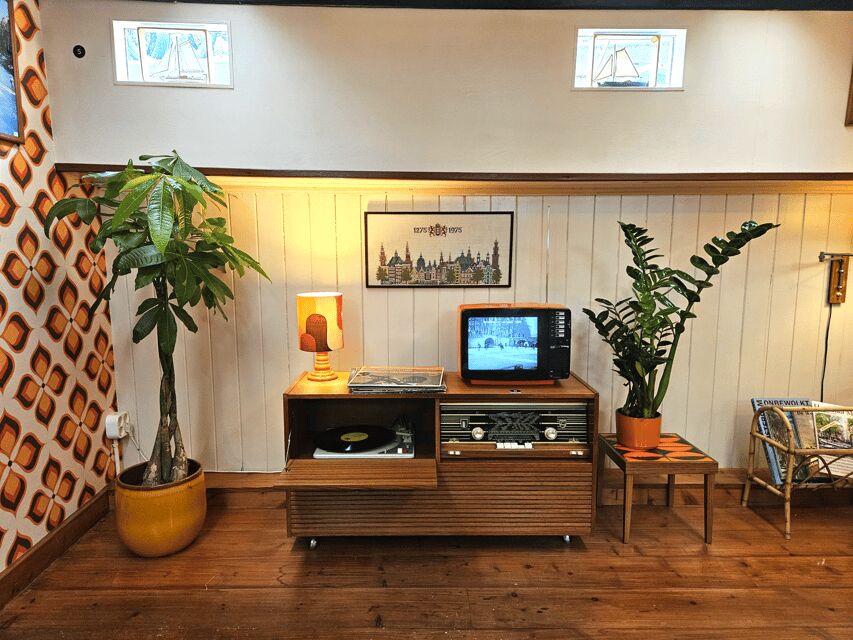
If you like history you can touch, this is your kind of stop. The museum is set inside the Hendrika Maria, a 1914 cargo ship later converted into a residential houseboat in 1967. That conversion timeline gives the visit a clear story arc: work on the water, then a life built around living on board.
What makes it work is the contrast. You’re not just looking at photos or a scale model—you’re standing inside the same type of space where everyday routines would have happened. The result is simple and direct: you can picture how people cooked, slept, and lived with the boat as their whole world.
And because the interior is still original from the period when it became a regular home, you get a very specific snapshot of domestic life. This isn’t generic “old-fashioned” décor. It’s the lived-in look that tells you what comfort and practicality meant back then.
You can also read our reviews of more tours and experiences in Amsterdam



Ticket Value: What You Get for About $12
At around $12 per person, the value depends on what you want from a museum visit. This one is more focused than sprawling. The boat layout is small enough that you can cover it fairly quickly, especially if you follow the tour flow inside.
That quick pace can be a plus. You’re not committing your whole day to one site, and you won’t feel lost trying to “optimize” a long route. It’s ideal if you want a meaningful experience without turning it into a time sink.
Still, there’s a real trade-off. If you expect a long guided experience that keeps you busy for hours, you may feel done faster than planned. The best approach is to go with the right mindset: treat it like a concentrated, hands-on stop where you learn, look closely, and then move on.
Entering the Hendrika Maria: From Freight Ship to Home on Water
The core idea here is transformation. The museum lets you explore how the vessel functioned as a freight barge, and then how it became a houseboat when it was turned into a residence in 1967.
That history matters because it changes how you read the space. When you learn what the ship used to do—carry goods, travel, and connect places—you start noticing practical features in a different way. Things that might look like simple parts of a house become clues to how the boat was meant to work.
A big part of the story is the family of four who used the ship as home life when it had already shifted into residential living. It’s a very human scale. The goal isn’t just maritime trivia. It’s the daily reality of sharing tight space, managing routines, and making the boat livable.
The 1970s Interior: Orange, Yellow, and Real-Home Texture
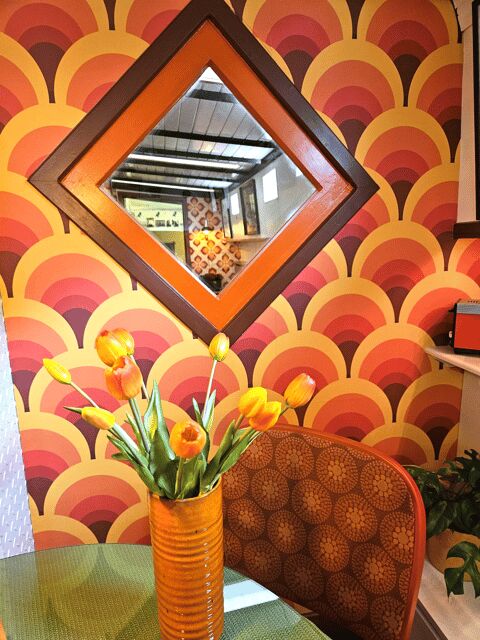
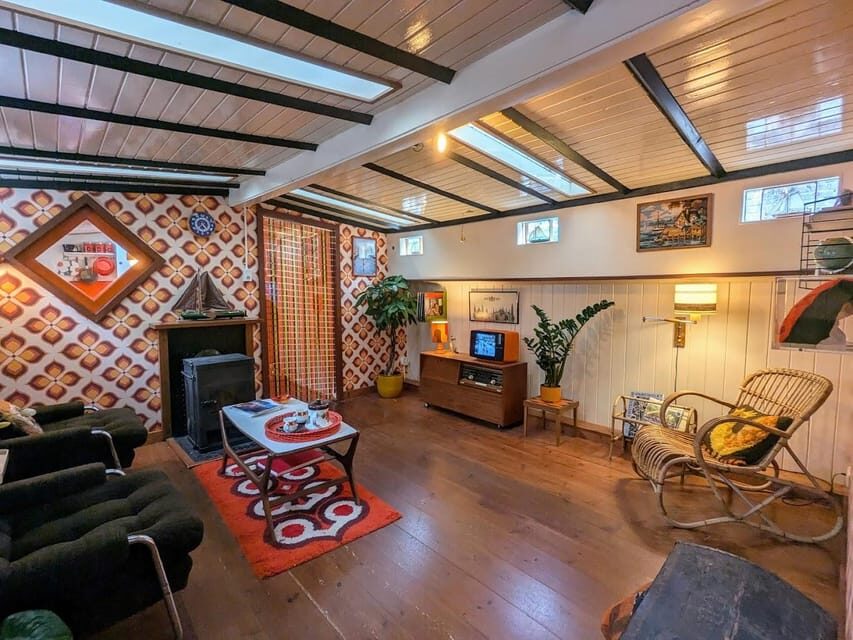
One of the most memorable parts is the interior look. The museum’s interior design is still from the period when the boat started being used as a regular house. Expect a throwback palette—a lot of orange, yellow, and brown—plus the overall feel of an older home layout rather than a glossy, modern exhibit.
That’s exactly why I think it’s fun. Modern museums often try to look pristine. Here, the design helps you imagine the everyday. The rooms feel like places someone actually lived, not like sets built for visitors.
You should also plan for the space to feel small. Houseboats were practical first, comfortable second. In a compact layout, details matter more: where storage might be, how routes through rooms work, and how you move between levels.
Living Afloat for More Than 100 Years: What the Museum Wants You to Notice
This isn’t just a story about one renovation in 1967. It’s also about continuity—how people have lived on this kind of boat over long stretches of time. The museum shares how residents have experienced life on the water for more than 100 years, using the Hendrika Maria as the anchor.
While you explore, you’ll get a sense of how “home” on water can still be home: routine, family life, and a need to work with what the boat offers. Even if you’ve never lived on a narrow ship, you’ll understand the logic quickly—every corner has a job, and every space gets used.
The museum is also described as interactive, with a lot of knowledge shared during the visit. That approach helps keep the experience from turning into just walking rooms. Instead, you’re guided to connect what you see—materials, layout choices, and original elements—with what that meant for daily life.
You can also read our reviews of more museum experiences in Amsterdam





The Original Sailing Mast and Leeboard: Practical History You Can See
Some museums show you old objects. This one explains why the objects mattered. The boat still has an original sailing mast and a leeboard, which were practical components for sailing back when the ship went to Scandinavia for transportation.
That detail is more than an interesting fact. It links the houseboat life to the older transportation role. You can stand in a place that once supported movement across water, and then imagine how the same boat shifted into a stationary kind of living.
If you like maritime mechanics—even just as background context—these features are likely to be one of the best parts of the visit. They connect the ship’s practical past to what it became when it stopped being a cargo route and started being a home.
How the Visit Usually Flows Inside a Compact Houseboat
This museum experience is set up as a guided walk through the boat. The museum is interactive, and there’s a lot of knowledge shared as you move from area to area. You’ll also likely use an audio-style flow to follow the tour around the boat’s interior.
Because the layout is limited, you should expect the visit to feel efficient. One helpful way to think about it is: you’re not meant to wander for ages. You’ll get the essentials, notice the key original details, and then finish having learned what you came for.
In other words, treat this as a short, focused time on the vessel. That helps you enjoy it more. You’ll spend time looking closely rather than rushing because you “feel like you should still find more.”
Photography, Stairs, and Space: Practical Tips That Save You Stress
Before you go, plan around three realities: space, stairs, and photos.
First, the museum is on a real houseboat, so space may be limited. If you don’t like tight corners or narrow passages, go slowly and give yourself time. Wear comfortable shoes that work well on steep stairways.
Second, the stairs are steep. That matters for safety and comfort. If stairs are hard for you, this may not be the best match, even if you can physically manage them with care.
Third, photography is allowed, but flash photography is not permitted inside. If you’re someone who likes photos for memories, bring a camera that performs well without flash, and keep settings ready so you don’t stop the flow inside.
Languages and Hosting: Making It Easy to Understand the Story
The experience is hosted by Boat Boys, with language support that includes English, French, Traditional Chinese, German, Spanish, Portuguese, Italian, and Dutch. If you want the museum story explained in your language, this kind of coverage is a real quality-of-life feature.
You can expect the visit to be delivered by a host or greeter and supported with commentary and interactive sharing. That helps, because houseboat history can feel abstract if it’s only a list of facts. Here, you’re meant to connect the details to living.
Who Should Book This Houseboat Museum, and Who Might Skip It
This is a great fit if you enjoy:
- Old-world living spaces you can actually step into
- Maritime history tied to real household life
- Short, meaningful museum stops that don’t eat your whole day
It may not be ideal if you:
- Want a large, room-filled museum with lots of space to roam
- Need fully step-free access (the stairs are steep)
- Expect a long, multi-hour guided tour
If you’re doing a broader Amsterdam day, this can work well as a concentrated cultural break. You’ll get a strong “sense of place” without needing a whole itinerary built around one site.
Price and Logistics: Small Ticket, Big Payoff for the Right Mindset
Let’s talk about the money plainly. At about $12, you’re paying for access to a preserved, lived-in style museum on a working-feeling vessel. The value is highest when you appreciate the compact format and the specific story of the Hendrika Maria.
If you treat it like a quick look—ten minutes, photos only—then the price can feel steep. If you treat it like a short guided walk where you read the details and follow the commentary, it feels more fair. The museum’s strengths are the original elements and the way the interior and ship features connect to history.
Also, the listing says the activity duration is 1 day with checkable starting times. That doesn’t mean you’ll spend the entire day there. It means the visit is slotted into your schedule cleanly, which is useful if you’re planning around other Amsterdam highlights.
Should You Book This Amsterdam Houseboat Museum Entry Ticket?
I’d book it if you want a compact, authentic experience that feels different from a typical museum. The Hendrika Maria story—freight ship roots, conversion in 1967, and an interior still tied to the 1970s—gives you a clear, memorable time capsule feel.
I’d skip it if you need lots of space, easy movement, or a long entertainment-style outing. This is a real houseboat, so comfort and access are part of the trade-off.
If your goal is a quick but meaningful cultural stop, this one makes sense.
FAQ
Where is the Houseboat Museum in Amsterdam?
It’s located in Amsterdam, in North Holland, Netherlands.
What boat is the museum inside?
The museum is on the Hendrika Maria, a 1914 cargo ship that was converted into a residential houseboat in 1967.
What does the ticket include?
The ticket includes entrance to the Houseboat Museum.
How long is the experience?
The activity is listed as lasting 1 day, and the visit is based on touring the houseboat’s interior.
Is the museum in a real houseboat?
Yes. It’s a real houseboat, so the layout is compact and space may be limited.
Are there steep stairs?
Yes. The houseboat has steep stairs, which may not be suitable for everyone.
What languages is the host or greeter available in?
English, French, Traditional Chinese, German, Spanish, Portuguese, Italian, and Dutch.
Can I take photos inside?
Yes, photography is allowed, but flash photography is not permitted inside.
Does the museum sell food or drinks?
Food and drinks are not included.
Is the museum the only houseboat museum in Amsterdam?
Yes, it’s described as the only Houseboat Museum in Amsterdam.
If you tell me what else you’re doing that day in Amsterdam, I can suggest a smooth order that pairs well with this short, focused stop.