REVIEW · AMSTERDAM
Amsterdam Open Boat Sightseeing Canal Cruise
Book on Viator →Operated by Blue Boat Company · Bookable on Viator
Amsterdam hits different from the water.
This 75-minute open-top canal cruise is a smart way to get your bearings fast, since you glide right past major landmarks and canal houses while the captain talks you through what you’re seeing. I love the small-group feel and the personal commentary from the captain, and you can get a cleaner, more panoramic view than you’d get on covered boats. One possible drawback: if the boat is busy, the guide can be harder to hear, so you’ll want to sit close.
You meet at Blue Boat Company on Stadhouderskade and cruise multiple times throughout the day, so it’s easy to fit into your plan. The route is built around Amsterdam’s canal story—from the classic 17th-century Canal District to big city sights like Rijksmuseum, Amsterdam Centraal, and A’DAM LOOKOUT.
In This Review
- Key Points to Know Before You Go
- Open-Top Boats: Why Amsterdam Looks Better From the Water
- The 23.40 Price Question: Is This a Value Win?
- Where the Cruise Starts: Blue Boat Company on Stadhouderskade
- Westerkerk to the Canal Ring: The Classic Amsterdam View You Can’t Learn From a Map
- Spotting Why the Canal Houses Look Like They Do
- From Old Icons to Modern Amsterdam: Amstel Hotel, NEMO, and the City’s Mix
- Rijksmuseum and Amsterdam Centraal: Seeing Big Architecture at Boat Level
- A’DAM LOOKOUT: The View That Connects Amsterdam North to the Canal World
- The Captain’s Commentary: How It Changes Your Sightseeing
- Crowding, Seating, and Hearing the Guide (Practical Advice That Matters)
- Timing Tips: Morning Light, Fewer Glare Moments
- Rain on an Open Boat: What to Expect and What to Bring
- Who This Cruise Is For (and Who Might Prefer Something Else)
- Should You Book the Amsterdam Open Boat Sightseeing Canal Cruise?
- FAQ
- How long is the Amsterdam open boat canal cruise?
- Is the tour offered in English?
- What’s included in the ticket price?
- What sights will I see during the cruise?
- What happens if it rains?
- How many people are in the group?
Key Points to Know Before You Go
- Open-top views give you a wide, 360-degree feel along the canals
- 75 minutes is long enough to connect the neighborhoods without dragging
- Small groups (max 10) keep the experience calmer and more personal
- Captain commentary helps you spot what matters, not just what looks pretty
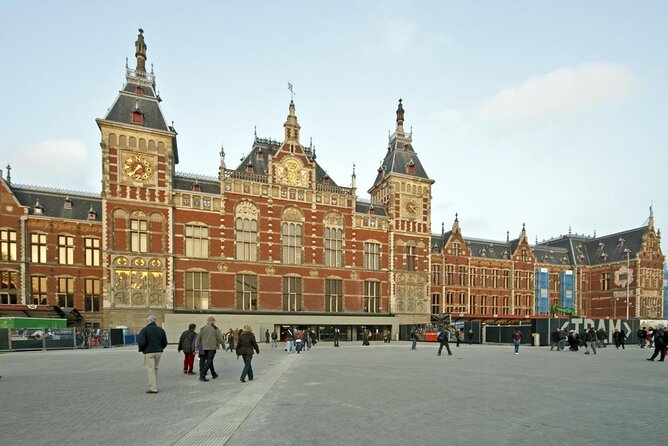
- You’ll pass major landmarks: Westerkerk, Grachtengordel canal houses, NEMO, Rijksmuseum, Amsterdam Centraal, and A’DAM LOOKOUT
- Rain plan: if weather is too bad, you’ll be transferred to a regular canal cruise
Open-Top Boats: Why Amsterdam Looks Better From the Water
Amsterdam’s canals aren’t just scenery. They’re the city’s old streets, built for movement, commerce, and daily life—so seeing them from a boat makes the whole place click.
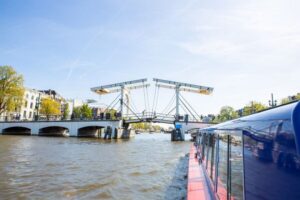
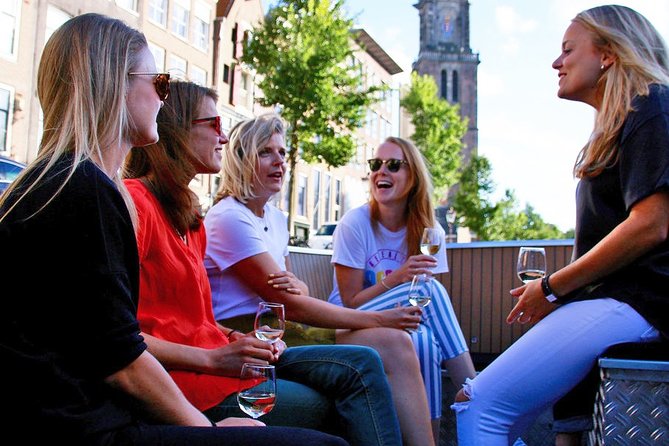
An open-top boat matters because you get fewer visual barriers. On bright days, a covered boat can turn the ride into window reflections and partial angles. With open sides and a roofless layout, you can tilt your head, look up at facades, and frame photos without feeling trapped behind glass.
And since you’re cruising for about 75 minutes, you get time to notice details beyond the big postcard spots: the shapes of the canal houses, the rhythm of bridges, and how the city’s layout changes as you move along the water.
You can also read our reviews of more boat tours in Amsterdam


The 23.40 Price Question: Is This a Value Win?
For about $23.40, you’re buying three things: time on the water, a guided interpretation, and a small-boat experience. That’s a solid deal in a city where tours can get pricey fast, especially if you’re only staying a short time.
What I like most is that you’re not paying for a museum admission or a big production. You’re paying for perspective. A canal cruise is one of the few activities where you immediately see the city’s geometry, and captain commentary helps you turn sightseeing into understanding—so you leave with “I get Amsterdam now” energy.
Where the Cruise Starts: Blue Boat Company on Stadhouderskade
The meeting point is Blue Boat Company, Stadhouderskade 501, 1071 ZD Amsterdam. The cruise ends back at the same place, which makes the whole plan simple—no second vehicle or tricky navigation.
If you want to avoid stress, arrive a bit early and plan to walk with your group toward the dock. One of the less pleasant experiences people report isn’t about the sights—it’s about missing a boat and waiting longer than expected. Extra buffer time is cheap insurance.
Good news: the meeting area is near public transportation, so you can pair this with other stops in your day without needing a car or long taxi hop.
Westerkerk to the Canal Ring: The Classic Amsterdam View You Can’t Learn From a Map
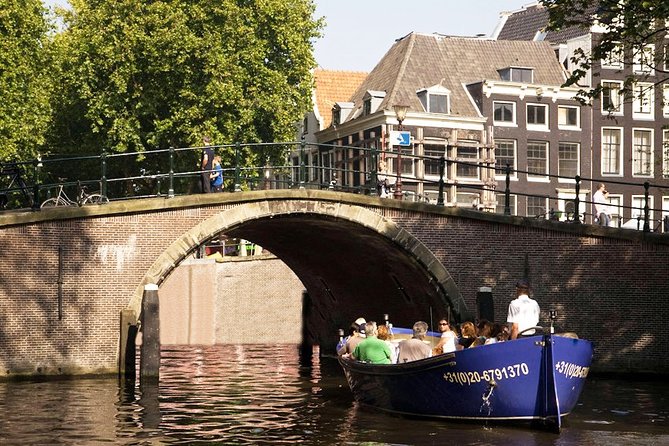
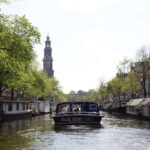
The cruise’s first major landmark is the Westerkerk, built between 1620 and 1631 in Renaissance style based on designs by Hendrick de Keyser (who’s buried in the church). The building was completed by his son Pieter de Keyser and inaugurated on June 8, 1631.
Even if you’re not a church-architecture expert, this sight works from the water because you see scale. The church is about 58 meters long and 29 meters wide, and its layout is described as two Greek crosses connected together. From the canals, you can also appreciate how major buildings anchor the surrounding streets and waterways.
From there, you move into the heart of the canal story: the Grachtengordel, the Canal District. These 17th-century canals in central Amsterdam are part of UNESCO’s World Heritage list (added in August 2010). The district is organized around the Singel, Herengracht, Keizersgracht, and Prinsengracht, with the Brouwersgracht branching out.
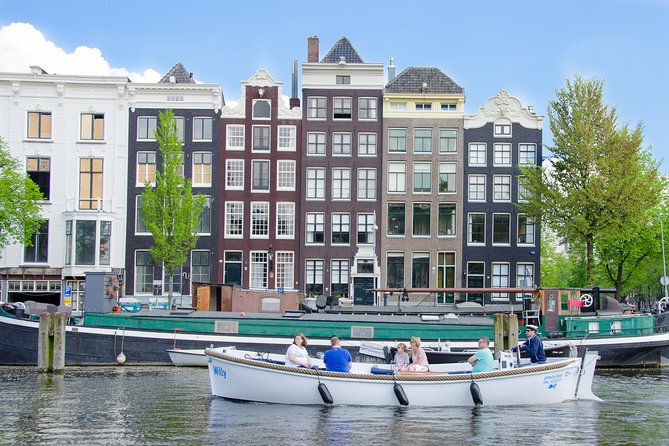
As you cruise, you’ll notice something useful: the canal houses may look “Golden Age,” but many have been restored or rebuilt over different periods. That’s why facades can vary. It’s one of those details you only catch when you’re moving slowly enough to look—so an open boat plus 75 minutes is exactly the right combo.
Spotting Why the Canal Houses Look Like They Do
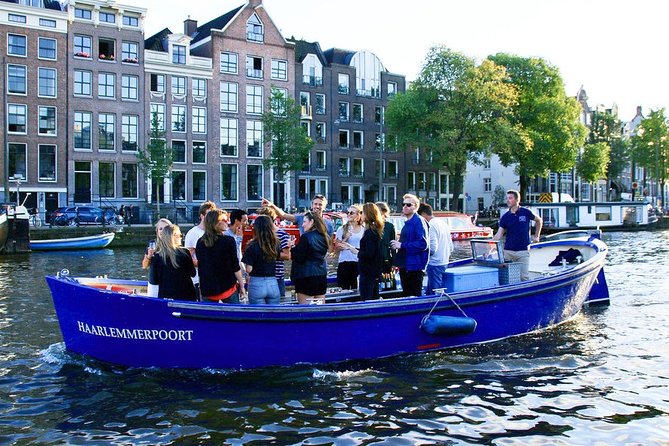
A lot of Amsterdam sightseeing is about big names—Rembrandt, Van Gogh, major museums. The canal cruise is different. It teaches you how Amsterdam’s buildings evolved.
Along the Canal District, many structures date to the Dutch Golden Age in the 17th century, but reconstruction and restoration over time create mixed architectural styles. That means you can see layers of history on one side of the water: older forms next to newer facades, with changes showing up in windows, trim, and proportions.
If you sit and watch long enough, you’ll start to recognize the city’s canal logic: the way parallel canals generally line up from the Brouwersgracht and lead gradually southeast toward the Amstel. It’s the kind of “map in motion” learning that sticks.


From Old Icons to Modern Amsterdam: Amstel Hotel, NEMO, and the City’s Mix
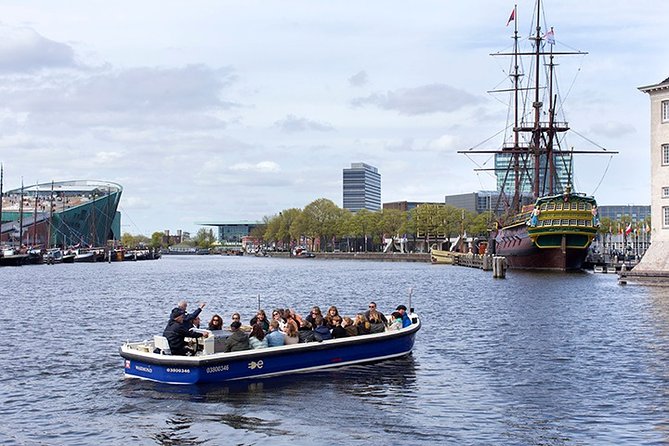
Not all the sights on this cruise are 17th-century. Amsterdam is also a working modern city, and the route reflects that.
On the east bank area of the Amstel, you’ll pass the InterContinental Amstel Amsterdam Hotel (often called the Amstel Hotel). It joined the World’s Best Hotels list in 2007 and ranked 90th at that time. It’s part of the InterContinental chain, and ownership changes have included a sale to Morgan Stanley in 2006, a purchase by Toufic Aboukhater in 2011, and an acquisition by Katara Hospitality in 2014 (still operated by InterContinental Hotels Group).
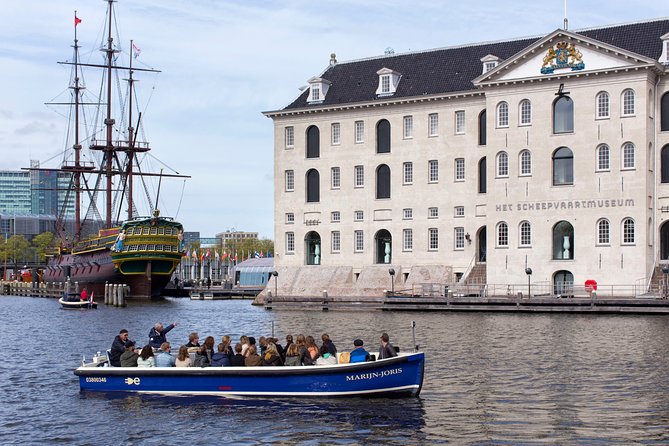
Next up is NEMO Science Museum, known for being interactive and geared to everyday contact with science and technology. It’s designed so visitors can see, hear, and experience how scientific phenomena and technology matter in daily life, and it works closely with science and education fields. It’s also a registered museum with a significant historical collection.
From the boat, NEMO is useful because it breaks the “only old buildings” rhythm. You can look at the big museum shape, then glance back at older facades and bridges and understand how the city manages both eras in the same frame.
Rijksmuseum and Amsterdam Centraal: Seeing Big Architecture at Boat Level
You’ll also see Rijksmuseum on this route. The museum houses more than 8,000 works of Dutch and European art history, including masterpieces by Rembrandt, Vermeer, and Van Gogh. From the water, it’s not about standing in front of a ticket desk. It’s about catching how a major cultural institution sits inside the city’s water-and-street layout.
Another standout is Amsterdam Centraal, designed by Pierre Cuypers, who’s also known for the Rijksmuseum’s design. One detail worth noting: it’s believed Cuypers focused mostly on the station building’s decoration, while the structural design was handled by railway engineers. That’s the kind of “how it was made” note that makes you look differently when the building suddenly feels less like a single object and more like an engineered city machine.
Boat-level sightlines help here. You notice angles that you usually miss from the sidewalk, like the relationship between the station area and the canal approach.
A’DAM LOOKOUT: The View That Connects Amsterdam North to the Canal World
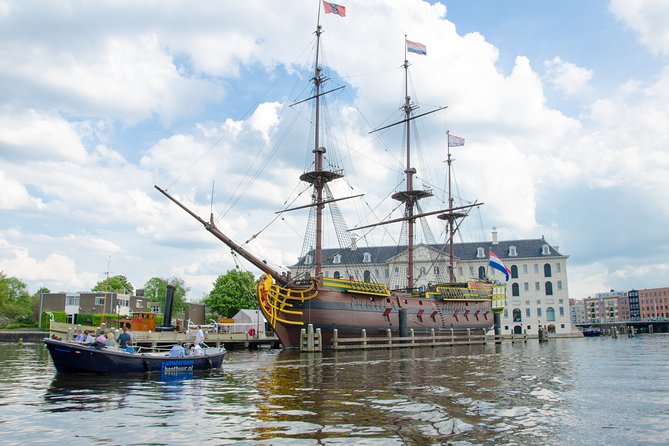
This cruise route also connects you to the modern skyline in Amsterdam North via A’DAM LOOKOUT. It’s an observation deck on top of the A’DAM Tower, offering panoramic views of Amsterdam’s historical center, its port, and the Dutch polder landscape. You’ll also be able to spot the famous UNESCO-listed canals.
What’s practical here is the “big picture” nature of the view. Even without leaving the boat, you can understand where the city’s main heritage zone sits relative to the newer waterfront and north-side development.
A’DAM LOOKOUT also includes a state-of-the-art interactive exhibition and a free audio tour about Amsterdam’s history and culture. If you want to keep extending your day after the cruise, this is the kind of stop that helps you consolidate what you saw from the water.
The Captain’s Commentary: How It Changes Your Sightseeing
The ticket includes personal commentary from the captain, and that makes the ride feel less like a sightseeing commute. Instead of just pointing at landmarks, the best narration style helps you understand “why this place matters” and “what to look for next.”
This is where open-air cruising shines. You can glance up when the captain mentions a building, then drop your eyes to the canal houses and bridges right in front of you. The best part is that the narration gives you a trail of context while you’re moving, so you’re not stuck reading afterward.
That said, sound quality depends on the day and the crowd level. Some people find the guide can be hard to hear if the boat is packed and the guide doesn’t use a microphone. Your fix is simple: sit toward the front/center where you can hear clearly, and don’t choose a seat that forces you to look through tall passengers.
Crowding, Seating, and Hearing the Guide (Practical Advice That Matters)
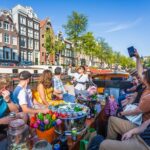
This experience is designed for small groups with a maximum of 10 travelers, so it usually stays comfortable. Still, boats can run fuller than you’d expect on popular departures, and that affects two things: hearing and visibility.
If you’re sensitive to sound, choose a departure time when the boat doesn’t feel rushed. Also, avoid seating in spots that block your view. One issue people run into is passengers sitting in the bow where taller riders can obstruct sightlines for shorter travelers.
You don’t need perfect gear. Just be intentional: pick a seat where you can see over heads and still keep your attention on the captain’s face and directions.
Timing Tips: Morning Light, Fewer Glare Moments
One useful detail that comes up again and again is that timing affects what you see. When the sun is high, reflections can soften views—especially with water and bright facades.
If your schedule allows, I’d pick an earlier slot or one that avoids the harshest sun angle. It’s a small change, but it can turn the ride from “nice photos” into “clean photos,” plus you’ll enjoy the scenery more when you’re not squinting.
Rain on an Open Boat: What to Expect and What to Bring
Amsterdam weather can swing quickly, so plan for the reality of wind and rain. This tour notes that if weather is too bad to make the cruise, you’ll be transferred to a regular canal cruise.
My recommendation: bring a lightweight rain jacket and something to protect your phone or camera. Layers beat a single heavy coat because you’ll warm up as you move around before boarding. When it’s just chilly and drizzly, an open-top ride can still be pleasant—wind is the bigger issue than rainfall.
Who This Cruise Is For (and Who Might Prefer Something Else)
This is a great fit if you want a first-day activity that gives you orientation. You’ll see major sights without negotiating ticket lines for every stop, and the captain’s narration helps you build a mental map fast.
You’ll also like it if you prefer active sightseeing. An open boat is close to the action, and you get to look up at architecture rather than only scanning along street level.
If you’re extremely picky about quiet conversation or flawless audio, you should choose your seating carefully and aim for a departure that feels less crowded. And if you have trouble with uneven sightlines, try to avoid seats where the bow area blocks shorter views.
Should You Book the Amsterdam Open Boat Sightseeing Canal Cruise?
I think this is a strong buy if you want an affordable, time-efficient Amsterdam introduction with the bonus of captain commentary. The 75-minute duration hits the sweet spot, and the open-top format gives you a more complete visual experience than many covered canal options.
Book it if you:
- want a first-time city overview with real context
- like open-air sightseeing and clear sightlines
- appreciate small groups and direct narration
Skip it (or at least choose carefully) if you:
- need guaranteed audio clarity regardless of crowding
- get very uncomfortable with rain or wind, even with a jacket
If you match your expectations to the format, you’ll come away understanding why these canals shape Amsterdam’s identity—one bridge and canal house at a time.
FAQ
How long is the Amsterdam open boat canal cruise?
The cruise is about 75 minutes.
Is the tour offered in English?
Yes, it is offered in English.
What’s included in the ticket price?
Your ticket includes the 75-minute canal cruise, small groups, and personal commentary from the captain.
What sights will I see during the cruise?
You’ll see landmarks such as Westerkerk, the Canal District (Grachtengordel), the Amstel Hotel area, NEMO Science Museum, Rijksmuseum, Amsterdam Centraal, and A’DAM LOOKOUT, viewed from the water.
What happens if it rains?
If the weather is too bad to make the cruise, you’ll be transferred to a regular canal cruise.
How many people are in the group?
The tour has a maximum of 10 travelers.