REVIEW · AMSTERDAM
Amsterdam: Off the Beaten Path Bike Tour in French
Book on GetYourGuide →Operated by Samy's Bike tours · Bookable on GetYourGuide
Amsterdam by bike beats any museum day. I love the quality bikes for different sizes, and I like how the ride pairs canal-side views with real stories in the Jewish Quarter area. One heads-up: the commentary is French, so you’ll want at least basic French comfort to catch everything.
This tour is a great fit if you enjoy moving through neighborhoods on two wheels, but you should be ready for a 2.5-hour cycling rhythm in the city.
In This Review
- Key things I’d circle before you book
- Entering Amsterdam’s quieter side by bike
- Finding Bike Rental Reine and getting your bike sorted fast
- Jordaan: the “village within the city” warm-up ride
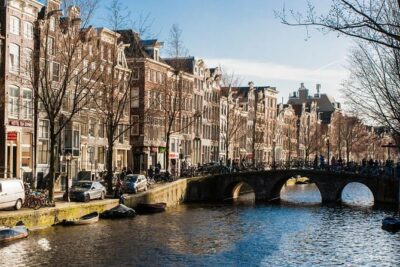
- From Centrum to Prins Hendrikkade: canal city, but with breathing room
- Warehouses and Plantage: seeing Amsterdam’s everyday layers
- WWII on two wheels: Holocaust Names Monument and Anne Frank’s footsteps
- Magere Brug, Amstelveld, and Reguliersgracht: the classic bridge finish
- The guide factor: how Samy’s French turns streets into stories
- Price and value: what $41 buys you in real terms
- Practical tips so you enjoy every stop
- Should you book this off-the-beaten-path French bike tour?
- FAQ
- FAQ
- What language is the tour in?
- How long is the bike tour, and when does it depart?
- Where do I meet the guide?
- Are bikes included, and do they have options for children?
- Can I store luggage before or after the tour?
- Can I cancel for a full refund?
Key things I’d circle before you book
- Jordaan start in narrow streets, hofjes, bridges, and canal views (with a photo pause)
- WWII focus around Anne Frank’s footsteps and the Holocaust Names Monument
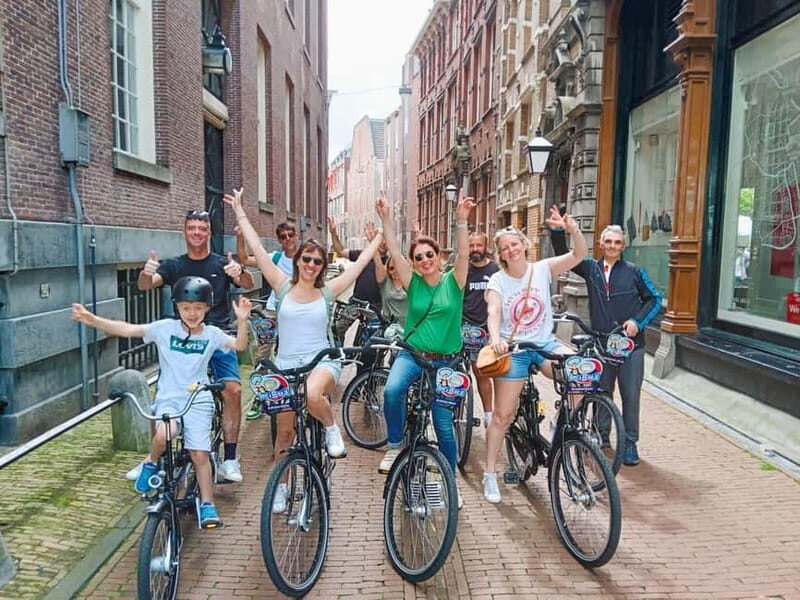
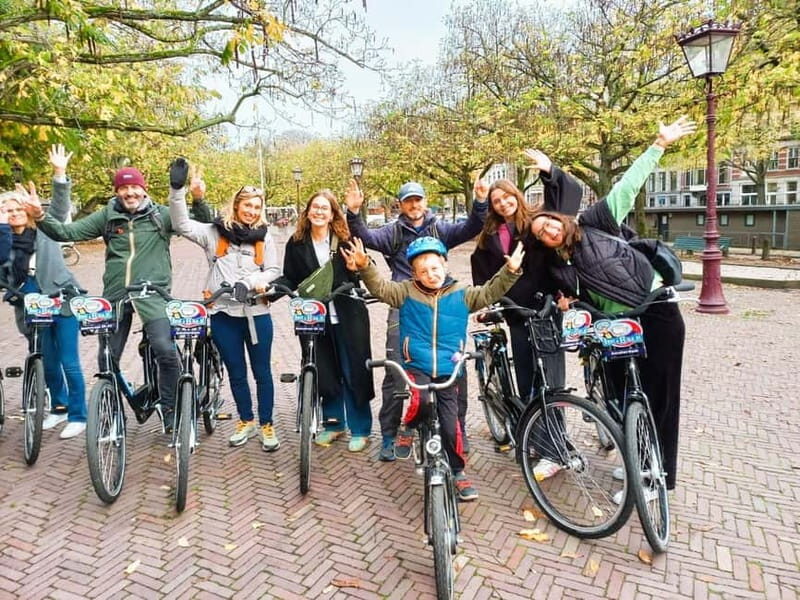
- Quality bikes included, sized for different riders (including kids, baby seats listed)
- Local guide Q&A style, with humor and daily-life anecdotes
- Canal-bridge payoff, including Magere Brug and classic photo stops
Entering Amsterdam’s quieter side by bike
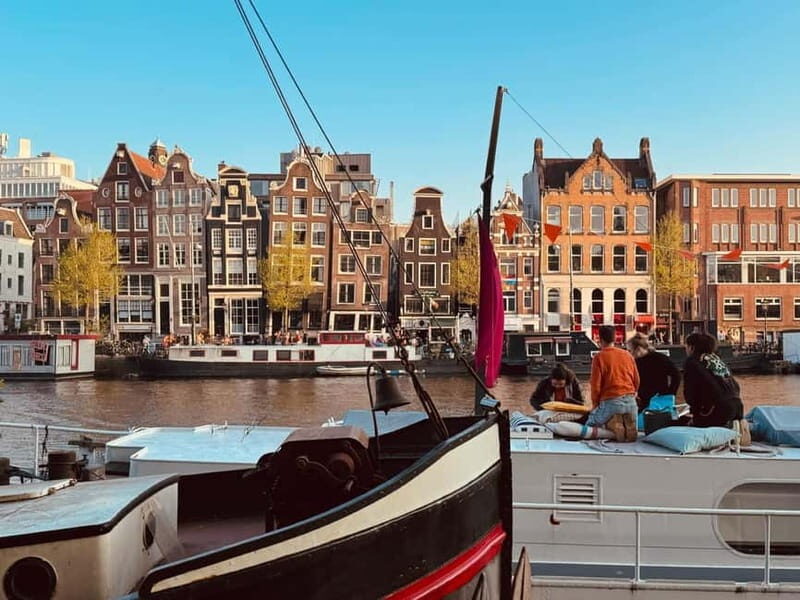
This is the kind of Amsterdam tour that makes you slow down without making you feel stuck. You’re on a bike, so you get motion and perspective at the same time: canals, narrow streets, and bridges roll by like a living map. And instead of only hitting the biggest photo spots, the route leans into the neighborhoods you’d naturally wander if you lived here.
Two things make it click. First, you’re not stuck fighting for a shared rental bike that’s the wrong size. The tour includes quality bikes for all sizes, and the setup matters because comfort makes you a better rider. Second, the guide doesn’t just list dates. You get explanations connected to daily life—education, work, health, sports, gastronomy, culture, ecology—so the city feels like a place, not a PowerPoint.
The tour is also built around a serious emotional thread: World War II and the story connected to Anne Frank. That mix—normal life details plus memory—gives the ride weight.
You can also read our reviews of more cycling tours in Amsterdam
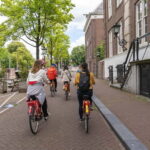
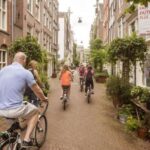
Finding Bike Rental Reine and getting your bike sorted fast
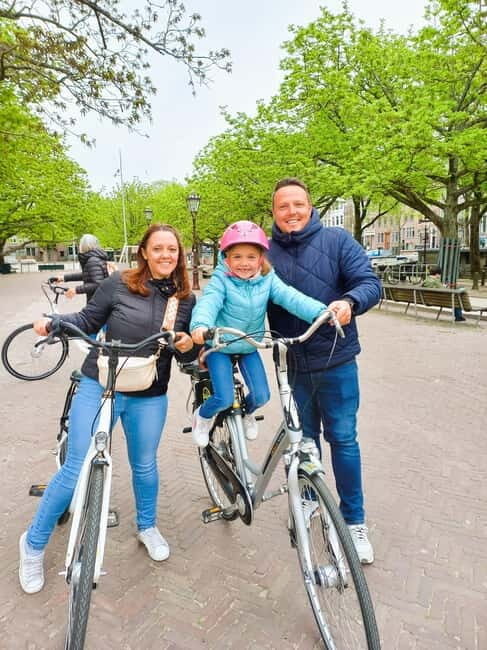
You meet in front of Bike Rental Reine (with luggage storage available), at Binnen Wieringerstraat 3, 1013 EA Amsterdam. The shop is in a small alley, about a ten-minute walk from Amsterdam Central Station. Show up about 5 minutes early, and have your reservation QR code ready.
Why I like this start: it’s close enough to the main rail hub that you’re not burning half your tour time just reaching the launch point. And because the bike shop also handles luggage storage on arrival or departure (tell them in advance), you can travel lighter if you’re in transit during the day.
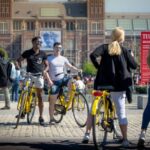
Bikes and gear are part of the value here. The tour includes proper bikes (including options noted for children and riders under 1m50). Electric bikes and cargo bikes aren’t included—you’d pay for those separately—so if you’re used to e-bikes, plan ahead.
Jordaan: the “village within the city” warm-up ride
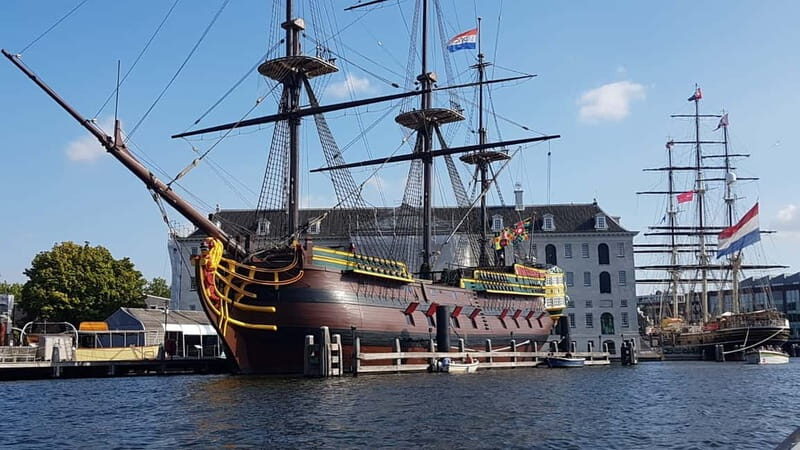
The tour kicks off in the Jordaan, and that’s smart. This neighborhood has the feel of a working-class district that kept its small-street personality. It was created in the 17th century for artisans and the working class, and today it’s known for narrow streets, lots of bridges, leaning houses, hofjes, and canal views (presented here as UNESCO World Heritage).
Your first stretch includes a guided introduction and a photo stop, about 20 minutes. This isn’t just sightseeing. It’s the part where you learn how to read the city as a rider: where the narrow turns are, where the street rhythm changes, and what kinds of canal edges and courtyards you’ll pass later.
What you’ll likely feel after this first segment: you’re not just collecting views. You’re learning the neighborhood’s “grammar.” And once you get that, the rest of the ride makes more sense—especially when the tour shifts from everyday life into WWII storytelling.
From Centrum to Prins Hendrikkade: canal city, but with breathing room
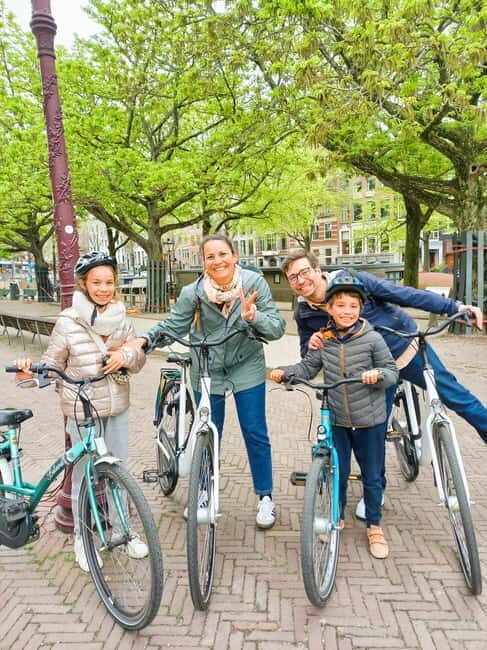
After Jordaan, you move toward Amsterdam-Centrum for about 15 minutes of guided biking and explanation. This is a transition moment. The city center can feel like a loop if you visit on foot, because the biggest streets funnel you into the busiest zones. On bikes, the city opens up: you can glide past key areas while still getting the smaller streets and bridges that help Amsterdam feel human-scale.
Then you hit Prins Hendrikkade for about 10 minutes. The value of these mid-tour stops is that you’re building context. You’re not only seeing places; you’re getting the logic of where Amsterdam’s waterways and neighborhoods connect. It helps later when you reach the Jewish Quarter area, because you can start mapping the city mentally instead of just watching.
A small consideration: there are photo stops in the mix. That’s normal, but it means you’ll stop briefly even while the tour stays moving overall. If you hate pauses, this route might feel a bit “stop-and-go.” If you like breaks to look around properly, it’s a plus.
Warehouses and Plantage: seeing Amsterdam’s everyday layers
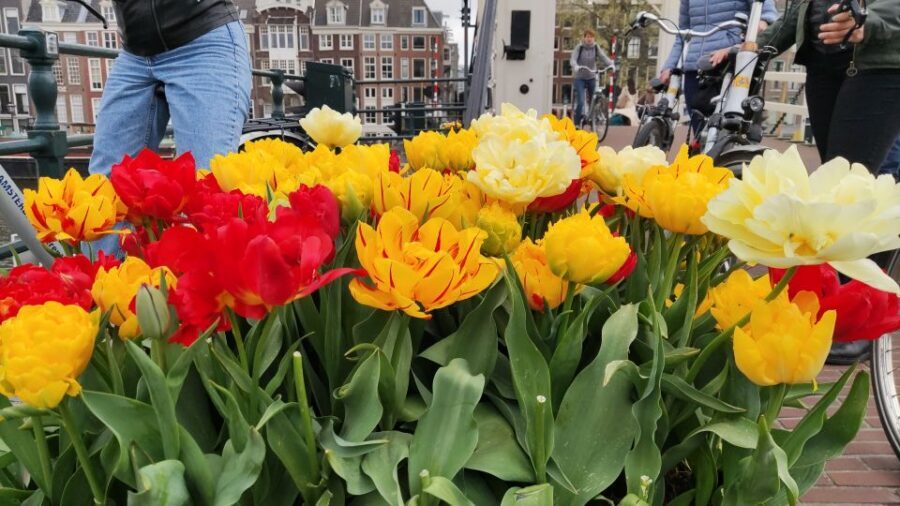
Next comes Entrepotdok with about 15 minutes guided biking. This area’s function—warehousing and canal logistics over time—adds another layer to the Amsterdam story. You get a sense of how the city moved goods and people, not just how it looked in postcards.
Then the ride continues into Plantage for about 20 minutes. Plantage is often where visitors miss the mark because they stay stuck near the core attractions. Here, you get a different tempo: streets and canal edges that feel more lived-in, where the city looks like it’s continuing beyond the tourist route.
Why this part matters for your day: it breaks the “only highlights” pattern. You still get classic Amsterdam sights later, but you also get an Amsterdam that explains itself. The guide can connect those spots to daily life topics—work, culture, ecology—so you leave with a better sense of how Amsterdam actually runs.



WWII on two wheels: Holocaust Names Monument and Anne Frank’s footsteps
This is the emotional heart of the tour. You stop for a photo and a guided segment at the National Holocaust Names Monument, with about 25 minutes on this part. The monument is dedicated to the names of the Holocaust, and it’s presented here alongside the story connected to Anne Frank.
From there, the tour keeps moving through the Jewish Quarter area while connecting details from WWII and the present day. The way it’s framed matters: you don’t just walk past a memorial. You understand how the neighborhood fits into the larger story, and how remembrance connects to the city you see today.
If you’re sensitive to heavy topics, this is your heads-up. It’s not a “light-and-laugh” segment. But it’s also not handled in a cold way. The guide’s approach—Q&A included—helps you ask questions and get context without feeling rushed.
Magere Brug, Amstelveld, and Reguliersgracht: the classic bridge finish
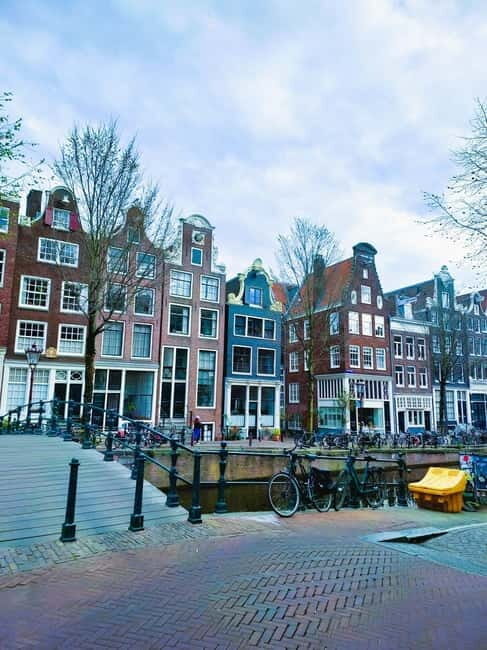
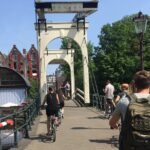
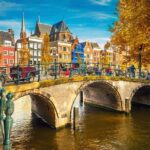
After the WWII-focused portion, the tour still delivers that postcard Amsterdam feeling, but on your terms. You bike toward Magere Brug for about 10 minutes of guided time. It’s one of those bridges that makes you understand why Amsterdam keeps earning those famous photos.
Then you have a photo stop at Amstelveld for about 10 minutes. This is a useful pause: you can step back, look around, and frame what you’ve just learned into actual city space.
Finally, there’s Reguliersgracht for another photo stop plus around 10 minutes of biking/guided time. This is the kind of ending that helps you feel you saw more than just monuments. You’re back in the canal network, back in the neighborhood mood—before you head back to the bike shop.
Stop 11 includes 15 minutes of guided biking before you return. Since it’s not labeled with a named location here, think of it as the wrap-up portion: final context, last explanations, and the ride back with the route’s logic tying together.
The guide factor: how Samy’s French turns streets into stories
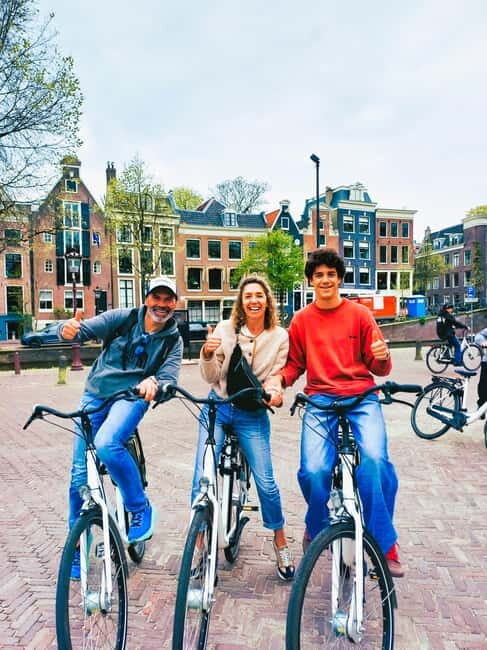
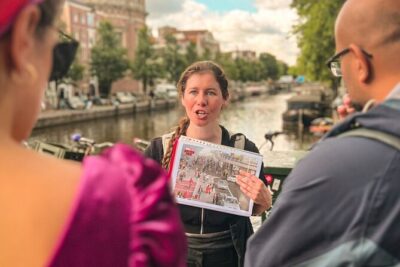
The guide on this tour is Samy, and the tour runs in French. What I appreciate about this format is that the guide isn’t limited to lectures. The structure explicitly supports questions, and the topics mentioned include education, work, health, sports, gastronomy, culture, and ecology.
In practice, that means you can ask about everyday life. How people eat. How neighborhoods differ. Why certain places feel the way they do. And because the guide blends history with daily-life anecdotes, you get explanations tied to what you’re looking at—not just general facts floating in the air.
One practical bonus: the bike tour format keeps the city moving while the guide talks. That helps your memory. You attach a story to a bridge, a canal corner, or a street bend. It’s a different way of learning than standing in one spot.
Price and value: what $41 buys you in real terms
At $41 per person for about 2.5 hours, the value is mostly about what’s included and what you avoid. You get:
- a 2h30 guided bike tour with local commentary
- quality bikes for all sizes included in the price
- a map of Amsterdam
- 10% discount on bike rental if you want to rent after the tour
- luggage storage possibility on arrival or departure (with advance notice)
- a recommendation list for Dutch, Indonesian, Surinamese restaurants, plus brown cafes
- a snack for children
If you’re comparing to tours where you pay extra for the bike, this is a big deal. Also, you’re not just paying for the ride—you’re paying for guided context in French, plus the local “where to eat” intelligence that saves time once you’re done cycling.
The one cost note to watch: electric bikes and cargo bikes are at your expense. If you need that style of bike, budget for it.
Practical tips so you enjoy every stop
Here are a few things that help this type of bike tour go smoothly:
- Bring the right expectations. It’s 2.5 hours on city streets. If you’re comfortable riding a standard bike, you’ll enjoy the pace more.
- If you don’t speak French well, prep anyway. The tour’s commentary is French, so knowing a few basic cycling and question words can help you keep up.
- Use the photo stops. They’re built for a reason—Magere Brug, Amstelveld, and Reguliersgracht are your chances to slow down, frame a photo, and actually look.
- Take advantage of the food tips after. The included recommendations span Dutch, Indonesian, and Surinamese spots, plus brown cafes. That’s useful because Amsterdam food can get repetitive fast if you only chase the obvious tourist choices.
- Ask about bike needs early. Options for children, riders under 1m50, and a baby seat are mentioned, and it’s best to communicate special requests as soon as possible.
Should you book this off-the-beaten-path French bike tour?
I think you should book if you want a bike ride that blends neighborhoods, canal scenery, and real context—without turning your day into a checklist of big-name attractions. The route focus on the Jordaan plus the WWII-linked stops around the Jewish Quarter makes it feel more meaningful than a standard sightseeing circuit.
You should also book if you like learning from a guide who mixes humor, questions, and practical details about daily life. That style helps the city stick in your head.
Skip it if French-only commentary would leave you frustrated, or if you strongly prefer walking tours over cycling on city streets.
If you’re flexible and ready for a 2.5-hour ride that goes beyond the usual highlights, this is a strong way to see Amsterdam like a local.
FAQ
FAQ
What language is the tour in?
The tour commentary is in French.
How long is the bike tour, and when does it depart?
The duration is about 2.5 hours. Departures listed are 10:30 a.m. and 1:30 p.m., and a 4:15 p.m. departure may also be possible depending on availability.
Where do I meet the guide?
Meet in front of the Bike Rental Reine shop, Binnen Wieringerstraat 3, 1013 EA Amsterdam, about five minutes before the start time. The shop is in a small alley roughly ten minutes walk from Amsterdam Central Station.
Are bikes included, and do they have options for children?
Yes. Quality bikes are included for all sizes, and the tour mentions bike options for children, including riders measuring less than 1m50 and baby seats (special requests should be made ahead of time).
Can I store luggage before or after the tour?
Yes. There is the possibility of leaving suitcases on arrival or departure. You’re asked to let them know in advance.
Can I cancel for a full refund?
Yes. Free cancellation is available up to 24 hours in advance for a full refund.