REVIEW · AMSTERDAM
Amsterdam Treasure Hunt: The Mystery of a Secret Sender
Book on Viator →Operated by Mystery City Games · Bookable on Viator
Amsterdam turns into a gameboard.
This interactive hunt in Golden Age Amsterdam has you proving your worth to a secret group, the Order of the Rosy Cross, by solving puzzles and tracking down a historic member known only as a Secret Sender. You’re not just wandering with facts. You’re hunting for clues in the city’s streets and architecture as you go.
I love the self-guided setup because it keeps you in control. You choose your start time, follow your own tempo, and still get a structured route that keeps things moving. I also like the story-driven clues: one of the best parts is how well the puzzle booklet and hints work for real engagement, including for teens.
One consideration: you’re covering about 3 km on foot in roughly 2 hours of play time, so it’s not a sit-and-read kind of activity. If your group hates walking or you start late, you may feel a bit rushed in an already busy Amsterdam day.
In This Review
- Key points at a glance
- A Secret Sender story that turns streets into clues
- How price stacks up for a 2-hour interactive hunt
- Starting at Zwanenburgwal 178: easy to find, simple to finish
- The route that keeps you from wandering aimlessly
- Five stops on the board: what each one is for
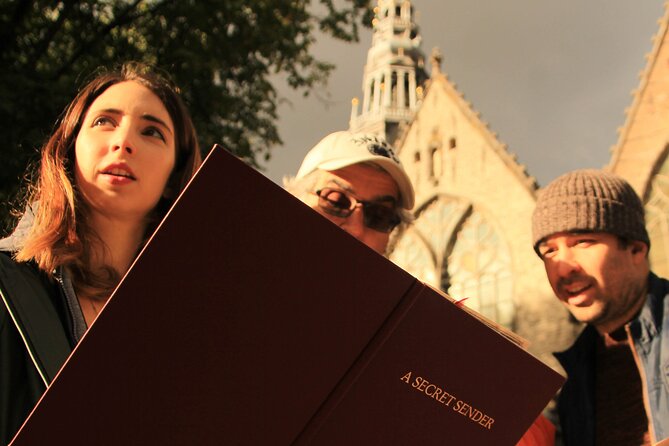
- Stop 1: Oude Kerk
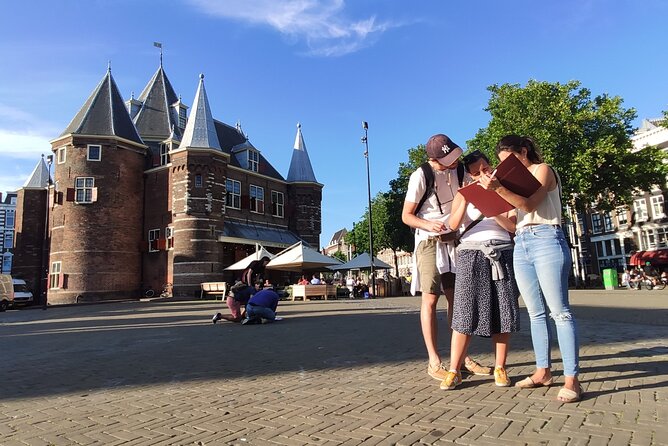
- Stop 2: Nieuwmarkt
- Stop 3: Westerkerk
- Stop 4: Torensluis
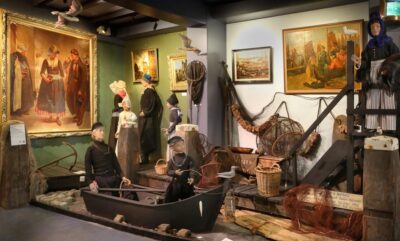
- Stop 5: Amsterdam Museum
- Self-paced means you choose the tempo, not the chaos
- What’s actually happening during the game
- Who should book: families, first-timers, and puzzle lovers
- Practical tips to make your hunt feel smooth
- Should you book Amsterdam Treasure Hunt: The Mystery of a Secret Sender?
- FAQ
- What is the duration of the Amsterdam treasure hunt?
- How far do you walk?
- Is it self-guided or guided?
- Where does the tour start and end?
- What language options are available?
- What is the cancellation policy?
Key points at a glance
- A story with real stakes: join the Order of the Rosy Cross and figure out who A Secret Sender really is
- Self-paced, still structured: a clear route through the center makes it easier than a DIY scavenger hunt
- Five named landmarks to guide you: Oude Kerk, Nieuwmarkt, Westerkerk, Torensluis, and Amsterdam Museum keep the game on track
- Designed for teens: the challenge level tends to feel just right for older kids
- Short and doable: 2 hours and around 3 km fits well into first-days-in-town plans
- A real kit experience: the materials are more than a single phone screen, and you’ll have a booklet-like puzzle flow
A Secret Sender story that turns streets into clues
This Amsterdam activity is built like a mystery you can walk through. The premise is simple: a secretive order wants new members, and you’re the one being tested. You have to solve an ancient puzzle, then uncover the identity of a historic person connected to the case—A Secret Sender—using clues found around the city.
What makes that more fun than a standard walking tour is the way the storyline gives you a reason to look closely. You’re not just checking boxes of famous places. You’re searching for answers. That search changes your attention: you notice details you’d usually ignore, like shapes, patterns, and layout cues at the landmarks on your route.
Also, the format is friendly for mixed groups. Adults can treat it like a light city brain-teaser, while kids and teens have enough interaction to stay interested. One family-style outing worked well because the puzzles kept teenagers actively involved rather than drifting off into separate sightseeing plans.
You can also read our reviews of more tours and experiences in Amsterdam.



How price stacks up for a 2-hour interactive hunt
The ticket price is $30.25 per person for about 2 hours of play time. That sounds like it should be “just a puzzle,” but the value comes from a few practical choices:
- You get a mobile ticket and a ready-made experience flow, so you’re not planning and troubleshooting your own scavenger hunt.
- You’re given a defined 3 km route through the center, which reduces the guesswork of where to go next.
- The materials and clues are built to be used while walking, which is part of why the experience tends to feel smooth and engaging.
In my view, this is best value when you’re trying to get more out of a short time window. If you have a layover, a free afternoon, or you want something you can do early in your trip to orient yourself, the cost feels easier to justify. For longer trips, it’s also a good “reset” activity on day one because it gets you moving and helps you learn the city layout without feeling like homework.
If you’re the type who hates any kind of puzzle or prefers purely guided narration, you may need to mentally adjust. This is active sightseeing. You participate.
Starting at Zwanenburgwal 178: easy to find, simple to finish
You meet at Zwanenburgwal 178, 1011 JH Amsterdam, and the hunt ends back at the same meeting point. That matters more than it sounds. Amsterdam can be tricky for logistics. A round-trip close to transit and central streets lowers the stress factor.
The start and finish locations also have real staff presence. One guest highlighted that the people at the beginning and end were friendly and fun to chat with, and another specifically mentioned Ben as a standout host. If you get someone like Ben, you’ll likely appreciate the quick help and warm handoff before you start solving.
You’ll want to plan a little time before your start so you can get oriented, pick up your game materials, and settle into the pace. A small thing, but it can change how smoothly the first puzzle goes.
The route that keeps you from wandering aimlessly
The game runs along a roughly 3 km route through central Amsterdam. The key word here is structured. This isn’t open-ended. You have named stops, and you’re guided from one to the next.
Because the route is only a couple of kilometers, the pace stays lively. You’ll be able to connect multiple landmarks without burning an entire afternoon. It also makes the “self-guided” part feel more like freedom than confusion—your next move is waiting for you, right when your energy needs a new task.
One practical tip from the experience style: walking time adds up. Even though the play window is around 2 hours, plan to add extra minutes for the moments where your group slows down to read clues and compare answers. If you start early, you’ll feel more in control of timing.
Five stops on the board: what each one is for
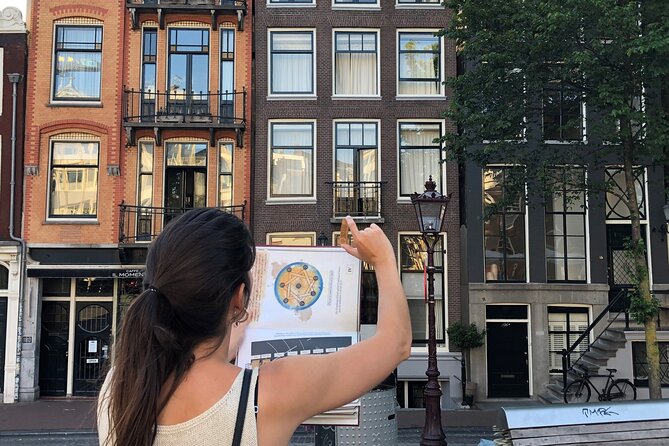
Your hunt uses five named stops, each acting like a puzzle checkpoint. The idea is consistent: you’ll pause at the stop, look for clue information tied to the mystery, solve what you can with your group, then move on to the next location.
Here’s what that means in plain terms for your walk:



Stop 1: Oude Kerk
This is your first checkpoint, so it sets the tone. Your job is to start paying attention fast—read the clue prompts, use what you notice at the location, and begin moving through the logic of the mystery. A good first stop matters because it helps you understand how the puzzles think.
A mild drawback here: if your group starts slow, you’ll carry that drag into the rest of the route. Once you get rolling, the hunt tends to feel smoother.
Stop 2: Nieuwmarkt
This middle stop keeps momentum. By now you should have a rhythm: solve a clue, confirm your direction, and keep walking with purpose. Nieuwmarkt is another place where the puzzle depends on city details you can actually see while you’re standing there.
This checkpoint is especially useful for anyone who wants the game to feel like real city exploration rather than a sequence of phone screens. You have to look up and around.
Stop 3: Westerkerk
Westerkerk is another location that helps maintain the “landmarks as evidence” feel. The game leans on architecture and history as clue sources, meaning you’ll likely spend a few minutes comparing what the puzzle suggests with what you can observe.
If you like puzzles that make you stop and think, this is a good place for the group discussion to happen. It’s also a natural place to regroup if you’re solving with a mixed-age crowd.
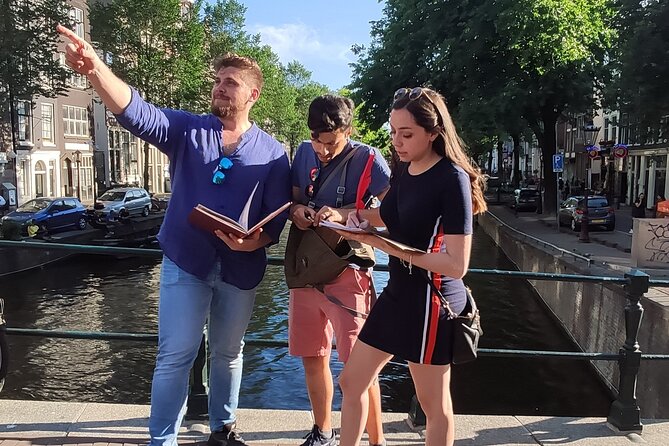
Stop 4: Torensluis
This stop keeps your route connected through the city center. By now, you’re not just doing sightseeing. You’re moving through the story, step by step, and that makes the walk feel less like “random wandering.”
Potential snag: if the weather is hot or cold, mid-route stops are where you’ll feel it most. It’s short, but it’s still walking. Wear comfortable shoes and keep water in mind.
Stop 5: Amsterdam Museum
Ending at Amsterdam Museum works well because it feels like a payoff location—your final clue solving happens near a major cultural stop. The route is designed so you finish back at the meeting point, so you don’t end in a complicated place where you need to figure out your next move.
If you’re doing this early in your trip, you can also turn the museum area into part of your next sightseeing plan. The hunt acts like a warm-up for more formal museum time if that’s your style.
Self-paced means you choose the tempo, not the chaos
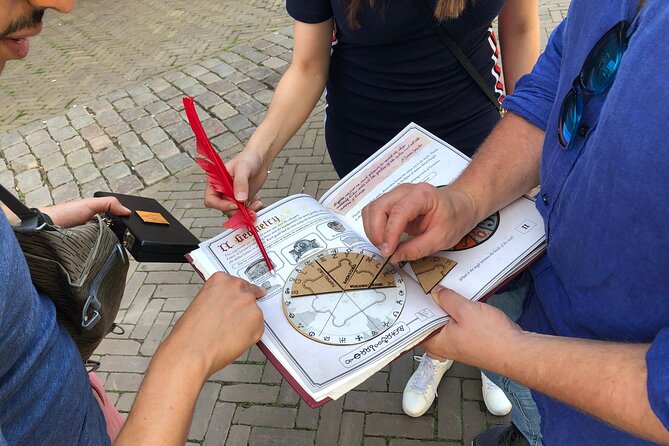
The experience is self-paced, but it’s not aimless. You’re given a route and checkpoints. Then you decide how long to spend at each stop.
That flexibility is a big deal for families and couples. If one person wants to race through puzzles and another person wants to read every clue carefully, you can meet in the middle by taking a realistic approach: solve together, then take a quick look around after you’re done.
One review-style detail that’s useful: the clues are often described as challenging enough to be exciting. That usually hits a sweet spot for teenagers and adults—smart, but not so hard that people get stuck.
If you’re traveling with a larger group, the experience may feel more complicated than it does for a smaller team. More people means more opinions and more time spent debating answers. For best results, think in terms of a tight group that can make decisions together.
What’s actually happening during the game
During the hunt, you’ll:
- Walk around discovering interesting buildings and monuments
- Solve puzzles while exploring with friends
- Learn true stories from the city’s history
That last bullet matters. A scavenger hunt can be either purely gimmicky or genuinely educational. This one is designed to blend puzzle solving with real historical storytelling, so you’re not just collecting answers—you’re building context as you go.
It’s also available in multiple languages: English, Dutch, French, German, Spanish, and Italian. If language matters for your group, this is a strong advantage because the experience is designed for more than just one audience.
Who should book: families, first-timers, and puzzle lovers
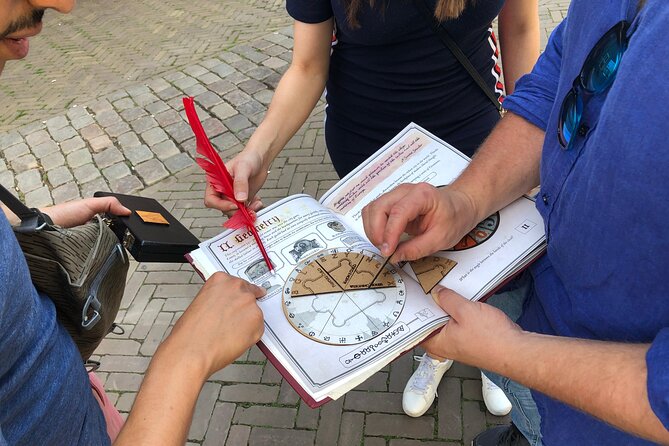
This activity is made for people who want to move through Amsterdam while staying mentally engaged.
It’s especially good for:
- Teenagers and teens-at-heart: it has the “mission” structure that keeps younger people involved, not passively watching.
- Couples: the hunt-and-walk combo makes for a fun shared afternoon, and it’s easy to turn into a light competition without turning it into stress.
- First couple of days in town: it helps you learn where things are and gives you a reason to see the center beyond a single canal cruise or a museum checklist.
- Groups who like an activity with an exit ramp: because the game is time-bound (around 2 hours), you’re not stuck for half a day if the mood changes.
A small reality check: you do need to be comfortable walking. If your group’s mobility is limited, this might feel like too much distance. But the “most people can participate” guidance suggests it’s workable for many visitors—just make sure your footwear and pace match the plan.
Practical tips to make your hunt feel smooth
Here are the choices that will make the difference between an enjoyable afternoon and a slightly irritating one:
- Start early if you can. One key practical note: there’s quite a bit of walking, so early timing helps you keep the energy up.
- Bring a good attitude about puzzles. If you accept that you’re solving as you go, the experience feels playful and rewarding.
- Use the group as a team, not a debate club. Assign roles lightly: reader, clue checker, and walker who keeps the group moving to the next stop.
- Wear comfortable shoes. You’ll cover around 3 km total, and you don’t want your feet to turn the story into a chore.
- Keep your backpack or kit handling simple. One review mentioned a backpack that was fine but not easy to buckle and unbuckle—so if you get a carry kit, set it up before you start so you’re not fiddling mid-route.
If you want to turn the hunt into a full day, plan your lunch nearby afterward. One family fit the hunt into a longer day and then grabbed food after, which worked well because the walk leaves you ready for a break.
Should you book Amsterdam Treasure Hunt: The Mystery of a Secret Sender?
Book it if you want a fun, structured way to explore central Amsterdam in a short window. It’s a strong pick for teens, for couples, and for anyone who likes the idea of solving clues while walking past landmarks instead of just listening to a guide the whole time.
Skip it if your ideal sightseeing day is mostly seated, mostly guided by narration, or you dislike puzzle-solving. The experience is designed for active participation, and you’ll feel it in the route length and the stop-and-solve pacing.
If you’re on the fence, here’s the decision rule I’d use: if you can picture yourself enjoying a 2-hour walking game with real city stops and a clear finish back where you started, this one is worth your afternoon.
FAQ
What is the duration of the Amsterdam treasure hunt?
It’s about 2 hours of play time, with a route of roughly 3 km through central Amsterdam.
How far do you walk?
The route is around 3 km total, moving between five named stops in the city center.
Is it self-guided or guided?
It’s self-guided. You complete the puzzle hunt on your own pace while following the route and stops.
Where does the tour start and end?
It starts at Zwanenburgwal 178, 1011 JH Amsterdam and ends back at the same meeting point.
What language options are available?
The experience is offered in English, Dutch, French, German, Spanish, and Italian.
What is the cancellation policy?
You can cancel for a full refund up to 24 hours before the experience start time. Free cancellation is available, and refunds are based on local time.