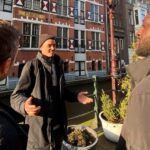
Walk where Amsterdam’s Jewish story still lives. In about two hours, this small-group walking tour connects key Jewish Quarter landmarks to the Dutch Golden Age and the Nazi occupation from 1940 to 1945. I like that you finish right at the edge of the Anne Frank House area, so the history feels very close to what you might see next. With a max of 15 people, the guide can keep the pace human and responsive.
The guide work is a big reason this tour performs so well. In particular, I’d expect the kind of storytelling style people rave about from guides like Aaron, James, and Andrea, with careful attention to emotion and context, not just dates and names. One consideration: the Anne Frank House entrance ticket is not included, so if you want to go in, you’ll need to plan that extra step.
In This Review
- Key Highlights to Look For
- Two Hours Through Amsterdam’s Jewish Quarter
- Sephardic Golden Age Story and an Active Synagogue You Can Spot
- Nazi Occupation, Monuments, and the Deportation Chapter
- Resistance, Deportation Camps, and the Human Scale of Events
- Plantage Area History and the Spinoza Monument Stop
- Dam Square and the Royal Palace: Power Meets Persecution
- Finishing Outside Anne Frank House: What You Can Do Next
- Price, Group Size, and Guide Impact (Aaron, James, Andrea)
- Should You Book This Jewish Quarter Heritage Tour?
- FAQ
- FAQ
- How long is the Amsterdam Jewish Quarter Heritage Walking Tour?
- Where does the tour start?
- How much does the tour cost?
- Is the tour offered in English?
- How big is the group?
- Is the Anne Frank House entrance ticket included?
- Does the tour include hotel pickup and drop-off?
- Do I need a mobile ticket?
- Can I bring a service animal?
- Can I get a full refund if I cancel?
Key Highlights to Look For
- Small-group size (max 15): easier questions and a more personal pace for tough history
- Sephardic Jewish roots in the Dutch Golden Age: see how a wealthy community shaped visible landmarks
- WWII focus (1940–1945): Nazi occupation, deportations, and what resistance looked like locally
- Plantage area history plus the Spinoza monument: a shift from memorial sites to a lived-in neighborhood story
- Dam Square and the Royal Palace walk: connect persecution with the political center of the city
- Finish outside Anne Frank House: a natural stepping-stone for your next visit
Two Hours Through Amsterdam’s Jewish Quarter
Amsterdam can feel like it’s all canals and quick photo stops. This walk is different. You’re on foot for about two hours, moving through the Jewish Quarter with a local guide in English and a small group that stays under 15 people.
That time window is practical. You get an ordered storyline without burning a whole day, and it works well even if your schedule is tight. It also helps if you’re planning an Anne Frank House visit soon, because you’ll arrive with more context for what you’re seeing.
You can also read our reviews of more walking tours in Amsterdam



Sephardic Golden Age Story and an Active Synagogue You Can Spot
The first part sets the scene: Amsterdam’s Jewish community history, with a spotlight on the Sephardic community. During the Dutch Golden Age, they became one of the largest and richest Jewish communities in Europe, and that presence showed up in major religious landmarks.
One stop highlights a synagogue that remains an active place of worship while also drawing visitors. That matters because it keeps the story from turning into a museum-only look at the past. You’re encouraged to notice how religious life, architecture, and community wealth intersected in the city’s everyday reality.
Nazi Occupation, Monuments, and the Deportation Chapter
Then the tour turns hard—into the Nazi occupation period in the Netherlands from 1940 to 1945. You’ll visit a monument connected to Jewish deportation, and the guide explains what deportation meant for people in Amsterdam, not just as an abstract event.
This section is the kind of stop where listening closely matters more than taking photos. The route is designed to keep the focus on why these locations were chosen and how they fit into the wider machinery of persecution. If you like history that connects the city to human consequences, this part is built for you.
A recurring theme in the best feedback is how guides handle painful material with sensitivity. People praised guides for compassion and thought-provoking storytelling, including accounts that connect local events to wider patterns of collaboration and suffering.
Resistance, Deportation Camps, and the Human Scale of Events
After the deportation monument comes the local story of Jewish resistance. This is important because it avoids a one-note narrative of only victimhood. You get a clearer picture of what resistance looked like in Amsterdam’s Jewish community during the war years, even when options were limited.
From there, the walk addresses deportation camps. You’ll hear how the routes and outcomes shaped lives, families, and futures. The goal isn’t sensational shock; it’s understanding the pathway from persecution to deportation in a way you can remember later.
If you’re the type who likes questions answered clearly, this section is also where the guide’s personality shows. Many people specifically mention that their guides were attentive and handled questions with care.
Plantage Area History and the Spinoza Monument Stop
Next, the tour shifts in tone and geography toward the Plantage area. You’ll see the neighborhood and hear its history, which helps you think of these wartime stories as part of a real city people lived in every day.
Plantage is also a good breather in the pacing. You’re moving from memorial-heavy points to a place where the city feels more ordinary, which makes the contrast hit harder. It’s easier to grasp how much was stolen when the surroundings once held routine.
The tour also includes a stop for the Spinoza monument. This is a smart move in the itinerary because it pulls you toward Jewish intellectual and cultural presence beyond the wartime chapters. It reminds you that Jewish life in Amsterdam was more than one era, even though WWII dominated so much of the legacy people carry today.
You can also read our reviews of more historical tours in Amsterdam






Dam Square and the Royal Palace: Power Meets Persecution
Then you’ll walk toward Dam Square and the Royal Palace. This is where Amsterdam’s political center enters the story. It can feel jarring at first, but that contrast is the point: the same city that carried grand civic power also contained the locations where persecution was carried out and endured.
Dam Square is a natural meeting point for visitors, so adding it here makes the tour feel anchored in central Amsterdam. You’re not only wandering in the quiet edges of the city; you’re seeing the big public spaces too, with a new lens.
If you prefer tours that connect history to geography, this stretch is where it clicks. It helps you link what you see in the city square to what you learned just minutes earlier.
Finishing Outside Anne Frank House: What You Can Do Next
The tour ends with more on the Anne Frank story, finishing outside the Anne Frank House museum area. This is a strong close because it brings the wartime context into a widely known narrative. You’ll leave with a clearer sense of how the Jewish Quarter experience connects to what Anne Frank represents.
Here’s the key practical point: the Anne Frank House entrance ticket is not included. So your next move depends on your plans. If you want to go inside, plan that separately so you don’t lose time at the end of your walk.
Also note that the tour is listed to end back at the meeting point, even though it culminates at the Anne Frank House area. In practice, expect a final guided path that brings you back toward the starting area after that story wrap-up.
Price, Group Size, and Guide Impact (Aaron, James, Andrea)
At $29.52 per person for about two hours, the value comes from three things: a local guide, multiple major stops in one route, and a small group size. This isn’t just a stroll with trivia. You’re getting guided interpretation for sites tied to Jewish community life and WWII events.
Group discounts and a mobile ticket make it convenient, and hotel pickup/drop-off is offered for selected hotels, which can save time if you’re staying nearby. Also, this is offered in English, and the pace is set for most travelers, so you’re not likely to feel like you need special gear beyond comfortable walking shoes.
One more reason this tour gets such high marks: the guide experience. People called out guides like Aaron and James for being history-focused but compassionate, and Andrea for deep knowledge and a pleasant, engaging style. That combination matters here because the subject is emotionally heavy, and the way it’s explained can make or break your experience.
It’s also worth noting the broader signal: the tour averages a 4.8 rating with 149 reviews and is recommended by 95% of people. That doesn’t mean it’s perfect for everyone, but it does suggest the average experience is strong.
Should You Book This Jewish Quarter Heritage Tour?
I think you should book this tour if you want WWII and Jewish Amsterdam history explained through real locations, not just a lecture. It’s especially useful if you’re also planning to visit Anne Frank House, because you’ll arrive with context and leave with better sense of the neighborhood’s story.
Skip it or adjust expectations if you prefer lighter, upbeat sightseeing. This walk deals directly with deportation and camps, so bring the emotional readiness for that. And if Anne Frank House is a must for you, factor in that you’ll need your own entrance ticket.
FAQ
FAQ
How long is the Amsterdam Jewish Quarter Heritage Walking Tour?
It runs for about 2 hours.
Where does the tour start?
The meeting point is Amstel 51C, 1018 EJ Amsterdam, Netherlands.
How much does the tour cost?
The price is $29.52 per person.
Is the tour offered in English?
Yes, it’s offered in English.
How big is the group?
The tour has a maximum of 15 travelers.
Is the Anne Frank House entrance ticket included?
No, the entrance ticket to the Anne Frank House is not included.
Does the tour include hotel pickup and drop-off?
Hotel pickup and drop-off are included for selected hotels only.
Do I need a mobile ticket?
Yes, it’s listed as a mobile ticket.
Can I bring a service animal?
Yes, service animals are allowed.
Can I get a full refund if I cancel?
The tour has free cancellation. You can cancel up to 24 hours in advance for a full refund, and changes within 24 hours aren’t accepted.