REVIEW · AMSTERDAM
From Amsterdam: Day Trip to the Charming Brussels and Bruges
Book on GetYourGuide →Operated by Amigo Tours Spain · Bookable on GetYourGuide
Brussels and Bruges in one day feels unreal. This full-day guided tour covers Grand Place and Manneken Pis in Brussels, then shifts to Bruges’ canal magic with stops like Rozenhoedkaai and the Belfry. What I like most is the simple structure: coached transfers plus planned guided time, so you’re not stuck figuring out transit. One drawback to plan for: it’s a long day with plenty of walking, and lunch plus entry tickets are on your own.
What I really like is how much you see for the money: a guided Brussels circuit (including a photo stop at Atomium) followed by a guided Bruges circuit with multiple “wow” photo points. I also appreciate the human touch—people specifically praised guides like Adrian and Jorge for being upbeat, organized, and helpful with photos. The consideration: if you have mobility limits, you’ll want to double-check fit, because the tour is listed as wheelchair accessible but also marked as not suitable for people with mobility impairments.
In This Review
- Quick hits: what makes this Brussels + Bruges day trip work
- Brussels and Bruges in one day: what you should expect
- Getting there from Amsterdam: the coach ride, breaks, and timing
- Brussels highlights: Grand Place, Manneken Pis, and the Atomium photo moment
- Brussels add-ons: Tintin, Mont des Arts, and the Royal Galleries tour
- Bruges first impression: canals, cobbles, and beguinage calm
- Bruges walk highlights: Belfry, City Hall, and classic photo angles
- Half Maan brewery: beer history as a guided experience
- Food and entry fees: how to budget a realistic day
- Price and value check: is $170 a fair deal?
- Who this trip is for (and who should think twice)
- Final verdict: should you book this Brussels and Bruges day trip?
- FAQ
- How long is the day trip from Amsterdam to Brussels and Bruges?
- Where do I meet the guide in Amsterdam?
- Is food and drink included?
- What languages is the live guide?
- How long is the bus ride to Brussels (and back)?
- Is the tour wheelchair accessible?
Quick hits: what makes this Brussels + Bruges day trip work
- A long but planned route: about 3.5 hours each way by climate-controlled coach, with breaks built in
- Brussels core sights: guided stops at Grand Place and Manneken Pis, plus scenic viewpoints
- Bruges canal photo stops: Rozenhoedkaai, Bonifacius Bridge, and more classic angles
- Real Belgian flavor stops: a guided visit at Halve Maan brewery (beer-focused)
- Time balance: guided walking plus about 2 hours of free time in each city
- Guides who help you work the camera: names like Adrian and Jorge came up often in feedback
Brussels and Bruges in one day: what you should expect
This tour is built for people who want two of Belgium’s biggest hitters without spending a night on the road. You’ll start with Brussels’ medieval center—think grand guild buildings and instant “postcard” views—then you’ll roll into Bruges for canals, bridges, and cobbled lanes. It’s a fast paced day, but it’s not chaotic, because the day is chunked into guided blocks plus free time.
The best part is that you get guided context while still having time to wander. Brussels is where you’ll learn the story behind the symbols, and Bruges is where you’ll use that knowledge while you stroll through the preserved medieval layout. If you like city walking tours but don’t want to plan anything, this format makes sense.
You can also read our reviews of more tours and experiences in Amsterdam
Getting there from Amsterdam: the coach ride, breaks, and timing
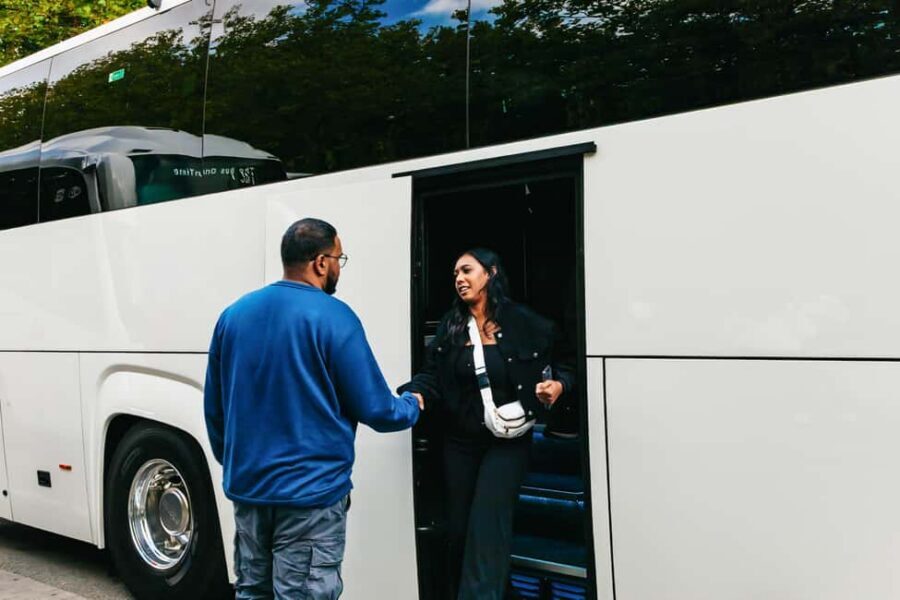
You’ll meet your group outside Aloha Bowling and look for a guide holding an Amigo Tours sign. The drive is about 3.5 hours each way, and your day starts early enough that you’ll likely feel like you’re “day tripping” even though it’s practically a mini-journey.
In the feedback, people noted the bus was clean and comfortable, and that there are bathroom and quick break stops during the ride. One person even said they made a bathroom/food break after about 90 minutes on the outbound trip and a quick stop on the way back. That matters because you’ll be stepping out a lot once you reach Belgium.
Group size can be another quiet quality factor. One review noted a group of around 12, which usually means less waiting and smoother movement through crowds. If you’re sensitive to bus-group energy, it’s still worth going in expecting a group day, just not an enormous one.
Brussels highlights: Grand Place, Manneken Pis, and the Atomium photo moment
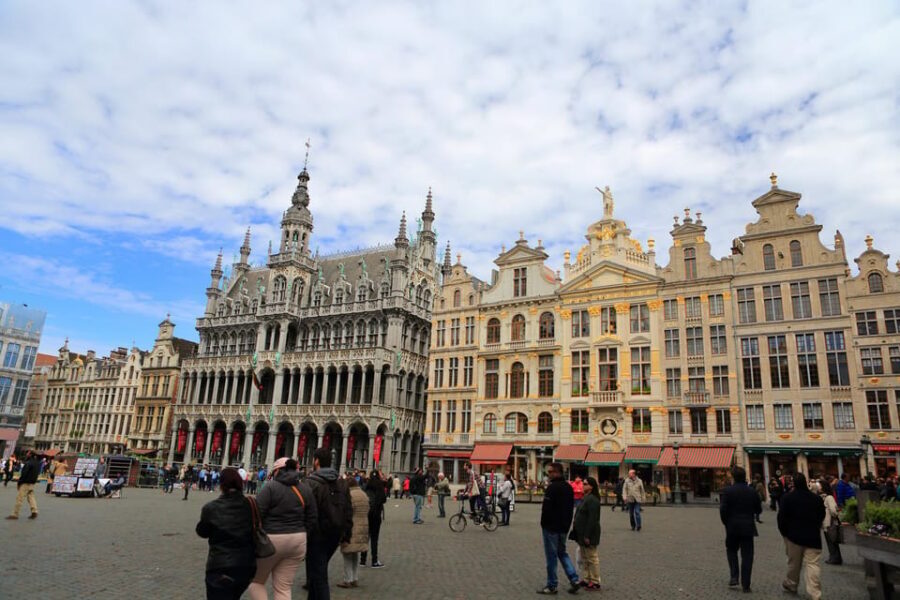
Brussels starts with iconic “you can’t miss it” landmarks, but the tour keeps you moving in a way that feels efficient rather than rushed.
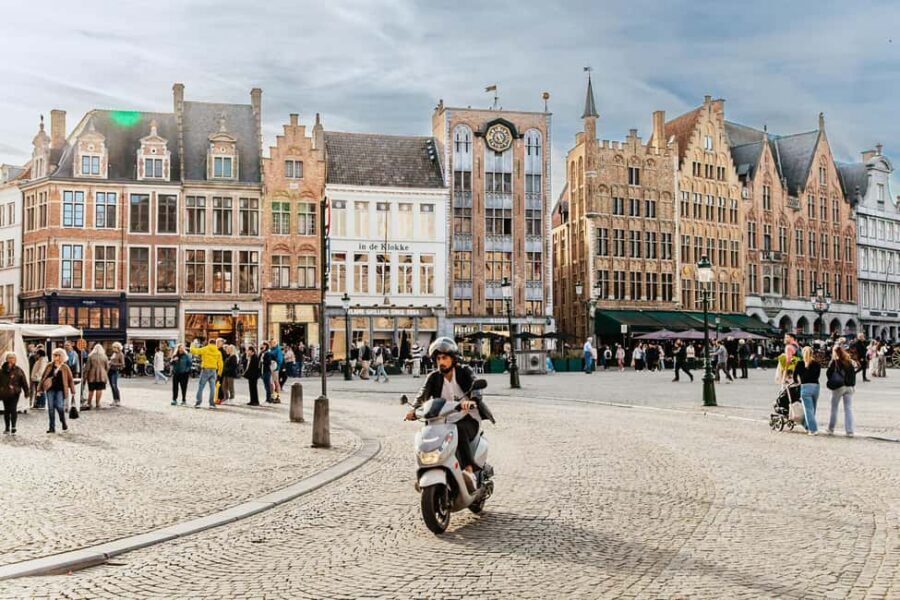
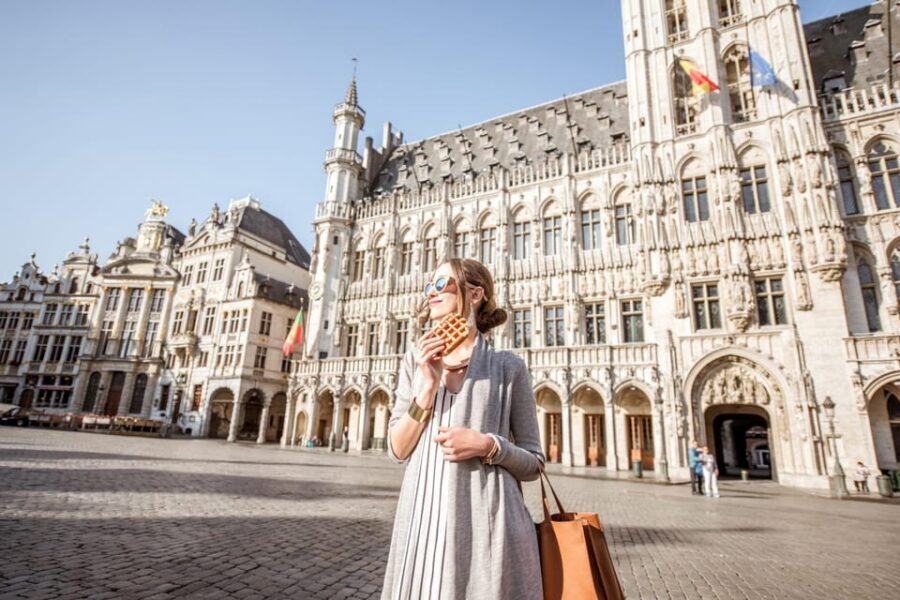
Grand Place is the first big wow. It’s famous for the 17th-century guildhalls and the grand Town Hall backdrop, and a guided walk helps you notice details you’d likely skip if you were just snapping photos. You’ll also have a guided segment inside the Royal Galleries area, which gives you a sense of how Brussels mixes old city heart with shopping-era elegance.
Then comes Manneken Pis, the tiny statue that somehow causes huge reactions. It’s funny in the best way, and it’s also a cultural symbol, not just a joke. The guide’s job here is to connect the quirks to the city’s history so it feels like more than a quick stop at a famous spot.
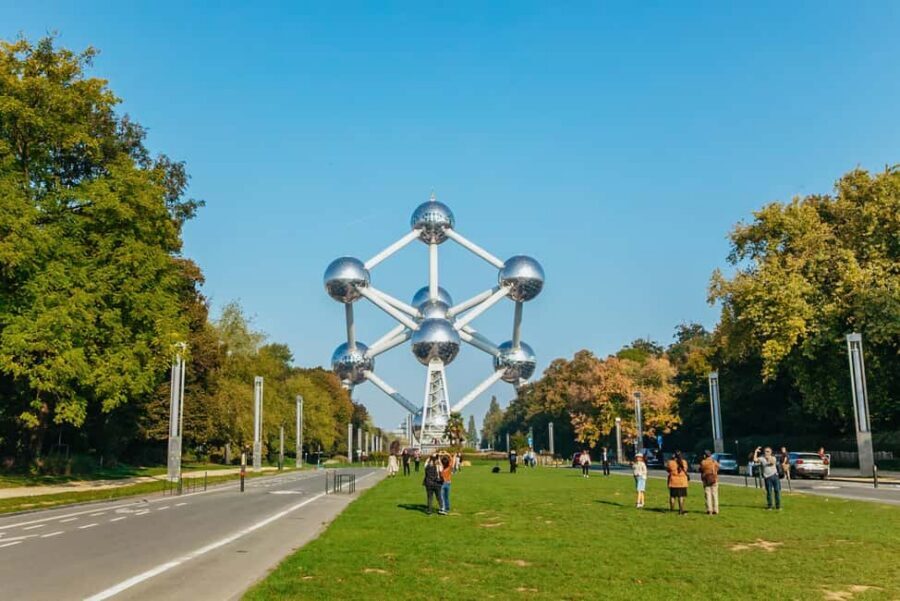
Atomium is the other standout beat. You’ll get a photo stop (about 30 minutes), which is exactly what it should be for a structure like this. If you’re hoping for deep interior exploration, you should temper expectations, because this is a stop for views and photos, not a long museum-style visit.
Brussels add-ons: Tintin, Mont des Arts, and the Royal Galleries tour
After the big-name hits, the day adds a few extra Brussels moments that make the city feel more specific and less generic.
You’ll visit a Tintin comic mural, which is a nice reminder that Brussels isn’t only about grand plazas and buildings. The “comic culture” angle is a fun, modern contrast that helps break up the older architecture focus.
Mont des Arts (the “Arts Hill” area) is another stop that helps you see the city from above. Even with short time, viewpoint stops are useful because they give you orientation. When you look back down after a guided explanation, you understand how the city layers fit together.
The Saint-Hubert Royal Galleries visit is a good pacing tool too. It’s a covered, people-watching-friendly space, so you can refuel your senses without losing time to the elements. If Brussels weather swings, having a partially indoor segment can be a comfort win.
Bruges first impression: canals, cobbles, and beguinage calm
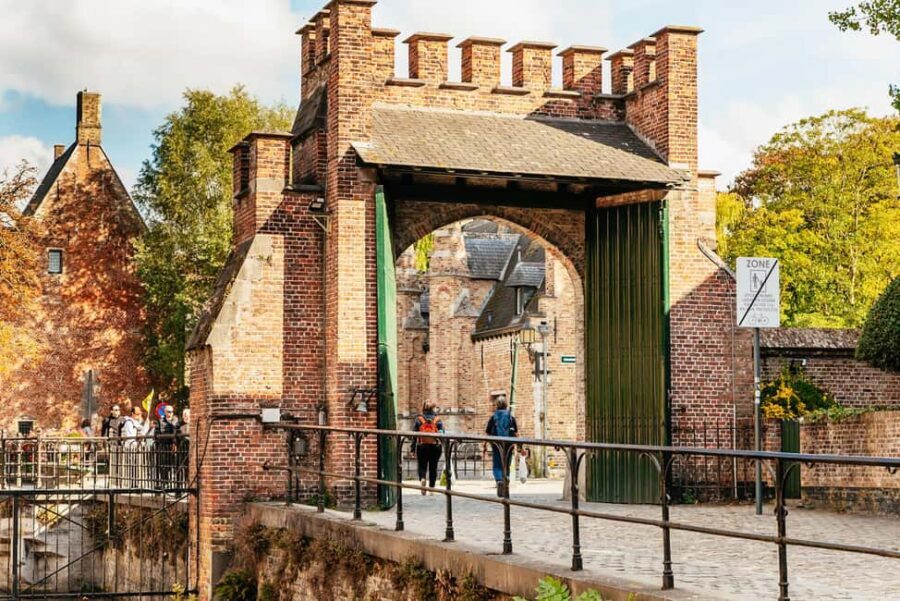
Bruges is where the tone changes. Brussels can feel busy and layered, while Bruges is quieter, scenic, and picture-perfect in a way that can feel almost unfair. You’ll arrive and then switch to a guided walking flow that’s built around the city’s medieval bones.
One of the first “you’ll get it instantly” stops is the beguinage area (the tour includes the Beguinage visit). The beguinage setting adds a human scale to Bruges. Instead of only towering buildings and big squares, you get a calmer, tucked-away slice of historical life.
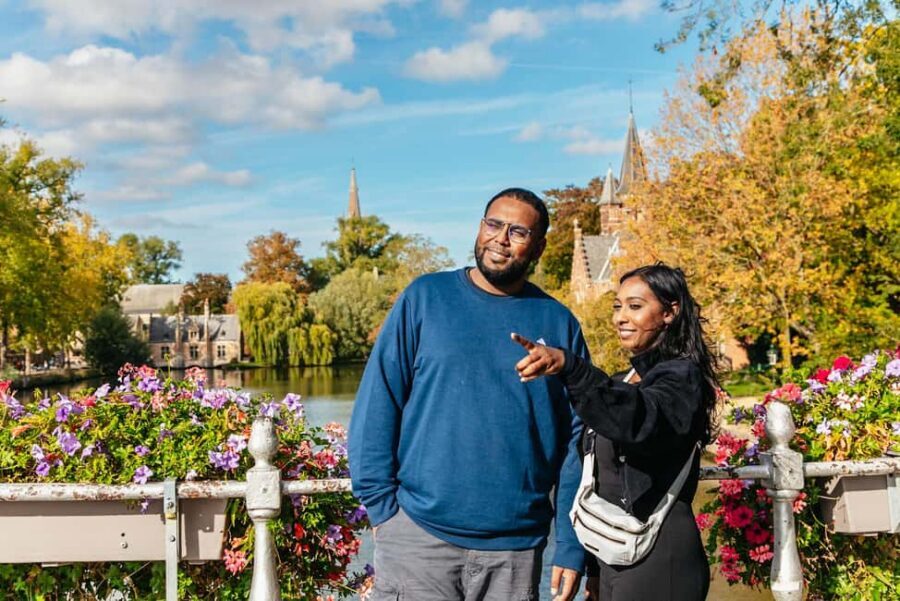
You’ll also visit the Lake of Love area, which gives you a romantic-feeling moment without turning it into a gimmick. These smaller places are important on a day trip because they slow you down just enough to feel like Bruges isn’t only about photos.



Bruges walk highlights: Belfry, City Hall, and classic photo angles

Bruges’ guided section leans into architecture and the visual rhythm of the city.
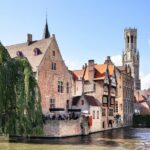
The Belfry of Bruges is a key stop. Even if you’re not going inside, a guided visit helps you understand why it matters—this is the type of civic landmark that tells you how the city once organized power and pride. Bruges City Hall is in the same spirit: big statements, crafted for permanence.
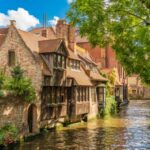
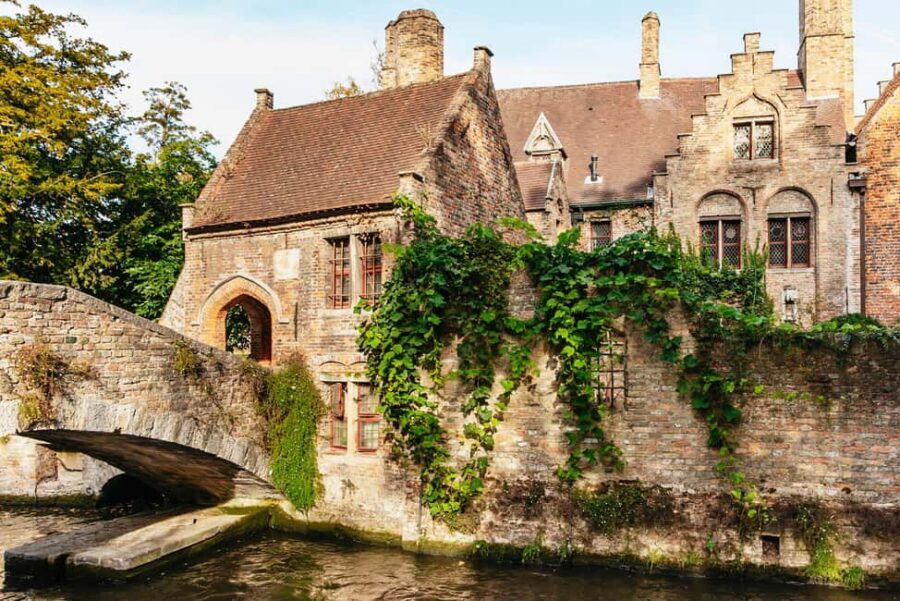
The itinerary also includes multiple “move your feet, get your photo” spots along the canals. Bonifacius Bridge is one of those points where a single angle makes the whole scene. Rozenhoedkaai is another, and it’s easy to see why it’s so often photographed; the viewpoint naturally frames the canal-side story.
In practical terms, these photo stops are worth it because Bruges can be slippery with crowds and corners. With a guide, you’re more likely to hit the best viewing points without wasting time hunting.
Half Maan brewery: beer history as a guided experience
One stop I’d plan for (even if you’re not a hardcore beer person) is Halve Maan brewery. It’s included as a guided visit, which means you don’t just see buildings—you get a story and a context for why this place matters in Bruges.
The tour’s beer focus fits the overall day theme. You’re moving between medieval civic icons in Brussels and then shifting to Bruges’ “slow charm.” A brewery stop is a fun bridge between those worlds: it’s living culture, not only architecture.
Also, this is one of those included experiences that helps justify value. If everything were self-paced sightseeing, you’d spend the day on your own. Instead, you get a guided activity that doesn’t depend on your ability to speak Dutch or figure out what to look for.
Food and entry fees: how to budget a realistic day
Your tour price covers the guide and bus transportation, but food and drinks and entry fees are not included. That’s important because Brussels and Bruges can turn into surprise expenses if you plan to snack and keep buying tickets.
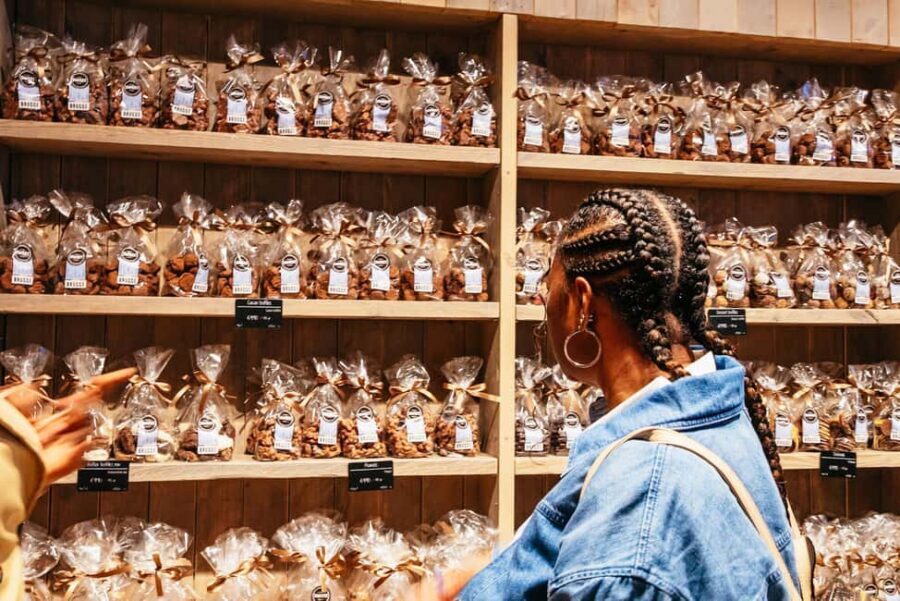
For lunch, you’ll have free time in both cities, including about 2 hours in Brussels and 2 hours in Bruges. That free time is your chance to eat and regroup. In feedback, people praised food suggestions from guides like Adrian, including Belgian waffles and fries, which are easy wins when you want something fast and very local.
My practical advice: set a lunch budget you feel good about, then add a small snack buffer. That way, when you’re standing in front of a chocolate shop or beer stand, you won’t feel stressed about the final bill.
Price and value check: is $170 a fair deal?
At $170 per person, this isn’t a bargain-basement day trip, but it also isn’t overpriced for what you’re getting. You’re paying for three big things:
1) Two major cities in one itinerary (Brussels plus Bruges)
2) Guided time in both places, not just a bus drop-off
3) Coach transfers that save you from intercity planning headaches
The long transfer time is real—about 3.5 hours each way. Still, the tour structure helps you use that time efficiently by mixing guided walking with photo stops and free time. If you tried to replicate this on your own, you’d spend time figuring out transport, timing between cities, and what to prioritize.
Where the value really shows is on a first visit. If you’ve never been to Belgium, you’ll appreciate having someone point out the story behind Grand Place, the meaning behind Manneken Pis, and the reason Bruges’ canal views look the way they do.
Who this trip is for (and who should think twice)
This tour is a strong fit if you want an organized day and you don’t want to overplan. It works well for first-timers who like guided context plus time to roam. If you’re a history buff, architecture fan, or foodie, the blend of city landmarks and a brewery visit hits a lot of tastes.
It’s also a good choice when your schedule is tight. If you’re visiting Amsterdam and want Belgium without adding a whole extra hotel night, this is a practical way to “sample” both cities.
The consideration is walking. The day includes multiple stops that require moving through old streets and crowded areas. One review pointed out the walking but said it didn’t feel too bad because the activities were well arranged, with breaks for bathroom and food. That’s the key: it works best if you can handle a full day with breaks and photo stops.
If you have serious mobility concerns, you should double-check fit. The tour is listed as wheelchair accessible, but it’s also marked as not suitable for people with mobility impairments, so there’s likely a mismatch between capability and the amount of walking required.
Final verdict: should you book this Brussels and Bruges day trip?
I’d book this tour if you want the classic Belgium highlights with a plan that keeps you from wasting hours figuring things out. The combination of guided Brussels icons plus Bruges canal-and-bridge photo points, plus the Halve Maan brewery stop, gives you enough variety to feel like you didn’t just repeat the same city vibe twice.
Skip it if you hate long days, need lots of rest breaks, or want minimal walking and lots of downtime. Also, go in knowing that entry fees and meals are extra, so budget for lunch and any ticketed sites you choose to add.
If you do book, bring comfortable shoes, keep your camera ready for the bridge and canal angles, and take advantage of the guided time—guides like Adrian and Jorge were repeatedly praised for making the day feel organized, fun, and photograph-friendly.
FAQ
How long is the day trip from Amsterdam to Brussels and Bruges?
The total duration is about 15 hours.
Where do I meet the guide in Amsterdam?
Meet your guide outside Aloha Bowling. Look for the guide with an Amigo Tours sign.
Is food and drink included?
No. Food and drinks are not included.
What languages is the live guide?
The live tour guide speaks Spanish and English.
How long is the bus ride to Brussels (and back)?
The bus trip is about 3.5 hours each way.
Is the tour wheelchair accessible?
The activity is listed as wheelchair accessible, but it is also marked as not suitable for people with mobility impairments. If this applies to you, it’s smart to confirm details with the operator before booking.