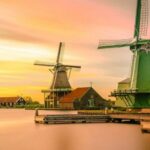
Amsterdam from the water hits different. This private canal cruise turns the usual photo run into a guided story ride through the city’s canals and landmarks. I like that you’re not stuck watching other groups cycle past; you get a small-group private experience on a historic boat with an art historian guide in English, plus coffee and drinks.
Two things I especially like: first, the route hits the big-name canals and also the key “how Amsterdam worked” spots like the Amstel locks. Second, you can ask questions in real time, so the history lands faster than it does on self-guided canals. I also enjoy the extra comfort of being able to slow down with the boat instead of sprinting between viewpoints.
One consideration: this is weather-dependent, and canal cruising is best when it’s comfortable outside. If it’s cold or stormy, plan for the fact that you may need a reschedule.
In This Review
- Key points to know before you go
- Meeting H’ART Museum: where the canal cruise starts
- Spiegelgracht and Prinsengracht: fast orientation, real Amsterdam views
- Amstelveld houseboats: the scene behind the postcard
- Skinny Bridge and the Amstel locks: where water controls the pace
- Rembrandt corner and the dancing houses: art meets street-level history
- Herengracht to Keizersgracht: seeing traders’ Amsterdam in one arc
- Jordaan and Anne Frank House: neighborhood mood and landmark sightlines
- Coffee, tea, and drinks: small comfort that changes the mood
- Price and value: $599.50 per group can be smart
- Who this private canal cruise is best for
- Should you book this private canal cruise?
- FAQ
- How long is the private canal cruise?
- What does the tour cost?
- Is this a private tour?
- What language is the tour offered in?
- Where do we meet for the cruise?
- What is included in the price?
- Do you provide mobile tickets?
- Is the tour suitable for families with strollers?
- What if the weather is poor?
- What is the cancellation policy?
Key points to know before you go
- Private small-group cruise (up to 10) on a historic boat, so you won’t feel packed in
- Art historian guide in English who can connect the sights to how Amsterdam grew
- Route includes signature areas: Spiegelgracht, Prinsengracht, Herengracht, Keizersgracht, Jordaan
- Highlights for classic photo stops: Amstel locks and the Skinny Bridge
- Includes coffee/tea, bottled water, and alcoholic beverages
- Mobile ticket; the tour starts and ends at the same meeting point near central Amsterdam
Meeting H’ART Museum: where the canal cruise starts
Your tour begins at H’ART Museum (Hermitage Amsterdam), Amstel 51 (1018 EJ). This is convenient because it’s central, so you’re not committing to a long walk from transit. You’ll also get a mobile ticket, which makes check-in fairly quick once you’re there.
Once you’re aboard, the “small historic boat” part matters more than you might think. On larger canal boats, you’re often stuck facing one direction with limited time to get good angles. Here, the vibe is calmer. You can look left, right, and forward without feeling like you’re constantly rerouted by the crowd.
Timing is also reasonable: you’re on the water for about 1 hour 30 minutes to 2 hours. That’s long enough to absorb the canal architecture and the guide’s explanations, but not so long that you’ll feel worn out before dinner.
You can also read our reviews of more boat tours in Amsterdam


Spiegelgracht and Prinsengracht: fast orientation, real Amsterdam views
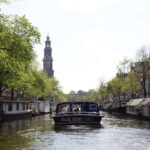
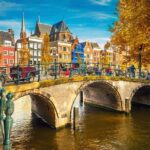
After departing the starting point, the cruise heads into Spiegelgracht and Prinsengracht. This is a great “getting your bearings fast” stretch. Even if you’ve visited Amsterdam before, the canals look different from the water—scale changes, details pop, and you get a sense of how the city’s edges shaped daily life.
On Prinsengracht, you’ll pass the Amstelveld area and the houseboat zone. This part is visually memorable because the canal life feels close-up: you’re not just seeing famous canal facades, you’re seeing the way people live alongside the water. The guide helps connect those scenes to the wider story of how canals became the city’s backbone.
A private format makes this easier. You can stop your attention on one house, one bridge, or one detail while the guide walks you through what it likely meant to the original residents.
Amstelveld houseboats: the scene behind the postcard
The cruise spends time in the area around Amstelveld and the houseboats. Houseboats in Amsterdam aren’t just a quirky sightseeing stop. They’re part of the modern canal relationship with the water—how residents keep a home-life bond with the city’s waterways.
This segment works well if you like atmosphere. You’ll be moving through a part of town where the canal feels like a living street, not just a scenic corridor. If you’re the type who likes to understand what you’re looking at, this is where the guide’s art-history angle becomes practical: you’re learning how buildings and design reflect social choices and historical periods.
If you’re sensitive to motion, keep in mind that you’re on open water, even though the ride is designed for sightseeing. Bring a light layer if you tend to get chilly on the water.
Skinny Bridge and the Amstel locks: where water controls the pace
Next comes a very Amsterdam moment: turning toward the Amstel River, then passing the Skinny Bridge and heading toward the Amstel locks. The Skinny Bridge area is famous for a reason—it’s narrow, it frames beautifully from the boat, and it’s the kind of spot where the city’s design feels engineered for close-quarter charm.
Then you reach the Amstel locks, and this is one of the strongest “how it works” sections of the cruise. Locks tell you Amsterdam’s relationship to water isn’t casual. It’s managed. The guide’s explanations help you see the canals as infrastructure, not just scenery.
If you’ve ever wondered why Amsterdam canals look the way they do—how levels, movement, and building placement fit together—this is where you’ll get satisfying answers without a lecture tone.
Rembrandt corner and the dancing houses: art meets street-level history
From the locks zone, the route continues to the Rembrandt corner, linked to the painter’s early years in Amsterdam. This isn’t just a name-drop stop. The value is in connecting a cultural figure to a place you can actually see and measure in your own field of view. The boat perspective helps you grasp how neighborhoods were laid out in everyday terms.
After that, you’ll encounter the dancing houses. These houses get their nickname from their unusual shape, which stands out immediately from the canal. It’s a fun contrast to the heavier historical explanations because it’s visual and memorable on the spot.
Then the cruise turns toward the canal most associated with status: Herengracht, often described as the canal of the Lords. You’ll see the 17th-century trader wealth reflected in the canal architecture and the way the canal corridor was used.
You can also read our reviews of more private tours in Amsterdam



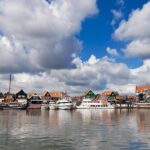
Herengracht to Keizersgracht: seeing traders’ Amsterdam in one arc
The shift to Herengracht is key to understanding why Amsterdam’s canal rings matter. This is the stretch where the homes feel grander and the canal looks more intentionally framed. If you like “why these buildings look like this,” the guide can connect style and scale to the economic story of the city.
From there, you move toward Keizersgracht, and the cruise also includes a stop that centers on the seven bridges in the Reguliersgracht area. Bridges in Amsterdam do more than connect land. They help organize movement and shape the rhythm of the canals, and they’re perfect for photos because they create strong, layered lines through the water.
This is also where you start feeling the neighborhood texture shift. The city’s center doesn’t change all at once—it changes block by block, canal by canal. Your private boat lets you notice those subtleties instead of racing to keep up.
Jordaan and Anne Frank House: neighborhood mood and landmark sightlines
The tour heads into the Jordaan neighborhood area after the bridges stretch. Jordaan is the part of Amsterdam that often feels most “lived-in” to visitors—more street feeling, more character per block, less pure monumentality. From the boat, you’ll get a smooth, long view of what the neighborhood looks like from the water.
Your itinerary also includes Anne Frank House. On a canal cruise, it’s less about lingering and more about passing with context, letting the guide frame why the location matters in Amsterdam’s story. If you’re planning to visit the house later, this helps you get oriented to where it sits within the canal city.
If you want to get the most out of this section, pay attention to the rhythm: buildings close to the water, the narrowness of the canal corridor, and how bridges and streets line up from your vantage point.
Coffee, tea, and drinks: small comfort that changes the mood
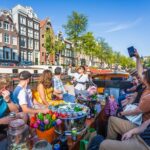
One reason this tour feels like more than a sightseeing trip: you’re not just looking at views; you’re staying comfortable while you learn. You’ll get coffee and/or tea, plus bottled water. Alcoholic beverages are also included, which can be a nice touch if your group enjoys a relaxed, celebratory atmosphere.
I like tours that give you an easy way to slow down. Here, the drink service supports the pacing. It’s easier to stick with the guide’s explanation when you’re not scanning for where the next photo will happen.
And the guide experience seems to really land with people. The tour is led by a professional art historian guide, and the result is a blend of solid context and a style that doesn’t feel stiff. You’ll be able to ask questions and get answers that connect the canals to people and eras, not just facts.
Price and value: $599.50 per group can be smart
The price is $599.50 per group, for up to 10 people. On a per-person basis, this can make a lot of sense compared with booking multiple individual tours or paying premium rates for large-group canal cruises where you don’t get much guide time.
Here’s the simple way to think about value:
- If you’re traveling as a couple or small group, you’re paying for privacy and guidance, not just the boat ride.
- If you have up to 10 people, the cost spreads out, and you’re paying mainly for the exclusive experience and the guide’s attention.
- The included drinks (coffee/tea plus alcoholic beverages) also add tangible value, especially if you’d otherwise buy a round during sightseeing.
If you’re a solo traveler, it can still be worth it if you strongly prefer a quiet private setting, but the math tends to favor groups.
One more practical note: the experience requires good weather. If it’s canceled due to poor conditions, you’ll be offered another date or a full refund.
Who this private canal cruise is best for
This cruise is a great match if you want Amsterdam with structure but not a rigid pace. It’s ideal for:
- Couples and small groups who want quiet time on the water
- People who like city history when it’s explained through buildings, art, and place
- Visitors who want classic canal landmarks without the chaos of crowded decks
- Anyone who appreciates a friendly guide you can actually talk with during the ride
It’s less ideal if you need a stroller-friendly setup, since no baby stroller is allowed.
Should you book this private canal cruise?
I’d book it if your top priority is a private Amsterdam canal experience with a real guide and included refreshments. The route hits the major highlights—Prinsengracht, Amstel, the locks, the Skinny Bridge, Herengracht, Keizersgracht, the seven bridges, Jordaan, and Anne Frank House—so you’re not stuck choosing between “famous” and “interesting.” You get both.
If you’re traveling with a group of friends, the pricing can feel especially reasonable for a boat-and-guide package. If you’re short on time, the 1.5–2 hour length is also a win. Just keep an eye on weather plans, and dress for the water.
If your idea of a perfect Amsterdam day is slow, scenic, and explained in plain language, this is a strong pick.
FAQ
How long is the private canal cruise?
The cruise lasts about 1 hour 30 minutes to 2 hours.
What does the tour cost?
It costs $599.50 per group, up to 10 people.
Is this a private tour?
Yes. Only your group participates.
What language is the tour offered in?
The tour is offered in English.
Where do we meet for the cruise?
You meet at H’ART Museum (Hermitage Amsterdam), Amstel 51, 1018 EJ Amsterdam, Netherlands.
What is included in the price?
Included items are a professional art historian guide, bottled water, coffee and/or tea, and alcoholic beverages.
Do you provide mobile tickets?
Yes, the tour includes a mobile ticket.
Is the tour suitable for families with strollers?
No baby stroller is allowed.
What if the weather is poor?
The experience requires good weather. If it’s canceled due to poor weather, you’ll be offered a different date or a full refund.
What is the cancellation policy?
You can cancel for a full refund up to 24 hours in advance. If you cancel less than 24 hours before the experience’s start time, the amount paid is not refunded.