REVIEW · AMSTERDAM
Amsterdam: Red Light District Tour in German/English/Italian
Book on GetYourGuide →Operated by Amsterdamliebe · Bookable on GetYourGuide
Red windows, Dutch facts, and real street stories. I love the witty, young guide approach that mixes humor with a critical perspective on sex work, not just gawking.
I also like the tour’s focus on practical details, from how night shifts work to the politics around coffeeshops in Amsterdam. One possible drawback: this is not a no-rules street photo-op—no cameras are allowed, and Amsterdam’s rules mean the route avoids standing in front of the windows.
In This Review
- Key highlights to know before you go
- How This Tour Talks About Sex Work Without Turning It Into Theatre
- Dam Square Start to Condomerie: Why the Contraception Stop Sets the Tone
- Oude Kerk and the Red-Light Paradox: Old Church, Modern Regulation
- Walking the Red Light District Under Amsterdam’s Window Rules
- Warmoesstraat to Dancing Houses: Gay Street Energy and the Photo Moments That Earn Their Keep
- From Centraal to Chinatown to Nieuwmarkt: Why the Walk Doesn’t End at the Windows
- Coffeeshops and The Jolly Joker Stop: Blessing, Curse, and the Politics in Between
- Practicalities That Actually Matter: Language, Weather, and the Rules You Must Follow
- After the Tour: How to Keep Exploring Respectfully (Including a 70s Peep Show Tip)
- Value for Money at About $28 per Person
- Should You Book This Amsterdam Red Light District and Coffeeshop Tour?
- FAQ
- How long is the Amsterdam Red Light District tour?
- What languages are available?
- Where does the tour start and end?
- Does the tour include going inside a coffeeshop?
- Are cameras or photos allowed?
- Is the tour allowed in front of the red windows?
- Is it suitable for children?
- What is the cancellation policy?
Key highlights to know before you go
- Earnings and shift logistics: you learn what workers pay for, how customers operate, and how safety is handled.
- Condom history at the Condomerie: a short stop that gives you context fast.
- Oude Kerk’s unexpected connection: you’ll see why old Amsterdam and this district keep colliding.
- Red Light District origins, tied to the harbor: the tour connects the neighborhood’s birth to the city’s geography.
- Coffeeshop politics with a real stop at The Jolly Joker: policy talk, but no inside coffeeshop visit.
- After-tour ideas: you’ll get tips for what to explore on your own, including a 70s peepshow option.
How This Tour Talks About Sex Work Without Turning It Into Theatre
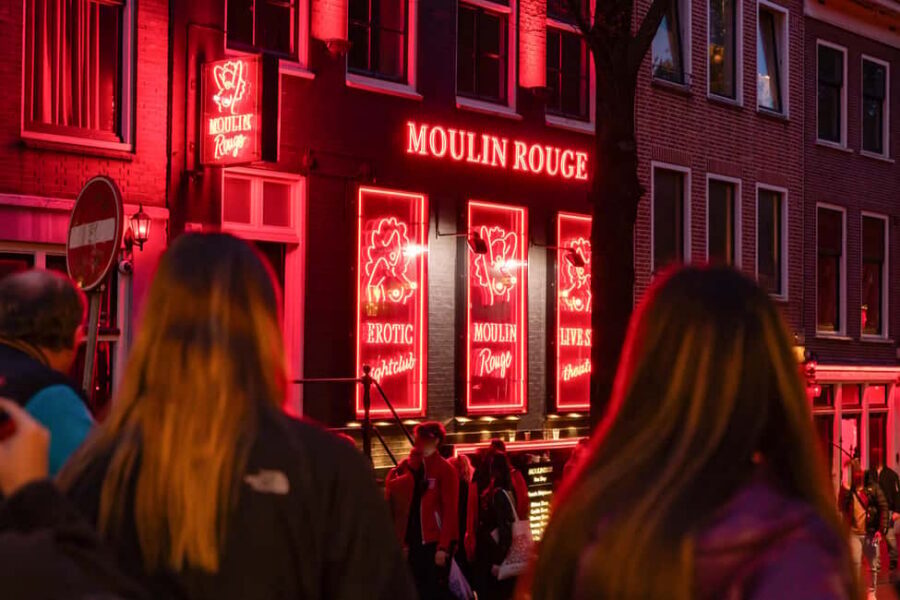
This Amsterdam Red Light District tour is built around perspective. You don’t just see the district; you get the arguments around it—history, politics, and the real-world math of the business.
The guide-led storytelling tends to feel brisk and human, with humor used as a pressure valve. Names like Francesco, Risheet, Sanja, and Deborah show up often in guide descriptions, and the consistent theme is that the person leading you can keep the tone thoughtful while still moving at a pace that doesn’t drag.
You’ll cover the basics people usually want to ask: how sex workers earn per night, how many customers they might see in a shift, and what kinds of transactions tend to pay more. You also hear about overhead—room rental and taxes—and the practical side of security. That mix matters, because it shifts the story from scandal to systems.
You can also read our reviews of more tours and experiences in Amsterdam.


Dam Square Start to Condomerie: Why the Contraception Stop Sets the Tone
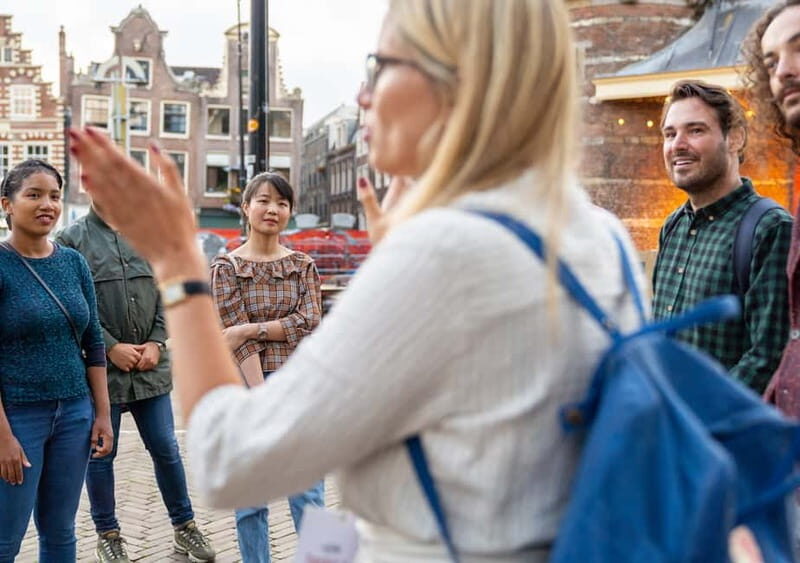
You start on Dam Square near the National Monument, then walk toward Warmoestraat. Right away, the tour signals it will be more than a sightseeing loop.
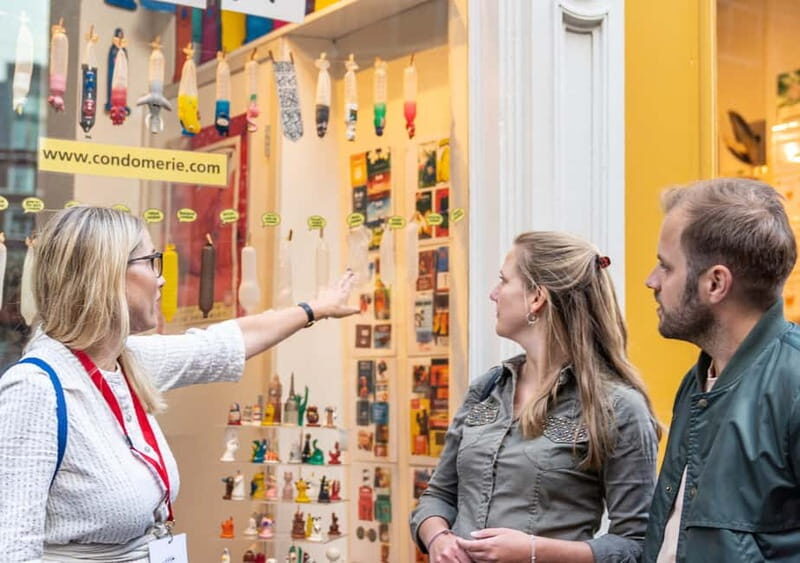
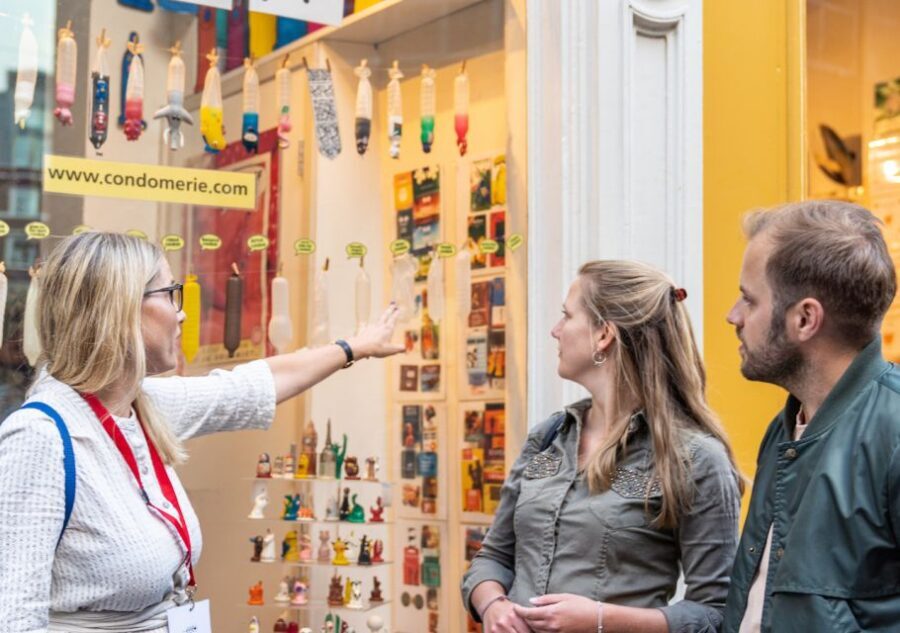
One of the first guided stops is the Condomerie, a fun condom store with a quick, informative segment (about 10 minutes). It’s short, but it’s a smart move. It connects sex work to public health and policy, not just to street spectacle—so when the tour later talks regulations and politics, it already has your attention.
From there, you’re positioned for the next key contrast: Amsterdam’s old stone and its modern realities.
Oude Kerk and the Red-Light Paradox: Old Church, Modern Regulation
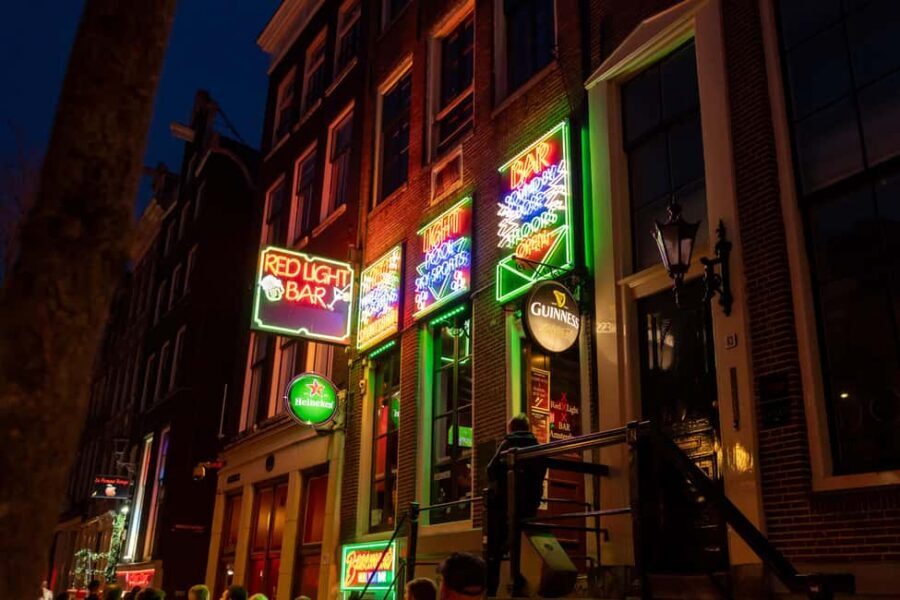
The Oude Kerk stop is a photo moment plus guided time (around 15 minutes). This is Amsterdam’s oldest church, and the tour leans into the odd pairing: how a place tied to deep history sits next to a neighborhood that has long forced moral and legal debate.
That paradox is the whole point. The Red Light District doesn’t exist in a vacuum. It’s woven into the city’s identity, and Amsterdam has spent decades negotiating how to control, tolerate, protect, and regulate what’s happening here.
If you like travel that makes you think as you walk, this stop does it quickly. You get the sense that Amsterdam keeps building layers—religion, commerce, law, and street life—over the same geography.
Walking the Red Light District Under Amsterdam’s Window Rules
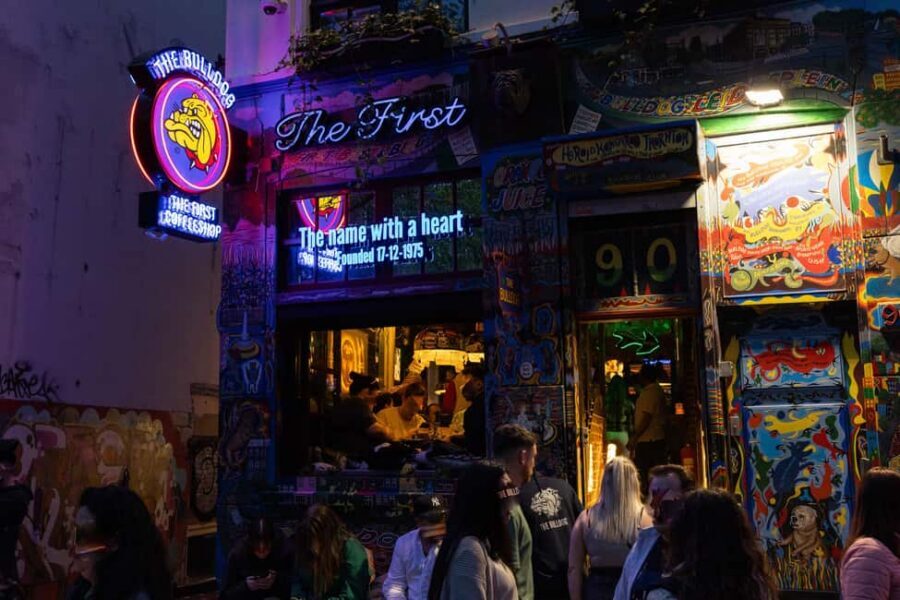
This is the part most people come for, and it comes with very specific constraints.
Since 2020, Amsterdam tourism rules prohibit tours in front of the red windows. This tour follows the adapted route, so you won’t be guided into that exact front-row viewing position. The windows are still visible as you explore on your own after the tour, but the guided portion is designed to respect the legal boundaries.
Also, you must follow the photo rules. Cameras are not allowed at all, and taking photos of sex workers is forbidden. That keeps the experience focused on information and streetscape, not on recording people.
In the guided Red Light District segment (around 15 minutes), the tour covers origins—especially the role of the harbor in why the district took shape. You’ll also learn about the negotiation process between customers and prostitutes, including the practical logistics and what’s typical in a transaction. Even when the subject is uncomfortable, the way it’s framed is meant to be factual and grounded: earnings, costs, taxes, and safety.
Warmoesstraat to Dancing Houses: Gay Street Energy and the Photo Moments That Earn Their Keep
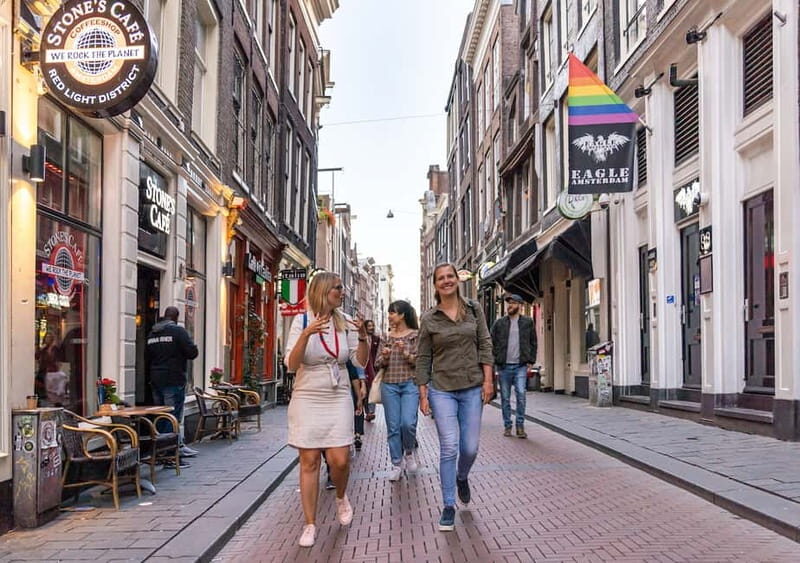
After the core district walk, you head toward Warmoesstraat. It’s one of Amsterdam’s more famous gay streets, and the tour uses it as a palette cleanser—still in the same zone, but with a different vibe than the red-window area.
There’s a photo stop here plus a short guided segment (about 5 minutes). Don’t treat it as a random snapshot break. It’s a reminder that the neighborhood isn’t only about one function. It’s a working district with multiple identities pressed into the same few streets.
Next come the dancing houses photo stop and guided time (about 5 minutes). These buildings are picturesque, but the tour’s approach is practical: it uses them as a way to keep you oriented and moving while your guide ties the city’s layout back to the district’s story.
It’s a walking-tour structure that helps you avoid the “stare, awkward, move on” feeling. You keep getting context, then you get a clear moment to look up and enjoy the architecture.



From Centraal to Chinatown to Nieuwmarkt: Why the Walk Doesn’t End at the Windows
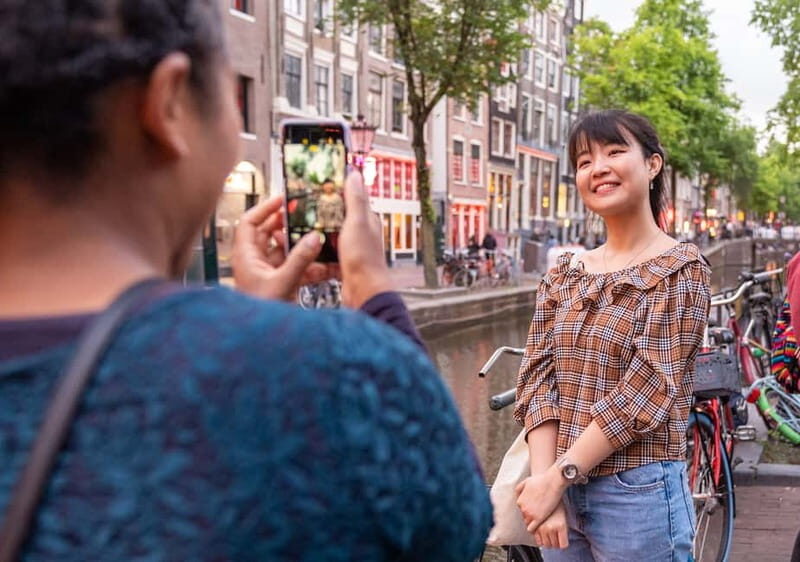
The route continues with more city texture. You get a photo stop at Amsterdam Centraal Station with guided time (about 10 minutes). Then you head into Amsterdam Chinatown for a guided segment (about 10 minutes), followed by Nieuwmarkt Square (about 15 minutes).
This is valuable because it prevents the whole day from turning into a single-theme tunnel. The Red Light District is part of a broader urban patchwork: transport hubs, immigrant neighborhoods, food and commerce zones, and squares where Amsterdam life happens when you’re not focusing on headlines.
Also, the tour’s inclusion of these stops makes timing work well. In about 1.5 hours, you cover roughly 1.8 km at a comfortable pace. That’s enough walking to feel like a real neighborhood experience, but short enough that you’re not exhausted before you explore on your own.
Coffeeshops and The Jolly Joker Stop: Blessing, Curse, and the Politics in Between
Then you hit the coffeeshop section, and it’s handled in a policy-minded way. The tour explains how coffeeshops were established, what issues the city has to manage, and how coffeeshops are regarded as both a benefit and a problem.
One important clarification: the tour does not include an inside visit of a coffeeshop. Even so, there is a guided stop at Coffeeshop The Jolly Joker (about 15 minutes). In practice, this gives you the on-the-ground feel of the coffee-shop culture without turning the experience into a “sit inside and snack” outing.
This part is also where you’ll get the most “real Amsterdam” perspective. Coffeeshops here sit at the intersection of law enforcement, public order, tourism pressure, and political compromise. You’ll leave understanding why the topic can’t be simplified to one moral argument.
If you’re the kind of visitor who likes policy explained in plain terms—rather than shouted slogans—this segment is worth your time.
Practicalities That Actually Matter: Language, Weather, and the Rules You Must Follow
This is a live guided walking tour in English, German, or Italian. It is not bilingual, so pick the language option you’ll understand best. (If you’re choosing between English and German, it’s the difference between following nuance and missing it.)
It runs in any weather, so bring an umbrella if rain is possible. No drama needed—just be ready.
There are also strict conduct rules: cameras are not allowed, alcohol and drugs are not allowed, and unaccompanied minors are not permitted. The tour also isn’t suitable for children under 14.
That might sound intense on paper, but it’s exactly what makes the experience work. It keeps things respectful, and it prevents the walk from becoming a show for the wrong reasons.
After the Tour: How to Keep Exploring Respectfully (Including a 70s Peep Show Tip)
A big plus of this tour is that it doesn’t pretend you’re done after 90 minutes. You’ll get recommendations for how to keep exploring the Red Light District at your own pace, without turning it into a chaotic scavenger hunt.
One specific tip mentioned is visiting a 70s peepshow, which you can experience on your own after the tour. Whether that’s your style or not, the broader idea is smart: you get guided context first, then you decide what level of curiosity you want next.
If you plan to continue walking afterward, keep the photo restrictions in mind. You should also expect that the exact red-window frontage isn’t part of the guided route due to the 2020 rule changes, so treat any window viewing as self-guided and respectful.
Value for Money at About $28 per Person
At $28 per person for roughly 1.5 hours and about 1.8 km of walking, this tour is priced like a focused city briefing rather than a full-day event. That can be good value, because the content is built for orientation: sex work basics, neighborhood history, and coffeeshop politics—so you understand what you’re seeing before you move on.
You’re also paying for language support by a live city guide. And the guide quality seems to matter: multiple guide descriptions point to humor, pace control, and patience with questions—things that keep a sensitive topic from turning awkward.
What you’re not paying for is extras. No snack, no beverages, and tips are not included. If you want a cheap add-on, you’ll need to build that yourself afterward.
Should You Book This Amsterdam Red Light District and Coffeeshop Tour?
Book it if you want an honest, structured walk through Amsterdam’s most controversial corners—one that mixes street context with politics and practical details. It’s especially a good fit for first-time visitors who want more than a surface-level picture.
Don’t book it if you’re expecting a camera-friendly, front-window photo tour, or if you strongly dislike walking tours with rules. The window-view experience is limited by city restrictions, and cameras are prohibited—so go in with the right expectations.
If you like your Amsterdam with explanations attached, and you’re ready to treat the topic with respect, this is a solid use of 90 minutes.
FAQ
How long is the Amsterdam Red Light District tour?
The tour lasts about 1.5 hours. The exact starting times depend on availability.
What languages are available?
You can choose between English, German, or Italian. The tour is not bilingual, so you should book the language option you prefer.
Where does the tour start and end?
It starts at a meeting point that may vary by the booked option, and the standard starting option listed is the National Monument area. The tour ends back at the meeting point.
Does the tour include going inside a coffeeshop?
No. The tour does not include an inside visit of a coffeeshop. It includes a stop at Coffeeshop The Jolly Joker, but it is not described as an inside visit experience.
Are cameras or photos allowed?
No cameras are allowed. Also, it is forbidden to take photos of the sex workers.
Is the tour allowed in front of the red windows?
Since 2020, Amsterdam tourism restrictions prohibit tours in front of the red windows. The route is adapted, and you can see the windows in the heart of the district on your own pace after the tour.
Is it suitable for children?
It is not suitable for children under 14. Unaccompanied minors are also not allowed.
What is the cancellation policy?
You can cancel up to 24 hours in advance for a full refund. There is also a reserve now & pay later option.