REVIEW · AMSTERDAM
Anne Frank’s Story – Guided Walking Tour through Amsterdam
Book on Viator →Operated by 360 Amsterdam Tours · Bookable on Viator
WWII history lives in Amsterdam’s street corners, and this small-group walk tracks the WWII occupation through the Jewish Quarter to the Anne Frank House exterior. You’ll hear the story as you walk, with an English-speaking guide and a route that’s tight enough to feel personal, but broad enough to cover a lot of ground in two hours.
I love the short stops—you get a landmark, a clear piece of history, and time to look closely instead of rushing past. I also love the focus on how the Nazi regime changed daily life, from key events like the Winter of Hunger and the February Strike to the Dutch resistance helping families in hiding, like the Franks.
One consideration: tickets aren’t included, and you’re not going inside the Anne Frank House (or the Jewish Historical Museum and Portuguese Synagogue). If you’re counting on indoor access, you’ll want to pair this tour with a separate Anne Frank House visit.
Key things I’d plan around
- Meet at Westermarkt 20 (in front of the Anne Frank House area) and return there at the end.
- Max 15 people means you can actually ask questions without yelling over crowds.
- Outside-only landmarks: key sites like the Portuguese Synagogue and Jewish museum are discussed from the street.
- Big emotions, structured stops at the Dokwerker and the Auschwitz Monument.
- Ends next to the Anne Frank House so you can book tickets for later if you want to go in.
- Mobile ticket + service animals welcome, with a moderate walking pace and comfortable-shoes advice.
In This Review
- Walking Amsterdam’s Jewish Quarter with WWII context
- Price and what you’re really paying for
- Meet at the Anne Frank House area, start on time, and wear real shoes
- The Jewish Quarter stops: from museum doors to synagogue exteriors
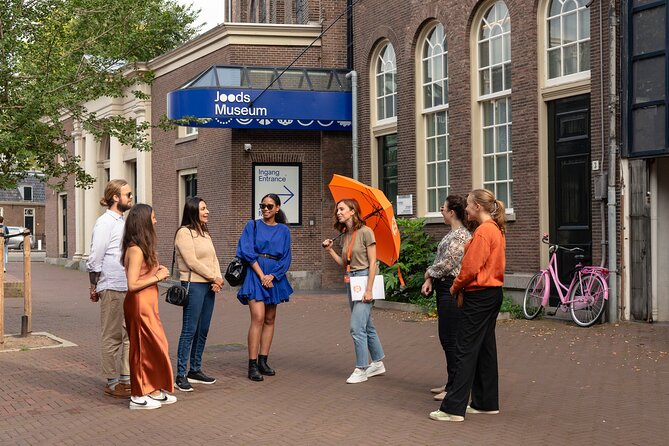
- Stop by Joods Museum (from the outside)
- Stop at the Portuguese Synagogue (also outside)
- The Dokwerker statue: industry, loss, and a community’s daily life
- Auschwitz Monument: remembrance where the story turns heavier
- Dam Square and the Anne Frank statue: public space, private suffering
- Ending at the Anne Frank House exterior: what this tour sets up for you
- Who should book this walk, and who might prefer a different plan
- What the best guides do on this route
- Should you book this Anne Frank walking tour?
- FAQ
- How long is the Anne Frank guided walking tour in Amsterdam?
- Is the Anne Frank House entrance included?
- Do we enter the Jewish Historical Museum or the Portuguese Synagogue?
- Where do I meet for the tour, and where does it end?
- What group size should I expect?
- Is the tour offered in English?
- Are service animals allowed?
- Can children join the tour?
- What is the cancellation window for a full refund?
Walking Amsterdam’s Jewish Quarter with WWII context
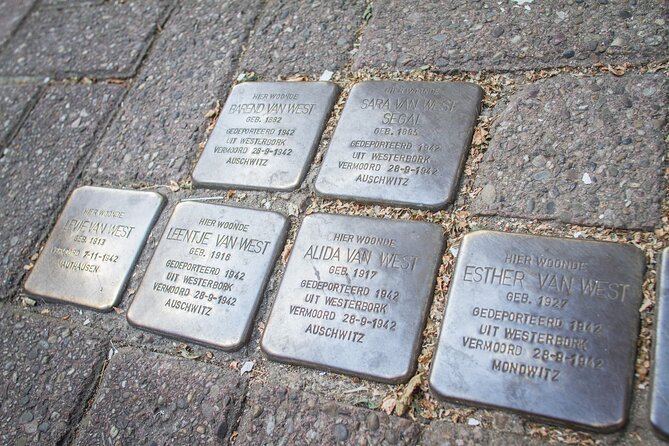
Amsterdam’s history isn’t trapped in a single museum room. On this walk, it’s written into streets, corners, and memorials—so the story of Anne Frank lands in the place where it unfolded. You’re not just hearing about dates; you’re seeing the geography of the community and the way occupation changed the rhythm of everyday life.
The tour is built for momentum without feeling like a sprint. You cover several meaningful stops in about two hours, and the small group size (up to 15) helps the guide keep the conversation moving while still giving you time to take in each site.
If you’re a WWII history buff, this is the kind of tour that feels like it tightens every other Anne Frank moment you’ve seen before. And if you’re coming in with less background, the route gives you a clean scaffold: Jewish Amsterdam, the occupation, resistance, and then the Frank family’s story.
Price and what you’re really paying for
At about $39.30 per person, this isn’t a budget throw-in, but it also isn’t priced like you’re getting museum entry or a private guide. The value is in the guided storytelling + small-group pacing over two hours, plus the fact that you see a cluster of key locations that would take you longer to research and stitch together on your own.
The trade-off is that the tour price covers the walk and your guide, not admissions. Entrance to the Anne Frank House is excluded, and the Jewish Historical Museum and Portuguese Synagogue are discussed from the outside, with no entry included. If you plan correctly, this becomes a strong “setup” tour—then you follow up with any ticketed museum visit you still want.
You can also read our reviews of more walking tours in Amsterdam



Meet at the Anne Frank House area, start on time, and wear real shoes

You’ll meet at Westermarkt 20, 1016 GV Amsterdam, and your tour ends at essentially the same spot—right at/near the Anne Frank House. Plan to arrive about 15 minutes before departure, because the guide needs everyone together and ready.
This is a walking tour, so comfortable shoes matter. The route is described as having a moderate physical fitness level requirement, and the time at each stop is short enough that you’re not stuck standing forever—but you are moving.
Weather matters here. The experience notes a need for good weather, so if it’s raining or cold, dress for it. (Amsterdam can switch up fast, and you don’t want your attention on your jacket sleeves.)
Also, good to know: service animals are allowed, and the tour is offered in English. If you rely on public transport, the meeting area is described as being near transit, which makes the start easier.
The Jewish Quarter stops: from museum doors to synagogue exteriors
This walk centers on the historic Jewish Quarter, with the guide turning streets into context. Even though you’re not entering the major buildings, you still get the “why” behind them: what these places meant, who used them, and how the occupation changed what normal community life looked like.
Stop by Joods Museum (from the outside)
You start at the entrance area of the Jewish Historical Museum (Joods Museum). You won’t go in, but you’ll talk about it and the community around it. For me, the useful part of an outside discussion is that it helps you see the building as part of the neighborhood fabric, not as an isolated exhibit.
Practical note: expect this to be more “orient and interpret” than “tour the galleries.” If you want inside details, you’ll need separate museum tickets.
Stop at the Portuguese Synagogue (also outside)
Next comes the Portuguese Synagogue area. Again, you’re not entering—this is a street-level look with guided explanation. What you’re gaining is the historical map: how different Jewish communities and institutions shaped Amsterdam, and how the occupation disrupted those networks.
This outside approach can actually be a benefit. It keeps the pace moving and lets you stay focused on the human story the guide is building.
You can also read our reviews of more guided tours in Amsterdam




The Dokwerker statue: industry, loss, and a community’s daily life
At the Dokwerker statue, the tour shifts from institutions to lived reality. The name ties to dockworkers and labor—Amsterdam wasn’t just famous for culture and canals, it also ran on work, trade, and people moving through the city.
This stop tends to stick with you because it helps you feel the stakes beyond the headline events. When occupation and persecution escalated, it didn’t only affect those in hiding—it reached into how people worked, traveled, and survived.
You’ll get about 20 minutes here, with time for the guide’s explanation and for you to look around before you move on.
Auschwitz Monument: remembrance where the story turns heavier
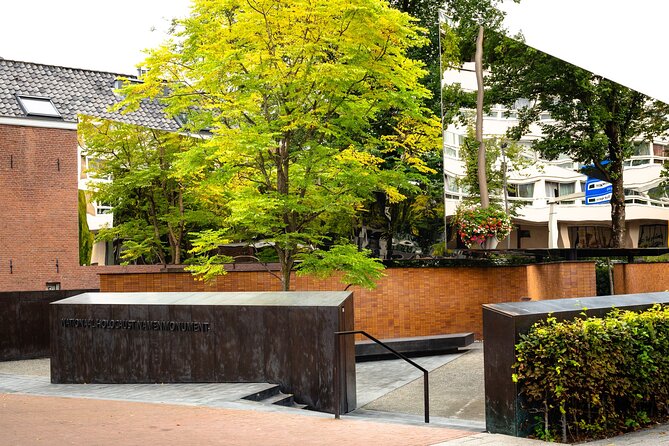
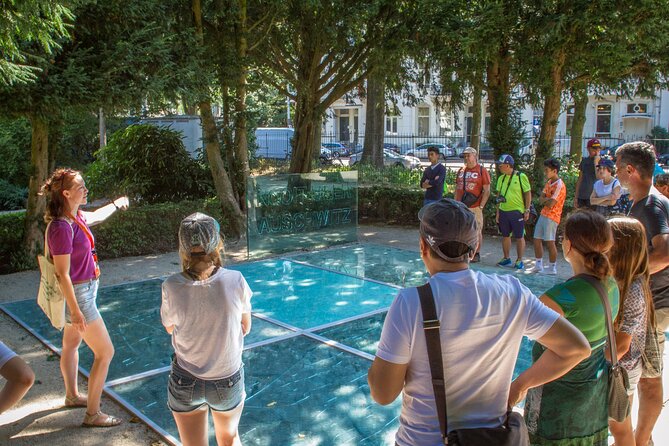
The tour’s Auschwitz Monument stop is one of the most emotionally serious parts of the walk. You spend around 20 minutes here, and it’s treated as a moment of reflection rather than a quick photo break.
Your guide’s approach can make a big difference. Many guides bring historical context and help you understand why memorials are placed where they are and how people show respect in that space. Some guides also point out practices visitors use at Holocaust memorial sites—small actions that turn remembrance from abstract to personal.
Tip: at this kind of stop, don’t rush to “check the box.” Stand, read what’s there if you can, and let the explanation land. The whole tour has been building toward this point.
Dam Square and the Anne Frank statue: public space, private suffering

Then you’re out in Dam Square, where the National Monument of Amsterdam gives you a different angle on the war—less neighborhood history, more national memory in public view.
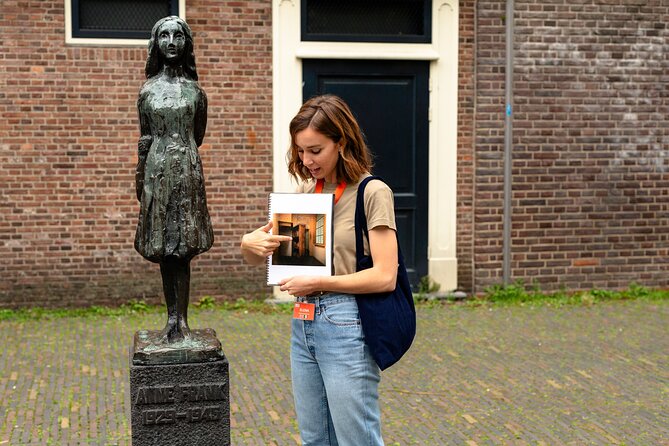
After that, you’ll visit the Statue of Anne Frank. This is where the story moves from the specific streets of Jewish Amsterdam to the way Anne Frank has become a worldwide symbol. Seeing her statue helps you connect the individual to the larger legacy: a diary that became evidence of lives crushed by terror, and a reminder of what humanity looks like under pressure.
These stops are shorter (roughly 10–15 minutes each), so they work best as emotional waypoints. You’ll likely feel a bit of contrast here: the city is still “there,” but the meaning is heavier.
Ending at the Anne Frank House exterior: what this tour sets up for you
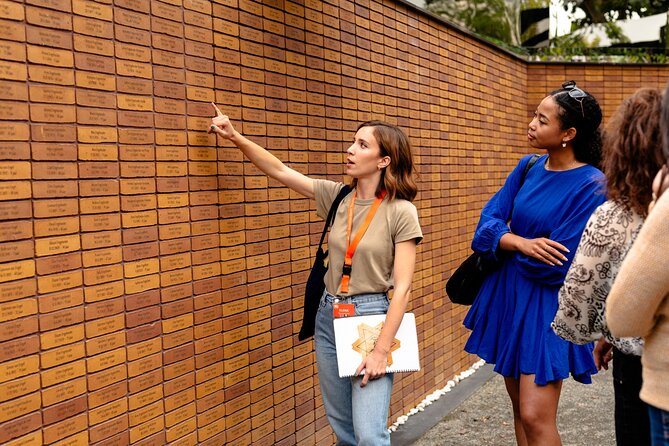
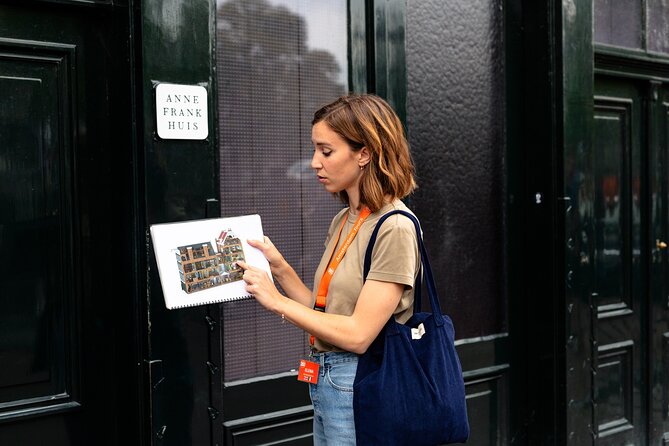
You finish outside the Anne Frank House. The guide discusses the diaries and how they were later published by Otto Frank—so you get the story arc, not just the geography.
Important: this tour does not include entry to the Anne Frank House. You’re not going inside. You’re learning how to understand what you see from the street—and then you have the option to add a ticketed visit later.
For your planning, this ending format is actually smart. If you’re unable to get House tickets right away, you still leave with context that makes a future visit hit harder. And if you can get tickets, the tour helps you focus: you’ll know what details matter and what themes to watch for.
Who should book this walk, and who might prefer a different plan
This is a strong match if you want WWII context woven through real urban stops. It’s also a good pick for history-minded travelers who don’t want to lose half a day hopping between museums.
You’ll likely enjoy it if:
- You like tours that connect people, places, and events.
- You want a practical overview of Amsterdam’s Jewish Quarter and the occupation period in about two hours.
- You appreciate small-group pacing and a guide who can answer questions.
If you’re only interested in going inside the Anne Frank House, consider booking that directly and using this walk as either a follow-up or a backup plan. The walk ends at the exterior because that’s part of the concept: the guided story first, the ticketed visit later (if you want it).
What the best guides do on this route
One of the most praised aspects is the guide’s ability to make the material feel human and grounded. Names that show up in recent feedback include Yoshi, Ollie, Giovanni, Manuel, Patrick, Edwin, and Peter—and across those styles, the common thread is clear: the guide explains the city like it’s part of the narrative, not just a backdrop.
A lot of the most memorable moments involve historical photos and careful links between what you’re seeing and what happened during the 1940s. You’ll also hear about Dutch resistance and the idea of secret hiding places, which helps explain how families like the Franks survived by relying on others.
Another detail worth paying attention to: guides often handle the mood with respect. This is not a casual “fun walk” topic. It needs a tone that matches the subject, and the guides who get the highest marks tend to keep that balance.
Should you book this Anne Frank walking tour?
Yes—if you want a high-impact, two-hour introduction to Anne Frank and the Jewish Quarter in Amsterdam, this is a smart buy. The route gives you real place-based context for key wartime events, and the small group size makes it easier to ask questions and stay focused.
I’d book it especially if you’re planning to visit the Anne Frank House later. This walk acts like a story lens: by the time you stand outside or (with a separate ticket) go inside, you’ll understand more of what you’re seeing and why it matters.
If you’re going to do only one thing and you want the House interior included, then be careful with your expectations. This walk ends at the House, but it doesn’t include entry. In that case, price can still be fair—but your “must-see” will need its own separate ticket plan.
FAQ
How long is the Anne Frank guided walking tour in Amsterdam?
The tour lasts about 2 hours.
Is the Anne Frank House entrance included?
No. Entrance to the Anne Frank House is excluded, and the tour does not grant access inside.
Do we enter the Jewish Historical Museum or the Portuguese Synagogue?
No. The tour discusses both locations from the outside and does not include admission.
Where do I meet for the tour, and where does it end?
You meet at Anne Frank House / Westermarkt 20, 1016 GV Amsterdam. The tour ends next to the Anne Frank House at the same location.
What group size should I expect?
The tour has a maximum of 15 travelers.
Is the tour offered in English?
Yes. The tour is offered in English.
Are service animals allowed?
Yes. Service animals are more than welcome.
Can children join the tour?
Children must be accompanied by an adult.
What is the cancellation window for a full refund?
You can cancel up to 24 hours in advance for a full refund. If you cancel less than 24 hours before the experience starts, the amount paid will not be refunded.