REVIEW · AMSTERDAM
Discover Holland’s Beautiful Tulip Fields with an Expert Guide
Book on Viator →Operated by Tulip Tours Holland · Bookable on Viator
Tulips, minus the crowds. This 6-hour day trip from Amsterdam takes you into beautiful, less-crowded tulip farms and adds a real stop at a working windmill (with a chance to go inside). I like that the day is built for photography—fields in spots you typically can’t reach on your own. I also like the small-group pace, which helps the guide steer you to the best-looking areas.
I especially like the guide approach—Roel and Mike talk tulips beyond just colors. You get practical context about how bulb and growth cycles affect what you’ll actually see, plus photo help to help you frame rows and borders without feeling rushed. With a maximum of 30 people, the stops feel more like countryside exploring than a conveyor belt.
One possible consideration: tulips are seasonal. If you go later in the season (early May has shown less dramatic bloom in some cases), some fields may already be cut back, so your results depend on timing and the guide’s field-finding skills.
In This Review
- Key highlights worth your time
- The Beemster Polder: a UNESCO start that sets the stage
- Twisk and Venhuizen: tulip fields you can actually wander and shoot
- Onderdijk lunch and the 1929 Geradus Majella church
- Museummolen Schermer: going inside a working windmill
- What Roel and Mike add to the day (and why it changes your photos)
- Price and value: what $163.27 buys you in a 6-hour day
- Timing reality: May can be less dramatic than April
- Practical tips for a smooth day trip from Amsterdam
- Who should book this tour (and who might not)
- Should you book Tulip Tours Holland from Amsterdam?
- FAQ
- Where do I meet the tour in Amsterdam?
- How long is the tour?
- Is the tour in English?
- What’s included in lunch?
- Do I need to pay for the windmill entrance?
- Can I go into the windmill?
- What should I bring for the field stops?
- What if the weather is poor or the tour is canceled?
Key highlights worth your time
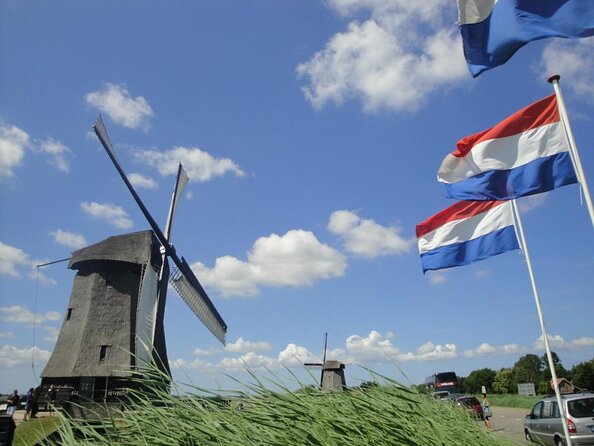
- Beemster Polder drive: you start in a UNESCO reclaimed landscape shaped by Dutch water engineering
- Photographable tulip fields: stop at multiple farms designed for walking and pictures, not just views from a road
- Small-group rhythm: max 30 travelers means less waiting and more time on your feet
- Onderdijk lunch with local flavor: a meal included in a quiet village setting
- Museummolen Schermer windmill visit: an older windmill you can enter to see how it works
- Guide-led bulb insights: Roel and Mike explain what you’re seeing and why it matters
The Beemster Polder: a UNESCO start that sets the stage
The day kicks off with a drive through the Beemster Polder, just north of Amsterdam. It’s part of the UNESCO Stelling van Amsterdam (Defense Line of Amsterdam), and it’s famous for reclaimed land created through early 17th-century water management. Even before you hit the flowers, you’re seeing why the Dutch can pull off both agriculture and engineering on the same flat canvas.
This matters because tulip farming isn’t magic; it’s land, water control, and timing. When you understand that the fields sit on planned, reclaimed ground, the whole day feels more grounded. You’re not just chasing blooms—you’re seeing how Holland shapes working land.
If you care about photos, this start is also helpful. The drive gives you wide, open sightlines that make it easier to understand where the fields begin and how the polder geometry guides the scenery.
You can also read our reviews of more guided tours in Amsterdam


Twisk and Venhuizen: tulip fields you can actually wander and shoot

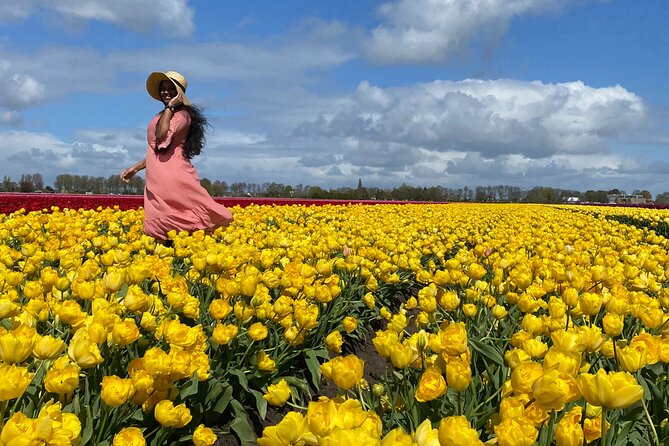
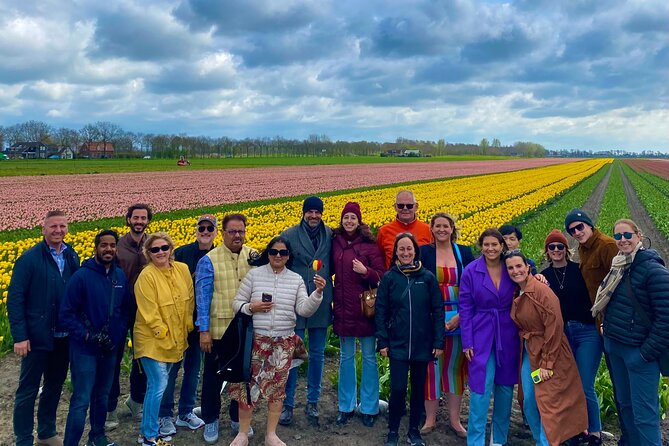
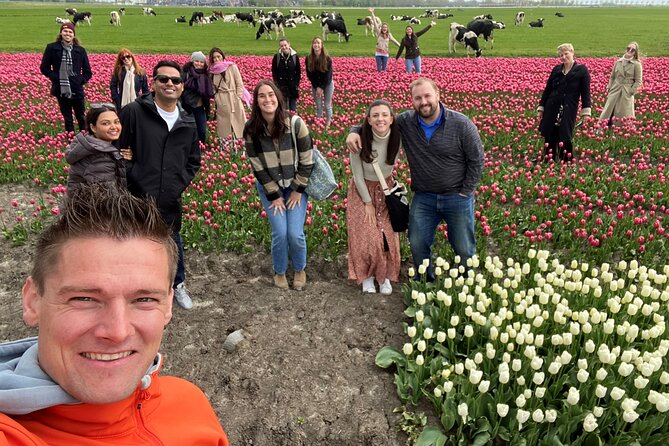
The tour includes multiple tulip-field stops, including Twisk and Venhuizen. These are short but focused windows—about 25 minutes at each field—with free admission tickets for the stops. The payoff is simple: you get time to walk the rows, stand at angles that show depth, and photograph tulips in a way that feels normal, not forced into a single roadside viewpoint.
Here’s the practical difference versus the big, famous tulip gardens: this experience aims for quieter farms. That usually means less crowd jostling, fewer people blocking your foreground, and more freedom to adjust your stance and framing. If you like capturing repeating lines across a field, the smaller, farm-style stops are a good match.
Potential drawback: the fields are working farms. Timing affects what you see. If you hit the tail end of bloom, you may still find flowers in pockets, but the most dramatic rows might be reduced. The guide’s job is to react to that in real time.
Onderdijk lunch and the 1929 Geradus Majella church
Midday is spent in Onderdijk, where you get about 45 minutes and a lunch included stop. Lunch comes with juice and water, plus bottled water (so you won’t leave dry—though you may still want extra water for the bus, which I’ll cover later).
Onderdijk is a quieter kind of Dutch village stop. You get a chance to slow down, eat well, and reset before the windmill. Reviews praise the lunch as a highlight, and that tracks with the vibe: it’s not a rushed grab-and-go. It’s more of a local meal break in a setting that still feels like countryside.
You’ll also see the Geradus Majella church, described as a 1929 architectural gem. This is one of those add-ons that helps the day feel richer than just flowers. It also gives you a useful contrast while you’re driving through flat farmland—suddenly you have details, stonework, and a reason to look up.
Museummolen Schermer: going inside a working windmill
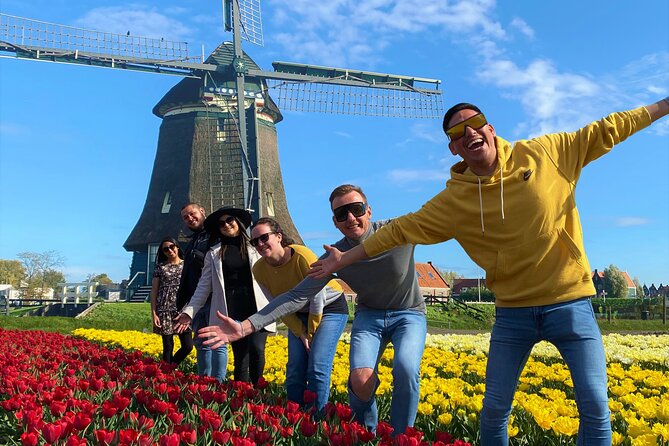
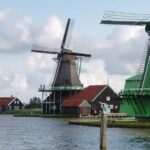
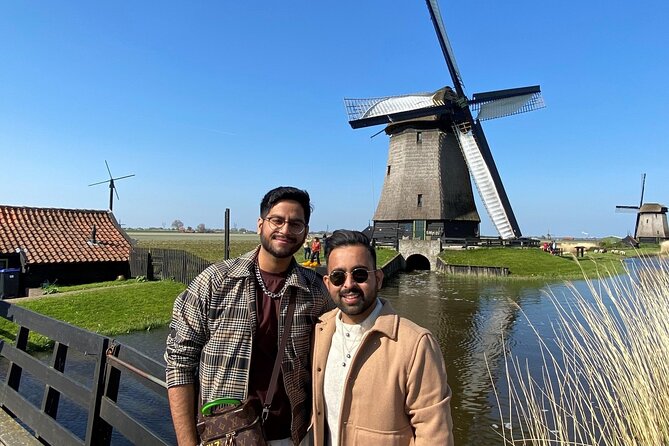
The windmill stop is Museummolen Schermer, with around 45 minutes and admission included. This is one of the oldest windmills in the Netherlands, and the best part is that you can go inside to understand how it works.
If your mental picture of windmills is only postcard silhouettes, this changes that. Reviews mention an optional climb to the top at your own risk, so you may get a chance to see more of the mechanics and get an elevated view. Even if you skip the climb, the interior visit tends to feel more real than a viewing platform.
Why it’s worth your time on a tulip day: windmills were built to manage water and power jobs in a country where land and water are constantly negotiating. That ties back to the UNESCO reclaimed-land theme from the start of the trip.
A small caution: windmills can be tight. If you don’t like enclosed stairways or narrow passageways, keep that in mind. The tour still includes time to move at a comfortable pace.
What Roel and Mike add to the day (and why it changes your photos)
The guides here are a big part of why this tour scores so high. You’ll hear names like Roel and Mike, and their style is practical: they focus on tulips and bulbs as living things, not just rows of color.
What you get in real terms:
- They explain what you’re seeing in the field and how the bulb life cycle affects bloom timing.
- They know where to look in the final days when flowers can be hit-or-miss.
- They offer photo tips, including how to frame rows and use the field layout to keep your shots looking full even in smaller farm areas.
- They run the day with a small-group feel, so questions don’t get lost.
One of the more useful outcomes of a guide like this is that you can adjust expectations. If the fields are earlier or later than you hoped, you’re not left staring at green leaves wondering if you picked the wrong date. You understand why the field looks the way it does, and you still get to enjoy what’s there.
Also: you’ll notice the tone. Several reviews mention patience, encouragement, and a laid-back approach. That helps on a day where weather can be unpredictable and the ground can get muddy.






Price and value: what $163.27 buys you in a 6-hour day
At about $163.27 per person for roughly 6 hours, this isn’t a cheap impulse buy. But when you look at what’s included, it becomes easier to justify.
You’re getting:
- Round-trip transfers from Amsterdam
- A full guide-led route across multiple tulip farms
- Lunch with juice and water, plus bottled water
- Admission for the windmill
- A mobile ticket in English
- A small group capped at 30 people
For me, the value comes from the combination: tulip access that’s harder to replicate on your own, plus the windmill stop, plus a planned lunch you don’t have to find after a long countryside drive. If you’ve ever tried to coordinate buses and farm access yourself for “the best tulip views,” you know how quickly the effort eats your vacation time.
That said, the price still depends on timing. If you go in a weaker bloom window, the day can feel more educational than visually spectacular. The good news: the guide’s field choices usually help you get the most out of the date you picked.
Timing reality: May can be less dramatic than April

Tulips are seasonal, and this tour reflects that. One review directly suggested going in mid to late April, because early bloom cutbacks can start soon after peak. Another review mentioned that bloom was already ending on April 29, but the guide found places where the final fields still offered strong color.
So here’s the real advice: aim for mid to late April if you want the highest chance of full rows. If you’re going in early May, treat the trip as a mix of tulip viewing plus tulip farming education and countryside exploring. You can still have a great day—just don’t expect every stop to look identical to peak-season photos you’ve seen online.
The guide helps with this uncertainty by shifting field locations to match what’s blooming at that moment. That’s why bulb-cycle context matters: you’ll know how to read the field instead of chasing only the most perfect rows.
Practical tips for a smooth day trip from Amsterdam
This is a pickup-and-return style tour: you start at Market 27 Termini 27, 1025 XM Amsterdam, and you end back at the meeting point.
A few practical notes that make the day easier:
Bring what you need for weather and walking
The countryside stops involve walking on farm ground, and reviews mention muddy conditions in rainy weather. If it looks wet, wear shoes you don’t mind getting a bit dirty. In at least some conditions, shoe covers have been provided, but don’t rely on that alone—come prepared.
Water: bottled is included, bus water may not be
Lunch includes juice and water, and there’s bottled water included. Still, one review notes there may not be water provided on the bus itself. If you’re the kind of person who drinks often during rides, pack a small extra bottle so you’re comfortable the whole way.
Don’t expect Keukenhof
This tour focuses on working tulip farms and windmill machinery, not a botanical garden day. If your dream trip is specifically Keukenhof, you’ll want a different plan. Think of this as off-the-beaten-track tulip viewing that’s closer to how the industry actually works.
Set your pace
Short field stops mean quick photo windows. If you like long wandering time, prioritize getting your first good photos early, then use the remaining time to explore angles and colors.
Who should book this tour (and who might not)
This tour fits best if you want:
- Less crowded tulip fields you can actually walk through
- A small-group day where the guide can adjust plans
- A tulip experience that includes how bulbs and farming work, not just scenery
- One solid cultural stop (the Onderdijk church) plus a hands-on windmill visit
It may not be ideal if:
- You’re only happy with peak-bloom, postcard-perfect fields at every stop
- You want a large, curated park experience like Keukenhof
- You dislike structured schedules with multiple brief stops
If you’re traveling as a couple, with friends, or as a family, the group size helps keep it friendly. The tour also notes service animals are allowed, and most people can participate.
Should you book Tulip Tours Holland from Amsterdam?
Yes, if your priority is real tulip farming access with a guide who knows how to manage the day when conditions aren’t perfect. The combination of less-crowded fields, lunch in a village, and the chance to enter a historic working windmill makes this feel like more than a simple flower photo run.
Book with a timing mindset. Pick mid to late April for the strongest bloom chances, and treat early May as still worthwhile but more variable. If you like learning as you go—and you want photos that don’t feel crowded—this is an easy “yes” in my book.
FAQ
Where do I meet the tour in Amsterdam?
You start at Market 27 Termini 27, 1025 XM Amsterdam, Netherlands. The tour ends back at the same meeting point.
How long is the tour?
The experience runs for about 6 hours.
Is the tour in English?
Yes, the tour is offered in English.
What’s included in lunch?
Lunch includes juice and water, and bottled water is also included.
Do I need to pay for the windmill entrance?
Yes, the windmill admission is included. Other tulip field stops listed are free admission.
Can I go into the windmill?
You can go into the Museummolen Schermer windmill. Some visits include an option to climb to the top at your own risk.
What should I bring for the field stops?
Wear comfortable shoes for walking on farm ground. If rain is possible, plan for mud. Bring extra water if you tend to drink a lot during bus rides.
What if the weather is poor or the tour is canceled?
The tour requires good weather. If it’s canceled due to poor weather, you’ll be offered a different date or a full refund.