REVIEW · AMSTERDAM
e-Scavenger hunt Amsterdam: Explore the city at your own pace
Book on Viator →Operated by Qula · Bookable on Viator
Want Amsterdam without the tour group hassle? This e-Scavenger hunt lets you explore at your own pace with a phone-based trail and problem-solving challenges. It’s a fun way to see classic sights and lesser-straight-aways while keeping everyone moving and curious.
I especially like the freedom: you can pick your start time, start anytime during the day or night, and pause or stop whenever your crew needs a snack break. I also like the game aspect—friendly competition as you solve riddles and assignments on your smartphone instead of just reading signs.
One thing to consider: you’ll need your own smartphone (and data), since smartphone & data aren’t included. And yes, it’s still walking—great for a day out, but not ideal if your group wants lots of sit-down time.
In This Review
- Key things I’d highlight before you go
- A self-guided Amsterdam quest with no fixed start time
- Price and group setup: what $37.29 per group really buys
- How the Qula trail works on your phone (and what to prep)
- Walking route overview: from Canal Ring to Red Light District and back
- Stop-by-stop: 14 landmarks, clues, and what to watch for
- Stop 1: Canal Ring (Grachtengordel)
- Stop 2: Anne Frank House
- Stop 3: Westerkerk
- Stop 4: Dam Square & Damstraat
- Stop 5: Old Center
- Stop 6: Royal Palace Amsterdam
- Stop 7: Rijksmuseum
- Stop 8: Van Gogh Museum
- Stop 9: The Jordaan
- Stop 10: Centraal Station
- Stop 11: Amsterdam Canal Ring
- Stop 12: Herengracht
- Stop 13: Red Light District (De Wallen)
- Stop 14: Leiden Square (Leidseplein)
- Family-friendly competition that doesn’t feel like homework
- Pacing and timing: plan for about 3 hours, then adjust
- Languages and private-group comfort
- Should you book this Amsterdam e-Scavenger hunt?
- FAQ
- How much is the e-Scavenger hunt Amsterdam?
- How many people can join per group?
- How long does the trail take?
- Is there a fixed start time or do I need a reservation?
- Can I pause and stop during the hunt?
- Do I need a smartphone or data plan?
- What languages are available?
- Where do I start and where do I end?
- Is it accessible and can I bring a service animal?
- Do you get a refund if you cancel?
Key things I’d highlight before you go
- Start anytime, 24/7: No reservations and no fixed starting window.
- No time pressure: The trail has no time limit, so you can stretch it out.
- Built for groups up to 6: Private activity for just your group.
- Riddles that keep kids engaged: Less wandering “because we have to.”
- One phone guides the whole route: Clear instructions sent by email.
- Amsterdam classics plus variety: Canal areas, museums, and city squares in one sweep.
A self-guided Amsterdam quest with no fixed start time
This isn’t a guided tour where you wait for a departure time and then follow someone’s pace. Your trail runs on your schedule. That means you can do it late afternoon when the light is nicer, right after lunch when everyone’s awake, or even during the evening if you want a different vibe.
The practical win here is control. If you’re traveling with kids or friends who move at different speeds, you can set the rhythm and keep the energy up with short stops for answering questions. If you’re feeling “museum mode” that day, you can slow down near the Museum area. If you’re more of a street-walker, you can keep it moving.
You can also read our reviews of more city tours in Amsterdam


Price and group setup: what $37.29 per group really buys
The price is $37.29 per group (up to 6 people). That matters because the cost isn’t per person—so the per-head value gets much better as you fill out the group.
For small groups, it’s a decent price for a 3-hour activity that gives you a plan and keeps you entertained. For families, it often becomes one of the cheaper ways to get an outing that feels more like a game than a sightseeing checklist—especially since you’re not paying for separate attractions or guided commentary on top of it.
Also, it’s private for your group. That means no trying to match the pace of strangers, no awkward “did we miss the answer?” moment with someone else’s family.
How the Qula trail works on your phone (and what to prep)

After booking, you get an email with instructions on how to play the Trail on your smartphone. You’ll start at the meeting point and then the app guides you from clue to clue along the route.
You’ll want to prep a couple of boring-but-important things:
- Bring a charged phone battery.
- Have at least some data/connection available, since smartphone & data aren’t included.
- Make sure your phone’s comfortable to use while walking (you don’t want to do this with a half-dead screen and gloves on).
The trail is available in many languages—English, German, French, Dutch, Spanish, Italian, and more. That’s useful if you’re traveling with a mixed-language group and still want one shared activity.
Walking route overview: from Canal Ring to Red Light District and back
Your trail ends back at the same place where you started, at Stationsplein (1012 AB Amsterdam). That starting point is handy because it’s right by the transit flow around Centraal Station, so it’s easy to arrive, meet up, and then begin exploring.
The route is designed like a loop through Amsterdam’s most recognizable zones—canals and canal streets, major squares, the museum district, and then back toward the station area. You’ll see a mix of big-name landmarks and neighborhoods that feel different street to street.
And because there’s no time limit, you can handle the real-life Amsterdam stuff—unexpected crowds, a detour to grab coffee, or the very human urge to pause for a photo when the canals look too good to ignore.
Stop-by-stop: 14 landmarks, clues, and what to watch for
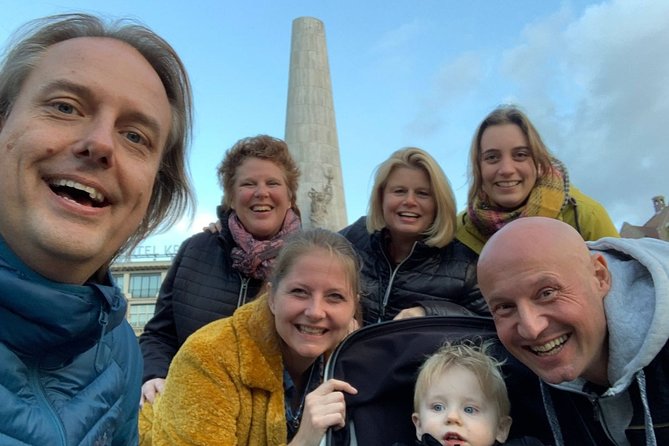
Think of each stop as a mini chapter. You’ll be there for the location, then you’ll answer the questions tied to it. Some stops feel more “sightseeing,” while others feel more like “look around and figure it out.”






Stop 1: Canal Ring (Grachtengordel)
You start with the Canal Ring, which is a smart first move. It sets the tone fast: Amsterdam’s layout, bridges, and canal edges are all part of how you understand the city.
If you’re trying to get kids engaged immediately, this is where to do it. Answering early clues gives everyone momentum and reduces the chance the game turns into a slow shuffle.
Stop 2: Anne Frank House
Next comes the area around the Anne Frank House. Even if you’re not entering (it isn’t listed as included), it’s a meaningful stop that naturally encourages reading and observation.
A consideration: this area can feel more intense than some other parts of the route. If your group prefers lighter stops, keep the game focus tight here—answer the clue, then move on.
Stop 3: Westerkerk
The Westerkerk stop gives you a strong city landmark moment—something you can spot from a distance and use as a visual anchor. It’s a helpful “orientation point” for your brain while you’re walking.
This is a good place to slow down for a quick look around rather than rushing for the next answer. You’ll likely get more out of the puzzle if you actually glance at your surroundings.
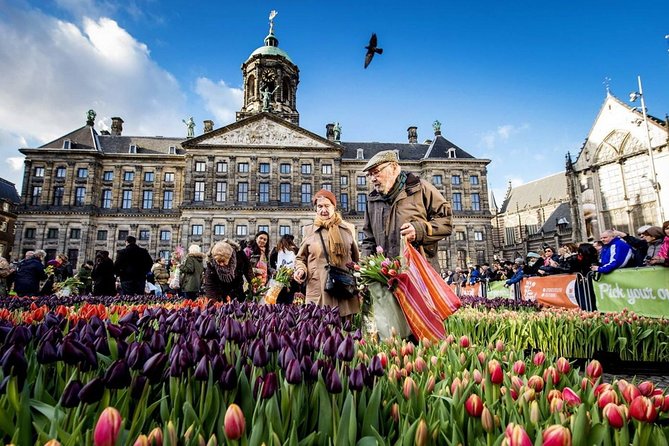
Stop 4: Dam Square & Damstraat
Then you hit Dam Square and Damstraat, one of Amsterdam’s central hubs. The route here benefits from how much energy and street-life you’ll see.
When a stop is busy, the riddle format works well because it turns crowds into background noise. You’re still moving, but you’re actively scanning rather than just trying to “keep up.”
Stop 5: Old Center
The Old Center stop is where the trail starts to feel like more than a checklist. You’re moving through streets that feel like the real walking texture of central Amsterdam.
This is a solid moment to take a short break if you need it. The trail’s no-time-limit setup makes it easier to keep everyone happy.
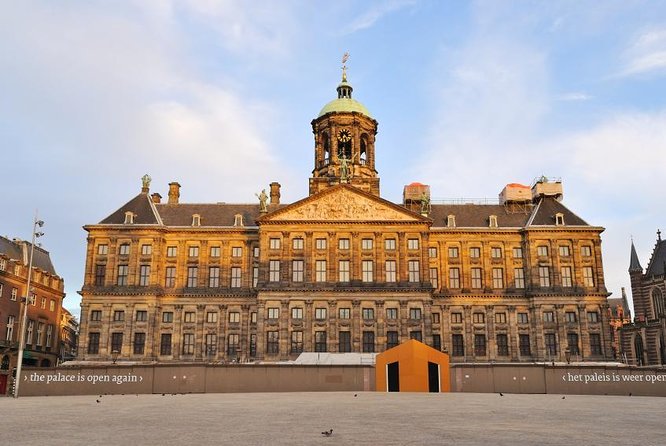
Stop 6: Royal Palace Amsterdam
At Royal Palace Amsterdam, you’re back in big-name landmark territory. Even if you don’t go inside, it’s the kind of stop where observation-based clues can feel satisfying because the building is visually “loud.”
If you’re traveling with teenagers, this sort of landmark helps them buy into the hunt—there’s something recognizable to react to while they solve.
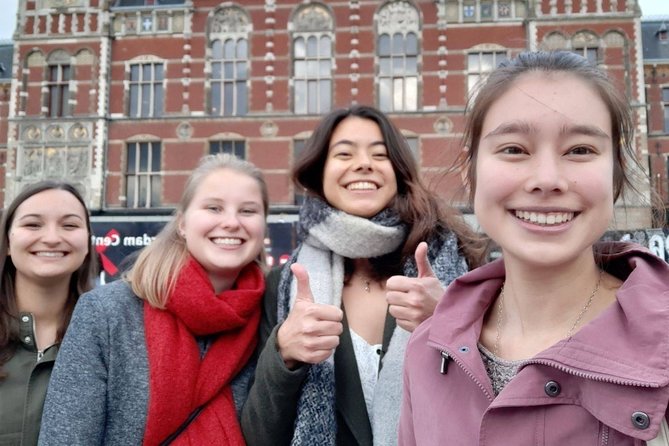
Stop 7: Rijksmuseum
The Rijksmuseum stop puts you right near the Museum area. It’s great if you want the route to feel like it includes major culture without committing to a full museum day.
If your group loves museums, you can use this stop as your “maybe later we’ll visit” moment. If you don’t, you’ll still get a strong sense of where you are in the city.
Stop 8: Van Gogh Museum
Next is the Van Gogh Museum area. Again, not everything is about entering a ticketed attraction—this stop works as a visual waypoint in your trail.
A practical tip: museum-district streets can be wide and busy, so keep your phone easy to access and double-check you’re following the right clue step before stepping off the main pedestrian flow.
Stop 9: The Jordaan
Now you shift into The Jordaan, which often feels like a different Amsterdam than the big squares and museum frontage. This stop is a chance for the trail to become more about neighborhoods, not just landmark spotting.
This is also a friendly stage for food and people-watching. If the questions let you look around, you’ll likely enjoy it more while you’re slow-walking and reading the streets.
Stop 10: Centraal Station
Centraal Station is where the route hits an emotional “we’re back in the heart of it” moment. Even though you started near Stationsplein, encountering it mid-trail makes the loop feel like it has structure.
If your crew is tired, this is a good time to regroup. You’re close to transit access and you’re in the zone where you can decide if you want to push on or extend your play.
Stop 11: Amsterdam Canal Ring
Back to the Amsterdam Canal Ring with another round through the canal-world. Doing it twice (with a different stop listed) gives you variety even if the canal theme is familiar.
This is where the hunt can feel rewarding for adults too. The game logic nudges you to notice details you’d normally walk right past.
Stop 12: Herengracht
Then comes Herengracht, one of the classic canal streets. It’s a good stop for the “look, compare, solve” style of puzzles because the street tells its story at multiple levels—architecture, bridges, and canal edges.
If your phone battery is low, this is also a good area to pace yourself. You’ll still want enough battery to complete the clue steps cleanly.
Stop 13: Red Light District (De Wallen)
The trail doesn’t avoid the famous area. De Wallen shows up as a named stop, and it’s a moment where the city’s energy can feel sharper than the postcard canals.
For groups with sensitive kids, I’d treat this as a clue-and-move stop. Stay focused on solving and keep the overall tone practical and age-appropriate.
Stop 14: Leiden Square (Leidseplein)
Finally, you reach Leidseplein, which helps end the hunt on a lively, central-feeling note. It’s a strong finish because it’s easy to keep exploring the area after you wrap the last clue.
And since the trail ends back at Stationsplein, your “finish line” feeling is built in. You’re not left wondering where the trail stops or how to get back—Amsterdam’s transit hub logic takes over.
Family-friendly competition that doesn’t feel like homework
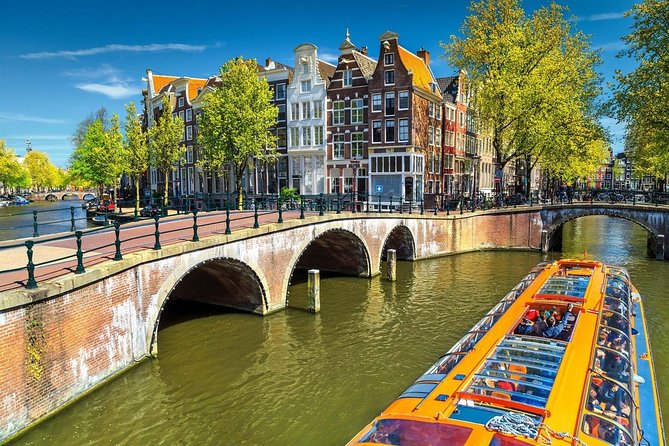
A big reason I like this format is that it turns sightseeing into something you can win. You and your group can set a goal for top score, which adds energy without needing anyone to be a “tour guide.”
For kids, the best part is momentum: they’re not stuck listening to long explanations. Instead, they’re scanning, guessing, and checking—so the city feels like a game board.
For adults, it avoids the opposite problem of some scavenger hunts: random trivia with no connection. Here, the clues are tied to real locations, which makes the city stick in your head after the walk.
Pacing and timing: plan for about 3 hours, then adjust
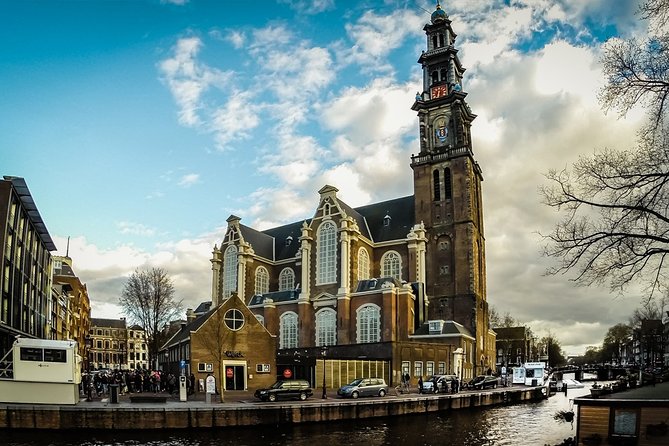
The duration is listed as about 3 hours. But the trail also has no time limit, and you can pause and stop whenever you want.
That means I’d plan it as a flexible block in your day rather than a strict appointment. If you’re moving fast, you might feel done sooner. If you’re taking detours for snacks, photos, or just slowing down when the streets look good, it can easily stretch without turning stressful.
Rain doesn’t automatically ruin a phone trail, but it changes your experience. Keep your phone protected and be realistic about how long you’ll want to stand still while reading prompts.
Languages and private-group comfort
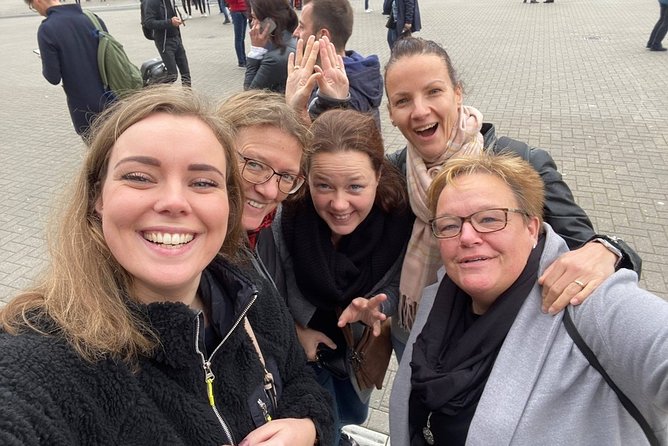
This is offered in multiple languages—English, German, French, Dutch, Spanish, Italian, and more. If you’re traveling with friends, that matters because you can keep one activity running even when the group languages differ.
It’s also private: only your group participates. That’s a quiet but important quality-of-life detail. You’re not competing with strangers for attention, and you don’t have to match anyone else’s pace.
If you care about accessibility, it’s listed as user-friendly for hearing impaired. Service animals are allowed, and it’s near public transportation, which helps you jump in and out of your day easily.
Should you book this Amsterdam e-Scavenger hunt?
Book it if you want a structured way to explore Amsterdam without committing to guided pacing. It’s a good fit for families, mixed-age groups, and friend groups who like light competition and don’t want to spend a full day in ticketed attractions.
Skip it if your group hates walking or you don’t want to rely on a phone during your sightseeing time. Also, if you’re only interested in museum interiors, this is more of a landmark-and-clue route than an entrance-heavy experience.
FAQ
How much is the e-Scavenger hunt Amsterdam?
It costs $37.29 per group, up to 6 people.
How many people can join per group?
The trail is for a team of max. 6 people.
How long does the trail take?
It’s listed as about 3 hours.
Is there a fixed start time or do I need a reservation?
No fixed starting times or reservations are required. You can start whenever you choose, and the trail runs 24/7.
Can I pause and stop during the hunt?
Yes. You can start, pause, and stop whenever it suits you, and there is no time limit.
Do I need a smartphone or data plan?
Yes. Smartphone and data are not included, so you’ll need to have your own device and connectivity.
What languages are available?
The trail is offered in multiple languages including English, German, French, Dutch, Spanish, Italian, and more.
Where do I start and where do I end?
You start at Stationsplein, 1012 AB Amsterdam, Netherlands, and the activity ends back at the same meeting point.
Is it accessible and can I bring a service animal?
Service animals are allowed. It’s also listed as user-friendly for hearing impaired.
Do you get a refund if you cancel?
Yes. You can cancel up to 24 hours in advance for a full refund. If you cancel less than 24 hours before the experience start time, it won’t be refunded.