REVIEW · AMSTERDAM
Amsterdam: Van Gogh and Rembrandt Immersive Experience Entry
Book on GetYourGuide →Operated by Tours & Tickets · Bookable on GetYourGuide
Want a church show with art-history power.
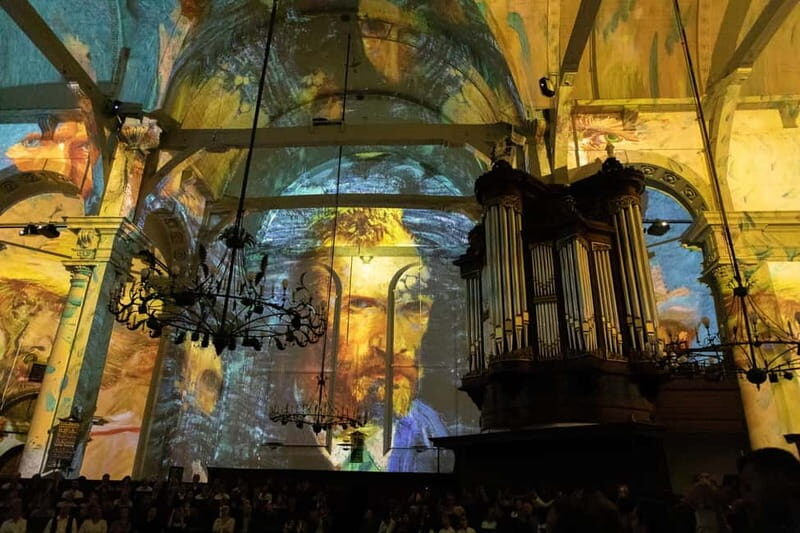
This Noorderkerk 360° sound-and-light show turns the interior of a national monument into a moving canvas, and I like that it focuses on the real connection between two Dutch giants, not just big names on walls. The storytelling uses Van Gogh’s letters to his brother, recited in English, while projections bring sunflowers, angels, and blossoms into your line of sight.
One possible drawback: the narrative is delivered through audio and letter recitations, and if you go in with zero art context, you may find parts of the story a bit hard to follow or track who is speaking.
In This Review
- Key things to know before you go
- Entering Amsterdam’s Noorderkerk for a Van Gogh and Rembrandt show
- The Van Gogh–Rembrandt connection, told through letters in English
- What happens during the 45 minutes: your “itinerary” inside one church
- Check-in and getting settled
- The show begins: a 360° art sequence around you
- The narrative lands: inspiration and artistic influence
- Ending and leaving
- Seating, sound, and projection quality: how to get the best experience
- Price and value: is $17 reasonable for a 45-minute show?
- Practicalities that matter in the real world
- Plan your timing
- What’s included (and what’s not)
- Rules inside the venue
- Language and staff help
- Who should book this Van Gogh and Rembrandt experience?
- Should you book this show in Amsterdam?
- FAQ
- Is this the Van Gogh Museum?
- How long does the experience last?
- Where does it take place?
- What’s included with the ticket?
- What language is the story told in?
- Can you lie down or walk during the show?
- Is it wheelchair accessible, and are pets allowed?
- Is it suitable for people with epilepsy, and are food and drinks included?
Key things to know before you go
- National monument setting (Noorderkerk): The whole show is built inside this historic church, so you feel surrounded by the art.
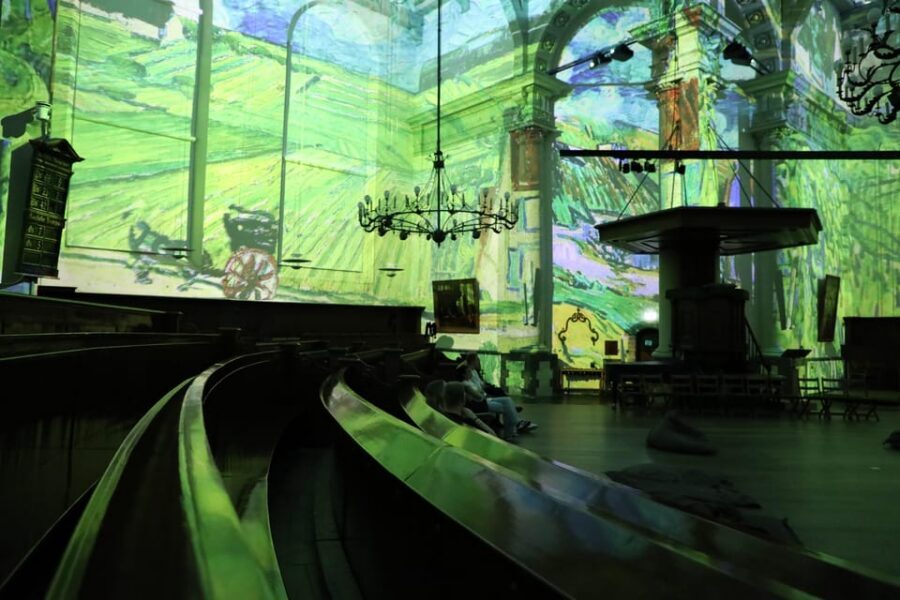
- A 360° moving canvas: Projections cover the interior as the “screen” goes around you, not just across one wall.
- Letters drive the plot: You learn how Van Gogh looked to Rembrandt, using Van Gogh’s letters to his brother as a backbone (English recitations).
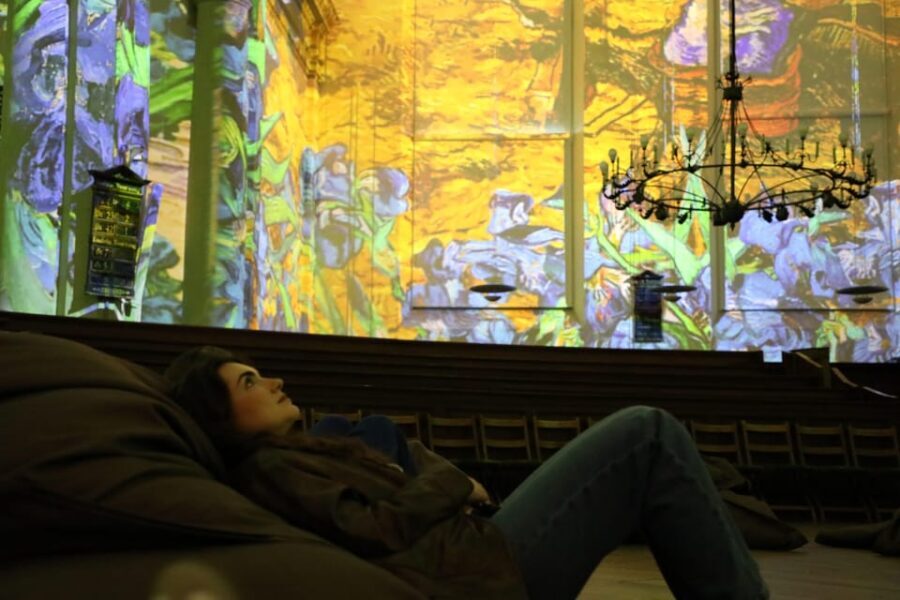
- Beanbags and walking are both options: You can lie down on comfortable seating or stroll during parts of the program.
- Not the Van Gogh Museum: This is a separate experience, built around a sound-and-light production in the church.
Entering Amsterdam’s Noorderkerk for a Van Gogh and Rembrandt show
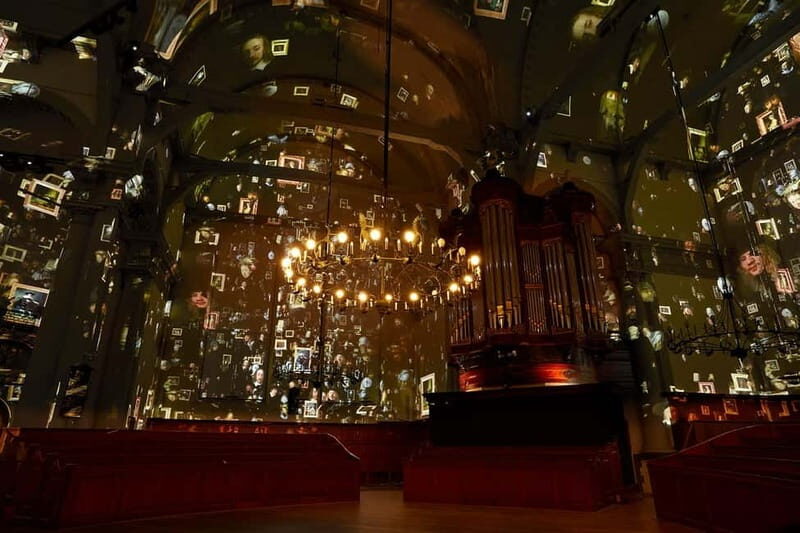
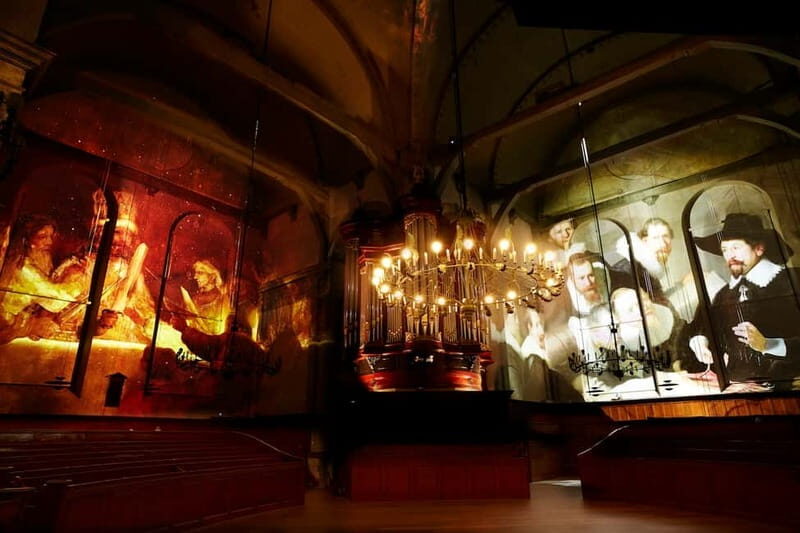
Amsterdam has no shortage of art venues, but this one is different the moment you step inside. Instead of a quiet gallery, you’re entering the Noorderkerk, a national monument church that becomes the theater, the backdrop, and part of the storytelling.
The “stage” here is the entire interior. That matters because it changes how you experience famous paintings: you’re not studying details behind glass. You’re watching images scale up and move, with sound shaping what you notice next.
The show is also explicitly designed around the link between artists. It’s not a broad greatest-hits tour. The focus is how Van Gogh became fascinated by Rembrandt and how the two are connected in theme and influence.
You can also read our reviews of more tours and experiences in Amsterdam.


The Van Gogh–Rembrandt connection, told through letters in English
What I find smart here is that the program doesn’t rely only on visuals. It uses Van Gogh’s letters to his brother as a narrative guide, with the recited text in English. That gives you a human thread: not just who painted what, but how one artist thought, studied, and responded to another.
In practice, that means you’re seeing Rembrandt’s work alongside moments that explain why it mattered to Van Gogh. The story goes beyond simple admiration. It frames Van Gogh’s interest as something personal and reflective, which is exactly what letters can do.
You’ll also see story cues built from both artists’ imagery. The projections pull you into scenes symbolically tied to admiration and influence, including sunflowers and angel-like figures that match Van Gogh’s visual world.
What happens during the 45 minutes: your “itinerary” inside one church
This experience is single-location, single-flow, and that’s part of its appeal. You won’t be switching venues or walking all over the city. You’ll be in the Noorderkerk for the full program, starting from your arrival and orientation.
Check-in and getting settled
Plan to arrive early and check in about 10 minutes ahead. Starting times are strict, so I’d rather you be early than rushing. Once you’re in, the staff guide you toward the seating or viewing areas.
If you like a slow start, arrive with the mindset that you’re about to “enter” the show. You’ll want a comfortable spot before the projections fully kick off.
The show begins: a 360° art sequence around you
The main event is a son-et-lumière sound-and-light production scaled to the church’s interior. The visuals wrap around the space, creating the effect of a 360° moving canvas. That’s a big deal in a church setting because the architecture helps the sound and projection feel larger than life.
You can follow the story two ways:
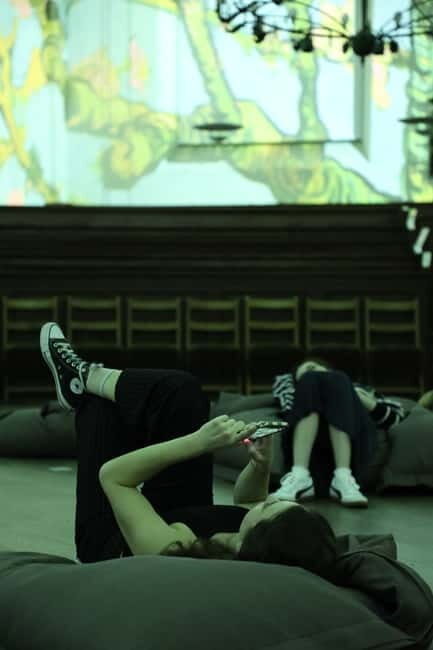
- You can lie on beanbags and watch the projections move around you.
- Or you can take a stroll through the church during parts of the show, using your position to change what you see.
Both approaches work. If you’re the type who likes to absorb while relaxing, the beanbag option is made for that. If you prefer being active, walking helps you experience the “canvas” from different angles.


The narrative lands: inspiration and artistic influence
As the program progresses, you’ll notice the structure: the letters and recitations act like a guide, while artwork and imagery illustrate the connection. You’re meant to understand how Van Gogh looked to Rembrandt, not just that the two artists are both famous.
This is also where audio description helps. While the show is primarily visual, audio support can make it easier to track what’s changing as the projections shift. If you’re the kind of person who likes clarity, pay attention to the audio cues early so you’re oriented when the program accelerates.
Ending and leaving
After about 45 minutes, it wraps up and you’ll exit with the sense that you’ve been inside a story rather than just viewing artworks. No long museum crawl afterward—just a quick reset back into Amsterdam.
Seating, sound, and projection quality: how to get the best experience
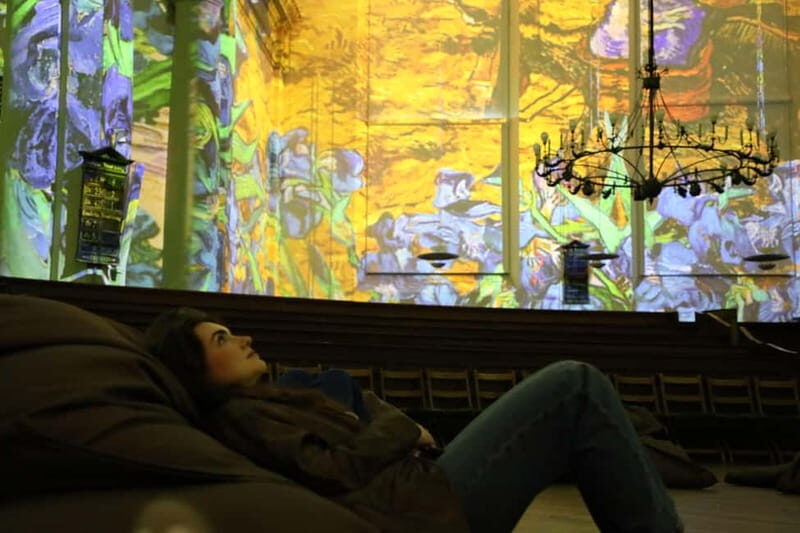
Even with a fixed program, your “viewing outcome” depends on where you choose to sit or stand. I especially like that this show gives you options, and you’re not forced into one rigid row.
A practical tip: for better sound clarity, choose the cushions in the round area. The show’s audio is clearer there, and it can make the English recitations and soundtrack feel easier to follow.
The beanbag layout is also genuinely relaxing. One of the best reasons to pick this format is that you can watch without needing to crane your neck or keep your camera at eye level the whole time. If you’re traveling all day and your feet are tired, this is the kind of stop that lets you reset.
On the technical side, people have noted improvements to the sound and light setup after prior issues, so the experience should feel polished. And if you spot a small visual hiccup at the very start of a sequence, it can help to give it a moment as the program synchronizes.
Price and value: is $17 reasonable for a 45-minute show?
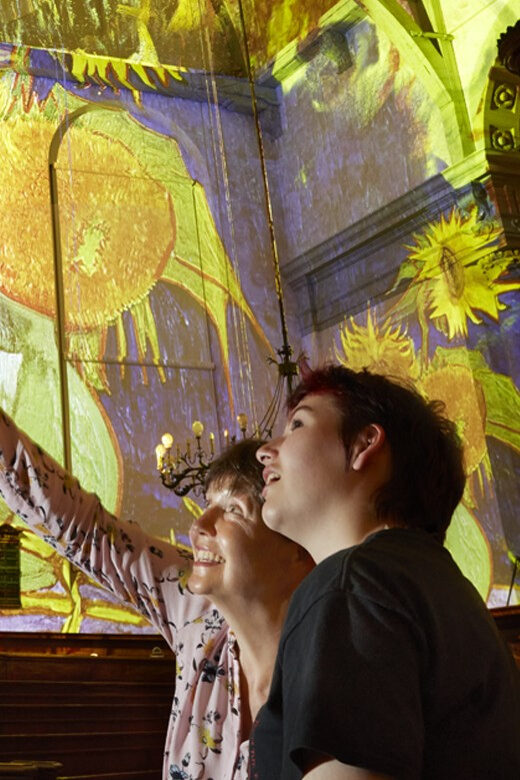
At $17 per person for a 45-minute, church-based, son-et-lumière production, I’d call this a good value—especially compared to typical museum add-ons. You’re paying for production scale, not just admission to a room.
The big value drivers:
- The setting: Noorderkerk isn’t an ordinary venue. It’s the art-surface.
- The format: 360° projections plus sound makes this more like a show than a traditional exhibit.
- The storytelling tool: Letters recited in English add context that many projection experiences skip.
If you’re trying to squeeze in “something art” that doesn’t require museum stamina, this is a straightforward option. It’s also a smart pick if you’ve seen Rembrandt and Van Gogh galleries already and want a different way to connect the dots.
Practicalities that matter in the real world
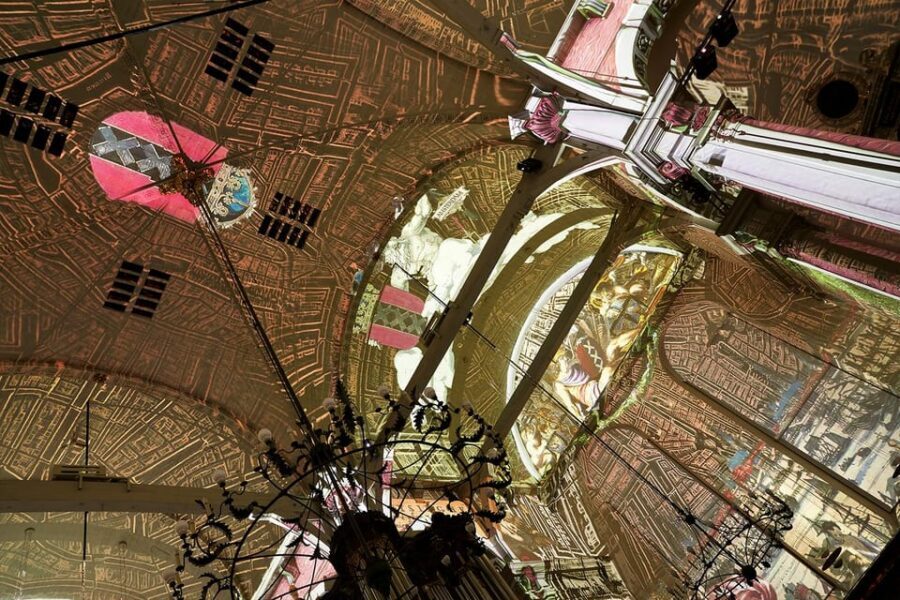
Here’s how to make this go smoothly.
Plan your timing
The show runs about 45 minutes, with starting times that vary. Check the schedule when you book so you land at the right entry time. Then arrive early enough for check-in, since starting times are strict.
Also note it’s closed on Sundays. If Sunday is your travel day, you’ll want to build your Amsterdam plan around that.
What’s included (and what’s not)
Your ticket includes:
- Entry ticket
- Audio description
Food and drinks are not included. I’d eat before you go. Treat it like a show you’ll sit through, not a casual stop where you’ll have time to browse a café inside.
Rules inside the venue
The basics are clear and worth respecting:
- Pets are not allowed (assistance dogs are allowed).
- Alcohol and drugs aren’t permitted.
- Intoxication isn’t allowed.
There’s also an important safety note: it’s not suitable for people with epilepsy due to the nature of the projections and sound.
Language and staff help
The host or greeter speaks Dutch and English. The letters are recited in English, which is the key language for following the main story thread.
Who should book this Van Gogh and Rembrandt experience?
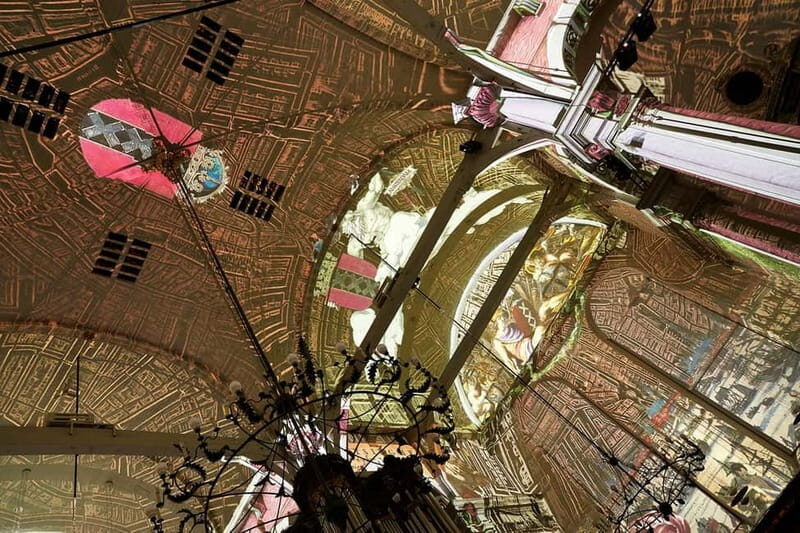
This fits best if you want:
- A short, high-impact art stop in Amsterdam
- A way to understand the connection between Van Gogh and Rembrandt without wading through a long museum route
- A format that lets you choose how you watch, either lying down on beanbags or walking a bit during the show
If you’re the type who loves craft, sound, and staging as much as paintings, you’ll likely enjoy how the church architecture works with the projections.
And if you’re traveling with someone who finds museum galleries tiring, this is an easier “yes” than another hour in a quiet room—because the experience is guided by sound and story.
Should you book this show in Amsterdam?
If your goal is to connect Van Gogh and Rembrandt in a time-efficient, high-production way, I’d book it. The combination of Noorderkerk as a 360° venue, plus the letter-based storyline, makes it more than a slideshow.
I’d only think twice if you strongly prefer traditional, label-on-wall museum viewing, or if you know you’ll struggle with audio-led narration. Also skip it if you fall under the epilepsy caution.
Otherwise, for art lovers and casual museum wanderers alike, this is one of those Amsterdam experiences where the setting does half the work for you.
FAQ
Is this the Van Gogh Museum?
No. This is a separate Van Gogh and Rembrandt entry experience and it is not the Van Gogh Museum.
How long does the experience last?
The duration is 45 minutes.
Where does it take place?
It takes place inside the Noorderkerk in Amsterdam, a national monument building.
What’s included with the ticket?
Your ticket includes entry and audio description.
What language is the story told in?
The host/greeter speaks Dutch and English, and Van Gogh’s letters are recited in English.
Can you lie down or walk during the show?
Yes. You can lie down on beanbags or stroll through the church during parts of the program.
Is it wheelchair accessible, and are pets allowed?
Yes, it is wheelchair accessible. Pets are not allowed, though assistance dogs are allowed.
Is it suitable for people with epilepsy, and are food and drinks included?
It is not suitable for people with epilepsy. Food and drinks are not included.