Windmills, mummies, and ancient astronomy in one day. This small-group day trip shows lesser-visited Dutch places with real Dutch stories, not just quick photo stops. I like how you get five full stops across the polder and Friesland countryside in about 8.5 hours, plus planetarium and crypt admissions are covered. One thing to consider: it is a long day with lots of driving, and lunch and drinks are not included.
You’ll feel the pace in a good way, because the route jumps from canal-house charm to windmill engineering and then to big water-management scale. Guides such as Simon, Adrian, and Jan are specifically praised for being clear in English and for making the countryside and Dutch systems easy to understand. My only caution: if you have limited mobility, the walking and uneven village areas may be tough, since this isn’t marked as mobility-friendly.
In This Review
- Key highlights that make this tour worth your time
- The value of a small group leaving Amsterdam
- De Rijp: a town that looks staged, but isn’t
- Schermerhorn windmills: engineering you can actually see
- Franeker planetarium: the oldest working one in the world
- Wieuwerd mummies: a crypt stop with real mystery
- Afsluitdijk: Dutch water management at full scale
- Price and what $155 buys you in a full day
- What your day will feel like: pacing, snacks, and comfort
- The guides: clear English and story-driven explanations
- Who this tour is best for (and who should think twice)
- Should you book this Amsterdam hidden-side day trip?
- FAQ
- What is the starting meeting point for the tour?
- Where does the tour end?
- What time does the tour start?
- How long is the tour?
- How many people are in the group?
- Is the tour offered in English?
- Are admission tickets included?
- Is lunch included?
- What about snacks during the tour?
- Is the tour suitable for limited mobility?
- Is there a requirement for weather?
Key highlights that make this tour worth your time
- Small group size (up to 7) means more questions and less rushing
- Working windmill time lets you grasp Dutch engineering up close
- Franeker’s planetarium is the oldest working one in the world, still functioning
- Wieuwerd church crypt mummies add a truly unusual stop with included entry
- Afsluitdijk shows Dutch water control at a scale you can actually see
- Snacks and water help you handle a day that runs on driving between stops
The value of a small group leaving Amsterdam
If you like Amsterdam but also want the Netherlands beyond the canals, this tour fits. You get out of the city for the kind of Dutch settings most people never reach: compact villages, working wind power, and waterworks that made whole regions possible.
The small-group setup is the big reason this feels human. With only up to 7 people, your guide can slow down when something matters, like why a dike was built or what the planetarium is actually doing. It also helps if you’re traveling solo or as a couple, because you’re not stuck waiting for a crowd.
One practical note: you are spending a big chunk of the day in an air-conditioned vehicle. That’s not a deal-breaker, but you’ll want to dress for short walks plus longer sitting. The snack pack and water help here.
You can also read our reviews of more tours and experiences in Amsterdam.


De Rijp: a town that looks staged, but isn’t
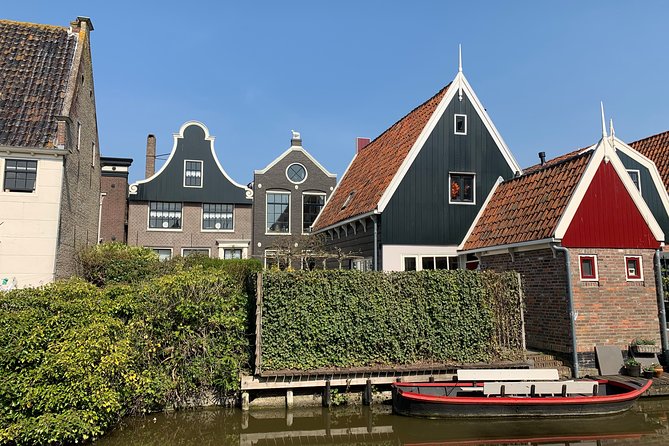
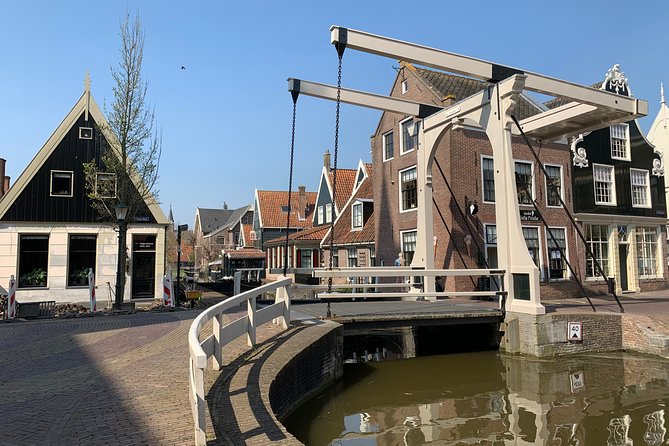
De Rijp is the first stop, and it hits you fast. This village has that picture-perfect “old Dutch” look—wooden houses with red rooftops, canals close by, and an old white bridge you can cross while your guide explains what you’re seeing.
The best part is that it feels like a real place you could live in, not a theme park. You’re looking at architecture tied to the Dutch Golden Age, and the highlight is the town hall from that era, which you can appreciate while wandering at a relaxed pace.
What you’ll like here: the walk has flow. You’re not sprinting from one corner to another; you can take your time spotting details.
A possible drawback: De Rijp is a walking stop, so if you’re not steady on your feet, go slow and use available rest spots.
Tip: bring a light layer. Even on a nice day, village streets by the water can feel cooler than central Amsterdam.
Schermerhorn windmills: engineering you can actually see
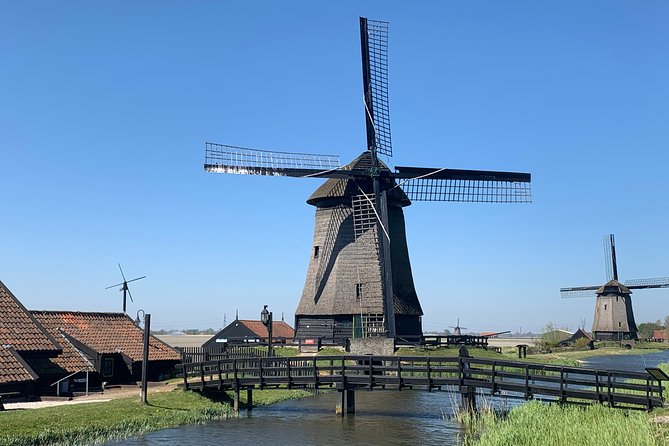
Next comes Schermerhorn, and this is where the Netherlands turns from postcard to system. During the Dutch Golden Age, this area was drained by dozens of windmills—here, the tour focuses on one of the remaining examples.
This isn’t just a “look from the outside” moment. You can explore the windmill from top to bottom, which is the difference between admiring a silhouette and understanding how it works. Your guide can connect the dots between wind power, water removal, and the flat polder geography you’ll notice everywhere in the north.
Schermerhorn also gets points for being less crowded than the big, famous windmill areas. You still get the impact—just with more breathing room.
What you’ll like here: the chance to appreciate Dutch engineering without huge crowds.
A possible drawback: the visit is shorter than some people expect. If you’re hoping for a long, slow windmill day, you’ll want to keep expectations realistic: you’re there to learn fast and move on.
Practical move: wear shoes that are comfortable for stairs and indoor surfaces. Even if the windmill time is manageable, it’s better to be ready.
Franeker planetarium: the oldest working one in the world
Then the tour heads into Friesland for the best “wait, what?” stop. In Franeker, you visit the Koninklijk Eise Eisinga Planetarium, famous because it is the oldest working planetarium in the world.
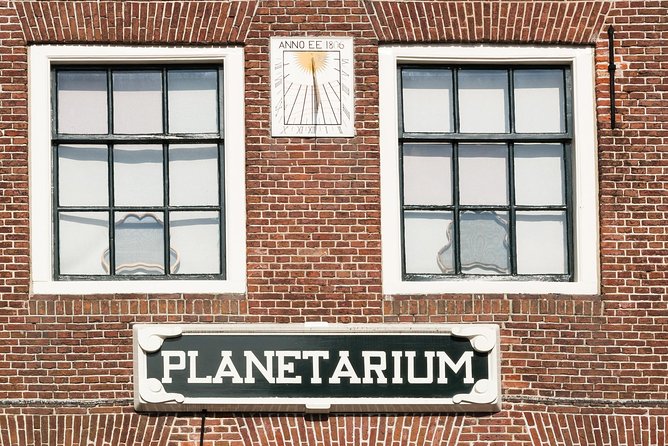
What makes it special is not just the age. It’s the idea that a model of the solar system is built and designed to show movement accurately—created over the late 1700s by a Frisian craftsman. The planetarium is suspended from the ceiling of a beautiful canal house, so you’re learning astronomy in a lived-in setting rather than a modern museum hall.
The time here is good—long enough to absorb the concept and still have room to ask questions. You’ll also appreciate how the guide connects the story to Dutch culture: curiosity, practical engineering, and the ability to build complex systems that work.
What you’ll like here: the feeling of stepping into a working historical instrument, not just viewing a display.
A possible drawback: planetarium time is included, but it still depends on how quickly the guide moves. If you prefer reading at your own pace, you may wish you had more time on-site.
Tip: if you’re sensitive to dim interiors, bring sunglasses for outside light and get ready for darker indoor viewing once you step in.
Wieuwerd mummies: a crypt stop with real mystery
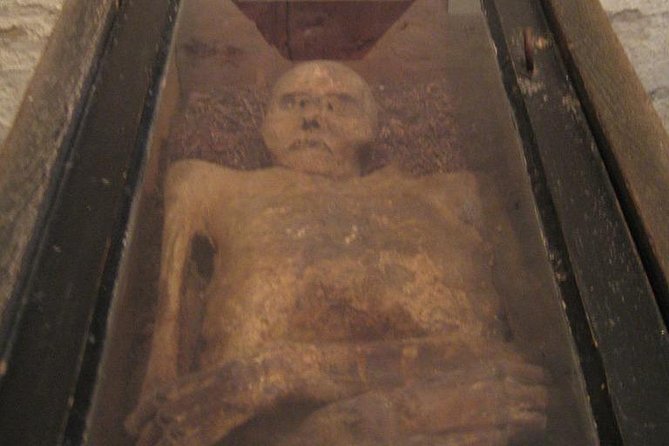
After astronomy, you get the spooky-left-field turn: the mummies of Wieuwerd. This is one of those stops that people remember because it feels odd in the best way—quiet, strange, and very real.
In the local church, four mummified people were found in a crypt, and they’ve been there for more than three centuries. You don’t just hear a ghost story. You see the burial crypt setting and learn why the situation still puzzles scientists, because the preservation and circumstances don’t fit neatly into simple explanations.
This is also one of the most “short but memorable” segments of the day. You get the shock value without losing the structure of the tour.
What you’ll like here: the unique human story tied to a specific place and church crypt.
A possible drawback: it’s a church visit, so you’ll want to keep your expectations respectful and calm. If you’re expecting a long guided lecture, you might find the time is more concentrated.
Tip: dress a touch warm. Church interiors and crypt areas can feel cooler.


Afsluitdijk: Dutch water management at full scale
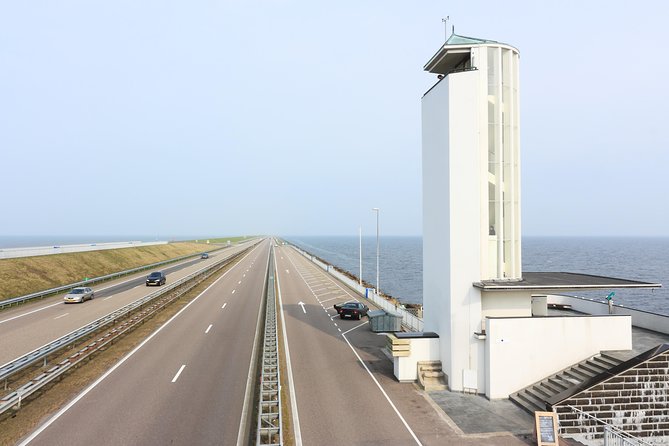
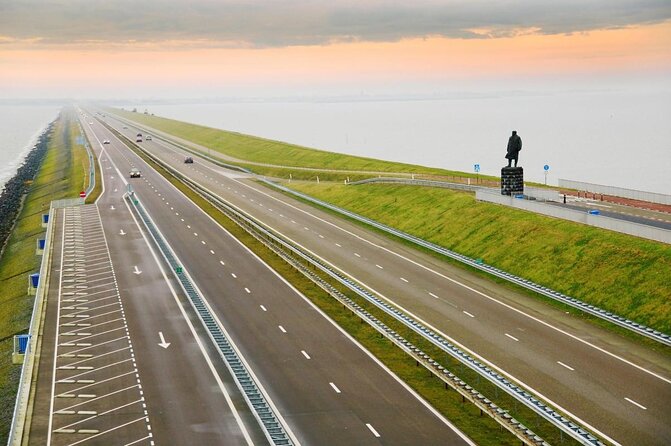
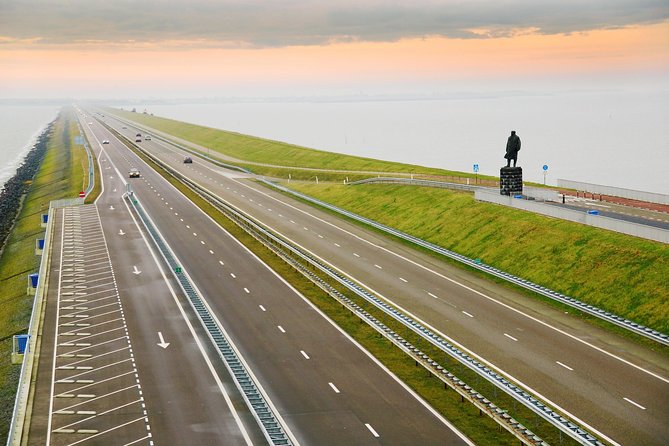
On the way back, the tour stops at Afsluitdijk, one of the most impressive Dutch “we built it so people could live here” stories. This 32-kilometer water barrier connects provinces and turns a chaotic water reality into controlled water systems.
You’ll go to a watchtower for views that explain the whole point. On one side you see the Wadden Sea, and on the other you see the Ijsselmeer lake. Standing there makes the Dutch water-management concept click: it’s not abstract. It’s engineering that changed what the coast and inland waters could do.
The timing is brief but focused, which is smart. This is a place where seeing is believing, and you do not need hours to grasp the scale.
What you’ll like here: the bigger-picture understanding of how dikes and dams shaped the country.
A possible drawback: it’s a quick photo-and-view stop. If you want a deep dive into water history, this will feel like the start, not the end.
Tip: bring a hat or cap. Wind at water barriers can be strong, even when the day feels mild elsewhere.
Price and what $155 buys you in a full day
At $155 per person, this isn’t the cheapest way to do a day trip from Amsterdam. But the value comes from how many real, paid moments are included and how much planning is done for you.
You’re paying for:
- a full day of air-conditioned transport,
- a small group experience,
- admissions for the planetarium and the church crypt,
- and the windmill admission being covered as part of the tour.
On top of that, you get snacks and water to keep the day comfortable while you move between regions. And because this is structured across five stops, you’re not spending your limited time figuring out schedules, ticket lines, and routes.
Where the price may not feel worth it is if you’re mainly craving Amsterdam city time or you hate long vehicle stretches. Also, since lunch and extra drinks are not included, you’ll want to budget for food separately.
My practical take: if you want Dutch engineering stories you can see with your own eyes, plus at least two truly unusual stops (planetarium + crypt), this price can feel fair.
What your day will feel like: pacing, snacks, and comfort
This tour runs about 8 hours 30 minutes, starting at 9:00 am and returning to the meeting point in central Amsterdam. Expect a rhythm of drive, short guided time, short walks, then drive again. That pacing is actually useful because each stop is memorable without turning into a half-day lecture.
Snacks are included, and water is part of that comfort setup. In practice, that helps you avoid the common day-trip trap: arriving at a stop hungry and then rushing because you need to find food.
Restrooms can matter on a day like this. On the type of stops included here, bathroom access is often easier than you’d think compared to quick city photo tours, so you’re less likely to feel stuck.
Comfort tip: wear layers and keep a small day bag. Bring a light jacket, since you’ll walk outdoors in villages and at water sites.
The guides: clear English and story-driven explanations
A huge part of whether this tour feels fun or factual is the guide. Past departures highlight guides such as Simon, Adrian, and Jan for being welcoming and easy to understand in English, and for connecting Dutch systems to what you can see outside the window.
The best guides here do two things:
1) they explain why windmills and dikes matter, and
2) they point out details you’d otherwise miss—like the significance behind Golden Age buildings in De Rijp or why the planetarium still works.
If you’re the type who likes asking questions, a small group size gives you a better shot at getting answers.
One more thing: good driving matters. You are doing countryside roads and multiple turns, and guides who manage it calmly make the ride feel smoother.
Who this tour is best for (and who should think twice)
This works well if you:
- want an Amsterdam day trip that actually changes scenery,
- enjoy history that you can see in buildings and infrastructure,
- like odd-but-real stops (planetarium and mummies) without it turning into a scary show.
It is also ideal for couples and small groups who prefer personalized attention. With a maximum of 7 travelers, you’re more likely to feel like you’re on a guided tour rather than a bus excursion.
Think twice if:
- you have limited physical movement, since walking is part of multiple stops,
- you require a long lunch break or a full meal plan (lunch isn’t included),
- you dislike spending much of the day traveling by van.
Should you book this Amsterdam hidden-side day trip?
If you want more than canals and museums, I’d book this. The mix is strong: Golden Age architecture in De Rijp, windmill engineering you can climb and understand, the oldest working planetarium in the world, mummies in a church crypt, and Dutch water management at Afsluitdijk.
It also feels like a day where your guide can genuinely shape how you experience the countryside. With up to 7 people, you’re set up for clarity, not crowd-control.
Skip it only if you’re not comfortable with a long driving day, or if mobility concerns make short walks tricky. Otherwise, this is a smart way to understand what makes the Netherlands work—wind, water, and the people who built both.
FAQ
What is the starting meeting point for the tour?
The tour starts at Italian Chamber, De Ruijterkade 5, 1013 AA Amsterdam, Netherlands.
Where does the tour end?
It ends back at the same meeting point in Amsterdam.
What time does the tour start?
The start time is 9:00 am.
How long is the tour?
The duration is approximately 8 hours 30 minutes.
How many people are in the group?
This tour has a maximum of 7 travelers.
Is the tour offered in English?
Yes, the tour is offered in English.
Are admission tickets included?
Yes. Admission fees are included for the mill in Schermerhorn, the planetarium in Franeker, and the mummies in the church crypt in Wieuwerd. Other stops on the route are listed as free.
Is lunch included?
No. Lunch and drinks are not included. Snacks are provided.
What about snacks during the tour?
Snacks are included, along with water as part of the provided snack setup.
Is the tour suitable for limited mobility?
It is not recommended for travelers with limited physical movement.
Is there a requirement for weather?
Yes. The tour requires good weather. If it’s canceled due to poor weather, you’ll be offered a different date or a full refund.