A good story can change how you see a city. This small-group Amsterdam walk turns famous streets into a chain of human-scale moments, from pioneering LGBTQ history to stories tied to philosophy, faith, and resistance. It’s built for about 2 hours, with short stops that still manage to feel personal.
What I like most is the way the route pairs big ideas with specific places. I’m also drawn to the guiding style: Elizabeth, Tanja, and Astrid (different guides on different departures) are described as engaging story-tellers who keep the pace easy and answers practical. The tour also impressed me for inclusivity, with one guide making a real effort to accommodate a wheelchair user and hearing limitations.
The main thing to consider is that it’s a fast-moving walk with brief time at each site. If you want long museum-style time inside buildings, you may feel like you’re skimming. Also, the experience requires good weather, so plan for outdoor walking.
In This Review
- Key highlights at a glance
- A 2-hour Amsterdam walk that feels like a real conversation
- Start at Monument Megadlé JethomiemAmstel, finish at H’ART Museum
- Dutch National Opera & Ballet: the LGBTQ story tied to one unassuming building
- Spinoza Monument: philosophy with consequences
- Mozes en Aaronkerk: a 17th-century Amsterdam community you can’t ignore
- Portuguese Synagogue of Amsterdam: heiress, escape routes, and the shadow of Inquisitions
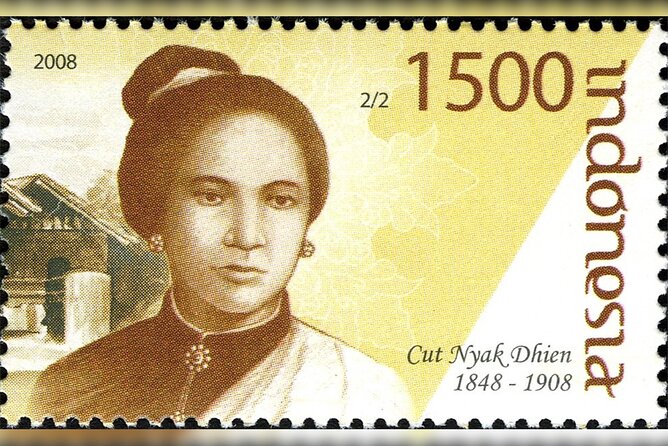
- Hortus Botanicus: Indonesian rebels with very different lives
- De Burcht: diamonds, workers, and rights that still matter
- ARTIS Amsterdam Royal Zoo: flamingos plus people who resisted
- University of Amsterdam: suffragist and diplomat on the main campus
- H’ART Museum: the family link behind a famous name
- Guides and the way stories get told in this group size
- Price and value: $48.16 for a full 2-hour route with free admissions listed
- Who should book this walking tour?
- Should you book? My take
- FAQ
- How long is the tour?
- How many people are in the group?
- What language is the tour offered in?
- Are admission tickets included?
- Where does the tour start and where does it end?
- What happens if the weather is poor?
Key highlights at a glance
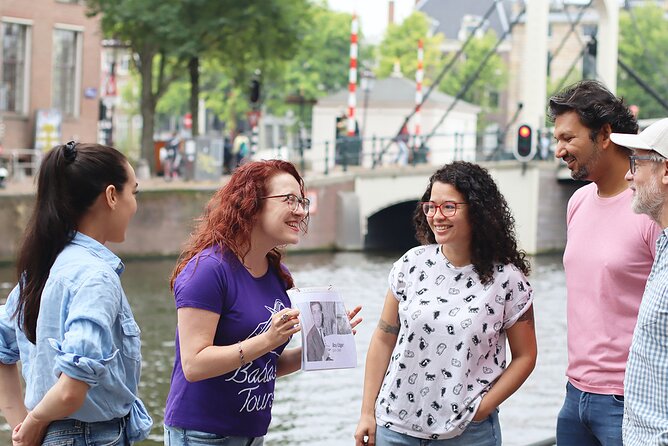
- Max 12 people means you can actually ask questions, not just hear over a crowd
- Short, high-impact stops connect Amsterdam’s hidden threads to places you can point to
- Free admission tickets listed on-site for the featured locations on the route
- Guides like Elizabeth, Tanja, and Astrid bring strong story skills and thoughtful answers
- A route that ends at H’ART Museum so you can keep going after the walk
- English language tour with a mobile ticket for a low-friction start
A 2-hour Amsterdam walk that feels like a real conversation
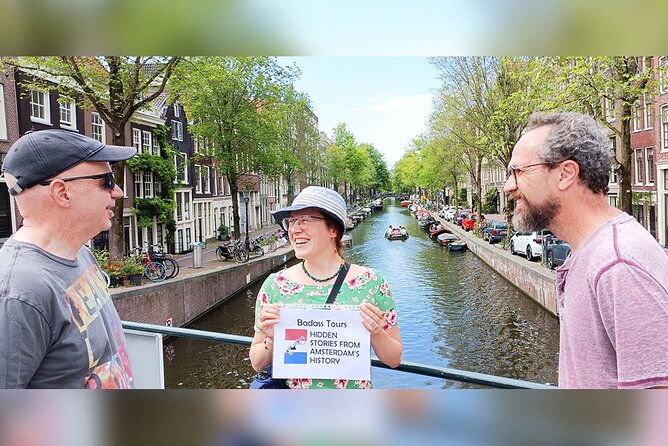
Amsterdam can be hypnotic. You look up at canal houses, you follow the bike lanes, and suddenly you’re doing the tourist shuffle. This tour fights that by using the city like a classroom with stops that hit themes you don’t usually get on a standard highlights route.
You’re not stuck in one neighborhood or one era. The stories jump from LGBTQ history to Jewish history, from philosophy and exile to workers’ rights and WWII resistance. The result is that you leave with more than facts—you leave with a sense of how Amsterdam has been shaped by people who pushed back, hid, escaped, organized, or simply refused to fit.
And because it’s only about two hours, it works well as an early or mid-trip plan. Early helps you get your bearings fast. Mid-trip helps you re-interpret places you’ll see later.
You can also read our reviews of more tours and experiences in Amsterdam.



Start at Monument Megadlé JethomiemAmstel, finish at H’ART Museum
The walk starts at Monument Megadlé JethomiemAmstel, Amstel 23, 1011 PT Amsterdam. It ends in front of H’ART Museum (formerly the Hermitage Museum), Amstel 51, 1018 EJ Amsterdam.
That start-to-finish setup is handy: it keeps you moving without making you backtrack to your first stop. Also, ending at H’ART Museum is a nice bonus because it gives you a natural place to pivot into art, especially if you want more culture after the guided portion. If you’re the type who likes to “ride the momentum” of a good guide, this ending helps.
Dutch National Opera & Ballet: the LGBTQ story tied to one unassuming building
Your first stop is the Dutch National Opera & Ballet. Instead of beginning with architecture trivia, you get an introduction that grounds you in the city and then moves into a landmark LGBTQ moment: the story of the world’s first gay marriage.
The way this works for you is simple. You see a recognizable Amsterdam building, but you also understand what went on there—how a “normal” civic site can hold a plot point that matters globally. If you’ve never heard that story before, this stop gives you a fast entry into Amsterdam’s deeper social history, not just its aesthetics.
Timing here is short (around 10 minutes), so don’t expect a long lecture. Do expect a strong framing so the next stops make more sense.
Spinoza Monument: philosophy with consequences
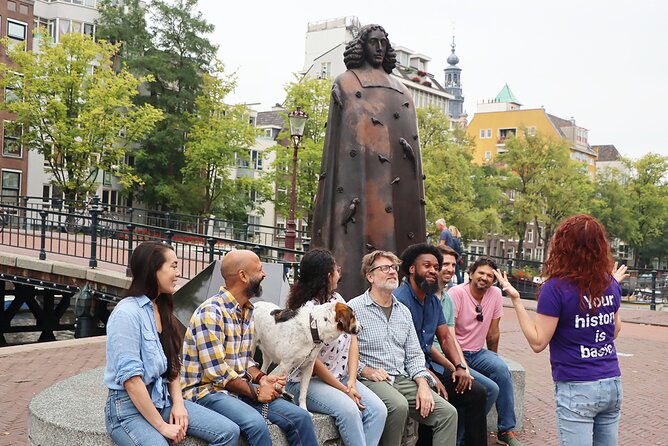
Next you visit the Spinoza Monument. This is where the tour shifts from public milestones to a more personal kind of impact—how one person’s ideas can collide with community life.
You’ll learn the backstory of one of the titans of modern philosophy and how he became an outcast in his own community. That’s the kind of theme that sticks, because it isn’t abstract. It’s about belonging, disagreement, and what happens when a community decides you don’t fit.
This stop is brief (about 5 minutes), so it works best as a spark. Afterward, you’ll likely notice similar patterns in other Amsterdam stories on the route: people pushed aside, people protected, people organizing for a better future.
Mozes en Aaronkerk: a 17th-century Amsterdam community you can’t ignore
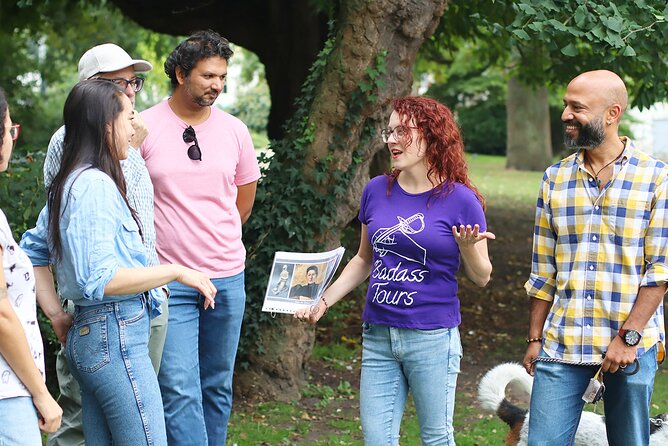
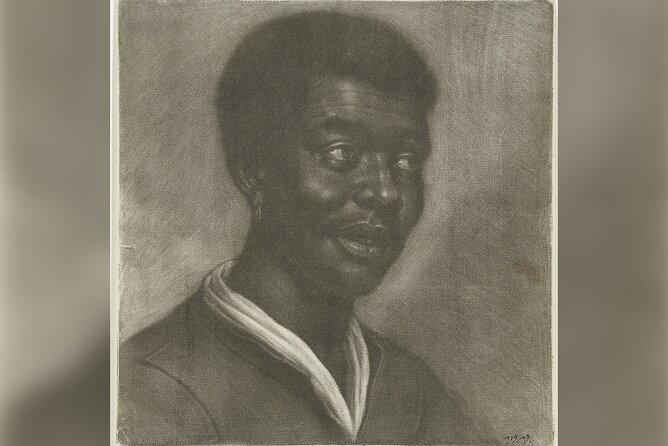
At Mozes en Aaronkerk, you hear about the life of a couple in Amsterdam’s free Black community in the 17th century. This is a stop that adds texture you just don’t get from the usual canal-house-to-museum circuit.
What I like about this kind of storytelling is that it centers ordinary people with real lives, not only famous names. The tour uses this example to show that Amsterdam wasn’t shaped only by elites or by the most recorded voices. It was also shaped by people who formed community, found ways to live, and navigated a society that could be unfair.
Expect about 5 minutes here. The goal isn’t to overload you. The goal is to give you a human thread you can carry into the later religious and political stories.



Portuguese Synagogue of Amsterdam: heiress, escape routes, and the shadow of Inquisitions
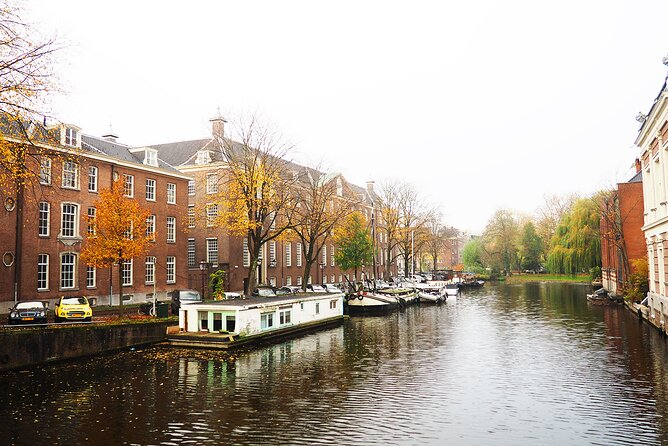
Then comes the Portuguese Synagogue of Amsterdam, one of the more powerful stops on the route. You stand between historic synagogues while hearing about a story tied to the Spanish and Portuguese Inquisitions—and the actions of an heiress who created an underground railroad.
That phrase—underground railroad—matters because it reframes the site. You’re not only looking at religious architecture. You’re learning how networks of safety can form when danger is real, and how money, family ties, and courage can mix into something practical.
This stop lasts around 10 minutes. Short or not, it can land emotionally, because the theme is protection under pressure. If sensitive topics are a lot for you, this is the stop where you’ll feel it most.
Hortus Botanicus: Indonesian rebels with very different lives
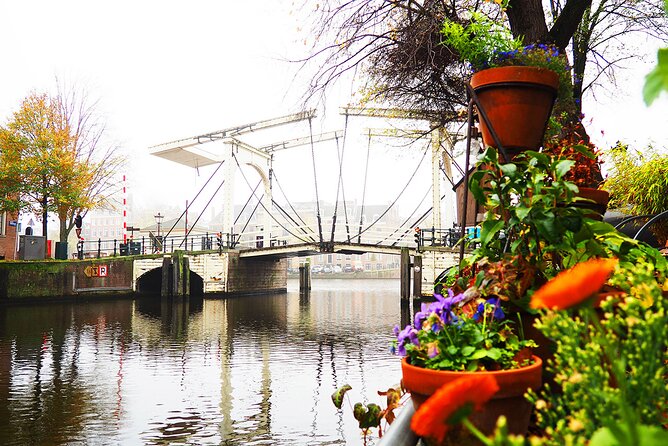
At Hortus Botanicus, the tone shifts again. You’ll hear harrowing stories of two Indonesian rebels and revolutionaries who led very different lives.
This is one of the tour’s best “big outside Amsterdam” moves. You get to see how Amsterdam’s story connects to Indonesia through people and political struggle, not just through trade-sounding facts. And because the setting is a botanic garden, the contrast hits harder: beauty around you, history that isn’t comfortable.
Time here is about 10 minutes. I’d treat it like a guided teaser. If anything resonates—an individual story, a political conflict—you’ll probably want to read more after.
De Burcht: diamonds, workers, and rights that still matter
Next you visit De Burcht, where Amsterdam’s diamond history comes into focus. You learn about the workers’ union that built the building and how their work led to rights citizens rely on today.
This stop is a reminder that Amsterdam’s “craft” reputation isn’t only about jewelry—it’s also about labor and organization. When you learn how unions and collective action shaped outcomes, it changes how you interpret civic buildings. They stop being scenery and become evidence.
This one runs around 10 minutes, but it’s the kind of stop that makes you look for the invisible story behind the visible thing.
ARTIS Amsterdam Royal Zoo: flamingos plus people who resisted
At ARTIS Amsterdam Royal Zoo, you pass by flamingos, but you’re not on a wildlife outing. The zoo setting becomes a backdrop for learning about influential Amsterdammers—from groundbreaking artists to WWII resistance heroes.
This is a smart pivot in the route. It keeps your energy up while you learn heavier content. It also shows you how Amsterdam spreads stories across the city. A place that feels like leisure can hold a serious thread once you know what to listen for.
Time here is about 30 minutes, which is noticeably longer than the earlier stops. That extra chunk helps because it gives you time to ask questions and absorb multiple stories without feeling rushed.
University of Amsterdam: suffragist and diplomat on the main campus
Crossing through the University of Amsterdam campus, you learn about an influential suffragist and a world-changing diplomat. This is where the tour broadens its lens beyond Amsterdam-only themes.
The practical value for you is that you’ll likely start connecting dots on your own. Amsterdam becomes a starting point, not a closed box. You get ideas about activism and international impact tied to people you might later recognize in European history.
This stop is about 15 minutes—enough time to feel grounded in what you’re hearing without turning it into a lecture.
H’ART Museum: the family link behind a famous name
The final guided stop is H’ART Museum, formerly known as the Hermitage Museum. Here, you hear the story of the fall and rise of a household name—focused on how a relative who barely knew him still shaped what the world saw.
This ending feels designed for the way your brain works near the close of a walking tour: you’re ready for something human, a story with motivation and consequences. It also tees up the museum element, so you can continue exploring through the collections after the walk.
This part runs around 15 minutes.
Guides and the way stories get told in this group size
With a maximum group size of 12 travelers, you get a different kind of experience than with a huge bus-and-lecture setup. You can ask follow-ups, and the guide can adjust pace without the group feeling like a single blob of bodies.
The guiding style comes through strongly in the way different named guides are described:
- Elizabeth is mentioned for being approachable and never rushing, plus making efforts to accommodate a wheelchair user and hearing limitations.
- Tanja is credited with strong Jewish quarter storytelling and answering questions clearly.
- Astrid is highlighted for passionate, compelling narration that connects history to moral urgency, especially around WWII suffering.
Even if you don’t meet those specific guides, the pattern is the same: story first, place second, answers always.
Price and value: $48.16 for a full 2-hour route with free admissions listed
At $48.16 per person, you’re paying for a short guided experience that moves you through multiple major sites. The value equation is mostly about three things.
First, the tour is only about two hours. You’re not tying up half a day, and you’re still getting a full sequence of stops. Second, multiple locations on the route are listed with admission ticket free. That matters because it prevents the classic “walk-and-wait-then-pay” problem. Third, you’re not paying for a lecture in a classroom; you’re paying for someone to connect buildings to people and to keep the story flowing on foot.
If your goal is to see more than the usual top sights in a short window, this pricing fits that plan pretty well.
Who should book this walking tour?
I’d steer you toward this tour if you:
- want Amsterdam beyond the postcard look
- like history that connects ideas to real places
- enjoy guided storytelling more than museum time
- appreciate inclusive perspectives and thoughtful pacing
- want an easy, English small-group plan that isn’t a full-day commitment
I’d hesitate if you:
- dislike walking for a couple of hours in the city
- strongly prefer long stays inside each building
- get overwhelmed by heavy themes like WWII, Inquisitions, and political rebellion
Should you book? My take
Book it if you’re curious about Amsterdam’s people—especially the ones whose stories don’t always land in the loudest guidebook pages. The combination of short stops, named guides with strong storytelling reputations, and free admissions listed for featured sites makes this feel like more than a basic stroll.
Skip it only if you’re chasing lots of time inside museums, or if outdoor walking on your trip date might be an issue. For most people, it’s an efficient way to see the city with meaning.
FAQ
How long is the tour?
The tour is approximately 2 hours.
How many people are in the group?
The group maximum size is 12.
What language is the tour offered in?
It’s offered in English.
Are admission tickets included?
The stop details indicate admission tickets are free for the featured locations on the route.
Where does the tour start and where does it end?
It starts at Monument Megadlé JethomiemAmstel, Amstel 23, 1011 PT Amsterdam, and ends in front of H’ART Museum (formerly the Hermitage Museum), Amstel 51, 1018 EJ Amsterdam.
What happens if the weather is poor?
This experience requires good weather. If it’s canceled due to poor weather, you’ll be offered a different date or a full refund.