REVIEW · AMSTERDAM
Amsterdam Architecture Tour
Book on Viator →Operated by Historical Amsterdam Tours · Bookable on Viator
Canals tell stories if you know where to look. This private Amsterdam architecture tour walks you through the canal ring and the buildings along the water, while your guide keeps the pace human enough for questions. You also pick from available start times, so the tour fits your trip instead of squeezing it.
I like two things most. First, you get a clear reading of how Amsterdam’s architecture works at street level, from house shapes you can spot instantly to why the city’s defenses mattered for keeping the canals going. Second, the tour includes an inside visit to Huis Bartolotti (with admission), and that stops turns into a quick lesson on how gardens played a role in the Canal Ring layout.
One consideration: it’s a walking tour, and the info notes a moderate physical fitness level. If you’re dealing with limited stamina or you want lots of sit-down time, you may find 2.5 hours on foot a bit much.
In This Review
- Key highlights at a glance
- Why a private architecture walk works in Amsterdam canal country
- Starting point on Brouwersgracht: the easy meet-up and mobile ticket
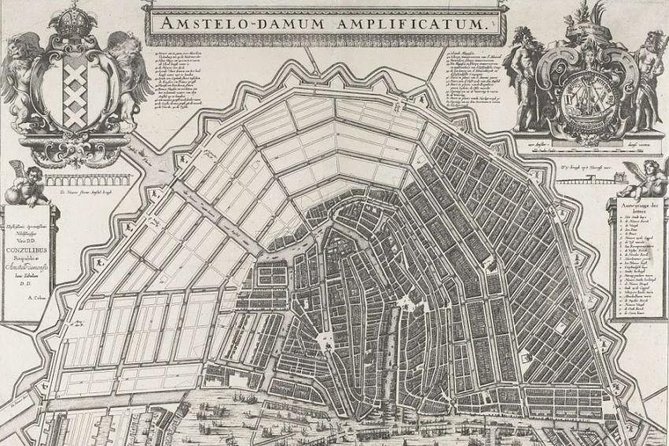
- The Amsterdam canal ring: structure, skyline, and fortifications
- Late 17th-century architecture and design for religious minorities
- Huis Bartolotti: stepping inside the canal house and gardens clue
- Westerkerk and the House with the Heads UNESCO library stop
- The stories you’ll carry: Multatuli, a prison below, and fair trade coffee origins
- How much walking is it, and what pace should you expect?
- Price and value for a private group of up to 8
- Who should book this tour (and who might want a different fit)
- Should you book Amsterdam Architecture Tour?
- FAQ
- How long is the Amsterdam Architecture Tour?
- Is this tour private?
- What’s the group size limit?
- What language is the tour offered in?
- Do I get a mobile ticket?
- Where do I meet, and where does it end?
- What will I see during the tour?
- Is Huis Bartolotti included, and is admission covered?
- What level of walking fitness is required?
- What is the cancellation policy?
Key highlights at a glance
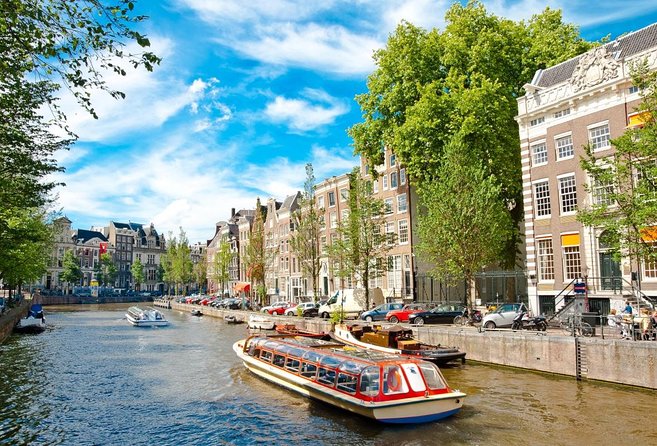
- Private guide, not a crowd: only your group participates, with time to ask questions as you walk.
- Canal ring architecture made practical: you learn to read building features you’ll see again later on your own.
- Late 17th-century religious history in buildings: a specific example shows how design responded to physical restrictions for religious minorities.
- Inside Huis Bartolotti for about 15 minutes: included admission, plus the gardens connection that ties the whole canal story together.
- Westerkerk and the House with the Heads: early 17th-century architecture and a UNESCO-listed library stop.
- Stories that connect city details to daily life: swan atop a Protestant domed church, Multatuli’s statue, a prison below an old bridge, and the origins of fair trade coffee.
Why a private architecture walk works in Amsterdam canal country
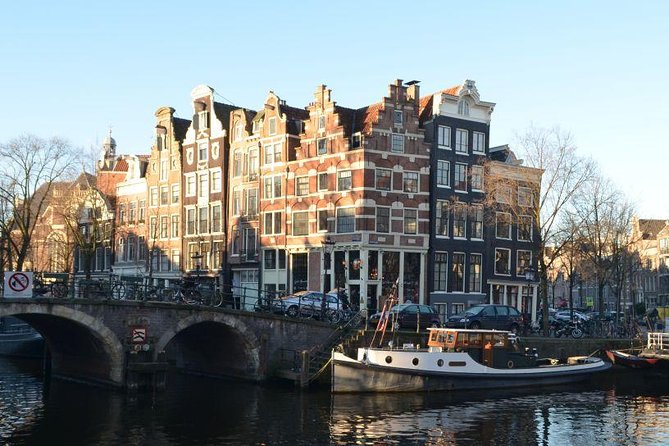
Amsterdam’s canal area can feel like one long photo-op. A private format fixes that. Instead of listening to a big group read a script, you can slow down when something clicks for you, or ask why a design choice looks the way it does.
This tour also helps you notice the small structural clues that make the canal ring feel readable: the way houses sit along the water, the logic behind widths and gable-ends, and how the skyline looks the way it does when you understand what’s happening underneath. That’s the kind of knowledge that sticks, because it’s tied to what you can see in real time.
You can also read our reviews of more tours and experiences in Amsterdam.



Starting point on Brouwersgracht: the easy meet-up and mobile ticket
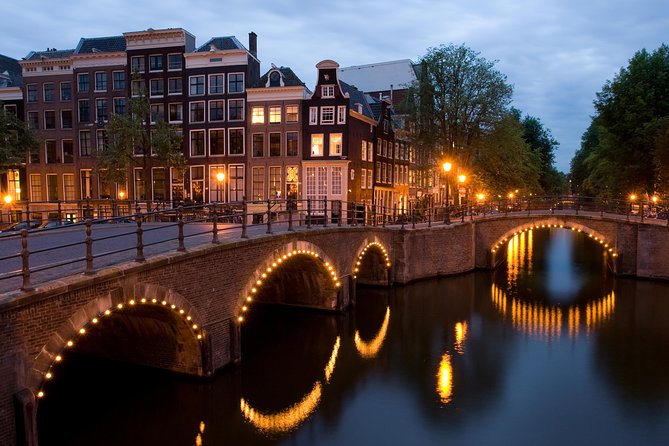
You meet at Design Amsterdam, Brouwersgracht 64 (1013 GX). The spot is near public transportation, which matters in a city where you’ll otherwise burn time figuring out the last few blocks.
You’ll also use a mobile ticket, which is a small thing but a real convenience when you’re moving between canal streets and don’t want to juggle paper. The tour ends back at the meeting point, so you won’t have to plan a second walk just to get “home base” at the finish.
The Amsterdam canal ring: structure, skyline, and fortifications
The first part centers on the Amsterdam canal ring—how it’s structured and what kinds of architecture you’ll see along the water. This isn’t abstract. You’re taught to connect what you see (house shapes and placement) with why the city developed the way it did.
One of the most helpful takeaways is how the city’s rapid growth after medieval times links to trade, and why some remnants of the older city walls still show up in the modern layout. You’ll also learn why canal fortifications were necessary to keep the city functioning the way it needed to.
And yes, you’ll get a few “wait, that’s connected” moments. Examples from the tour include understanding the skyline in the shape you see today and spotting how a swan sits on top of a Protestant domed church. Those are the kinds of details that make a second day in Amsterdam much easier, because you’re not starting from zero anymore.
Late 17th-century architecture and design for religious minorities
A dedicated stop covers a late 17th-century architectural example built as an inventive solution to physical restrictions faced by religious minorities. The value here isn’t just the date or the label. It’s the idea that architecture can be a workaround for real-world constraints—sometimes the building form is basically a practical compromise.
If you’re the type who likes learning how people in the past solved problems with design, this is one of the most interesting segments. You’ll come away seeing buildings as decisions shaped by laws, access, and everyday limitations, not just aesthetics from across a canal.
Huis Bartolotti: stepping inside the canal house and gardens clue
The tour’s most concrete “wow” stop is Huis Bartolotti, described as a standout canal house, and the schedule includes about 15 minutes there with admission included. You’ll look at the interior design and then get an explanation that ties back to the Canal Ring as a whole: the secret involves the gardens.
This is the part where a private guide really pays off. Inside a canal house, you can’t always pause long or take in everything at once. With a guide, you focus on what matters—the design choices you can connect to the larger canal story—and you don’t waste time guessing what you’re supposed to notice.
A practical note: the interior time is not long, so go in ready to look carefully. If you need slow, lingering museum-style pacing, you’ll likely want to pair this tour with extra self-guided time afterward.



Westerkerk and the House with the Heads UNESCO library stop
The itinerary then shifts toward early 17th-century architecture in general, with special attention on the Westerkerk. This section is where the skyline and “that church looks like it belongs there” feeling turns into something you can explain.
From what you’ll hear, the Westerkerk connection includes a specific visual detail: the swan on top of a Protestant domed church. It’s a small feature, but the guide uses it to link iconography to how Amsterdam’s religious architecture shows up in the city’s silhouette.
You’ll also cover an extravagant early 17th-century canal house in Dutch Renaissance style: the House with the Heads. The tour highlights that it’s currently home to a special UNESCO-listed library, which is a great reason to care beyond the exterior façade.
The stories you’ll carry: Multatuli, a prison below, and fair trade coffee origins
One reason this tour rates so well is the way city anecdotes get tied to physical places. You’re not just being shown buildings—you’re being given a set of threads to pull when you’re wandering later.
During the walk, you’ll hear about the Multatuli statue on the oldest bridge in Amsterdam, including the unusual note about a prison below it. You’ll also hear the origins of fair trade coffee, which is a reminder that Amsterdam’s trade and ideas are baked into daily life, not only in old stone.
Even the “house details” get explained in a practical way: why some houses are different widths, and how gable-ends fit into the overall streetscape logic. When you know what to look for, Amsterdam starts to feel less like chaos and more like a system.
How much walking is it, and what pace should you expect?
The tour lasts about 2 hours 30 minutes and is designed as a walking experience. The guidance calls for moderate physical fitness, which in Amsterdam usually means a steady pace, some uneven pavement, and breaks that are short rather than long.
If you plan this for a day when you’ll also climb stairs in a museum, do yourself a favor and keep the schedule realistic. Wear comfortable shoes you don’t mind getting wet in case of canal-side weather swings, and bring water if you tend to get thirsty while walking.
Price and value for a private group of up to 8
The price is $384.63 per group (up to 8), in English, for a tour of about 2.5 hours with a private guide and an included admission stop at Huis Bartolotti.
Is it “cheap”? No, it’s not priced like a basic group walking tour. But privacy changes the math. If you’re coming as a family or a small group, you’re paying for one guide experience across up to eight people, not per person for a crowd.
This is also a value option because you do get more than outside views. The tour includes a structured interior visit with admission, and it uses that time to teach you something you can’t learn from the canal-side street view alone.
Who should book this tour (and who might want a different fit)
Book this if you:
- want a private, question-friendly architecture walk rather than a one-size-fits-all group route
- enjoy learning how buildings connect to trade, religion, and city growth
- like interior-access stops, even if they’re short (here, about 15 minutes at Huis Bartolotti)
- want to return to the canal district later and recognize details faster
You might choose something else if you:
- dislike walking for long stretches, since the tour explicitly notes a moderate fitness level
- need lots of sitting time, because the structure is built for movement along the canal ring
Should you book Amsterdam Architecture Tour?
If you care about Amsterdam’s canal buildings beyond surface photos, I think this is a smart pick. The biggest win is the combination of private guiding and a route that explains how to read the city—then backs it up with an interior look at Huis Bartolotti and a guided connection to the Westerkerk and the House with the Heads (including its UNESCO-listed library).
I’d book it especially if you have limited time and want your “first canal day” to make sense fast. If your ideal trip is pure wandering with no structure, you might prefer a self-guided route—but if you want a guided lens that makes the whole canal ring click, this one fits.
FAQ
How long is the Amsterdam Architecture Tour?
It runs for about 2 hours 30 minutes.
Is this tour private?
Yes. It’s a private tour/activity, and only your group participates.
What’s the group size limit?
The tour is priced for a group of up to 8 people.
What language is the tour offered in?
It’s offered in English.
Do I get a mobile ticket?
Yes, the tour includes a mobile ticket.
Where do I meet, and where does it end?
You meet at Design Amsterdam, Brouwersgracht 64, 1013 GX Amsterdam, and the activity ends back at the meeting point.
What will I see during the tour?
You’ll learn about the Amsterdam canal ring and types of architecture along the water, including a late 17th-century example tied to religious minorities, early 17th-century architecture related to the Westerkerk, and the House with the Heads (with a UNESCO-listed library).
Is Huis Bartolotti included, and is admission covered?
Yes. You visit Huis Bartolotti for about 15 minutes, and an admission ticket is included.
What level of walking fitness is required?
The tour notes a moderate physical fitness level.
What is the cancellation policy?
You can cancel for a full refund up to 24 hours in advance of the experience’s start time. If you cancel less than 24 hours before, the amount paid isn’t refunded.