REVIEW · AMSTERDAM
Amsterdam city center run tour
Book on Viator →Operated by Tourist Run Amsterdam · Bookable on Viator
Amsterdam is best learned on foot. This city center run tour mixes classic sights with a move-you-along pace, so you see more than you’d ever fit into a casual walk. You’ll follow canal views, cross the Amstel river, and hit big-name districts early—when the city still feels fresh.
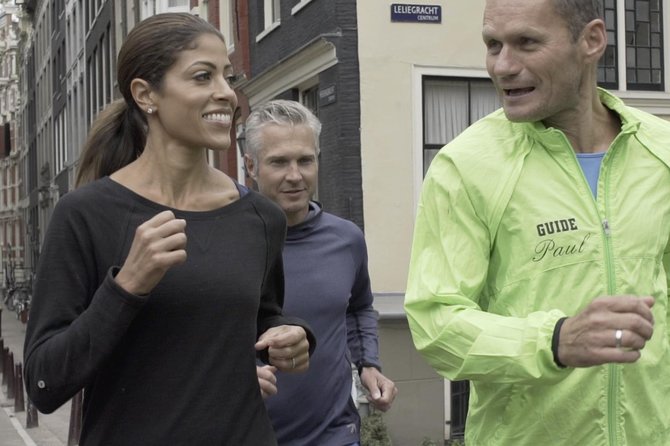
What I like most is the focus on an easy, runner-friendly pace and the fact that you get a real guide experience, not just a route. Guides like Paul and Katya are praised for keeping things fun, sharing stories, and spotting photo moments that most people miss.
One thing to consider: this is still a running tour. If your fitness is shaky on uneven cobblestones or you’re not comfortable jogging for about an hour, you may find the effort a bit more than a standard walking tour.
In This Review
- Key highlights you’ll care about
- Why an Amsterdam canal run beats a standard walk
- Price and value at about $37 per person
- Morning logistics: an 8:30 start with pickup at your door
- The first stretch: Rijksmuseum area and the Amstel canal vibe
- Magere Brug to the Red Light District: bridges, canals, and uncomfortable contrasts
- Jordaan after Anne Frank: where the streets feel lived-in
- Leidseplein and Dam Square: big-city Amsterdam, delivered in one loop
- Finishing touches: H’ART Museum and the Gay Monument
- Pace, group size, and how runners should prep
- What to wear and what to bring (so you enjoy the effort)
- Should you book this Amsterdam city center run tour?
- FAQ
- How long is the Amsterdam city center run tour?
- What time does the tour start and where do I meet?
- Is hotel pickup included?
- What languages is the tour offered in?
- How many people are in the group?
- Is bottled water included?
- Is free cancellation available?
Key highlights you’ll care about
- Hotel or AirBnB pickup right at your door, so you don’t waste morning time getting to a meeting point
- Small group (max 10), which keeps the pace and Q&A feeling personal
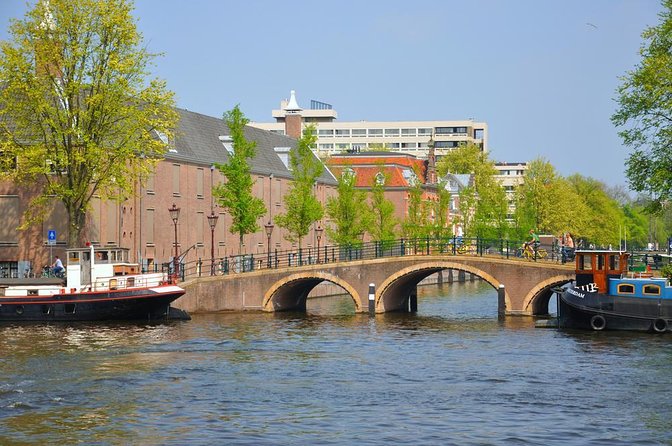
- A route designed around canal beauty and landmark clustering—Rijksmuseum to Dam Square without backtracking
- Stops at high-interest zones like the Red Light District and Anne Frank House area (expect contrast)
- Finishes with culture stops like H’ART Museum and the Gay Monument, so you end with something memorable
Why an Amsterdam canal run beats a standard walk
Amsterdam rewards slow gazing—canals, bridges, old brick, and that calm waterline look everywhere. But doing it the normal way can turn into a messy day of zigzags, crowds, and missed connections. This run tour uses the best trick: it bundles the city’s most famous areas into one efficient morning loop.
The payoff is simple. You get to enjoy the sights while also working up some energy. It’s a city sightseeing format that feels like motion, not museum-line logistics.
And the guide element matters here. The best part isn’t sprinting past things. It’s getting stories and context while you’re right there, along the canals and through the streets most visitors only glance at.
You can also read our reviews of more city tours in Amsterdam
Price and value at about $37 per person
$37.01 for roughly 1 hour 10 minutes sounds like a lot until you break down what you’re getting. This isn’t just “run here, run there.” You’re paying for a guided route, an organized pace, and the fact that pickup is included.
Hotel pickup is usually the hidden cost on many Amsterdam tours. If you’re staying in the city center (and you likely are), not having to hunt down a meeting point can save both time and money. It also makes the tour easier to start—especially if you want to see the city early.
You also get mobile ticketing and the tour runs in multiple languages (English, German, and Dutch). For international travel, that’s a real value add because you’re not relying on a mixed-audience situation.
One more practical angle: small group tours can feel better in a city where sidewalks can get tight. Max 10 travelers keeps things controlled, and that usually improves the experience more than you’d expect.
Morning logistics: an 8:30 start with pickup at your door
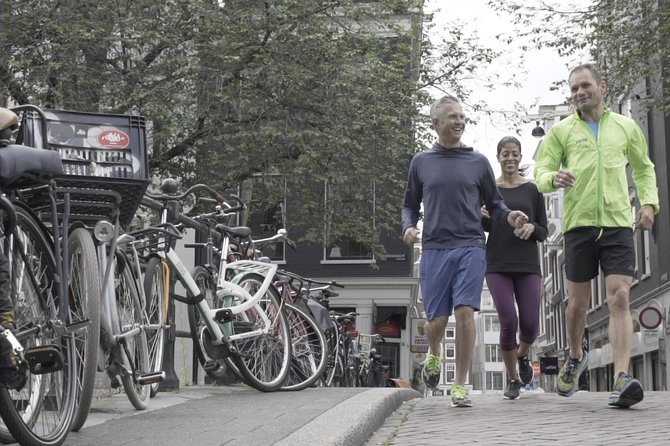
This tour starts at 8:30 am. That early timing is key in Amsterdam. You’ll beat a chunk of the day’s crowd energy, which makes it easier to enjoy canals and bridges at a calmer tempo.
Pickup is described as right at your hotel or AirBnB address. That’s convenient, but it also means you’ll want to be ready at pickup time—shower, shoes on, and out front. If you’re staying in a building with a tricky entrance, it’s smart to confirm you understand exactly where the driver/guide will find you.
You’ll also want to plan for a moderate fitness level. The tour is at an easy pace, but it’s still a run. Shoes with good grip matter more than you think when the ground turns slick or uneven.
The first stretch: Rijksmuseum area and the Amstel canal vibe
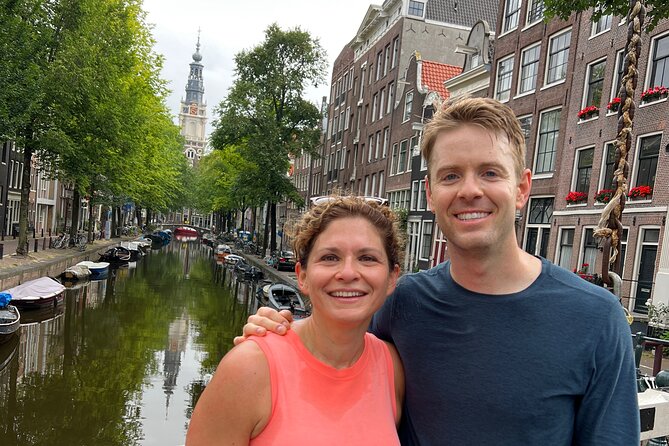
The route starts around the Rijksmuseum, putting you in the Museumplein/Rijksmuseum zone early. Even if you’re not going inside, this area gives you the big-picture Amsterdam feel: open space, classic architecture, and a natural gateway into the canal network.
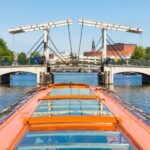
From there, the tour flows toward Magere Brug (the Skinny Bridge). That’s the kind of stop you want to experience by moving along the right angles. You’re close enough to feel the setting, but you’re also not stuck standing there like a statue while everyone takes photos from the same spot.
What makes this opening part valuable is rhythm. You warm up while the guide sets the tone: easy pace, city stories, and a sense of where everything connects. It’s a strong way to get your bearings without planning.
Possible drawback: this section is visually heavy. If you’re the type who likes long pauses for photos, you might feel slightly rushed. The solution is simple—let your guide know if you want extra time at a specific view, and then follow along.
Magere Brug to the Red Light District: bridges, canals, and uncomfortable contrasts
After Magere Brug, you’ll head into the Red Light District. This is one of Amsterdam’s most internationally known areas, but the tone changes fast once you’re there. Expect a mix of lively street life and a more adult-focused atmosphere. Your guide’s job is to handle it in a way that gives context, not just shock value.
The value here isn’t “watching a famous place.” It’s understanding how Amsterdam balances tourism, policy, and history in a real neighborhood setting. A running route makes you experience it as part of everyday city geography, not as a fenced-off attraction.
Then you’ll make your way toward the Anne Frank House area. The emotional weight of that area is real, and it lands differently when you arrive by foot and on a moving route. It helps the stories connect—Amsterdam isn’t just canals and gables. It’s also human history in ordinary streets.
Possible drawback: the contrast between Red Light District energy and Anne Frank House seriousness can feel like whiplash if you’re not mentally prepared. If you’d rather keep emotion and nightlife separated, you may want to use the stop time to slow your pace a notch and reset.
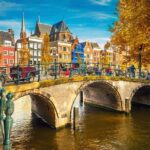





Jordaan after Anne Frank: where the streets feel lived-in
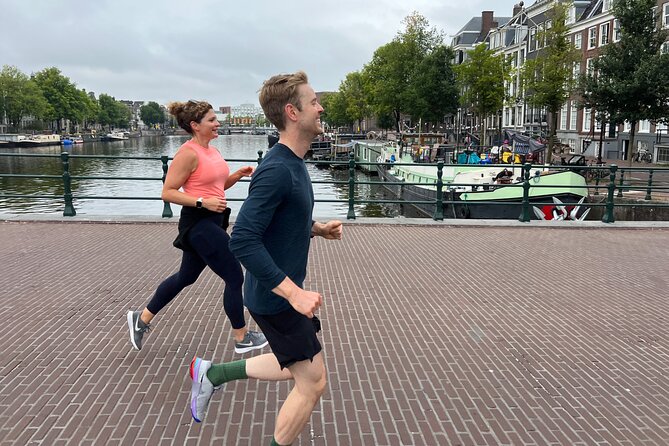
Next is the Jordaan, often loved for its street charm and neighborhood feel. This is where Amsterdam starts to shift from postcard landmarks into everyday lanes—narrower streets, local character, and the kind of architecture that makes you look up.
This part of the route is a good fit for why a run tour can work better than a walking tour for some people. You keep momentum through small streets, so you don’t get stuck in the “we’re moving but we’re still stuck in traffic of tourists” feeling.
You’ll also likely spot little details your brain would skip on a slower day. One guide-led highlight called out by guests is noticing small markers like Stumbling Stones and gable stones (gevelstenen). You might not catch them on your own, but once someone points them out, they pop everywhere.
Possible drawback: Jordaan can be visually dense. If you’re focused on pace first, it can be easy to miss some details. I’d treat this as your “look up” moment—glance at facades, then get back to the route.
Leidseplein and Dam Square: big-city Amsterdam, delivered in one loop
After Jordaan, the tour reaches Leidseplein (Leiden Square)—a major square area where the city feels more open and structured. That change in scenery can be a nice mental break. You’ll shift from tucked-away streets back to a place where you can breathe and re-orient.
Then you continue to Dam Square. Dam Square is the classic Amsterdam anchor: central, iconic, and hard to ignore. Even if you’ve already seen it from photos, arriving while you’re still fresh from the earlier parts of the run makes it feel more connected. It’s like the city snaps into place.
What I like about these final landmark zones is that they give you closure. You don’t end the tour in a random spot. You end in places you can easily use as a base for the rest of your day—whether that’s grabbing coffee, finding a museum, or just wandering.
Possible drawback: Dam Square is popular. You’ll still likely see crowds and busy streets. The good news is the tour timing starts early, so your experience should feel manageable.
Finishing touches: H’ART Museum and the Gay Monument
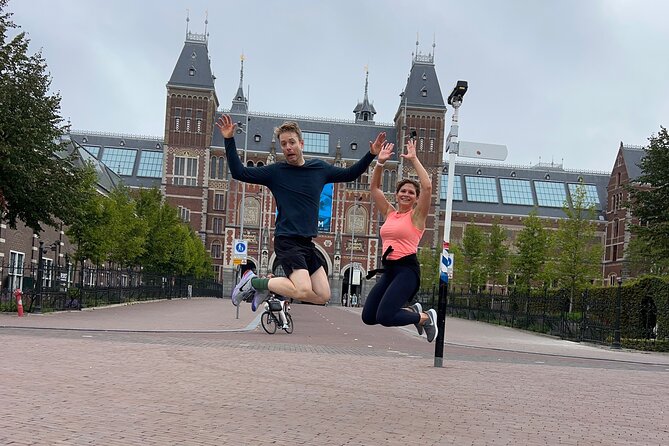
The route continues to H’ART Museum, a stop that adds a modern arts note to the mix. That matters because Amsterdam can feel like it’s all old-world canals and museums—H’ART Museum gives a different angle while you’re still walking in the city core.
Then you finish with the Gay Monument. It’s the kind of stop that helps round out the picture of Amsterdam as a city with a strong identity around inclusion and cultural visibility. Coming at the end of the run makes it a meaningful final marker.
This end section is where you’ll feel the tour’s “small group” benefit most. When you’re done running, you want an easy exit, and these central stops keep you close to transport and onward plans.
Pace, group size, and how runners should prep
This is an easy pace, but it’s still a running tour. The tour description is upfront about a moderate physical fitness level and an easy running rhythm, not sprinting.
With only up to 10 travelers, you’re not dealing with a huge pack. That helps for safety and also makes stops feel smoother. The guide can regroup you quickly, point out sights, and keep everyone moving.
Guides are also singled out for photo-savvy pacing. Guests mention that guides like Paul do a great job taking lovely photos along the way. Katya is praised for convenience and a smooth meet-up at AirBnB addresses.
Practical runner prep:
- Wear grippy shoes for cobbles and possible damp pavement
- Bring your own water or plan to buy it after (bottled water isn’t included)
- If you need to slow, do it early. Don’t wait until you’re struggling
What to wear and what to bring (so you enjoy the effort)
Amsterdam mornings can be cool, even in warmer months. Dress in layers you can adjust fast. You’ll warm up once you’re moving, but you may still feel chilly at the first stop if you’re standing around.
Bring:
- Comfortable running shoes with solid traction
- A light layer (or windbreaker)
- A small bottle of water since it’s not included
If you’re carrying a phone, secure it—running while balancing a phone in one hand is a fast way to lose a lens or a moment. A simple waist belt or small running pouch can make a big difference.
Should you book this Amsterdam city center run tour?
Book it if you want:
- A quick, early start to see major sights without spending your whole day planning
- An active way to experience canals, bridges, and central neighborhoods
- A small-group guide who shares stories and helps with photo moments
Skip it if:
- You’re not comfortable jogging for about 1 hour 10 minutes
- You prefer a slow, long-stay style where you don’t feel pulled onward
- You know you’ll be easily overwhelmed by the emotional and cultural contrast between stops
If your goal is to get oriented fast and then keep exploring on your own, this is a strong option. The route is compact, the guide support is part of the value, and the early timing gives you a calmer Amsterdam rhythm to work from.
FAQ
How long is the Amsterdam city center run tour?
The tour lasts about 1 hour 10 minutes.
What time does the tour start and where do I meet?
The start time is 8:30 am. You’ll meet at the pickup point where the guide picks you up at your hotel or AirBnB address.
Is hotel pickup included?
Yes. Hotel pickup is included in the tour price.
What languages is the tour offered in?
The tour is offered in English, German, and Dutch.
How many people are in the group?
The tour has a maximum of 10 travelers.
Is bottled water included?
No, bottled water is not included. You should plan to bring your own or buy water separately.
Is free cancellation available?
Yes. You can cancel up to 24 hours in advance for a full refund. Cancellation within 24 hours of the start time is not refundable.