REVIEW · AMSTERDAM
Amsterdam: Off-the-Beaten-Track Neighborhoods Private Tour
Book on GetYourGuide →Operated by City Unscripted · Bookable on GetYourGuide
Amsterdam has more than one face. This private neighborhoods tour helps you see the city in connected chunks, with a local host steering you past the obvious bits and into areas where Amsterdam feels like Amsterdam. You choose 3, 4, 6, or 8 hours, so the route can flex around what you actually want to do.
I love how much it’s about local lifestyle instead of a script. I also like that you get real neighborhood variety in one outing—Amsterdam-Noord parks and waterfront, then the medieval/center streets and markets, then De Pijp and Amsterdam-East.
One possible drawback: the experience is built for walking, and time can feel a bit generous if your group prefers a faster pace. If you’re the type who likes to cover ground quickly, you may want to book the shorter option.
In This Review
- Key points
- How This Private Amsterdam Neighborhood Tour Actually Works
- Choosing the Right Tour Length (3 vs 4 vs 6 vs 8 Hours)
- Amsterdam-Noord: Canal Calm, Parks, and the Eye on Film
- Amsterdam-West and the Markets: De Hallen + Ten Katemarkt
- Dam Square, National Monument, and Westerkerk on a Human Scale
- Jordaan and De 9 Straatjes: Boutique Streets Without the Pressure
- De Pijp: Cafés, Bars, and Canal-Side Everyday Amsterdam
- Amsterdam-East: Javastraat Cobblestones, Two Bars, and Dappermarkt
- What’s Included (and What You Should Budget For)
- Price and Value: Paying for a Local’s Time, Not Just Sightseeing
- Getting the Most Out of Your Host (Small Prep, Big Payoff)
- Who This Tour Suits Best
- Should You Book This Amsterdam Off-the-Beat-Track Private Tour?
- FAQ
- What neighborhoods does this private tour cover?
- How long is the tour?
- Is the tour private?
- What’s included in the price?
- Are food and drinks included?
- Are attraction tickets included?
- Where does the guide meet you?
- Is the tour wheelchair accessible?
Key points
- Private, personalized pacing: your route and emphasis adapt to your preferences.
- North + canal time: Amsterdam-Noord and the Noordhollandsch Canal bring a calmer side.
- Markets over museums: De Hallen and Ten Katemarkt show everyday Amsterdam.
- Center landmarks without the crowd crush: National Monument, Dam Square, and Westerkerk on a sensible walk.
- Neighborhood bar-and-street energy: De Pijp and Amsterdam-East give you modern Amsterdam flavor.
- Guides matter: one guide named Wendy stands out in feedback for being both pleasant and knowledgeable.
How This Private Amsterdam Neighborhood Tour Actually Works
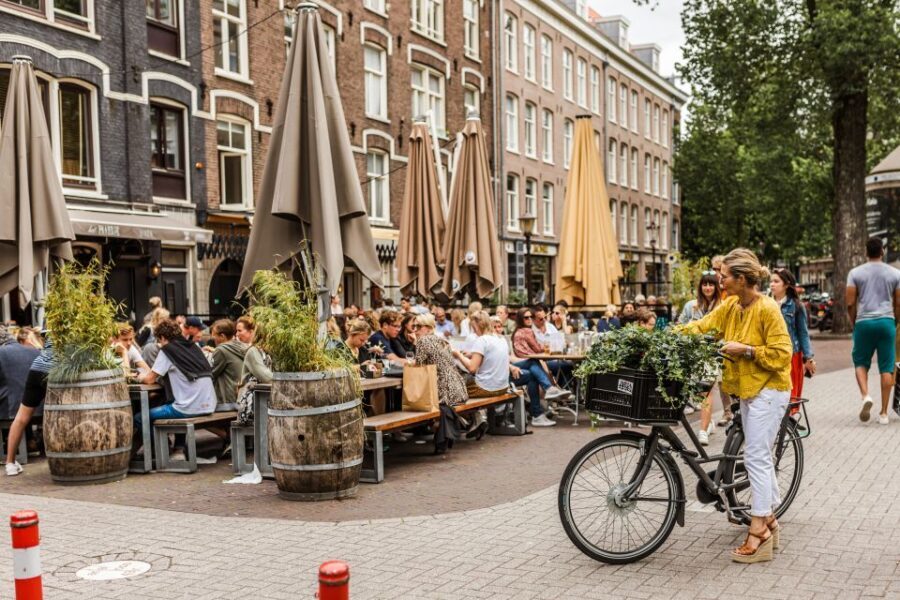
This tour is private, which changes everything. You’re not squeezed into a group rhythm. Instead, you and your host shape what you linger on, what you speed through, and which streets feel worth the extra photos. It’s also planned around the time you choose—3, 4, 6, or 8 hours—so you’re not stuck with a fixed mega-itinerary.
Your host is a local who spends time sharing their city with people matched to them. That usually means two things: better street-level context and fewer moments where you’re just “told facts” while everyone stares at a building. One guide that shows up by name in feedback is Wendy, described as pleasant and knowledgeable, which fits the point of this tour.
You should know what you’re paying for, too. At $108 per person, you’re mostly buying a private local guide and smart routing, not admission tickets or meals. Food and drinks aren’t included, and you’ll also need to handle any transport to and from the meeting area and any ticketed entry you want.
You can also read our reviews of more private tours in Amsterdam



Choosing the Right Tour Length (3 vs 4 vs 6 vs 8 Hours)

This is one of those cases where duration really affects how much neighborhood variety you get. The itinerary content includes Amsterdam-Noord, West/center (including major landmarks), Jordaan and De 9 Straatjes, De Pijp, and Amsterdam-East (including markets). That’s a lot to cover, so your time setting matters.
If you book 3 hours, you’ll likely get a “great hits” slice—enough to get your bearings without trying to do everything. 4 hours is often a sweet spot if you want highlights plus one market-focused stretch.
6 hours is where you can slow down without feeling like you’re sprinting. The tradeoff? If your group is very fast-walking and you like constant motion, you may find the bigger time doesn’t match your pace. In feedback, a 6-hour experience was noted as potentially doable in less time, which is a good clue: if you tend to move quickly, don’t assume longer always equals better.
8 hours is for people who like to wander, stop for snacks, and let neighborhoods breathe. You’ll also be better set up for a mix of canals, windmill views, markets, and bar/café streets without making it feel like a checklist.
Amsterdam-Noord: Canal Calm, Parks, and the Eye on Film

Most routes start with Amsterdam-Noord, and that makes sense. It flips the usual tourist flow. Instead of staying glued to the central ring of famous sights, you head toward green parks, modern art, and waterfront energy.
You can expect stops around the Noordhollandsch Canal, with an easy, peaceful stroll. This is one of the best “reset moments” in the whole day. The pace slows. You get that classic Amsterdam water-and-bridge rhythm, but with fewer snap-and-go crowds.
From there, Amsterdam-Noord often ties in contemporary culture, including the Eye Film Museum—a well-known spot for Dutch and international cinema. Nearby photo moments include the NDSM Werf, a former shipping yard that’s now a skate park and creative urban space. If you like places where a city repurposes old industry into something new, this part delivers.
A standout here is the d’Admiraal Windmill, a smock windmill built in 1792 and located next to the canal. It’s the kind of stop that’s quick to enjoy, but it also gives you a feel for how Amsterdam’s water-and-wind systems shaped everyday life.
Amsterdam-West and the Markets: De Hallen + Ten Katemarkt
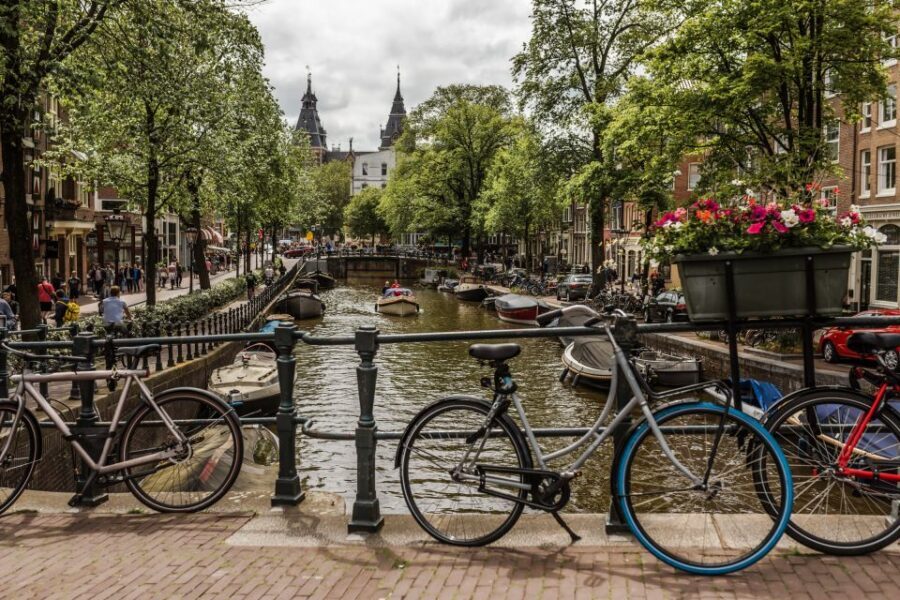
Then the tour typically moves into Amsterdam-West and the medieval city center zone. This is where street life and everyday shopping take over. Two market areas are central to the experience: Ten Katemarkt and De Hallen.
Ten Katemarkt is often described as a local favorite tucked away in a residential neighborhood. The point isn’t luxury—it’s the feeling of real neighborhood commerce. You’re not just looking at goods; you’re seeing how people actually shop, chat, and plan meals.
De Hallen is different. It’s an indoor street-food style setup housed in a converted industrial building. If you like the idea of trying multiple things without committing to a single sit-down meal, this is a smart stop. It also works for groups with mixed tastes: people can pick what they want, and you can still share the walk and atmosphere.
Because food isn’t included on the tour, you’ll want to budget for snack stops here. If you’re trying to keep costs down, treat De Hallen as a tasting stop rather than a full meal—grab something light and carry on.
Dam Square, National Monument, and Westerkerk on a Human Scale
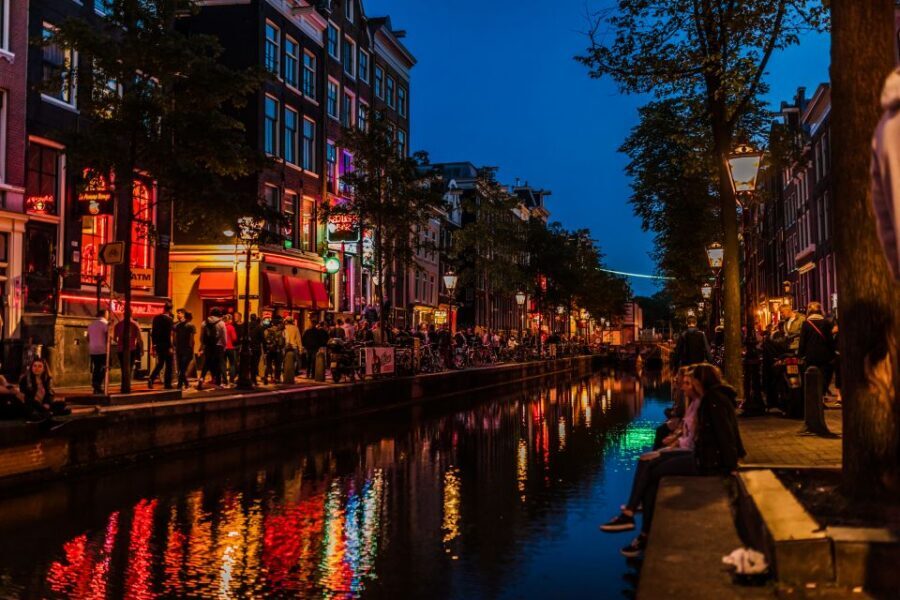
After markets come the big landmarks—National Monument and Dam Square—plus the Westerkerk, a 400-year-old church landmark. Seeing these sites on a guided walk is useful because you get the context without the “stare at it forever” problem.
The National Monument area anchors the city’s public history, and Dam Square is where Amsterdam’s identity overlaps with its everyday traffic. Westerkerk adds scale and visual weight to your route. You get a sense of where Amsterdam’s power and religious architecture sat, and how the city’s heart developed around that.
One practical tip: these are prime photo areas, but they’re also popular. Your host can help you time the walk so you’re not stuck waiting around forever for a clear angle.





Jordaan and De 9 Straatjes: Boutique Streets Without the Pressure
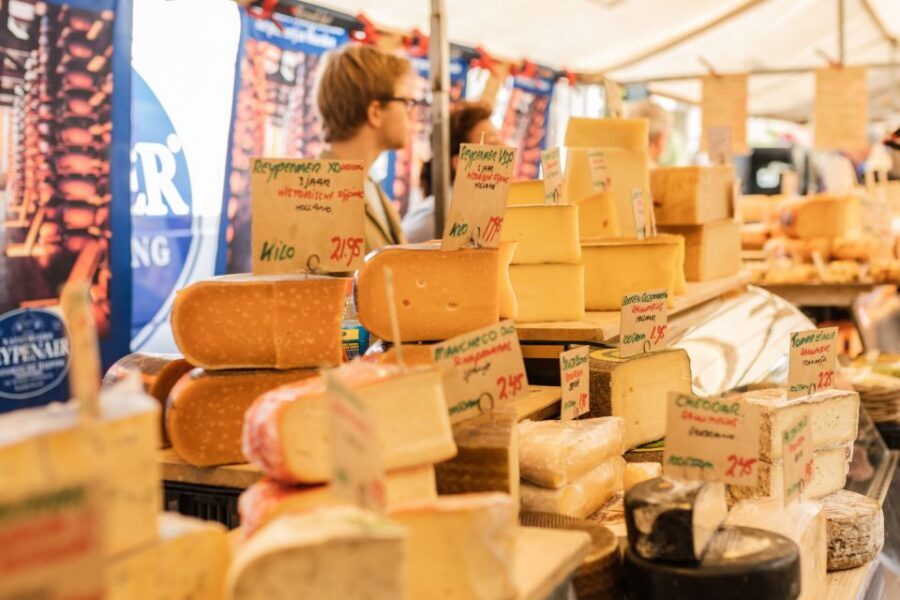
Next up, you’ll likely head into Jordaan and the adjacent micro-neighborhood known as De 9 Straatjes. This is a classic Amsterdam walking zone, but with its own character.
Jordaan is known for trendy energy and canal-adjacent streets that feel both stylish and residential. De 9 Straatjes is the connector area between major waterways, lined with niche outlets and boutiques. It’s the kind of place where browsing is half the activity—small shops, design stores, and specialty items that you won’t see everywhere.
This segment works best if you like strolling with purpose but not stress. If you’re the “buy one thing and keep moving” type, that’s fine too. Ask your host what’s worth your time. You’ll usually get quicker, more confident guidance than a map ever could.
De Pijp: Cafés, Bars, and Canal-Side Everyday Amsterdam

From there, the tour typically moves into De Pijp, one of Amsterdam’s most social neighborhood zones. You’ll walk bar-, bistro-, and café-lined streets, with the added bonus of calm canal moments in between.
Why I like this stop for visitors: it feels like real urban life rather than museum life. You get the mix of cultures and food culture that makes De Pijp such a magnet. Even if you don’t sit down for a full drink or meal, you’ll understand the neighborhood vibe just by walking it.
This is also where you can make a smart choice. If your group wants to rest, it’s easy to pause. If your group wants to keep moving, your host can keep you moving along the canal-and-street rhythm that makes De Pijp feel effortless.
Amsterdam-East: Javastraat Cobblestones, Two Bars, and Dappermarkt
The final neighborhood stretch is often Amsterdam-East, centered around Javastraat and one of its most famous markets: Dappermarkt.
Javastraat is cobbled, and it gives the tour a more old-world texture compared with some of the smoother central streets. It’s also where you get a sense of Amsterdam’s newer, trendier crowd alongside longstanding community life.
You may also see specific bar stops here, including Bar Basquiat and Bar Bukowski. These aren’t random names thrown on a list—they reflect the neighborhood’s modern social scene, the kind you’d miss if you only stayed in the postcard zones.
Then comes Dappermarkt, one of Amsterdam’s busiest markets. It’s lively in a practical way: people buying, chatting, and keeping their day moving. This is one of the best places on the route to pick up Dutch snacks for later. Food and drinks aren’t included, but your host can point you toward what’s easy to carry and what’s worth trying.
What’s Included (and What You Should Budget For)
Here’s the simple breakdown of value.
Included:
- A private, personalized neighborhood walking tour (3, 4, 6, or 8 hours)
- A local host
- A walking experience
- Tips and recommendations for the rest of your stay in Amsterdam
Not included:
- Food and drinks
- Entry tickets to attractions
- Transportation to/from the meeting point
- Public and private transportation during the tour
Why this matters: you’re paying for guidance and time. Since you’ll likely spend part of your tour around markets and café streets, you’ll want to set aside money for at least one planned snack stop. Also, if you’re arriving from outside the center, don’t assume the host will handle that leg for you.
Price and Value: Paying for a Local’s Time, Not Just Sightseeing
At $108 per person, this tour sits in the “private experience” bracket. That cost can feel steep if you’re comparing it to a group bus tour. But that’s not the right comparison.
You’re paying for:
- A private local host
- A route that links multiple neighborhoods
- Time to walk at your pace
- Recommendations that continue after the tour
The best value shows up if you come in with a few interests and let your host steer. If you just want a quick photo run, the price won’t feel as justified. If you want to understand neighborhoods—how they’re shaped, where locals go, and what to eat and do next—this is the kind of spending that pays back.
Getting the Most Out of Your Host (Small Prep, Big Payoff)
To make this tour feel personal fast, do a little homework before you go. Pick your priorities in advance, even if you don’t know the exact route.
Good things to decide:
- Are you more into markets, canals, museums, or shopping streets?
- Do you want more food stops, or more walking sights?
- How fast do you want to move, honestly?
Your host can adapt the itinerary to those preferences and the number of hours booked. And if you get a guide like Wendy—mentioned for being pleasant and knowledgeable—that kind of fit makes a difference. Ask questions that start conversations, not just trivia. Your host lives there, so they can point you to details that never make it into standard guides.
Who This Tour Suits Best
This is a great fit if you:
- Want a private way to see multiple neighborhoods without a rigid schedule
- Prefer walking routes and neighborhood context over long museum stops
- Enjoy markets and street life (De Hallen, Ten Katemarkt, Dappermarkt)
- Like a mix of Amsterdam’s classic center with modern Noord and East scenes
It’s also ideal if you’re traveling with a partner or small group and want control. You can slow down for canal views at the Noordhollandsch Canal, then speed up when it’s time for landmark walking.
It’s less ideal if your group hates walking, or if you want ticketed attractions as the core of your day. This tour is designed around neighborhoods and streets, not admissions.
Should You Book This Amsterdam Off-the-Beat-Track Private Tour?
If you want Amsterdam in connected neighborhood chunks—North, West/center, Jordaan/De 9 Straatjes, De Pijp, and East—then yes, book it. This is the kind of private tour that helps you get your bearings fast while still feeling like you saw real neighborhood texture.
Choose the shorter duration if you’re a quick walker and prefer a highlights route. Choose 6 or 8 hours if you want time to linger in markets, take a calm canal stroll, and add food stops without turning everything into a sprint.
One more simple check: go into it ready to spend a bit on snacks and drinks. The best parts of this tour live in the streets and markets, and that’s where your money and choices will make the experience feel like yours.
FAQ
What neighborhoods does this private tour cover?
The tour can include Amsterdam-Noord, Amsterdam-West (including the medieval city center area), Jordaan and De 9 Straatjes, De Pijp, and Amsterdam-East.
How long is the tour?
You can choose a 3, 4, 6, or 8-hour private tour. Starting times vary by availability.
Is the tour private?
Yes. It’s listed as a private group.
What’s included in the price?
The tour includes a local host, a walking experience, private and personalized tour time, and tips and recommendations for the rest of your stay.
Are food and drinks included?
No. Food and drinks are not included.
Are attraction tickets included?
No. Any entry tickets to attractions are not included.
Where does the guide meet you?
Pickup is included within the center of Amsterdam. The host can meet you at any location in the center, and if you’re staying in the center, they’ll meet you at your hotel. You confirm the location beforehand.
Is the tour wheelchair accessible?
Yes, the tour is listed as wheelchair accessible.