REVIEW · AMSTERDAM
Amsterdam Pedicab City Tour (2 hours)
Book on Viator →Operated by Bram de Haan · Bookable on Viator
Amsterdam by pedicab feels like a cheat code.
On a private ride with Bram de Haan, I love how Bram de Haan turns famous landmarks into real stories, using old photos and maps to show how Amsterdam changed. It’s also private, so you’re not squeezed into a crowd while you ask questions or request slower stops for photos.
The eco-friendly pedicab aspect matters because you cover a lot fast without feeling like you’re racing the city. I also like that the route is built for orientation: you get canals, bridges, and neighborhoods in one easy, two-hour loop, and rain gear (like a waterproof blanket) helps keep the ride comfortable.
One thing to consider: this is mostly an outside-view tour. If you’re hoping to enter specific museums, plan on buying tickets separately, since museum entry is not included for things like the Rembrandt House Museum.
In This Review
- Key highlights you will actually notice
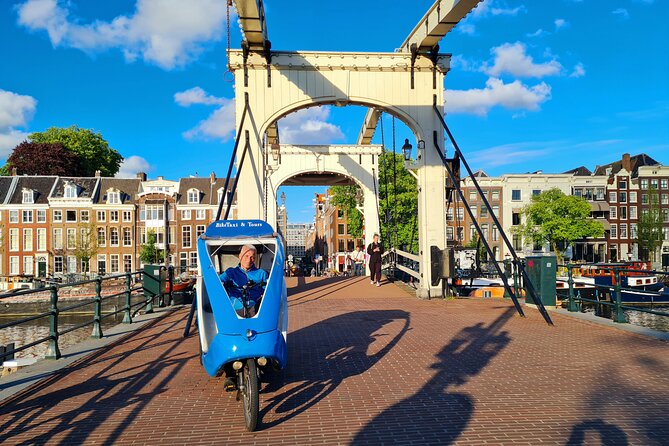
- A private blue pedicab that moves you through central Amsterdam fast
- From Dam Square into the city’s core story
- Montelbaanstoren, the Rembrandt exterior, and the view that connects the canals
- Jodenbuurt and Portuguese Synagogue: street-level history you can read
- Canal Ring, Magere Brug, and Museumplein: the big Amsterdam postcard hits
- What you get for the price (and how to judge value)
- The real-world feel: pace, flexibility, and comfort in rain or cold
- Who should book this Amsterdam pedicab tour
- Should you book the Amsterdam Pedicab City Tour?
- FAQ
- How many people can ride on this Amsterdam pedicab tour?
- Is pickup included?
- How long is the tour?
- Is the tour in English?
- Are museum tickets included?
- What happens if weather is poor?
Key highlights you will actually notice
- A private ride with Bram de Haan means the pace can flex around your questions and photo stops
- Old maps, photos, and comparisons help you see what changed across centuries
- Dam Square to Museumplein gives you a strong first-time Amsterdam orientation in two hours
- Jewish neighborhood sites are explained from the street, including the Holocaust Names Monument
- Canals and bridges come up naturally, with classic photo angles along the way
- Rain-ready comfort shows up in real ways, not just empty promises
A private blue pedicab that moves you through central Amsterdam fast
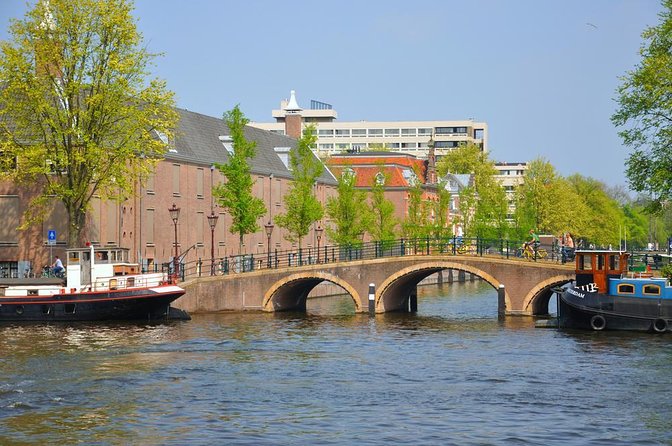
A pedicab in Amsterdam is more than a fun mode of transport. It’s a practical hack for a city where walking can eat your time, and where crowds can turn “seeing sights” into “jostling for position.” With a private setup for up to two people, you can take in major areas of the center without doing the full stamina routine.
The comfort factor is real. The bike is designed for a couple, you can get on and off with less fuss than some group tours, and you’re sitting at human height—not craning your neck from behind a bus window. If weather turns, the ride has been handled with waterproof protection in the past, which is exactly what you want when Amsterdam throws a surprise drizzle.
And the guide component matters. Bram’s style in particular is story-driven. He doesn’t just point. He explains how Amsterdam grew, how neighborhoods shifted, and what you’re really seeing when you look at canal houses, churches, and old city gates.
You can also read our reviews of more city tours in Amsterdam

From Dam Square into the city’s core story
Your ride starts at Dam Square, the old heart of Amsterdam. This is where the city’s identity first becomes obvious: you’re surrounded by the kind of landmarks that show power and permanence—places like the Royal Palace, the New Church, and the National Monument. The stop is short, so the goal isn’t lingering; it’s giving you the “where you are” anchor so everything later makes sense.
Next comes Zeedijk, one of the oldest dike streets around the old center. It’s also tied to one of Amsterdam’s oldest café traditions. The guide typically uses this stop to introduce a darker twist in the story of the area, not just architecture—so you get a mix of atmosphere and meaning. Even if you only have a few minutes, it helps you read the neighborhood instead of just passing it.
Then you roll into Chinatown, described here as the oldest Chinese neighborhood of the European mainland. You’ll notice the shift in signage, food, and temple presence. It’s a good reminder that Amsterdam’s “old city” isn’t one-dimensional. It’s layers piled on layers—immigrants, trade, and changing communities.
At Nieuwmarkt, you’ll feel the geography of the old walled city. The focus is the old citygate concept—how this square sat at the main entrance when Amsterdam was fortified, long before later expansion. That historical lens is useful because it makes nearby streets and buildings feel less random.
Practical note: many stops are just a few minutes. That can be a drawback if you want to stand and soak. But it also means you get a wide cross-section quickly, which is the whole point of this format.
Montelbaanstoren, the Rembrandt exterior, and the view that connects the canals
After the early-center stops, the route shifts toward the kind of Amsterdam views that look good in real life, not just on postcards.
At Montelbaanstoren, you’re looking at an old watch tower that was tied to ships and defense lines from the early 1500s era. The best part is the lookout concept: from here, you’re positioned to see the Oude Waal area and the houseboats lined up with 17th-century canal houses in the background. This is one of those “pay attention” stops. The guide’s explanation helps you understand why this waterfront area mattered.
Then comes the Rembrandt House Museum stop, but keep your expectations in check. You’ll see the original Rembrandt house from the outside, where Rembrandt lived during his successful years. Entry into the museum itself is not included on this ride. Still, the exterior stop is valuable for context—especially if you’re going to plan other museum time later.
Jodenbuurt and Portuguese Synagogue: street-level history you can read
This part of the itinerary is handled with seriousness, and it’s one of the strongest reasons to choose a private guide instead of just floating by on your own.
In the Jodenbuurt area, you’ll notice how much of the old Jewish quarter was affected by World War II, while some important buildings, synagogues, houses, and streets remain. The stop is timed so you can take in the streetscape without feeling rushed, but it’s also long enough for the guide to frame what survived and why it matters.
Across the route, you come to the Portuguese Synagogue of Amsterdam. The emphasis here is scale and timing: it’s the largest synagogue and among the early major ones allowed in Western Europe, with the year 1675 highlighted in the tour description. You’ll look at the outside and also the synagogues opposite it—described as part of what now forms the Jewish Museum. If you like history with a sense of place, this is where that approach really pays off.
Right after that, you pass the National Holocaust Names Monument. The description is specific for a reason: there are 102,000 brick stones with names, meant to remind you of Dutch Jewish victims during World War II. This is not a long stop, but it’s a powerful one. Even from a passing view, it lands because it’s so direct and so detailed in the concept.
My advice: if this topic hits you hard, take your time to look. You can’t control the schedule, but you can control how long you stare at the stones once you’re there.
Canal Ring, Magere Brug, and Museumplein: the big Amsterdam postcard hits
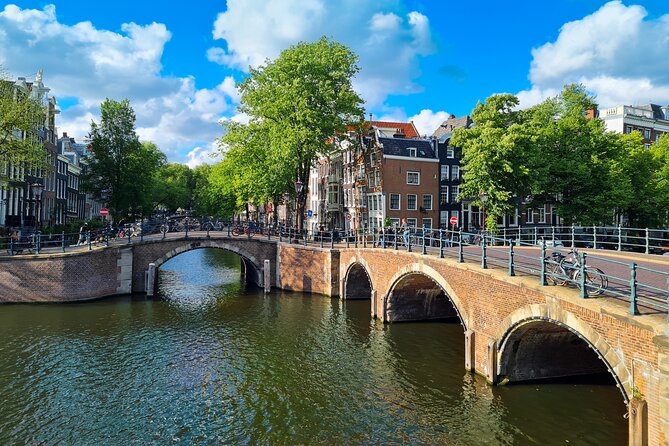
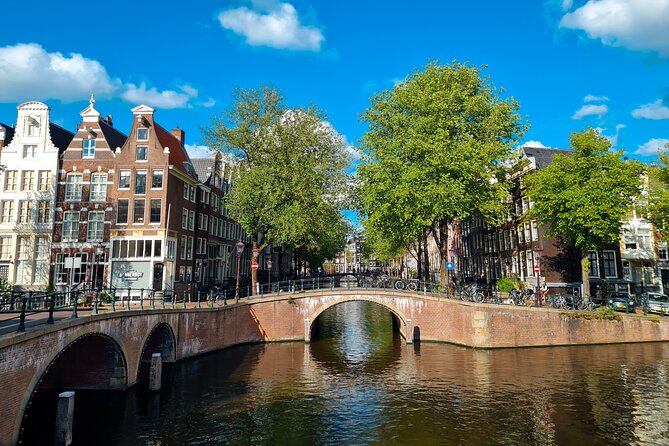
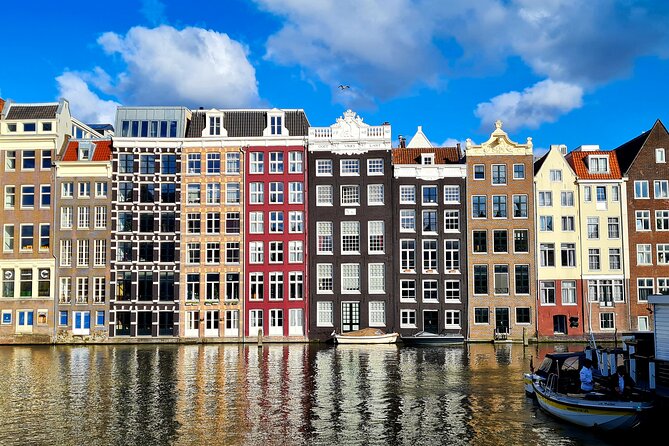
You’ll hit the canal district, also known as the Grachtengordel Canal Ring, which wraps around the old center in those recognizable half-circle patterns. This is where the tour becomes visually satisfying: you get the typical canal houses and the merchant-era logic behind their layout. The guide also tends to point out that the houses aren’t all identical—there are similarities, yes, but each one can show its era.
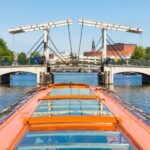
Then you reach Magere Brug, one of Amsterdam’s most iconic bridges. It’s called the Skinny Bridge for a reason, and it’s famous for the way it lights up at night with accent bulbs. Even if your tour isn’t at night, you still get that famous silhouette and a good canal angle over the Amstel. It’s a great place to grab photos quickly, because you’re positioned for a view that makes the canal system feel like a single connected machine.
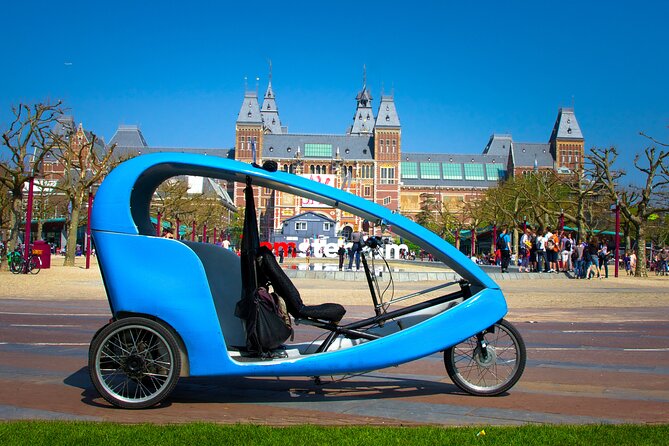
After that, the ride heads to Museumplein, a huge square and one of the city’s most impressive public spaces. On one side sits the Rijksmuseum, and nearby is the Concertgebouw. Nearby, you’ll also see or pass by other well-known museum options like Van Gogh, Stedelijk, Moco, and the Diamond Museum. In other words, you’re standing in the center of Amsterdam’s museum gravity.
And yes, there’s a very fun add-on: you pass through the famous bicycle tunnel under the Rijksmuseum. Depending on the day, street music may be part of the atmosphere, which makes this feel less like a “transport stop” and more like a mini experience.
To wrap this section, the guide positions you for a view over the back of the Rijksmuseum, completed in 1885 and designed by Pierre Cuypers. This is a nice counterpoint to the front-facing postcard view. You get a different architectural read, plus the timing works well because it’s end-of-ride energy.
You can also read our reviews of more tours and experiences in Amsterdam






What you get for the price (and how to judge value)
The price is listed as $237.65 per group, up to two people, for about two hours. That can sound steep if you’re thinking like a solo traveler booking an individual attraction. But for a couple, or for two friends traveling together, the cost becomes much easier to justify.
Here’s the practical way I think about value: you’re paying for (1) a private guide, (2) transportation by pedicab that reduces walking, and (3) guided context that turns stops into a single story. If you’re the type who likes to connect the dots—why a bridge looks the way it does, why a square formed a city entrance, why a neighborhood changed—you’ll get a lot out of this format.
Also, the guide’s use of old photos and maps is one of those small elements that can massively change how the city “lands.” You stop seeing landmarks as isolated icons and start seeing them as parts of a long timeline.
And remember: there’s no mention of snacks included. If you think you’ll get hungry, plan a snack before or after. The tour itself is designed around sightseeing stops, not breaks.
The real-world feel: pace, flexibility, and comfort in rain or cold
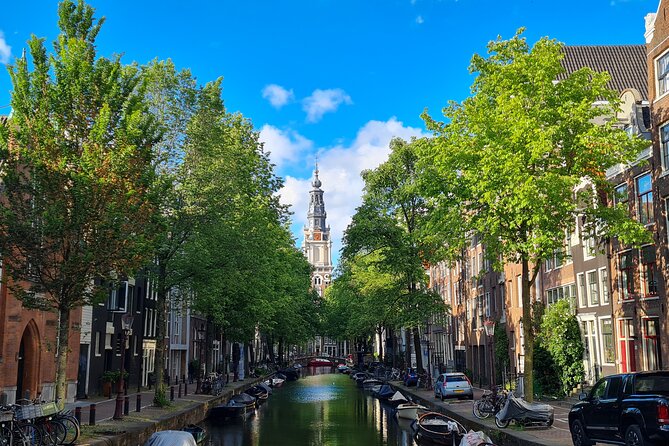
From the guide’s approach, you can expect a ride that doesn’t treat your time like a checklist. Bram has been described as pulling over whenever you want pictures or want to talk more about a topic. That’s not a tiny point. In a short two-hour window, that kind of responsiveness can make the difference between a ride that feels rushed and one that feels tailored.
Weather handling is also part of the value. Rain can happen at any time, and Amsterdam is famous for that. Waterproof protection has been provided on rides in cold conditions, which matters because getting wet changes how enjoyable the whole city feels. Dress for Dutch weather. Even if you’re not in winter, a layer helps.
Finally, the pedicab itself is built for up to two people, so you’re not squeezed among strangers. You’ll likely spend most of your time seated, only getting out briefly for the stops where photos or close viewing matters.
Who should book this Amsterdam pedicab tour

This tour fits best if you want a first-orientation day that still includes real neighborhood flavor.
- You’re short on time in Amsterdam and want a broad overview of the center
- You like history that’s explained on the street, not only inside museums
- You want canals, bridges, and iconic squares without a walking marathon
- You’re traveling as two people and can split the cost
It may be less ideal if you want long museum visits. The route includes exterior views like the Rembrandt House, and it passes by other museum-related sights without building time for entry. If museums are your main goal, you’ll want to combine this with separate ticketed time.
Should you book the Amsterdam Pedicab City Tour?
If you’re trying to choose one “see a lot” experience that still feels personal, I’d say yes. It’s a smart way to get oriented quickly, and it gives you context you can carry into the rest of your trip. The outside-view approach is also a good trade if you want to keep moving and avoid building your day around ticket lines.
Book it especially if you value the guide’s storytelling style and the old-photo comparisons that help Amsterdam make sense. And if you’re picky about museum time, plan your museum visits separately so you get the best of both worlds: guided street perspective now, deeper indoor time later.
FAQ
How many people can ride on this Amsterdam pedicab tour?
The tour is private, for your group only, and the price is listed per group up to 2 people.
Is pickup included?
Pickup is offered. The guide will have you wait in front of your hotel and look for the blue pedicab.
How long is the tour?
The duration is about 2 hours.
Is the tour in English?
Yes, the tour is offered in English.
Are museum tickets included?
Museum entry is not included. For example, Rembrandt House Museum is viewed from the outside, and entry is not part of the tour.
What happens if weather is poor?
This experience requires good weather. If it’s canceled due to poor weather, you’ll be offered a different date or a full refund.