REVIEW · AMSTERDAM
Discover The Netherlands Tour (from Amsterdam)
Book on Viator →Operated by Best of The Netherlands tours · Bookable on Viator
Windmills and dikes make the Netherlands click.
This small-group day trip from Amsterdam strings together iconic water management sights and postcard towns, with a guide who ties it all into one clear story. I especially like the way the route moves beyond the canal ring and shows why Dutch life depends on engineering, not luck.
You’ll also get the best “small-group” benefit: a ride in an air-conditioned vehicle and time to actually hear the guide at each stop. The pace is relaxed—less stampede, more strolling and looking—so the highlights land without feeling rushed.
One consideration: it’s not a smooth ride for people who have limited mobility. You should expect some walking at multiple stops, and the operator asks for moderate physical fitness.
In This Review
- Key highlights worth planning for
- A Netherlands sampler built around water control
- Morning start from De Ruijterkade
- Zaanse Schans: windmills and wooden houses, explained simply
- Afsluitdijk: the 32 km dike that reshaped the provinces
- Sloten (Friesland): canal walking and gabled houses in a smaller city
- Urk: a former island fishing village by the sea
- Elburg: medieval town feel with a 15th-century entrance gate
- Guides that make the story stick: Simon, Adrian, and more
- Small-group comfort and pacing that respects your time
- What you actually get for $148.99 per person
- Weather and planning: the tour runs with real Dutch reality
- Who this tour fits best (and who should skip it)
- FAQ
- FAQ
- What is the tour duration?
- What time does the tour start in Amsterdam?
- Where do I meet the guide?
- How large is the group?
- What language is the tour offered in?
- Is admission included for the stops?
- What’s included in the price?
- What if the weather is bad?
- Should you book the Discover The Netherlands Tour from Amsterdam?
Key highlights worth planning for
- Max 7 travelers on the tour for a calm, question-friendly pace
- Zaanse Schans for 1 hour of windmills, wooden houses, and classic Dutch views (admission free)
- Afsluitdijk in 30 minutes to understand a 32 km barrier that changed the map between provinces
- Sloten (Friesland) for 1 hour with a canal walk and gabled houses from one of Friesland’s eleven cities
- Urk (1 hour) for a seafaring fishing village feel, lighthouse views, and a church by the sea
- Elburg (1 hour) with a 15th-century entrance gate and surviving bits of old city wall
A Netherlands sampler built around water control
If you only see Amsterdam, you still miss the plot of the Netherlands. The country’s biggest theme is water—how it’s kept out, moved around, and managed for farms, towns, and ports. This tour does that in a way that’s easy to picture: you get engineering, then you walk through places shaped by it.
I like that the guide isn’t just naming sites. You’re guided through the why behind what you see—how Dutch communities grew with constant work on land and water. That makes the windmills at Zaanse Schans feel less like a set piece and more like a piece of the same system.
This is also a smart one-day “upgrade” if you’re short on time. Eight to nine hours is long enough to feel like you escaped the city, but not long enough to drain you like a full day of transit can. And with free admission at every stop, you’re paying for the experience and the storytelling, not ticket fees.
You can also read our reviews of more tours and experiences in Amsterdam.


Morning start from De Ruijterkade
The tour starts at 9:00 am at the Chamber of Commerce, De Ruijterkade 5, 1013 AA Amsterdam. It ends back at the same meeting point, which is great for keeping the rest of your day stress-free.
Why that start time matters: you’re hitting the big sights early, before daylight crowds fully arrive. Even if you’re not a crowds person, early touring gives you calmer photos and an easier stroll—especially at Zaanse Schans.
You’ll be riding in a private air-conditioned vehicle. That matters on a long day because you’ll likely be thinking, looking, and listening—then you need a comfortable reset between stops. Snacks are included, which is a small thing that saves you from hunting for food when the day is moving.
Zaanse Schans: windmills and wooden houses, explained simply
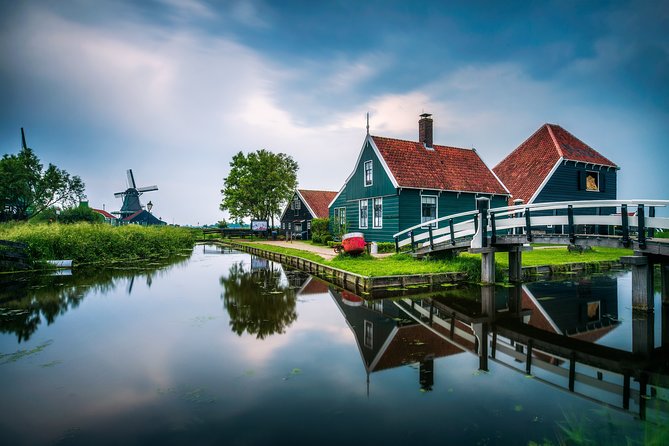
Zaanse Schans is often a Dutch highlight for good reason: water, windmills, and wooden houses together feel like a living museum. You get about 1 hour here, and the admission ticket is free.
What to do with your hour: don’t just “walk and snap.” Use the time to look at the details the guide connects to Dutch water control—wind power, drainage, and the way these structures helped communities live where water pressure and tides could otherwise win. When you know the purpose, the windmills stop being décor and start being history you can see.
Optional activities exist in this stop area, but they’re not required to have a satisfying visit. This is also a place where you can read the scene visually: gabled facades, canals, and the clean geometry of industrial Dutch design show up everywhere.
Small-group tip: with a max of 7 travelers, you can ask quick questions as you move. If you wait until the van again, the best moments pass. Ask on the spot.
Afsluitdijk: the 32 km dike that reshaped the provinces
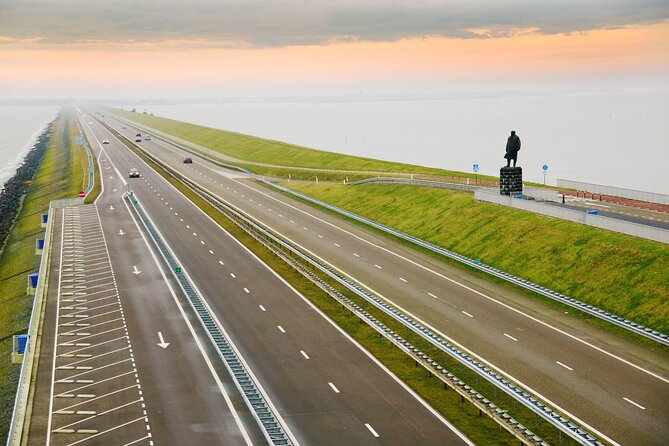
Next comes the Afsluitdijk, a water barrier stretching 32 kilometers. You spend about 30 minutes here, and admission is free.
This stop is short, but it has a big job: giving you a reality check about what “living with water” really means. The dike connects Noord Holland and Friesland, and it’s a powerful example of Dutch engineering—one that helps you understand how the coastline and waterways were reorganized for safer living and more usable land.
Why I think this stop is worth the quick timing: it acts like the bridge between the “pretty” and the “purpose.” After Zaanse Schans, Afsluitdijk turns your attention from iconic scenery to the mechanics behind it. When you get back to towns like Sloten and Elburg, you start noticing clues that reflect how water and land were handled over time.
Don’t overthink it while you’re there. Just use the half hour to take in the scale and let the guide explain the story. It’s the kind of place where the numbers matter, and your brain needs a minute to register that the change was deliberate.
Sloten (Friesland): canal walking and gabled houses in a smaller city
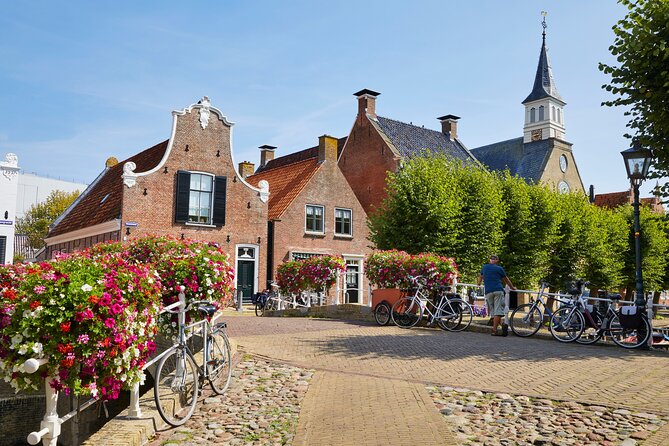
Sloten is a quieter, more local-feeling stop for a reason. It’s described as the smallest of Friesland’s eleven cities, and you get about 1 hour.
You’ll walk along a canal with old houses and the typical Dutch gables—those stepped and decorative shapes that look like they belong in every postcard. Here’s the value for you: it’s one of those towns that teaches you how Dutch communities preserve character while staying practical.
This isn’t about lining up at a single viewpoint. It’s about slow movement, looking at building shapes, and understanding how water and streets knit together. If you like towns where you can actually feel the rhythm—rather than just check boxes—Sloten is a good match.
Potential drawback: because Sloten is smaller, the time can feel tighter if you’re the type who wants lots of independent wandering. That said, 1 hour is a solid amount for a canal walk and a guided explanation without dragging you past the best bits.



Urk: a former island fishing village by the sea
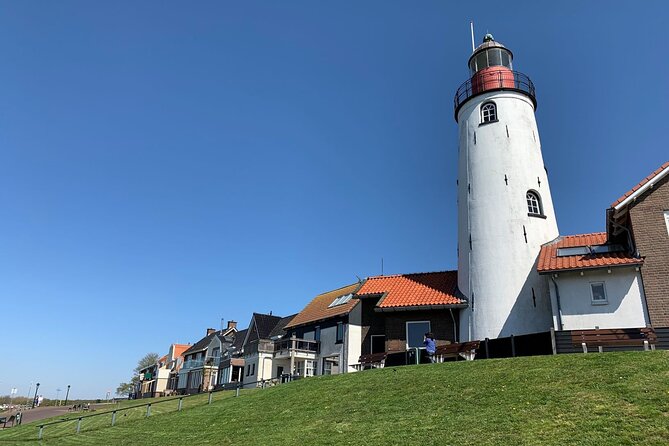
Urk changes the mood in a good way. You’ll visit this charming fishing village for about 1 hour, with free admission.
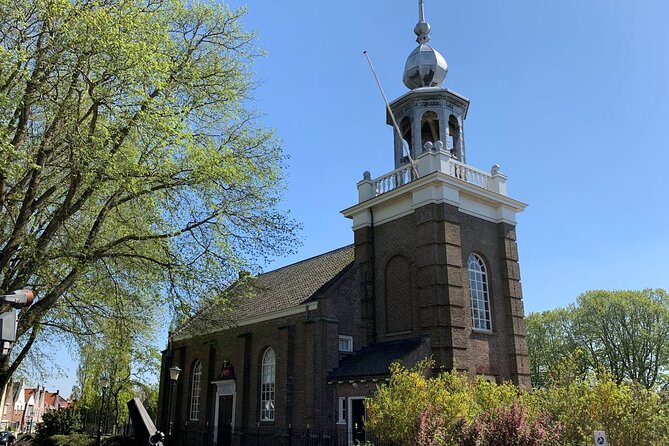
What you’ll likely enjoy here is the coastal feel: strolling near the lighthouse and the old church by the sea. You also learn that Urk used to be an island, and that the man-made creation of Flevoland is part of why the geography changed. That’s a fascinating Dutch theme: land wasn’t just discovered—it was made, then reshaped, then lived on.
If you come to this tour expecting windmills and dikes only, Urk adds texture. It’s a reminder that water projects weren’t abstract. They affected where people lived, how they worked, and how communities formed around sea routes and fishing.
The pace is relaxed, so you’re not just rushing through a stop. With the small-group setup, you can take a few extra minutes to look toward the water and ask your guide how Urk fits into the bigger national story.
Elburg: medieval town feel with a 15th-century entrance gate
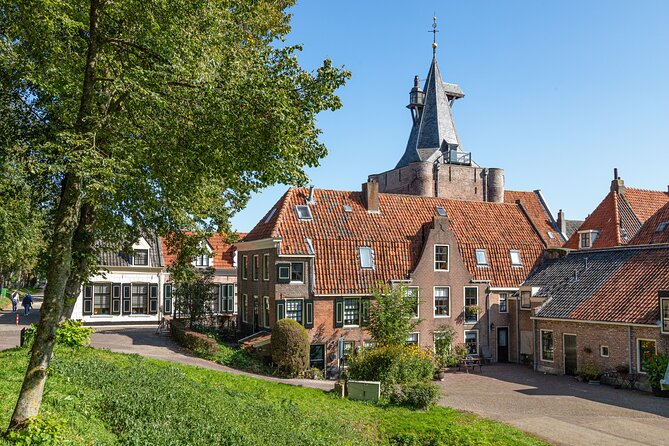
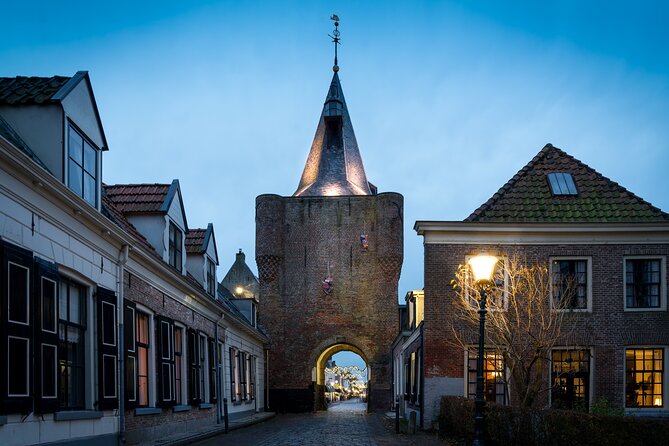
Elburg is the tour’s “time travel” stop. You get about 1 hour, and admission is free.
The highlight is the 15th-century entrance gate, which leads into a medieval town where it can feel like time slowed down. You’ll also see that the town keeps a notable number of monuments, and even parts of the old city wall remain.
This is where your earlier water lesson starts paying off, because medieval towns in the Netherlands weren’t random. They grew around trade routes, access, and the ability to protect communities. Elburg lets you see a more “human” result of the Dutch relationship with water management: sturdier towns, defined borders, and architecture that shows how long-term planning mattered.
If you like walking through historical streets but hate being trapped in a crowd, Elburg is a nice balance. It’s detailed enough to feel rewarding, but not so massive that you’ll lose time.
Guides that make the story stick: Simon, Adrian, and more
A huge part of why people rate this tour so highly is the guide. Names that show up across top experiences include Simon and Adrian (and you may also see Jon or Adriaan tied to excellent days).
What makes a difference is the rhythm: they share facts about each province and stop, then step back so you can absorb what you’re looking at. That balance matters on a day with five separate locations—if the guide talked nonstop the whole time, the towns wouldn’t “land.”
I’d aim to go with a mindset of questions. When someone is telling the story well, it’s also the kind of day where asking why a place developed the way it did is actually useful. This tour is built to connect engineering and everyday life, so your curiosity gets rewarded.
Small-group comfort and pacing that respects your time
This isn’t a long-distance coach tour where you’re just herded around. It’s private transportation, air-conditioned, and designed for a maximum group size of 7.
That group size changes the experience in practical ways:
- You’re less likely to feel rushed at photo stops
- You can hear explanations without straining
- The guide can adjust pace if someone needs a slower moment
The overall schedule is built around five stops spread across the Dutch countryside. Expect a mix of viewing and walking, with each town giving you roughly an hour. That makes it a great day if you want variety without switching locations every 20 minutes.
One note: the tour is not recommended for travelers with limited physical movement. If you know walking distances are an issue for you, you’ll want to plan carefully.
What you actually get for $148.99 per person
Let’s talk value, not just price. At $148.99 per person, you’re paying for a guided day trip outside Amsterdam that includes:
- transport in an air-conditioned vehicle
- a tour guide
- snacks
- multiple guided stops across Dutch water and historic towns
- free admission at each stop
Compared with piecing together a “DIY” day, the main value is not the sights alone—it’s the connections. Seeing windmills and dikes is memorable, but understanding why they exist and how they shaped communities is what turns the day into a story you carry home.
You should also plan for lunch. Lunch and beverages beyond the free snack pack are not included. In practice, that means you’ll want to eat before or after the tour, or budget time and money for a meal near your next plans.
Optional activities at Zaanse Schans could add cost, so decide in advance whether you want hands-on experiences or just the guided viewing.
Weather and planning: the tour runs with real Dutch reality
This experience requires good weather. If weather is poor, you’ll be offered another date or a full refund.
That matters because outdoor viewing at windmill and water sites is the core of the experience. If the day looks gray and stormy, you won’t get the best version of the Afsluitdijk views or the seaside atmosphere of Urk.
Practical advice: check your forecast the night before and keep your day flexible. The Netherlands can be friendly one hour and moody the next, and this tour is honest about that.
Who this tour fits best (and who should skip it)
This day trip is a strong fit if you want:
- a guided introduction to Dutch water management
- historic towns outside Amsterdam without long travel days
- a small-group setting (max 7) with real conversation time
- variety in one day: windmills, a major dike, canals, a fishing village, and a medieval town
It’s less ideal if:
- you have limited mobility and need minimal walking
- you hate tours that keep a steady schedule and stop-to-stop rhythm
If you’re traveling with kids, this could be fun for curiosity about how land was made and why people built barriers and wind-powered tools. But if your group needs lots of downtime, you might find the tight sequence less forgiving.
FAQ
FAQ
What is the tour duration?
It runs about 8 to 9 hours.
What time does the tour start in Amsterdam?
The start time is 9:00 am.
Where do I meet the guide?
You meet at the Chamber of Commerce, De Ruijterkade 5, 1013 AA Amsterdam. The tour ends back at the same meeting point.
How large is the group?
It’s a small group with a maximum of 7 travelers.
What language is the tour offered in?
The tour is offered in English.
Is admission included for the stops?
Yes. Admission tickets for the listed stops are free.
What’s included in the price?
You get private transportation, a tour guide, and snacks. Lunch and drinks beyond the snack pack aren’t included.
What if the weather is bad?
If poor weather cancels the tour, you’ll be offered a different date or a full refund.
Should you book the Discover The Netherlands Tour from Amsterdam?
I think you should book this if you want your first Netherlands day trip to explain the country’s big theme—water—and then reward you with five very different places you can walk through. The small group size, free admissions, included transportation, and snacks make it feel like a well-packaged day, not an expensive collection of separate stops.
Skip it if mobility is a concern for you, since the route includes multiple walking segments. Also, if you want full free time with no schedule, this tour’s stop rhythm will feel a bit structured.
If your goal is to see beyond Amsterdam and leave with a clearer picture of how the Netherlands works, this is a solid choice. And if you’re lucky enough to get Simon or Adrian, you’re likely to get the kind of guide who makes each stop connect to the bigger story.