REVIEW · AMSTERDAM
Rembrandt Tour
Book on Viator →Operated by Historical Amsterdam Tours · Bookable on Viator
Rembrandt’s world is mapped on today’s streets. This private walk is interesting because it starts at the house where Rembrandt lived at career peak and then moves through recognizable parts of Amsterdam that shaped his work and the Dutch art scene. I love the fully flexible feel of a private group, where your guide can slow down for questions or speed up if you’re eager to keep walking. The other big win is the guide’s storytelling style, which makes 17th-century art questions feel like they connect to real corners, not just wall labels. One drawback to plan for: it’s a walking tour with cobblestones and older streets, so bring shoes that handle uneven ground.
You’ll wrap up close to Dam Square, which is handy for an easy next stop after the tour. The experience runs about 3 hours, uses a mobile ticket, and is offered in English for small groups of up to 6.
In This Review
- Key things to know
- Entering Rembrandt’s Amsterdam, not just his paintings
- Rembrandt House Museum: etching techniques in the place he lived
- Rembrandtplein: the statue, the Night Watch in 3D, and a reality-check question
- Following the story from bridge views to hidden street turns
- The Oude Kerk connection: women in his life and the remarriage question
- Small-group guiding: why Tijs (and Edgar Foley) make it feel personal
- Price and group size: when $390.52 per group makes sense
- Timing and walking pace: what to plan for in 3 hours
- Where you start and finish matters more than you think
- Tips to get better answers from your guide
- Who should book this Rembrandt Tour
- Should you book it or choose something else?
- FAQ
- FAQ
- Where does the Rembrandt Tour start and end?
- How long is the tour?
- What is the price for the tour?
- Is this a private tour?
- What language is the tour offered in?
- Do I get a ticket on my phone?
- Is admission included at the first stop?
- Is there an admission fee at Rembrandtplein?
- What fitness level do I need?
- Can I cancel for a full refund?
Key things to know
- Private and flexible: only your group, so you can set the pace and ask follow-up questions.
- Rembrandt House Museum stop (45 minutes) with admission included and a workshop-style look at his etching techniques.
- Rembrandtplein (10 minutes) includes a statue and a 3D version of the famous Night Watch, plus a good question your guide will unpack.
- Amsterdam’s art progression in context: you connect Dutch art development to the city Rembrandt moved through.
- Old winding streets and hidden gems are part of the route, not an afterthought.
- Ends near Dam Square, so you can transition straight into the center of town.
Entering Rembrandt’s Amsterdam, not just his paintings
If you’ve ever felt stuck in the museum rhythm—read label, look, move on—this tour is built to change that. You’re not only seeing Rembrandt from a distance. You’re walking through Amsterdam like it’s a living reference book, where the streets and landmarks help explain why his work landed the way it did.
What makes this experience especially appealing is the balance between art focus and city focus. You’ll get guided answers to the big Rembrandt-style questions, but you’ll also keep returning to real places in the neighborhood layout. That means things like “what did he see from here?” and “why does this landmark matter?” turn into moments you can point at and picture.
The private format helps, too. When you’re in a group of up to 6, you aren’t competing with the crowd for hearing distance, and your guide can tailor the pace. If your interests lean toward technique, you’ll get time for that. If you care more about people and relationships, you’ll get time for those threads as well.
You can also read our reviews of more tours and experiences in Amsterdam.



Rembrandt House Museum: etching techniques in the place he lived
The tour starts at Museum Het Rembrandthuis, at Jodenbreestraat 4. This is where Rembrandt lived during his peak, so the mood is instantly right: the city isn’t a backdrop, it’s part of the story.
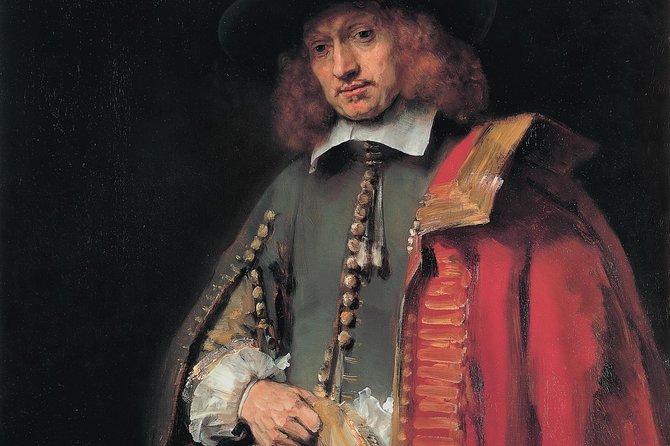
Stop 1 runs about 45 minutes and includes admission. The standout here is the workshop-style insight into Rembrandt’s famous etching techniques. Even if you’re not an art nerd, you’ll probably appreciate how a technique becomes easier to understand when you connect it to the space and mindset of the artist.
Here’s what I think you should pay attention to during this segment:
- Notice how the guide links place and process. Etching isn’t treated like a museum fact; it’s tied to how he worked.
- Listen for the way the guide introduces Rembrandt as a person first, then connects that to the broader Dutch art story.
- Use the time to ask the practical question: what changes visually when he uses etching in a certain way?
One small consideration: this is the part of the tour where you’ll slow down the most. If you’re the type who wants nonstop street time, you might have wished for more wandering earlier. Still, getting the technique and context up front makes later stops much more satisfying.
Rembrandtplein: the statue, the Night Watch in 3D, and a reality-check question
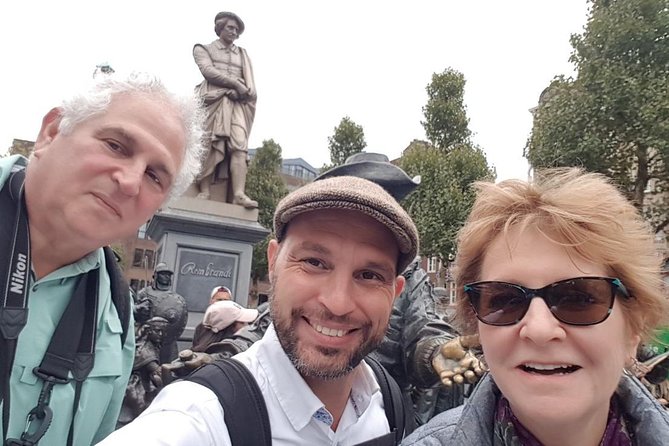
Next you move to Rembrandtplein. This stop is short—about 10 minutes—but it’s designed to spark curiosity instead of drag you through a checklist.
You’ll see the Rembrandt statue and a 3D version of the famous Night Watch. Then your guide raises a question that’s more interesting than it sounds: did Rembrandt ever visit this square, given what it was and wasn’t named at the time?
That kind of moment matters because it forces you to think about how cities remember artists. Landmarks can credit a person, but they don’t always reflect the person’s exact life timeline. Your guide uses that tension to pull you deeper into Amsterdam’s role in the evolution of Dutch art.
Practical tip: because this stop is brief and you’re mostly outside, keep your phone charged if you like taking photos. You’ll likely want to remember the look of the square before moving into the quieter streets.
Following the story from bridge views to hidden street turns
After Rembrandtplein, the tour keeps threading you through the parts of Amsterdam where the city layout supports the art narrative. One of the guided prompts you’ll hear is about what Rembrandt might have seen while standing on the forerunner of a bridge overlooking the Amstel river.
You won’t just get the vague idea of water and reflections. Your guide uses that bridge-and-river viewpoint as a way to talk about the artist’s surroundings: how the city’s movement, views, and daily life would feed an eye like his.
Then you’ll continue into the route’s quieter rhythm—older winding streets and small “why is this here?” moments that don’t come from big monuments. This is where the tour’s private format pays off again. A crowd can rush past details. A small group can stop, look, and actually connect the detail to the explanation.
A balanced note: if you strongly prefer fully indoor stops, you might find the walking segments more important than you expected. Still, the outdoor pauses are short enough that the tour stays manageable, especially with a guide who can pace for the group.
The Oude Kerk connection: women in his life and the remarriage question
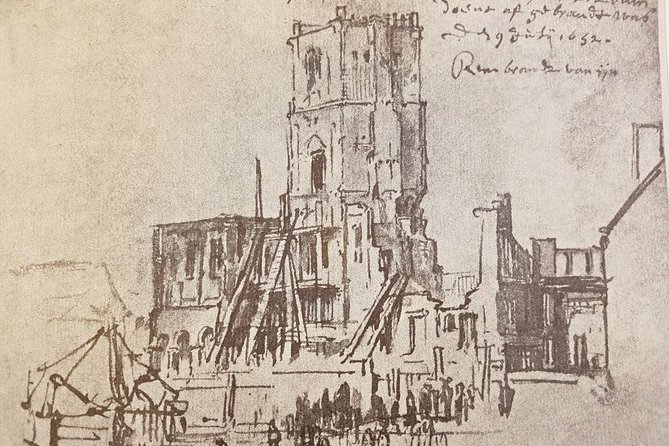
One of the most human segments of the walk focuses on the women in Rembrandt’s life and the question of why he never remarried after his wife’s death. Your guide also connects this to the Oude Kerk, and explains what that landmark has to do with the story.
This portion is valuable even if you’ve read a few Rembrandt biographies before. You’ll see how art history becomes personal history, and how a city landmark can function like a clue in a larger timeline.
To get the most from this stop:
- Listen for how the guide ties life events to the kind of work and public reception Rembrandt faced.
- Keep an eye on how Amsterdam’s institutions show up in the story, not as abstract background, but as real social space.
I like this segment because it avoids turning Rembrandt into a distant genius. The tour keeps him as a person moving through a real society, with relationships and consequences that shaped his later years.



Small-group guiding: why Tijs (and Edgar Foley) make it feel personal
The guiding really defines the tone here. The names that come up with this experience are Tijs and Edgar Foley, and the pattern is consistent: they’re engaging storytellers who connect Dutch art to Amsterdam itself.
What makes that work in practice is that the guide isn’t only reciting facts. They’re connecting facts to questions you’d actually ask if you were trying to understand Rembrandt without a textbook. That approach makes the walk feel like a conversation, not a lecture.
You can also expect a guide who stays professional and funny, in the sense that they know how to make information stick without dragging it out. When a tour is short—about three hours—good pacing matters, and these guides keep it moving.
Price and group size: when $390.52 per group makes sense
The price is $390.52 per group, with a max group size of up to 6 people. That pricing is the key to the value math.
- If you fill the group with 6 people, it works out to roughly $65 per person.
- If it’s just 2 people, it’s closer to $195 per person.
So here’s my honest take on value: this is best if you’re traveling with friends, or you can group up with another couple/family. It also makes sense for a couple who really wants a flexible, story-led route and doesn’t want to compete with strangers.
What you get here isn’t only “guided walking.” You get admission included for the Rembrandt House stop, a workshop-style etching look, and a route that targets specific Rembrandt-related city anchors. For a short window in Amsterdam, that combination can be a smart use of time.
Timing and walking pace: what to plan for in 3 hours
The tour runs about 3 hours, with 45 minutes at the Rembrandt House Museum and 10 minutes at Rembrandtplein. That leaves roughly the rest of the time for route walking, discussion, and the smaller stops that link each theme together.
It’s marked as moderate physical fitness. That usually means you should expect uneven sidewalks, cobblestones, and some walking on older street layouts. You don’t need to be a marathoner, but you do want shoes that won’t make you regret every step.
If you’re visiting in cold or wet weather, remember you’ll be outside for parts of the route. Layer up and keep a light rain option handy.
Where you start and finish matters more than you think
Starting at Rembrandt House Museum (Jodenbreestraat 4) is great for two reasons. First, the tour begins with context—Rembrandt’s life in the place it happened. Second, it gets you oriented quickly because you’re tied to a meaningful reference point from the start.
Ending at Dam Square (Dam) is equally practical. Dam Square is central, so you can switch to whatever you want next: a meal, a canal-area wander, or another quick sight without doing a long transit detour.
Tips to get better answers from your guide
You’ll get the best experience if you treat the guide like a conversation partner. A few practical ways to do that:
- Ask one technique question at the start (the etching workshop is where it fits).
- Ask one “city memory” question at Rembrandtplein (the square’s naming and Rembrandt’s connection).
- Ask the human-history question when you reach the Oude Kerk segment (life events tied to a landmark).
If your group likes structure, you can also ask the guide to prioritize what you care about most. Private tours are built for that.
Who should book this Rembrandt Tour
This tour is a good match if you want:
- A private, flexible Rembrandt-focused experience rather than a big group shuffle.
- A route that connects Amsterdam’s streets and institutions to the evolution of Dutch art.
- A guide who can explain art questions in plain language, with humor and pace that fits a 3-hour walk.
It’s less ideal if you only want museum time, or if you strongly dislike walking through the city. The experience is built around moving and stopping, not just sitting in galleries.
Should you book it or choose something else?
If your goal is to see Rembrandt in context—technique, people, and the city that shaped Dutch art—this is a smart choice. The included admission at Rembrandt House, the workshop-style etching insight, and the way the walk ties in landmarks like Rembrandtplein and the Oude Kerk make the story feel coherent.
I’d book it when:
- You’re traveling as a small group (or you’re happy paying per person for a private route).
- You want art history that’s tied to real Amsterdam corners.
- You like guides who talk like storytellers, not like powerpoint slides.
I’d consider another option if you want a purely indoor museum day or if your walking tolerance is limited. Otherwise, this is exactly the kind of short, focused experience that can make a city feel personal fast.
FAQ
FAQ
Where does the Rembrandt Tour start and end?
It starts at Museum Het Rembrandthuis, Jodenbreestraat 4, 1011 NK Amsterdam, and ends near Dam Square, Dam, 1012 Amsterdam.
How long is the tour?
The tour is approximately 3 hours.
What is the price for the tour?
The price is $390.52 per group, up to 6 people.
Is this a private tour?
Yes. It’s a private tour/activity, and only your group participates.
What language is the tour offered in?
The tour is offered in English.
Do I get a ticket on my phone?
Yes. The tour includes a mobile ticket.
Is admission included at the first stop?
Yes. Admission is included at Museum Het Rembrandthuis.
Is there an admission fee at Rembrandtplein?
Rembrandtplein is free to enter, and no admission is required there.
What fitness level do I need?
The tour is listed for travelers with a moderate physical fitness level.
Can I cancel for a full refund?
Yes. You can cancel up to 24 hours in advance for a full refund.