REVIEW · AMSTERDAM
Rotterdam, Delft and The Hague Small Group Tour from Amsterdam
Book on Viator →Operated by Alx Tours · Bookable on Viator
Some days feel like stamps on a passport. This one mixes big cities with real craftsmanship.
I especially like how the day pairs guided stops with time to roam on your own in each place. The itinerary also gives you a strong slice of Dutch life—from Rotterdam’s rebuilt cityscape to Delft’s pottery tradition. One thing to watch: it’s a long, tightly scheduled day with lots of driving and short stop times.
Second, I love that you’re not stuck in Amsterdam the whole time. You’ll get a small group setup (max 8), travel by air-conditioned vehicle, and include bottled water for the day’s rhythm. The Royal Delft visit is also included, so you’re not scrambling for tickets mid-journey.
One possible drawback is how much you’ll see from the outside. In The Hague, the Peace Palace and Binnenhof/Ridderzaal areas are time for exteriors only, and construction or access issues can affect what you can see clearly from outside.
In This Review
- Key points worth your attention
- Rotterdam, Delft, The Hague: how this day trip really feels
- From Amsterdam to Rotterdam: what the schedule buys you
- Rotterdam’s big-ticket sights: Markthal to Cube Houses
- Markthal: a market hall that looks like a planet
- Blaaktoren (1984): the Pencil building
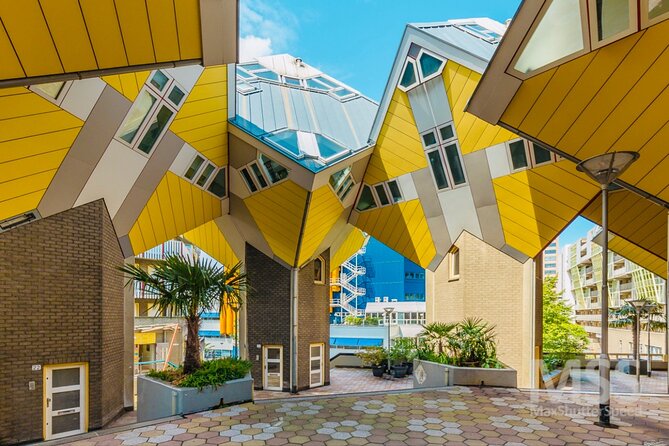
- Kijk-Kubus (Cube Houses): Piet Blom’s one-liner architecture
- Old Harbour and Nieuwe Maas: getting the “Rhine/Maas” perspective
- Old Harbour: history turned into nightlife and cafés
- Nieuwe Maas and the bridges
- Royal Delft: the included pottery visit you’ll remember
- Timing and what’s included
- Delft’s Markt and churches: views, towers, and city-center walking
- Nieuwe Kerk: a tower you can use for orientation
- Markt (Market Square): the civic heartbeat
- Stadhuis Delft: Renaissance city hall energy
- Oude Kerk (Old Church): Gothic and slightly famous for the nicknames
- The Hague’s Peace Palace and Binnenhof exteriors: what you’ll (and won’t) go inside
- Peace Palace: time for what’s outside
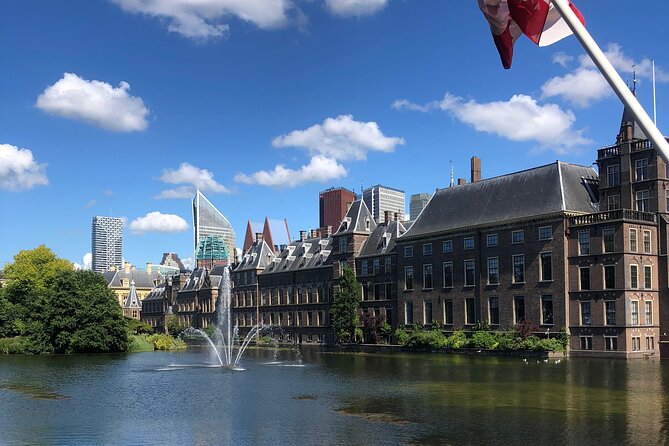
- Binnenhof & Ridderzaal: Dutch governance, viewed from the outside
- Optional Mauritshuis
- Walking time, coffee stops, and where lunch fits
- Price and value: is $151.16 a fair deal for this loop?
- Who should book this Rotterdam–Delft–The Hague tour
- Should you book this Rotterdam, Delft and The Hague small-group tour?
Key points worth your attention
- Rotterdam in “architecture mode”: Markthal, the Blaaktoren (Potlood/Pencil building), and Piet Blom’s Cube Houses
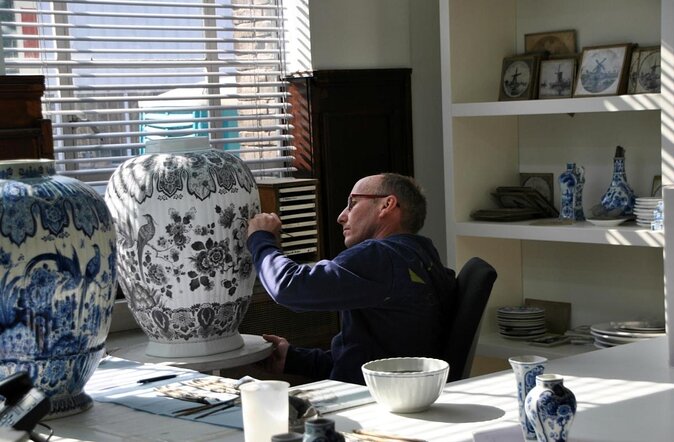
- A real craft stop in Delft: Royal Delft’s Delft Blue tradition since 1653, with an included museum visit
- The Hague highlights without the museum shuffle: Peace Palace and Binnenhof/Ridderzaal viewed from outside (Mauritshuis is optional)
- Guided + free time balance: short guided walks, then a block of wandering to reset your brain
- A long day that still moves: plan on 8.5 hours and accept that stop times are brief
Rotterdam, Delft, The Hague: how this day trip really feels
This tour is built for people who want more than a quick hop into one city. You’re looking at a full-day loop that starts and ends in Amsterdam, with a serious “best of” route through three Dutch cities that each tell a different story.
What makes it work is the pacing: you get guided walking time in the key areas, then free time to follow your own curiosity. In Rotterdam you’ll have a coffee/shopping/self-exploring window after arriving. In Delft you’ll get time to shop and wander after the Royal Delft stop. That balance matters because these places are visual—if you only hear facts at every turn, you miss the point.
It also helps that the group size is small (up to 8). Fewer people means less waiting and easier navigation when the walking starts.
You can also read our reviews of more tours and experiences in Amsterdam.


From Amsterdam to Rotterdam: what the schedule buys you
You leave Amsterdam early, with the meeting point at De Ruijterkade 46 (the Kiss & Ride area). The start time is 8:30 am, and the activity runs about 8 hours 30 minutes total, returning you to the same place.
Expect the drive to be the biggest “time gobbler.” The plan calls for about 75 minutes driving to Rotterdam. Once you’re there, the guided portion is shorter—around 30 minutes—followed by about 30 minutes for coffee, shopping, and exploring at your own pace.
That structure is good for first-time visitors. You get enough guided context to understand what you’re looking at, then you can slow down where you want. The trade-off is that you won’t have hours to get lost like you would on a multi-day trip.
Rotterdam’s big-ticket sights: Markthal to Cube Houses
Rotterdam can feel like two cities at once: the older port DNA and the modern, rebuilt city body. That contrast shows up fast, especially around the landmarks you’ll see.
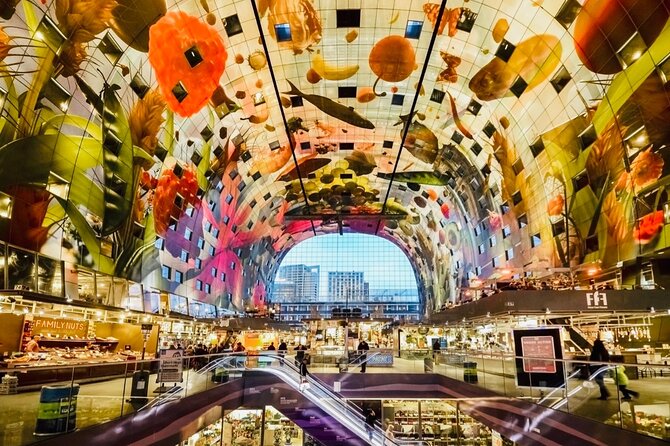
Markthal: a market hall that looks like a planet
The Markthal is a recent standout and an instant photo magnet. It’s described as an iconic building with a mix of cultures, flavors, scents, and picture-worthy sights. Even if you don’t go full foodie, it’s the kind of place that makes you understand why Rotterdam feels different from Amsterdam.
Tip for your own exploring time: spend your wandering not just on what you see from the outside, but on the vibe inside—markets make cities feel lived-in.
Blaaktoren (1984): the Pencil building
Next up is the Blaaktoren, also called the Potlood (Pencil) building. It’s a residential tower designed by Piet Blom, famous for the pointy top shape. This is one of those stops that’s brief but memorable because the architecture is so recognizable.
If you like the “how did they think this?” side of travel, this is a strong inclusion.



Kijk-Kubus (Cube Houses): Piet Blom’s one-liner architecture
Then come the Cube Houses (Kijk-Kubus)—a pile of cube-shaped homes designed by Piet Blom. This is one of Rotterdam’s signature images, and it works well in a short itinerary because the geometry does the storytelling for you.
A practical note: with only short walking time, you may not go deep into every viewing angle. Make your first pass for the big view, then use your free time to circle back if the light or crowds change.
Old Harbour and Nieuwe Maas: getting the “Rhine/Maas” perspective
Rotterdam’s waterways are part of its identity, not just a scenic extra. After the cube-and-modern architecture zone, you’ll move through areas that show the city’s port past and river connections.
Old Harbour: history turned into nightlife and cafés
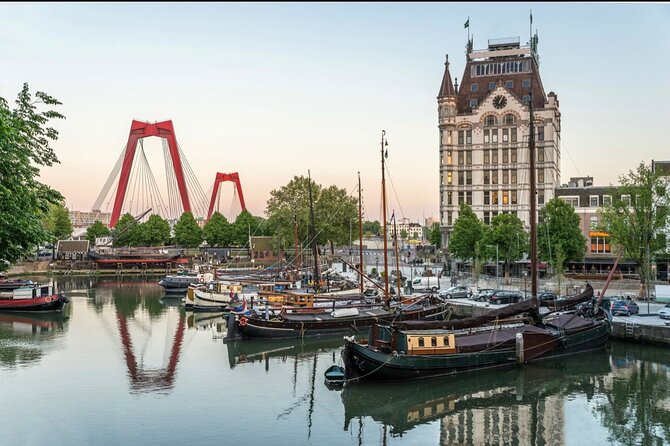
The Old Harbour is described as a historically rich port area that today feels more like cafés and evening energy. If you want a quick sense of where locals might hang out, this is the right direction to look.
Nieuwe Maas and the bridges
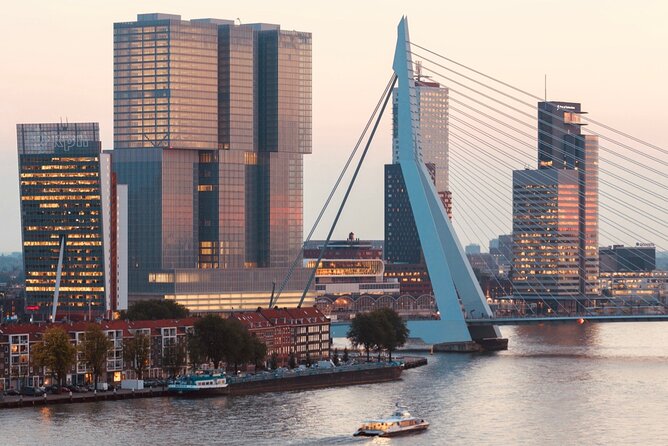
You’ll also pass by the Nieuwe Maas, described as a distributary of the Rhine River (and historically connected to the Maas). Along the way, you’ll see big bridge landmarks and signature buildings like the Erasmus Bridge, Willemsbrug Bridge, and notable architecture such as De Rotterdam and The Red Apple.
Even if you’re not an architecture superfan, this gives you the “why Rotterdam matters” context—trade routes, river geography, and modern skyline identity in one sweep.
Royal Delft: the included pottery visit you’ll remember
The Delft stop is the craft anchor of the whole day. Royal Delft (Koninklijke Porceleyne Fles) has been producing Delft Blue since 1653, and the tour focuses on how the tradition gets passed down generation to generation.
What I like about this inclusion is that it’s not just a museum label. The description emphasizes that iconic pieces are still made entirely by hand. That matters for value: you’re paying for an experience with a living process, not only glass-case viewing.
Timing and what’s included
You drive about 15 minutes to Royal Delft and then get about 60 minutes visiting time, with the entrance included. That’s enough time to see the main displays and understand the craft style, even if you don’t linger for every small detail.
Practical move: if you want one Delft souvenir that doesn’t feel random, aim to shop after you understand the pattern and style. You’ll be more likely to spot the difference between “pretty” and “meaningful.”
Delft’s Markt and churches: views, towers, and city-center walking
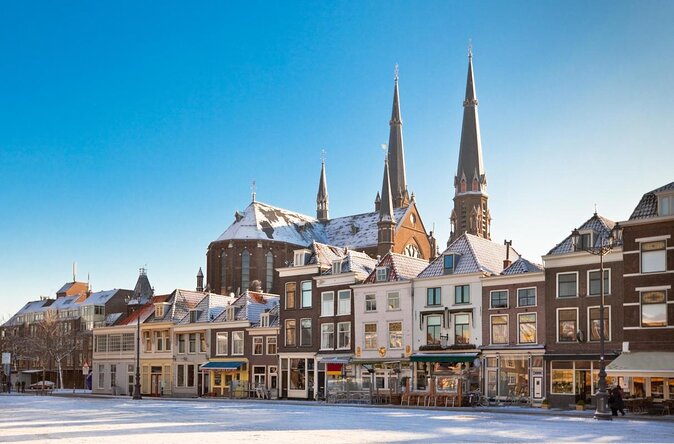
Delft is the kind of place where the buildings feel like they’re telling you where to stand. The day’s Delft walking component is around 30 minutes, then you get extra time—about 60 minutes total—for shopping and self-exploring.
Nieuwe Kerk: a tower you can use for orientation
The Nieuwe Kerk is a Protestant church and the tower is described as the second highest in the Netherlands. That means it’s not only a landmark; it also gives you a natural way to get your bearings across the city.
Markt (Market Square): the civic heartbeat
The Markt is described as one of the largest historic market squares in Europe, paved in the late 15th century. It’s lined with the town hall, the Nieuwe Kerk, cafés, boutiques, and souvenir shops, with markets held there on Thursdays.
Even on non-market days, this is a great “pause and people-watch” spot. With your free time, you can grab a coffee, do quick shopping, and just watch the square do its thing.
Stadhuis Delft: Renaissance city hall energy
Across the Markt sits the Stadhuis (City Hall), a Renaissance-style building that functions as the seat of the city’s government. It’s also used for civic wedding ceremonies. This stop adds texture: you’re seeing Delft as both historic and functioning.
Oude Kerk (Old Church): Gothic and slightly famous for the nicknames
The Oude Kerk is a Gothic Protestant church in the old city center of Delft. It’s nicknamed Oude Jan (Old John) and Scheve Jan (Skewed John). The nicknames are the kind of local detail that makes a church stop feel less like a checklist item.
The Hague’s Peace Palace and Binnenhof exteriors: what you’ll (and won’t) go inside
The Hague is where the day shifts from city charm to institutions. The tour keeps things efficient here, using outside views rather than interior visits.
Peace Palace: time for what’s outside
The Peace Palace houses major international institutions including the Permanent Court of Arbitration and the UN International Court of Justice, plus the Hague Academy of International Law. The Carnegie Foundation is described as the owner/manager.
On this tour, you only get about 15 minutes for the outside visit. That’s free and worth it for the building presence alone, but it’s not the same as an interior museum-style visit. If you want rooms and exhibits, you’ll need a separate plan.
Binnenhof & Ridderzaal: Dutch governance, viewed from the outside
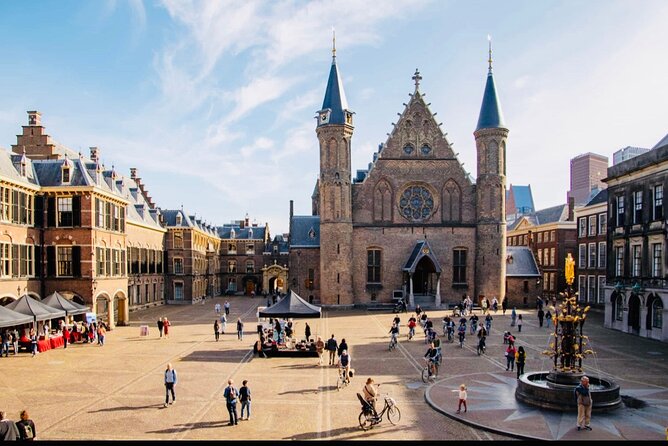
In The Hague, you’ll also see the Binnenhof complex and the Ridderzaal (Hall of the Knights) from outside. The Ridderzaal is described as Gothic with medieval-style turrets and is tied to the Dutch Parliament today.
The tour notes this clearly: during your time here, it’s exterior exploration only. If your main goal is the interior experience, you’ll feel more satisfied doing a museum visit on your own time.
Optional Mauritshuis
The Mauritshuis (Royal Gallery) is mentioned as an optional stop. But it isn’t included in the standard tour cost, and an extra entrance fee applies.
If art is your priority, you might plan your day around that choice. If architecture and civic landmarks are your priority, you’ll be fine with the exterior focus.
Walking time, coffee stops, and where lunch fits
This is a day trip built around short bursts. You’ll do plenty of walking relative to the time spent at each stop, but the pacing is managed with scheduled windows.
What you should plan for:
- Wear shoes that handle cobblestones and quick turns.
- Use the planned coffee/shopping time in Rotterdam wisely—don’t spend it all hunting for the perfect snack.
- Bring a snack if you’re picky, because lunch is not included.
The tour includes bottled water, which helps. Still, if you’re sensitive to long gaps between meals, treat lunch as your own responsibility and choose a spot near where you have your free time blocks—especially in Delft, where the schedule gives you a more relaxed shopping stretch.
Price and value: is $151.16 a fair deal for this loop?
At $151.16 per person, you’re paying for a bundled experience: transportation, air-conditioned vehicle, bottled water, and the one ticket that can be expensive or hard to line up on your own—Royal Delft (admission included).
Lunch isn’t included, so think of your true day budget as tour cost plus whatever you want to eat and buy. Shopping in Delft can add up fast, mostly because Delft Blue is addictive in small gift size.
So is it worth it?
- It’s a good value if you want three cities in one day and you prefer guided context plus free time.
- It’s less ideal if you’re the type who hates time pressure or wants full interior visits everywhere.
The small-group cap (max 8) also helps justify the price. A bus day trip can feel like a conveyor belt. This one tries to avoid that feel.
Who should book this Rotterdam–Delft–The Hague tour
This tour fits you best if:
- You want a first look at Rotterdam’s modern rebuild story and Delft’s pottery identity.
- You like architecture and city layout more than deep-dive museum hours.
- You enjoy guided context but still want to wander and shop on your own schedule.
- Your travel style matches a day with lots of motion but structured stops.
You might skip or adjust expectations if:
- You’re hoping for lots of interior admissions besides Royal Delft.
- You strongly prefer long stays in one city rather than short stop-and-go.
- You dislike the idea of outdoor-only views in The Hague.
Should you book this Rotterdam, Delft and The Hague small-group tour?
If you’re in Amsterdam and you want one smart day outside the city with a good mix of modern Rotterdam architecture, Delft craft tradition, and The Hague’s international-institution setting, this is a solid choice. The inclusion of Royal Delft plus the free roaming blocks gives you enough payoff without turning the day into a museum marathon.
My call: book it if you like guided structure with breathing room. If you want to go inside major sites in The Hague, or you’re not comfortable with a long travel day, plan a different format—one that gives each city more time.