REVIEW · AMSTERDAM
Rude Bastards Tour of Amsterdam (CYHIT)
Book on Viator →Operated by Rude Bastards Tour Berlin · Bookable on Viator
Amsterdam, but make it rude. This 2.5-hour, small-group walk turns the city’s sights into a fast history lesson with sharp jokes and even sharper opinions, starting right at Centraal Station. I like the way the guide keeps moving and keeps you talking, so the story doesn’t feel like a lecture.
The route also does a great job mixing famous postcards with places you’d skip on your own. I especially enjoyed the beer-history stop at Cafe Karpershoek, where the guide points to how Amsterdam’s past got its momentum, including the note that Vrerick Geritssen started selling beer there in 1606.
One thing to consider: you should expect bad language and politically incorrect humor. If you want a quiet, family-friendly museum vibe, this isn’t that kind of tour.
In This Review
- Key things to know before you go
- A rude-and-true way to get your bearings in Amsterdam
- Price and what $3.48 really means for value
- Meet-up, timing, and how the walk feels from Centraal to the Waag
- The guide’s irreverent style: what makes it work
- From Centraal Station to Cafe Karpershoek and beer in 1606
- Nieuwezijds Gay Sauna: older Amsterdam in a changing city
- Dam Square and Damstraat: how each century leaves fingerprints
- Begijnhof: a quiet courtyard that changes your mood
- Rembrandthuis and Amsterdam Museum: where tickets may add cost
- Bloemenmarkt to the Waag finale: souvenirs and street-level symbolism
- Who this tour suits best
- Tips for getting the most out of it
- Should you book Rude Bastards Tour of Amsterdam?
- FAQ
- How long is the Rude Bastards Tour of Amsterdam?
- Where do I meet for the tour?
- Where does the tour end?
- How big is the group?
- Is the price inclusive of museum tickets?
- What kind of ticket do I get?
- Is the tour family-friendly?
- Are service animals allowed?
Key things to know before you go

- Small-group format (max 15) keeps the pace lively and the conversation feeling personal
- Meet at Amsterdam Centraal so you get oriented fast and don’t waste time hunting a group
- Edgy humor with history means you’ll learn while laughing, not after the laughter fades
- Iconic sights plus offbeat stops helps you see Amsterdam as more than a single “top-10” list
- Some museum entry isn’t included (so plan for extra tickets at two stops)
A rude-and-true way to get your bearings in Amsterdam

If you’ve ever started Amsterdam with a slow walking tour that feels like homework, this feels different. I like how it trades polite pacing for momentum: you’re out in the streets, you’re hearing stories, and the guide keeps you focused on what the buildings and places are telling you.
You’re also not stuck in one single “theme” like canals only, or paintings only. The idea is to show you Amsterdam through layers: central power, everyday life, hidden courtyards, and the kinds of places that existed long before Instagram turned them into backdrops. You come away with a mental map, not just a list of stops.
Just be clear about the vibe. The tour leans into irreverence, including bad language and jokes that are more street-smart than lecture-room proper. That’s part of the point, and it’s exactly why some people love it.
You can also read our reviews of more tours and experiences in Amsterdam.



Price and what $3.48 really means for value
At $3.48 per person, you’re paying for the guide more than for “stuff.” And that’s the trade: you get a local guide and a guided route, but most of the extra spending still depends on what you choose to enter.
Here’s how I’d judge the value. For this price, you should expect:
- a lively 2.5-hour walking experience
- a clear starting point at Amsterdam Centraal
- a route that hits major sights plus a few less obvious ones
What you should not assume is that museum tickets are handled for you. Admission tickets for Museum Het Rembrandthuis and Amsterdam Museum are listed as not included, so the cost can rise if you want to go inside. Even so, you still get plenty of value if you use the tour to understand what’s worth your time later.
If you’ve got limited days, this is the kind of budget-friendly orientation that helps you spend your next hours more wisely.
Meet-up, timing, and how the walk feels from Centraal to the Waag
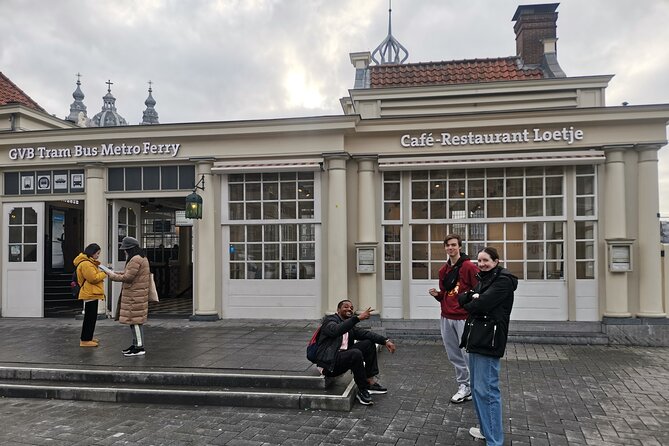
This tour starts at Loetje Stationsplein 10, 1012 AB Amsterdam, at 12:00 pm, and it ends at WaagNieuwmarkt 4, 1012 CR Amsterdam (near the Waag). You’ll meet your guide in the Centraal Station area, which is a big plus if you’re new to the city.
The duration is about 2 hours 30 minutes, which is long enough to feel like a real experience but not so long that you burn your whole afternoon. The route time is broken across several meaningful stops, including some shorter “story moments” and a couple longer ones where the guide sets context.
Practical tip: wear shoes you’d happily wear for a walking tour. Amsterdam streets are manageable, but this is still a city-center stroll with multiple places to stand and listen.
Also, you’ll get a mobile ticket, and the group size is capped at 15, so you’re not getting steamrolled by a huge crowd. Service animals are allowed, and the tour says most people can participate.
If you’re the type who likes to plan around flexibility, you’ll also appreciate that you can cancel for a full refund if you do it at least 24 hours in advance.
The guide’s irreverent style: what makes it work
The success of this tour comes down to how the guide performs the material. In the feedback I’m using as a guide for what to expect, Maja (sometimes spelled Maya) is highlighted as enthusiastic, interactive, and wry in her observations. That matters, because history in a city like Amsterdam can turn dry fast.
Here’s what you can expect from that style:
- You’ll get quick context, not a slow timeline you have to memorize
- The humor keeps you attentive during transitions between neighborhoods
- You’ll get practical tips mixed into the stories, so you can act on them later
If you’re worried that sarcasm means you’ll miss the facts, don’t. The stories are still grounded in real places and real centuries. The tone just makes you remember them.
This is a good fit if you like your tours with personality. It’s not ideal if you prefer a calm, polished presentation where you never hear anything unexpected.
From Centraal Station to Cafe Karpershoek and beer in 1606
You start where most first-time visitors start: Centraal Station. The guide meets and greets you there and sets expectations, then gives an intro that helps you understand how Amsterdam is laid out and why the center matters.
What I like at the very beginning is that it gives you a way to look at the city instead of just looking at it. You learn how to notice details like street patterns, landmarks, and why certain corners became important.
Next comes Cafe Karpershoek, where the tour shifts into daily life and commerce. The standout detail here is the beer angle: the guide highlights Vrerick Geritssen, tied to the idea that beer sales were underway there in 1606. That small historical nugget is exactly the kind of thing that makes a city feel lived-in rather than staged.
Even if you’re not a beer fan, this stop helps you understand Amsterdam’s practical side: people needed places to gather, trade, and keep going. The guide uses that to explain why the city became what it became.
What to watch for: this is an explanation stop, so don’t plan to multitask. If you drift, you’ll miss the story beats that make the next stops land harder.



Nieuwezijds Gay Sauna: older Amsterdam in a changing city
Then the tour heads to Nieuwezijds Gay Sauna, framed as one of the older inhabited parts of the city. The guide treats it like a portal to the past, describing how life worked back then and what kinds of things you could find or learn about from the area.
This kind of stop is valuable because it breaks the idea that Amsterdam is only “old stuff in pretty buildings.” You get to see how modern life sits on top of older patterns. It also reminds you that Amsterdam has always been a city with neighborhoods that served different communities, including those that didn’t fit the dominant image people often carry.
A note of timing here: it’s a shorter segment, so it won’t feel like a museum exhibit. It’s more like a guided lens. You’ll learn enough to make the place mean something before you move on.
If you want a tour that sticks to only the most famous landmarks, this may feel offbeat. If you want Amsterdam to feel human, it’s one of the best kinds of moments.
Dam Square and Damstraat: how each century leaves fingerprints
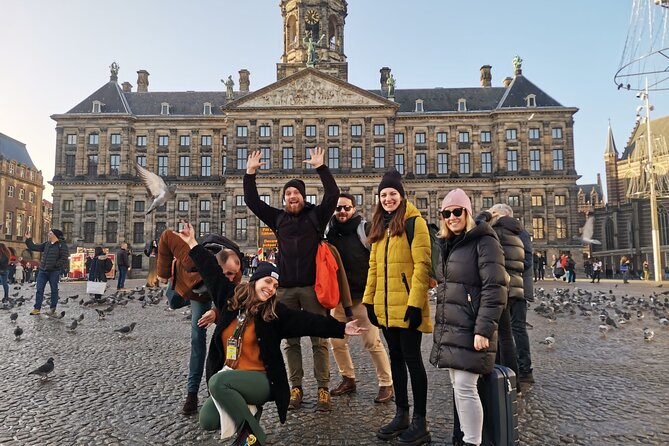
At Dam Square & Damstraat, the guide connects the dots between centuries and what changed at this exact location. This is where Amsterdam’s center shows its power.
I like Dam Square because it’s the kind of place where you can feel multiple eras at once. One minute it’s crowded with modern life, the next the buildings around you are a reminder that this was always a crossroads. The tour uses that tension to explain how the space got shaped over time and what the square means today.
You’ll also get a sense of how the city’s big events play into the square’s role. The goal isn’t to list dates; it’s to help you understand why the geography matters and why certain spots became inevitable gathering points.
Drawback to consider: if you’re expecting a deep, quiet historical lecture at each location, this is more of a fast-moving city-center story. That’s the style. If it works for you, you’ll feel like you’re getting the best highlights with context. If you need slow pacing to absorb details, you might want to follow up with self-guided reading afterward.
Begijnhof: a quiet courtyard that changes your mood
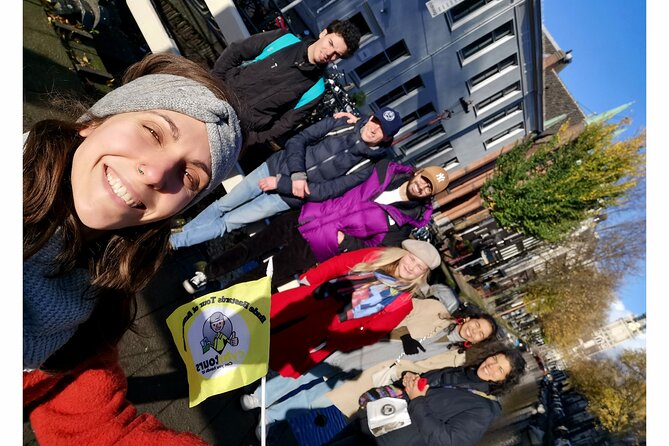
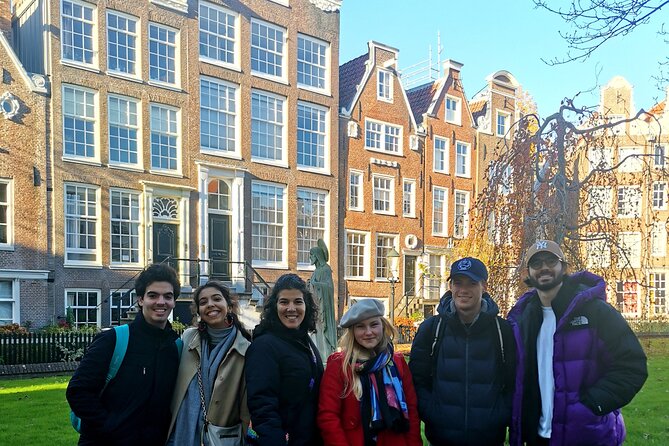
Then you reach Begijnhof, which shifts the emotional tone of the walk. This is where the guide talks about the people who stayed there, plus the history and how it’s used today.
You’ll appreciate this stop if you’re the kind of person who likes contrast. Amsterdam can be loud, busy, and noisy in a way that tricks you into thinking that’s all the city ever was. A place like Begijnhof reminds you Amsterdam also made room for quiet lives and different rules.
The guide’s job here is to help you see the courtyard as more than a postcard. You learn why it mattered, who it served, and why it remains relevant in how people experience the area now.
For practical comfort: this is a good point in the tour to reset your brain before the more museum-focused segments.
Rembrandthuis and Amsterdam Museum: where tickets may add cost
Two stops lean into the art-and-museum side:
- Museum Het Rembrandthuis (Rembrandt House)
- Amsterdam Museum
For Rembrandthuis, the guide talks about how awesome Rembrandt was and includes some of the crazy things he did. This is less about a full museum lesson and more about giving you a way to understand what you’ll see if you go inside.
For Amsterdam Museum, the focus is on the type of museums in the Netherlands and Amsterdam, plus the surrounding buildings and area. That can be useful if you’re deciding whether you want to pay entry later, because it helps you understand what museum experiences these places tend to offer.
One important money point: admission at these two museum stops is not included. So if you’re trying to stick to a strict budget, treat this segment as a guided preview. If you’re willing to spend on one or both, the tour can help you choose smarter because you’ll know what you care about once the guide frames the topics.
Bloemenmarkt to the Waag finale: souvenirs and street-level symbolism
You end on the colorful, practical side of Amsterdam with Bloemenmarkt, the flower market. This segment gives you a brief background on how it started and where it is today.
Then the tour finishes at The Waag, where the guide wraps up the madness around you and pulls the stories together. Ending at the Waag area is a strong move because it’s a recognizable landmark and a natural place to pause, regroup, and plan your next step.
What I like about this final stretch is that it brings you back to street-level Amsterdam. You’re not stuck in one museum mood. You’re leaving the tour with images, names, and themes you can carry into your own wandering.
Who this tour suits best
I think this works best if you want:
- a fast orientation to central Amsterdam
- a tour with personality and humor, not a dry script
- a route that mixes major sites with offbeat stops
- a small-group vibe that keeps questions and reactions possible
It’s less of a fit if you want a traditional, quiet history walk. The guide is intentionally irreverent, and the tour openly leans into politically incorrect comedy and bad language.
Tips for getting the most out of it
- Go in ready to listen. This tour works because the guide’s timing matters.
- Wear comfortable shoes. You’ll be moving through real city blocks for about 2.5 hours.
- If you care about museums, decide in advance if you’ll pay entry for Rembrandt House or Amsterdam Museum. The tour tees them up, but ticket cost isn’t covered.
- Use the tour to plan follow-up. After a guided route like this, you’ll usually have clearer instincts about which neighborhoods to revisit.
Should you book Rude Bastards Tour of Amsterdam?
I’d book it if you want Amsterdam to feel like a living place, not a textbook. The small group, the fast pace, and the mix of famous and unexpected stops make it a practical choice, especially if you’re short on time.
I’d skip it if you’re sensitive to swearing or you want a strictly family-friendly style. The humor is part of the package, not an occasional garnish.
If you’re somewhere in the middle, consider this: you’re paying a very low rate for the guide and route, and you’re likely to get enough context to make your own independent exploring better. That’s the best kind of value—information that changes what you do next.
FAQ
How long is the Rude Bastards Tour of Amsterdam?
It’s about 2 hours 30 minutes.
Where do I meet for the tour?
The meeting point is Loetje Stationsplein 10, 1012 AB Amsterdam, Netherlands, and the tour begins in the Centraal Station area.
Where does the tour end?
It ends near Waag at WaagNieuwmarkt 4, 1012 CR Amsterdam.
How big is the group?
The tour is limited to a maximum of 15 travelers.
Is the price inclusive of museum tickets?
No. Museum Het Rembrandthuis and Amsterdam Museum entry is not included, while other stops are listed as free.
What kind of ticket do I get?
You receive a mobile ticket.
Is the tour family-friendly?
The tour is described as politically incorrect and includes bad language and bad jokes, so it may not match what you want if you prefer a calmer, family-friendly experience.
Are service animals allowed?
Yes, service animals are allowed, and the tour says most people can participate.