REVIEW · AMSTERDAM
Small Group Tour to Nazi WWII concentration camp from Amsterdam
Book on Viator →Operated by Dutch Tours · Bookable on Viator
Auschwitz gets the headlines, but Kamp Vught is a quieter, heavier lesson. On this small-group trip from Amsterdam, you’ll visit the Nationaal Monument Kamp Vught and its memorials with a guide and an audio tour working together.
I especially love the personal way the history is handled, with guides like Eva (and other guides such as Sarah) using family stories to make the human stakes feel real. I also like the practical setup: round-trip transfers from central Amsterdam plus museum time that lets you move at your own pace.
One drawback to consider: the topic is intense, and for some people the museum portion can feel more self-guided than fully led inside, depending on the day and guide approach.
In This Review
- Key points before you go
- Kamp Vught in one morning: what you’ll actually see
- Getting there from Amsterdam: transfers, timing, and van comfort
- Stop 1: Nationaal Monument Kamp Vught memorial center and museum time
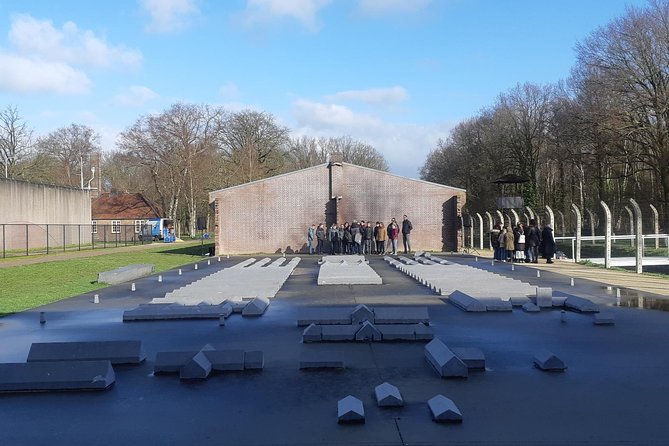
- Walking the reconstructed camp: watchtowers, barracks, crematorium
- The children’s memorial: names, ages, and June 1943
- The execution area in the surrounding woods
- Audio guide and live narration: how the day is structured
- Price and value: $199.55 for a camp memorial day-trip
- Small group reality: up to 8, capped at 16
- What to bring and how to prepare emotionally
- Who this tour is best for (and who might want another option)
- Should you book this Kamp Vught tour from Amsterdam?
- FAQ
- Is the tour in English?
- How long is the tour?
- Where do we meet in Amsterdam?
- What’s included besides the tour guide and audio?
- Is lunch provided?
- What does the tour cover at the camp?
- Is this tour suitable for children?
- What’s the group size?
- Can service animals join?
- What if the tour is canceled due to low sign-ups?
Key points before you go
- Small group feel: designed for close conversation (typically up to 8; overall maximum 16)
- Audio + live guidance: you’ll have both the audio tour and a group guide’s explanations
- Children’s memorial detail: names and ages of 1,269 Jewish children deported in June 1943
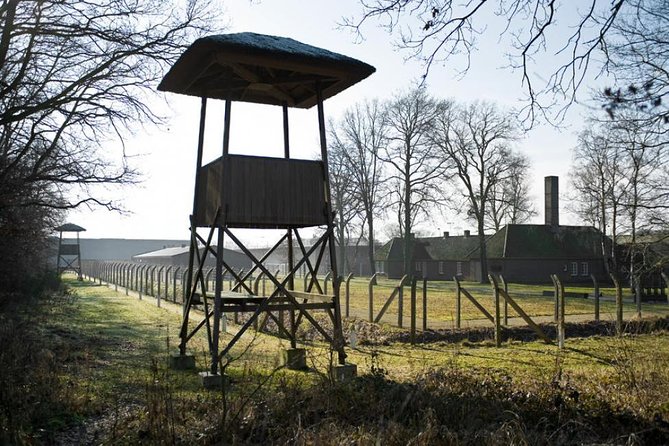
- Full-site highlights: reconstructed watchtowers, barracks, crematorium area, and outdoor memorials
- Execution area walk: a solemn stop in the surrounding woods with names of those executed
Kamp Vught in one morning: what you’ll actually see
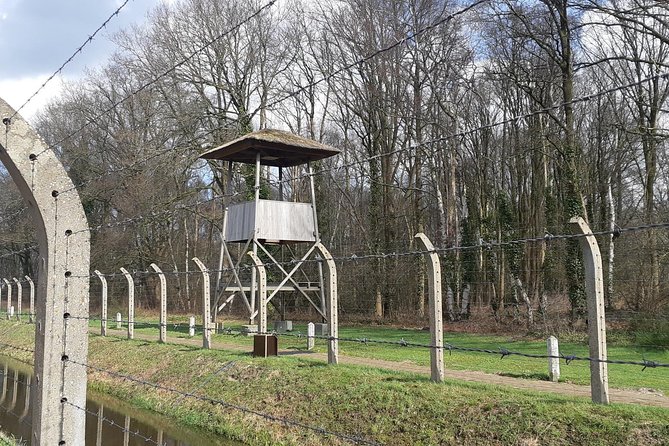
This tour centers on one place: the Nationaal Monument Kamp Vught, one of the most important WWII memorial sites in the Netherlands. Even if you know the basics, the physical setting changes the scale fast.
Expect a mix of reconstructed camp structures and memorial spaces. You’ll see elements like watchtowers, barracks, and the crematorium area, then shift into documentation and remembrance focused on victims—especially children. It is not a “quick look and move on” kind of visit.
The day is designed to fit a full experience in about 6 hours total, including travel. You’re starting at 8:45 am, so you’ll want to be awake and ready for a long, emotional stretch.
You can also read our reviews of more tours and experiences in Amsterdam.



Getting there from Amsterdam: transfers, timing, and van comfort
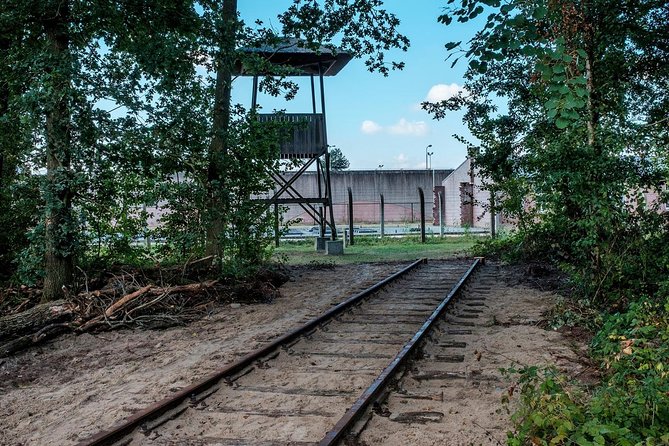
Transport is part of the value here. You get hassle-free round-trip transfers from a central Amsterdam meeting point at AlohaDe Ruijterkade 151 (1011 AC). It’s also near public transportation, which matters if you’re mixing it with other plans that day.
The drive is typically around 1 hour 15 minutes one way, though it can be longer if the roads are disrupted. One review mentioned extra time from accidents on the freeway, which is something you should mentally plan for on any day-trip.
The vehicle is air-conditioned, and there’s a practical rhythm: the drive gives context, and the site visits give you space to absorb what you’re seeing. If you’re the type who likes questions, the small group layout can help because you’re not shouting over a crowd.
Stop 1: Nationaal Monument Kamp Vught memorial center and museum time
Your first major segment is the memorial center and museum area at the site. This is where you’ll get background before (and while) walking the grounds. The museum experience is supported by an audio guide, which you’ll access as part of the tour.
A key detail: the tour doesn’t treat this as a rushed check-list. The schedule includes time for you to look around and walk, and some guides are careful about pacing—letting you take in exhibits at your own tempo before moving to the outdoor areas.
That approach is a plus for many people because the museum is where you can choose what to read closely. One person did wish the visit had more inside guidance, rather than feeling more self-guided. So if you love a constant human narration, just know you may still do a good chunk independently with the audio in hand.
If there are school groups, you might see more motion around the museum. The good news is that you’re still in a controlled, respectful setting designed for learning. The heavier the subject, the more you’ll appreciate the time to process.
Walking the reconstructed camp: watchtowers, barracks, crematorium
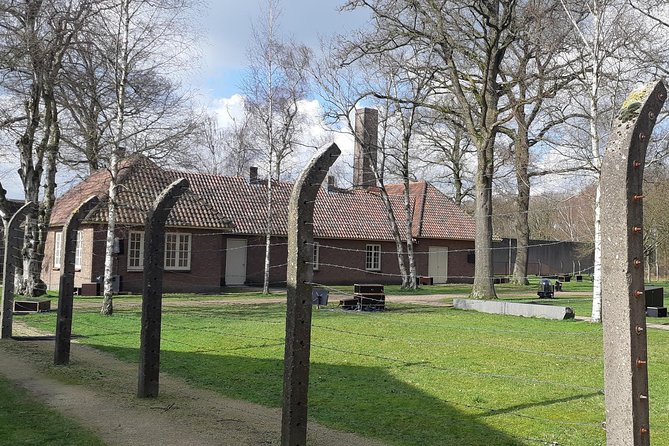
After the memorial center and museum, you’ll move into the outdoor camp grounds. This is where the reconstructions matter. Seeing structures like reconstructed watchtowers and barracks helps you understand how control and confinement were built into the space.
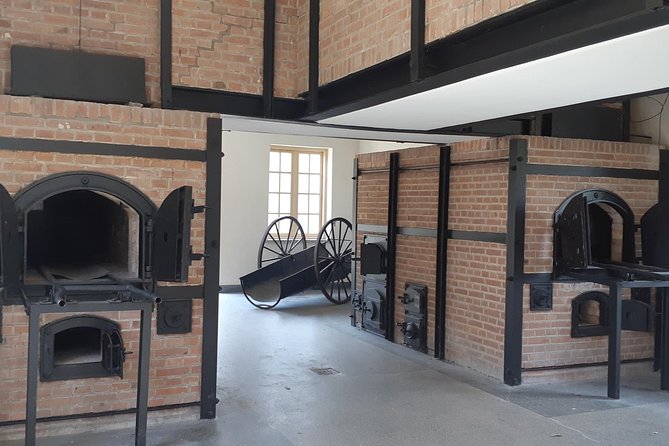
You’ll also encounter the crematorium reference area as part of the site’s presentation. This isn’t done as “shock value,” but as historical evidence and remembrance, which can still be difficult to face.
What makes this part particularly meaningful is the way remembrance is built into the walk. Instead of only general WWII history, the experience repeatedly returns to victims as specific people, not just an abstract statistic.
And that leads to the most emotionally distinctive element of the whole trip: the children’s memorial.
The children’s memorial: names, ages, and June 1943
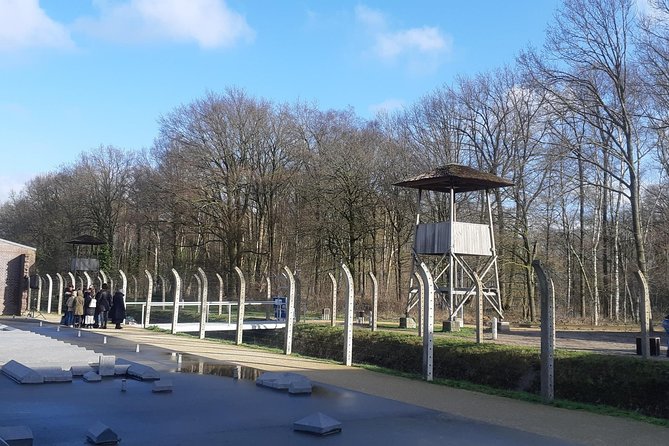
This is the heart of the site for many visitors. The memorial area lists the names and ages of 1,269 Jewish children who were deported in June 1943. It’s centrally located on the campgrounds, so it becomes a focal point rather than a side exhibit.
If you’ve studied the Holocaust in school, you’ll recognize the broader events. Still, reading names and ages at the location where the camp’s machinery of persecution operated changes the experience in a different way.
This is also where the guide’s role can become most important. Many reviews praised Eva’s storytelling and personal connection, which helps you hold the memorial without it turning into a cold “facts only” stop. One review highlighted how she shared her family’s preparation for survival and the difficult reality of hiding—context that lands especially hard when you’re standing near evidence of what was done to children.
Just remember: this isn’t designed to be fast or light. If you’re bringing young teens, you’ll want to consider their readiness in advance.



The execution area in the surrounding woods
Next comes a walk to the execution area located in the surrounding woods. The site includes a memorial there with names of prisoners who were executed at this location.
This segment often hits differently than the reconstructed camp areas. You’re no longer looking at structures that explain system and infrastructure. You’re visiting a place tied to outcomes—people who didn’t survive.
Even if you’ve read about executions before, being in the setting where remembrance is placed can make it feel closer and more personal. The tour keeps the focus on remembrance, which helps guide you through without turning it into a spectacle.
Time is also a factor here. One review mentioned the overall site review taking about 90 minutes, and that includes walking and absorbing outdoor areas. When you reach the woods, don’t rush through just to “get it over with.” If you need to pause, do it.
Audio guide and live narration: how the day is structured
This tour gives you two layers of interpretation: the audio tour and the group guide. In practice, that often means you’ll get a foundation while traveling, then use audio to support you inside and around the museum spaces.
The best version of this setup is when the guide gives you a clear timeline and then tells you what to look for. Several reviews praised the way guides used personal stories alongside historical context, with clear answers and time to ask questions in a small group.
That said, experiences aren’t always identical. One review complained that the guide explanation on the drive was too brief and that audio didn’t sync properly. Another noted that they didn’t feel a guide was leading inside the museum the way they expected.
So here’s my practical advice: treat the audio as your constant and the guide as your human anchor. If you want to ask questions, hold them until you reach an outdoor stop or until your guide has a moment to respond. And if you hear audio lagging or not matching up, pause and rely on the guide’s direction for the moment rather than trying to “force” the audio.
Price and value: $199.55 for a camp memorial day-trip

At $199.55 per person, you’re paying for more than the memorial visit. You’re getting round-trip transfers, an air-conditioned vehicle, and admission as part of the tour package. You also receive the audio guide, plus drinks and a small snack (soda/pop, bottled water, and a snack).
Lunch is not included, so you’ll need to plan for that. The good news is that there’s reportedly a cafe at the museum where you can grab drinks and snacks during the visit. Still, if you prefer a real meal break, you’ll want to bring your own or plan a nearby stop outside of the tour window.
Is it worth it? For me, it leans yes if you care about guided context and a small group experience. If you just want a self-paced museum visit, you might be able to do a lower-cost option on your own. But the day-trip structure here is built to get you there smoothly, help you understand what you’re seeing, and keep the group small enough for real questions.
Small group reality: up to 8, capped at 16
The tour emphasizes intimacy. The highlights mention a smaller group size (typically up to 8 travelers), and the overall maximum is listed as 16. In real life, that range matters because it changes the vibe.
With fewer people, you get better chances to ask questions and hear answers without feeling pushed along. Several reviews specifically called out the benefit of the group size for discussion.
It also affects how the guide can pace the day. On heavy sites like this, pacing is not a luxury. It’s part of being respectful. The best tours create breathing room, and the small group setup is designed to do that.
What to bring and how to prepare emotionally
This is one of those days where comfort details matter because your brain will be fully occupied.
Wear shoes you can walk in comfortably. You’ll be moving between the memorial center, outdoor areas, and the walk to the execution area in the woods. Bring a light layer too, since outdoor segments can feel cooler.
Bring water. You’ll get bottled water and a snack on the tour, but it’s still smart to keep drinking during walking breaks.
For the emotional side, give yourself permission to slow down. The memorial spaces are meant for reflection, not ticking off points. If you need to step back, do it. If you’re with someone who gets overwhelmed, sit it out and let the group continue to the next moment.
If you’re considering bringing children: the tour notes it is not recommended for children under 10. For younger teens, think carefully about their readiness and their interest in historical learning, because the content is heavy by design.
Who this tour is best for (and who might want another option)
This tour fits best if you:
- Want a structured day with transfers handled
- Appreciate a guide who connects facts to human stories
- Prefer a small group where questions are possible
It can be a tougher fit if you:
- Want constant, step-by-step live narration inside every room
- Are sensitive to emotional content and can’t handle memorial sites
- Expect audio and guide pacing to feel perfectly synchronized all the time
One reviewer noted that they might skip audio and choose another approach. That doesn’t mean the tour is bad—it means your learning style matters. Some people need the guide to talk nonstop. Others do better reading and listening at their own pace with audio supporting them.
Should you book this Kamp Vught tour from Amsterdam?
If you want one honest, well-structured way to visit Kamp Vught, I think this is a strong choice—especially because it pairs the site with interpretation and keeps the group small. The standout value is the combination of transfers + admission + audio + guided context, plus guides who (often) bring personal family connections to the telling of history.
Book it if you’re ready for an intense memorial visit and you value clarity about what you’re seeing. Consider alternatives if you need a lighter topic, want a completely inside-the-museum guided experience, or you’re not prepared for the emotional weight of children’s memorials and execution-site remembrance.
FAQ
Is the tour in English?
Yes. The experience is offered in English, and you also receive an audio guide as part of the tour.
How long is the tour?
It runs for about 6 hours total (approx.), starting at 8:45 am and returning to the same meeting point.
Where do we meet in Amsterdam?
You meet at AlohaDe Ruijterkade 151, 1011 AC Amsterdam. The tour ends back at the meeting point.
What’s included besides the tour guide and audio?
The package includes admission, an air-conditioned vehicle, all fees and taxes, and drinks/snacks (soda/pop, bottled water, and a snack). Lunch is not included.
Is lunch provided?
No. Lunch is not included. There is a cafe at the museum where you can get drinks and snacks.
What does the tour cover at the camp?
You’ll visit the Nationaal Monument Kamp Vught grounds, including the memorial center and museum, reconstructed areas such as watchtowers and barracks, and memorial spaces including the children’s memorial. The tour also includes time walking to the execution area in the surrounding woods.
Is this tour suitable for children?
It is not recommended for children under 10.
What’s the group size?
It’s designed as a small group (limited to 8 travelers in the highlights), with a maximum of 16 travelers overall.
Can service animals join?
Yes. Service animals are allowed.
What if the tour is canceled due to low sign-ups?
The experience requires a minimum number of travelers. If it doesn’t meet that minimum, you’ll be offered a different date/experience or a full refund.