REVIEW · AMSTERDAM
2 Hours Private Amsterdam Rickshaw Tour
Book on Viator →Operated by BlackfoXXX Amsterdam explorer · Bookable on Viator
Two hours, and Amsterdam feels suddenly smaller. This private rickshaw ride is built for quick orientation, with a guide pointing out what matters as you glide through streets and viewpoints most cars can’t reach.
I especially like the hotel pickup setup and the way the guide makes frequent, easy photo stops. You’re not stuck staring at a map or rushing across bridges.
One consideration: it’s outdoors and it can get chilly, so bring layers and expect the ride works best in good weather.
In This Review
- Key highlights that make this tour worth your time
- Why a private rickshaw beats rushing on foot
- Pickup, timing, and meeting points that reduce stress
- The two-hour route: seeing Amsterdam’s big characters efficiently
- Dam Square: street performers, pigeons, and layers of time
- The Red Light District: understanding the vibe before you judge it
- Nieuwmarkt: a calmer old-city square with market energy
- Rembrandtplein: nightlife history turned into modern terraces
- The Skinny Bridge (Mager Sisters bridge): a small structure with a big story
- Museumplein, Anne Frank House, and why the outside view matters
- Museumplein: the museum cluster and the Concertgebouw area
- Anne Frank House area: seeing the canal-side setting
- Vondelpark air, De Gooyer windmill, and De Negen Straatjes charm
- Vondelpark: the city’s go-to outdoor reset
- De Gooyer Windmill: an 18th-century landmark with a modern twist
- De 9 Straatjes (The Nine Streets): one-of-a-kind browsing between canals
- What it feels like on the rickshaw: comfort, speed, and photo-friendly stops
- Price and value for a private 2-hour overview
- Who should book this rickshaw tour (and who might not)
- Should you book this 2-hour Amsterdam Rickshaw Tour?
- FAQ
- FAQ
- How long is the private Amsterdam rickshaw tour?
- How much does the tour cost?
- Is this a private tour or shared?
- Is pickup available?
- What language is the tour offered in?
- Does the rickshaw have WiFi?
- What’s the maximum group size and weight limit?
- Are children allowed?
- Is there a weather requirement?
- What is the cancellation policy?
Key highlights that make this tour worth your time
- Private means your pace: only your group on the rickshaw, no waiting around for strangers
- Pickup from hotels or cruise areas: you can start with minimal hassle in central Amsterdam
- Protected rickshaw + blanket: reviews call out rain/wind protection and extra warmth for cooler mornings
- See major districts fast: Dam Square, Red Light District, Nieuwmarkt, Rembrandtplein, and more—without long walking breaks
- A practical overview: the route gives you context so you can choose what to revisit later on your own
Why a private rickshaw beats rushing on foot
Amsterdam is wonderful, but it can also be tiring. In two hours, you can only cover so much on foot before your legs turn into regrets.
This format is smart because it’s low-effort and high-coverage. You sit comfortably while the guide handles the navigation. And because it’s a rickshaw, you can reach spots that are awkward or impossible by car—so you spend your time seeing, not detouring.
It’s also a nice fit for first-time visitors who want the “big picture” fast. You’ll get a sense of how the city is laid out, where the activity clusters, and which areas feel more local versus more showy.
You can also read our reviews of more private tours in Amsterdam


Pickup, timing, and meeting points that reduce stress
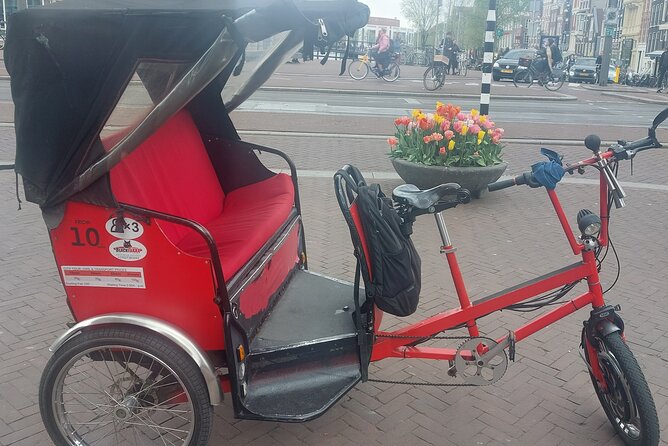
The biggest win here is that you can start with pickup offered. If you’re staying in a hotel in the center, the least confusing approach is to tell the operator the hotel name and where you want to be collected. That matters in Amsterdam, where streets can be packed, one-way, or simply hard to find on a tight schedule.
If you’re arriving by cruise, pickup is also described for common docking zones. Sea cruises often dock at the PTA area, while many river cruises dock around De Ruyterkade Oost or De Ruyterkade west. The tour can also meet you at other places if you tell them where you’ll be.
A useful detail for planning: this tour is typically booked about 59 days in advance. That’s not a “must,” but it’s a hint that good times can disappear, especially in peak season.
The two-hour route: seeing Amsterdam’s big characters efficiently
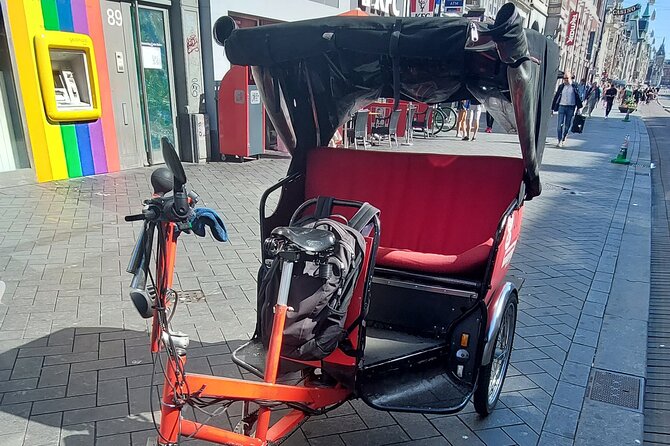
Two hours sounds short until you realize how Amsterdam rewards “glance time.” The guide isn’t just listing landmarks—they’re helping you understand what each area is for and how it evolved.
In the ride, expect a sequence that moves from the central historic core toward canals, museums and the park side, then into charming shopping and windmill territory. The stops are built around viewpoints and quick looks, with time to pause for photos and brief explanations.
Here’s what you should look out for as the rickshaw moves through the main stops.
Dam Square: street performers, pigeons, and layers of time
Dam Square is one of those places where history doesn’t sit quietly. The square was created when a dam was built around the river Amstel to help prevent flooding connected to the Zuiderzee. Later, in the 1960s, the area became known for its hippie era. Today it’s one of the biggest tourist magnets in the city.
On your ride, this is the moment where the guide can help you read the square beyond the obvious photos. Watch for the everyday energy: in spring you may spot carnival-style activity, and in warmer months you’ll often see mimers and street performers. And yes—pigeons. Lots of them.
Practical tip: Dam Square is busy, so use the rickshaw moment to get your bearings, then decide later if you want a deeper stop.
The Red Light District: understanding the vibe before you judge it
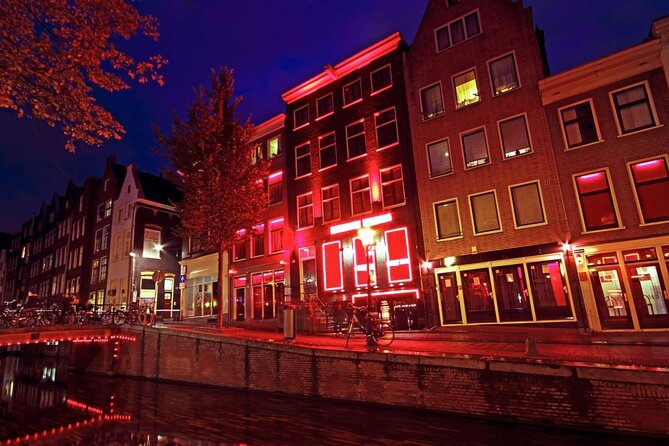
Next comes the Amsterdam Red Light District. It has the reputation you’ve heard, including the mix of brothels, sex shops, and museums.
What you can appreciate from the rickshaw perspective is scale and atmosphere. You don’t need to wander around to get a sense of the neighborhood’s pace and the way it functions as a real part of the city. The tone can feel friendlier and less chaotic than the stereotypes, and the guide can explain what’s changed over time.
If you’re unsure what to expect, this is exactly the kind of stop that benefits from having someone local guiding your first impression.
You can also read our reviews of more tours and experiences in Amsterdam



Nieuwmarkt: a calmer old-city square with market energy
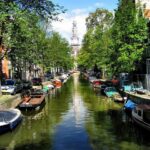
Nieuwmarkt sits in the old city center just east of the Red Light District. This square became a commerce and social hub as far back as the 17th century, originally shaped by filling in surrounding canals. That canal-to-square origin is a key detail: you’re looking at a place that was literally created by changing the city’s water map.
Today it holds a daily market, and on Saturdays there’s an organic food market. But the bigger draw for many people is simpler: the surrounding cafés and places to sit outside. There’s also a Nieuwmarkt metro stop right on the square, and the construction history included protests—though today it’s one of the most central and heavily used metro stops.
A rickshaw ride is useful here because Nieuwmarkt can pull you in visually, while still giving you the chance to keep moving without getting stuck in a long walk.
Rembrandtplein: nightlife history turned into modern terraces
Rembrandtplein is a major square tied to nightlife and clubbing. Long ago it was a butter and dairy market. Now, the rhythm is more modern: you’re more likely to be enjoying a latte on a terrace than buying dairy from a farm stall.
On the ride, I’d treat this stop as a “where the party lives” marker. It helps you understand how Amsterdam’s central areas overlap entertainment with daily life.
If your travel style is calmer, you’ll still enjoy it as a place to see how the city turns a practical space into a social one.
The Skinny Bridge (Mager Sisters bridge): a small structure with a big story
Now you’ll cross or pass by a famous wooden bridge across the Amstel: the double-swipe bridge design. It’s described as being opposite the Carré theatre.
There are two versions of how it got its name. Tradition says the bridge was tied to the sisters Mager, said to live on opposite sides of the river, with a story that they needed a bridge to visit each other. Another explanation points to language: mager means skinny in Dutch, and the bridge’s narrowness made it hard for two pedestrians to pass.
Either way, this is a great stop for a photo. Bridges in Amsterdam aren’t just crossings—they’re viewpoints, and they help you “feel” the geography of the canals.
Museumplein, Anne Frank House, and why the outside view matters
If you’re short on time, it’s tempting to cram museum tickets and tours. But the smartest move is often to get the outside context first, then choose what deserves a second visit.
Museumplein: the museum cluster and the Concertgebouw area
Museumplein is a public square in the Museumkwartier neighborhood in Amsterdam-Zuid. It’s where you find three major museums: the Rijksmuseum, the Van Gogh Museum, and the Stedelijk Museum. The Concertgebouw is also nearby.
You might not spend museum-time in this ride, but you’ll still benefit because you’ll see the space where people gather before they split into different ticket lines later. A rickshaw pass can help you understand distances and directions, which makes planning your next hours much easier.
Anne Frank House area: seeing the canal-side setting
The Anne Frank House is located on the Prinsengracht canal, close to the Westerkerk. This is one of those places where the surroundings matter—the narrow canal setting and the neighborhood context add weight to what the house represents.
Even without going inside, the rickshaw gives you a respectful, controlled way to be nearby and orient yourself. If you decide to visit the museum separately later, you’ll already know where it sits and how to approach it.
Vondelpark air, De Gooyer windmill, and De Negen Straatjes charm
Amsterdam isn’t only canals and squares. This part of the ride gives you a change in mood—more open, more local-feeling, and often quieter visually.
Vondelpark: the city’s go-to outdoor reset
Vondelpark is Amsterdam’s largest city park and the most famous park in the Netherlands. It’s where locals and visitors spread out on sunny days for dog walking, jogging, roller-skating, music, reading, or just lounging in the grass.
The ride helps you understand why people treat this park like a second living room. You might also notice the open-air theatre, the bandstand in summer, and other landmark features like the statue of Vondel and the cast iron music dome.
This stop is a reminder: Amsterdam doesn’t only run on canals. When you’re planning the rest of your trip, you’ll know where to go when you need a break.
De Gooyer Windmill: an 18th-century landmark with a modern twist
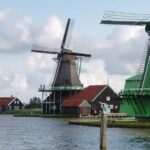
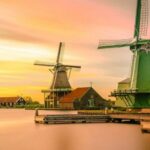
De Gooyer Windmill is an 18th-century grain mill, and it’s described as the sole survivor of five windmills that once stood in the area. The windmill was moved to its current spot in 1814, fully renovated in 1925, and is now a private home.
Alongside the windmill, public baths were converted into Brouwerij ’t IJ in 1985. That brewery connection is a neat example of how Amsterdam keeps using old structures in new ways.
Even if your stop is short, this is a memorable visual pause—windmills aren’t a background detail here. They’re part of how you understand what the city used to be.
De 9 Straatjes (The Nine Streets): one-of-a-kind browsing between canals
The Nine Streets area sits between Singel, Herengracht, Keizersgracht, and Prinsengracht. It’s known for intimate shopping streets filled with one-of-a-kind boutiques, stylish cafés, and galleries.
This is a good final-feeling stop because it shifts the city from landmarks to texture. You can almost imagine spending a whole afternoon wandering here, but in two hours you’ll still leave with a strong sense of where the charm lives.
And if you want a plan for later: jot down what catches your eye on this pass, then come back when you have time to slow down.
What it feels like on the rickshaw: comfort, speed, and photo-friendly stops
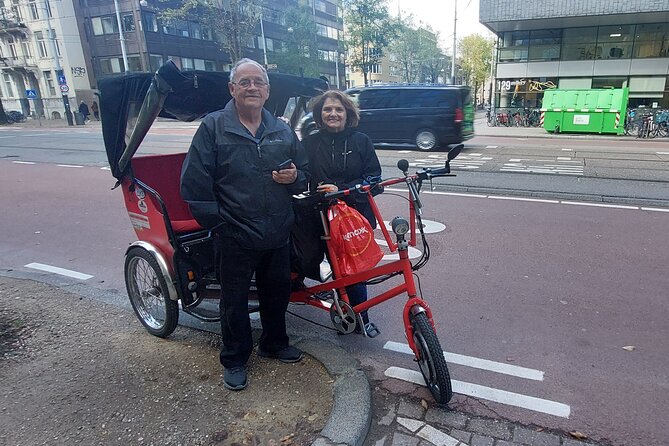
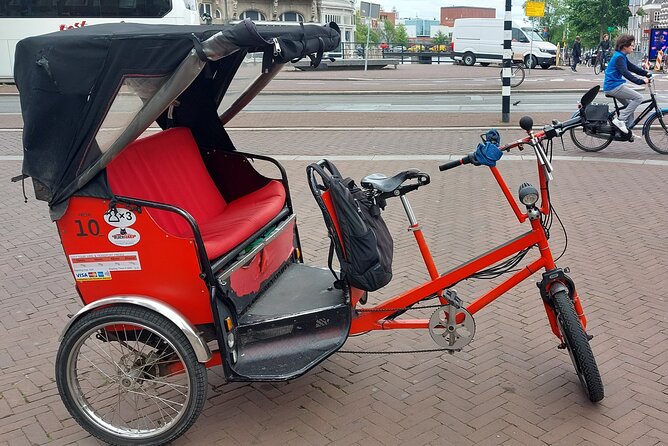
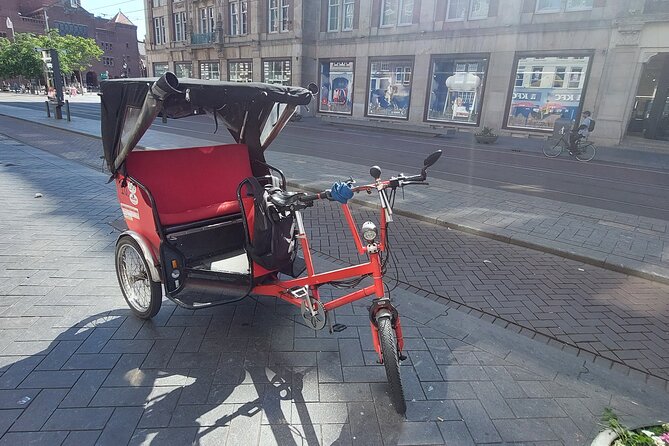
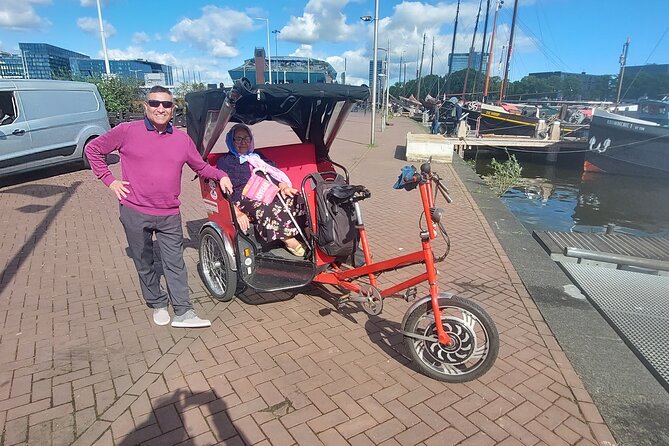
The ride is designed to be comfortable. Multiple points in past experiences highlight that the rickshaw stays clean, with protection from rain and wind. That makes a real difference in Amsterdam weather, which can change quickly even when the sky looks fine.
You should also plan for some cool moments. One practical detail that came up: a blanket may be provided, since chilly mornings are common.
Another smart feature is how the guide handles stops. You’re not just driving past everything. The guide can stop often for photos and explanation, including stepping off the rickshaw to talk so you can hear properly without the motion messing up the conversation.
And you won’t be pedaling. So you can enjoy the ride without turning it into a workout.
Price and value for a private 2-hour overview
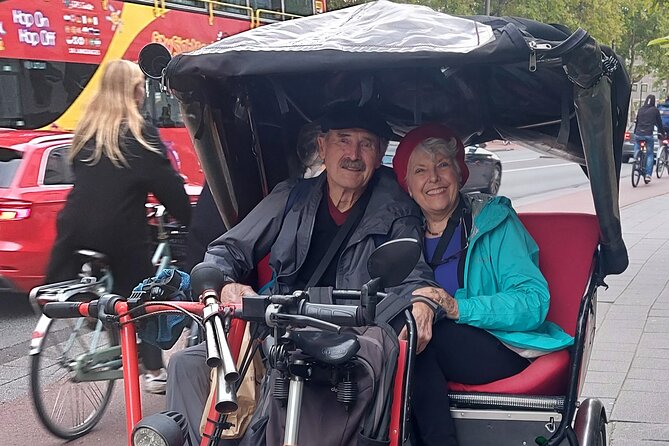
The price is $234.30 per group (up to 2) for about 2 hours. For two people, that comes out to roughly $117 per person. The value question is whether you’d otherwise pay for (1) guided time, (2) comfortable transport, and (3) someone to help you make smart choices fast.
Here’s why it can feel like good value:
- It’s private, so you don’t lose time waiting or matching schedules with strangers.
- Pickup is offered, including hotel pickup in central Amsterdam and common cruise docks.
- It includes WiFi on board and you get a tour focused on practical seeing rather than ticket queues.
- The route covers major sights across several parts of the city, which helps you plan where to spend your remaining hours.
Is it expensive? It’s not a bargain. But for couples or one-person groups who want a confident start—and need comfort and convenience—the cost is easier to justify.
Who should book this rickshaw tour (and who might not)
This tour fits best if you:
- Want an easy orientation to Amsterdam’s highlights in a short time
- Prefer not to spend your energy walking between distant sights
- Like the idea of a guide helping you make sense of what you’re seeing, while you enjoy the ride
- Are visiting with limited mobility or simply want less physical effort
It may not be the best match if you:
- Want long, in-depth time at museums or a strict walking-the-whole-city style day
- Plan to spend most of your time hopping between cafés and browsing slowly (this ride is built for movement and quick viewing)
Should you book this 2-hour Amsterdam Rickshaw Tour?
Yes—if you want a fast, comfortable, private way to see the main landmarks and neighborhoods that shape first impressions. The combination of pickup convenience, weather-protected comfort, and frequent photo-friendly stops makes it a strong choice for busy schedules.
Book it early if you can, since dates are commonly reserved well ahead. Then layer up, bring a camera, and use the ride to decide what you’ll return for after you’ve figured out the city’s rhythm.
FAQ
FAQ
How long is the private Amsterdam rickshaw tour?
It lasts about 2 hours.
How much does the tour cost?
The price is $234.30 per group (up to 2).
Is this a private tour or shared?
It’s a private tour/activity. Only your group participates.
Is pickup available?
Yes. Traveler pickup is offered, including pickup from hotels in and around central Amsterdam, and described cruise docking areas.
What language is the tour offered in?
The tour is offered in English.
Does the rickshaw have WiFi?
Yes, WiFi on board is included.
What’s the maximum group size and weight limit?
Maximum group size per rickshaw is up to 2 adults (or 2 adults and 2 small children up to 9 years old). Total weight must not exceed 500 pounds / 230 kilograms.
Are children allowed?
Children must be accompanied by an adult.
Is there a weather requirement?
Yes. The experience requires good weather. If it’s canceled due to poor weather, you’ll be offered a different date or a full refund.
What is the cancellation policy?
Free cancellation is available up to 24 hours in advance for a full refund.