REVIEW · AMSTERDAM
A 3-Hour Private Guided Tour Through Amsterdam with a Local
Book on Viator →Bookable on Viator
One good walk can reset your whole trip. This private 3-hour tour with Jan is built for getting your bearings fast, with hotel pickup and a tight route that mixes big Amsterdam icons with quieter corners. I like the way the stories stay human, not museum-fied, and I also like how you can tailor pacing when you have limits. One thing to consider: it’s still a walking tour, so plan on comfortable shoes and a steady pace even with the stops.
You’ll hit the city’s headline sites—Dam Square to the Royal Palace, De Wallen (safely guided), the floating flower market, and the 9 little streets—for a first-time lay of the land. I especially like the focus on what the city feels like day to day: commerce, politics, neighborhoods, and daily rituals, all threaded through local details. The trade-off is that this is efficient sightseeing, so if you want long stays in just one place, you may want to add museum or lunch time at an extra cost.
In This Review
- Key things to know before you meet Jan
- Why a 3-hour private walk is a smart first move in Amsterdam
- Price and value: what you’re really paying for
- The route’s pacing: what 12 stops in 3 hours feels like
- Dam Square and the Royal Palace: politics, power, and public life
- De Bijenkorf and Beurs van Berlage: how Amsterdam moved money and taste
- De Bijenkorf shopping hall
- Beurs van Berlage: where the stock market idea took hold
- De Wallen and Nieuwmarkt: Amsterdam’s edges and old-city heart
- Red Light District (De Wallen): context plus safety
- Nieuwmarkt and the Waag
- Rembrandt House, Staalmeestersbrug, and the floating flower market
- Museum Het Rembrandthuis: the Rembrandt home base
- Staalmeestersbrug: one of the best “frame the city” bridges
- Bloemenmarkt: the floating flower market
- Begijnhof and a pause from the crowd
- The mayor’s residence: how city governance shows up on the street
- Anne Frank House: what you’ll see without entry tickets
- Negen Straatjes: designer side streets and small-shop browsing
- What makes Jan’s guiding style different (beyond the checklist)
- Practical tips to get the most from your 3 hours
- Should you book this private Amsterdam highlights tour?
- FAQ
- FAQ
- How much does the Amsterdam private guided tour cost?
- Is pickup included, and can the tour start and end at my hotel?
- What language is the tour offered in?
- Does the tour include entry to the Anne Frank House?
- Are tickets for the other stops included?
- What if I need to cancel?
Key things to know before you meet Jan
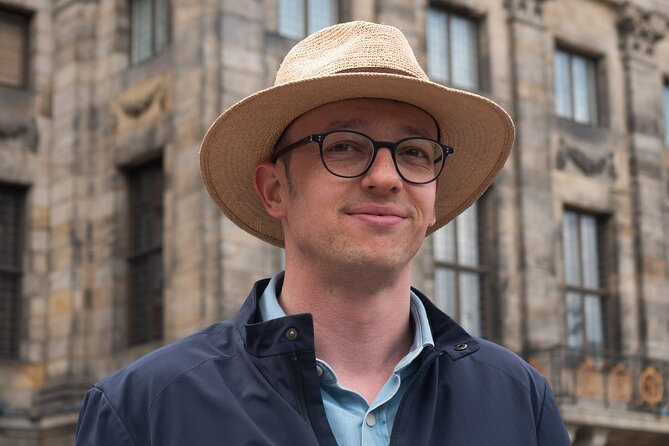
- Private group up to 4 means more room for questions and a route that can shift to your pace
- Hotel pickup and a tour that starts and ends at your place makes meeting easy and cuts down dead time
- 12 stops in about 3 hours (often ~15 minutes each) gives you coverage without feeling like you rushed through everything
- Anne Frank House is exterior-only on this tour, with entry requiring separate, advanced tickets
- De Wallen guidance is safety-focused, with context on how the area changes over time
- Optional add-ons like lunch or a museum stop are possible for extra cost
Why a 3-hour private walk is a smart first move in Amsterdam
Amsterdam can feel like you’re constantly decoding something: bikes zipping by, canals cutting the city into pieces, neighborhoods with their own personality. A short private walk helps you build a mental map quickly, and it also helps you avoid spending your first hours just figuring out where things are.
What I like here is the “workable” format. You’re not stuck in a rigid checklist with zero flexibility. Jan is known for being kind, on time, and willing to adjust the route as interests and stamina change. People have asked for detours for snacks and specific kinds of shops, and the tour can breathe a little around what you care about most.
There’s also value in the private setup. With just your group, you’re less likely to fight for space in the middle of the flow. And when you’re in places like Dam Square or the Red Light District, it’s nice to have a guide who knows how to keep things calm and moving.
You can also read our reviews of more guided tours in Amsterdam
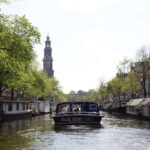


Price and value: what you’re really paying for
This tour costs $240.30 per group (up to 4 people) for about 3 hours. That means it can work out very reasonably per person if you have a full group:
- 4 people: about $60 each
- 2 people: about $120 each
You’re paying for two things: a private local guide and a pre-planned route that hits major areas without wasting time. If you’re traveling as a pair, it’s pricier than a group tour, but you’re also buying time saved (hotel pickup and a smooth path through central Amsterdam) plus the ability to slow down, add a cafe break, or swap priorities.
The route’s pacing: what 12 stops in 3 hours feels like
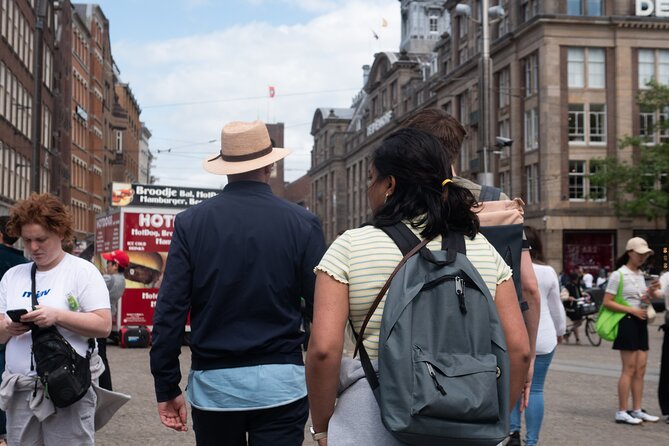
This tour is designed around lots of brief “landmark-to-landmark” viewing, with stops typically set at about 15 minutes each. That sounds short, but it works because the guide uses those windows for stories, context, and quick photo-worthy moments—then you move on.
Most people find the pace manageable, but it depends on your mobility and comfort with walking. One of the best practical tips from past tour experiences is simple: tell Jan what your limits are ahead of time. He’s been able to modify routes during the walk for people who can’t go long distances, and he’s also mixed walking with sitting breaks when needed.
If you want extra time somewhere—like a museum or a longer lunch—this tour can add it, but that comes with additional cost. The core tour itself stays tight on purpose.
Dam Square and the Royal Palace: politics, power, and public life
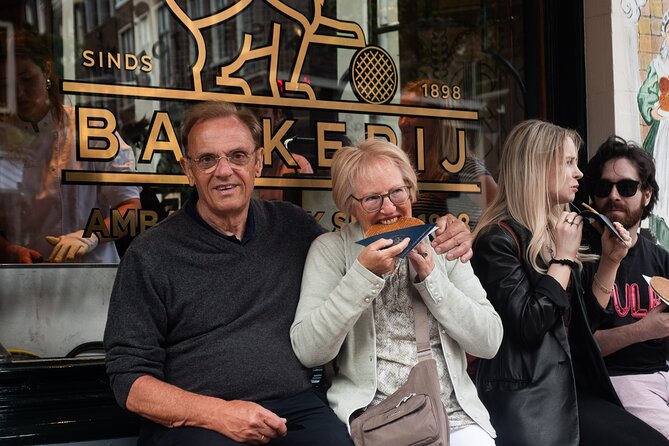
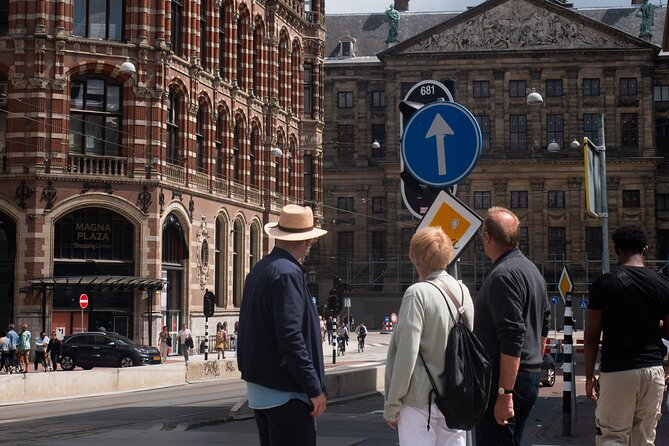
You start at Dam Square, where two Amsterdam anchors face each other. This is the kind of place that instantly tells you what the city values: national memory and civic identity.
In practice, you’ll spend time at:
- the war memorial on Dam Square
- the Royal Palace, right across the square
What I like about this start is that it sets the tone. Amsterdam isn’t just canals and boats—it’s also governance, public gatherings, and the way history lives in everyday space. Dam Square also serves as a stage for modern demonstrations and protests, which is part of what makes it feel alive rather than just ceremonial.
De Bijenkorf and Beurs van Berlage: how Amsterdam moved money and taste
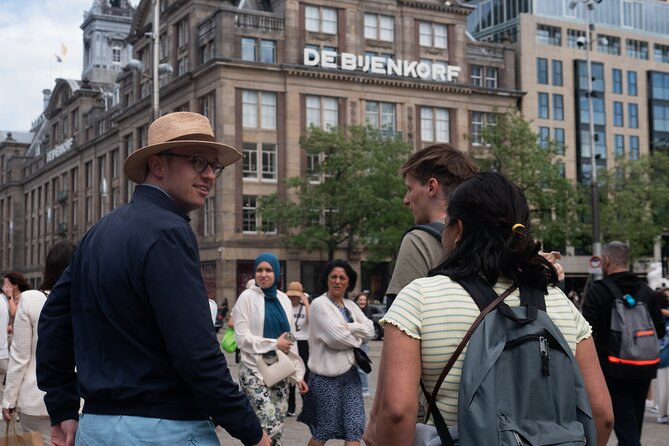
From Dam Square, the route shifts into “modern life meets old systems.”
You can also read our reviews of more private tours in Amsterdam




De Bijenkorf shopping hall
At De Bijenkorf, you’ll see a luxury department store that locals treat as an everyday landmark. Past tours have included little personal touches here—like the way the guide remembers visiting with family for tea and apple pie. It’s a reminder that these big institutional buildings aren’t only for tourists; they’re part of real routines.
If you like design or shopping, this stop gives you a quick look at how Amsterdam blends upscale retail with the city’s practical layout.
Beurs van Berlage: where the stock market idea took hold
Then you move to Beurs van Berlage, described as the first and oldest stock exchange in the world. This building is tied to the East Indies Company and the early concept of selling shares—an origin story that explains why Amsterdam became a financial hub.
Even if you don’t care about markets, I think this stop is worth it because the building itself signals “Amsterdam means business, not just travel photos.” It’s also a useful contrast after the shopping stop: taste and commerce in the same afternoon.
De Wallen and Nieuwmarkt: Amsterdam’s edges and old-city heart
This is where the tour leans into the city’s complexity.
Red Light District (De Wallen): context plus safety
At De Wallen (De Wallen), the guide doesn’t treat it like a spectacle. The point is to explain how the area’s character has changed over the decades and to walk through it safely with your group.
I’d treat this stop as a “know what you’re seeing” moment. If you’re uncomfortable with the subject matter, you can still use the time to learn about the neighborhood’s evolution and how Amsterdam handles controversial spaces—because that’s part of the city’s reality.
Nieuwmarkt and the Waag
Next is Nieuwmarkt, tied to the medieval heart of Amsterdam. Here you’re looking at a central area that used to be the entrance to the city, complete with a drawbridge. You’ll also see the Waag, a 15th-century building that now connects the past to the present.
This stop gives you a different pace: less polished, more grounded in how old Amsterdam shaped movement and boundaries.
Rembrandt House, Staalmeestersbrug, and the floating flower market
Now the route turns more visual—canals, bridges, and the kind of scenes you’ll want for your camera roll.
Museum Het Rembrandthuis: the Rembrandt home base
At Museum Het Rembrandthuis (Rembrandt’s house), you’re seeing a beautiful home tied to the artist’s life. This isn’t the massive, you-need-all-day museum style; it’s the lived-in scale that makes it feel more personal.
If you’ve already booked the big Amsterdam museum circuit (or couldn’t get tickets), this stop is a smart alternative that still connects you to a major figure.
Staalmeestersbrug: one of the best “frame the city” bridges
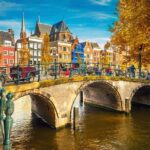
Then comes Staalmeestersbrug, a bridge known for an iconic view: canal and buildings framed together. One nice thing about this stop is that it explains why people swarm for a photo.
The guide’s approach here is practical: stand where the view works, take your photo, and then move on. That way you don’t get stuck waiting for the perfect shot while the group behind you grows impatient.
Bloemenmarkt: the floating flower market
At Bloemenmarkt, you’ll see the flower market on the water—something that feels normal to locals, but is genuinely special once you’re standing there.
I like this stop for a simple reason: it’s Amsterdam’s charm without needing any special entry ticket. It’s also a great place to spot the city’s canal “logic” in real time.
Begijnhof and a pause from the crowd
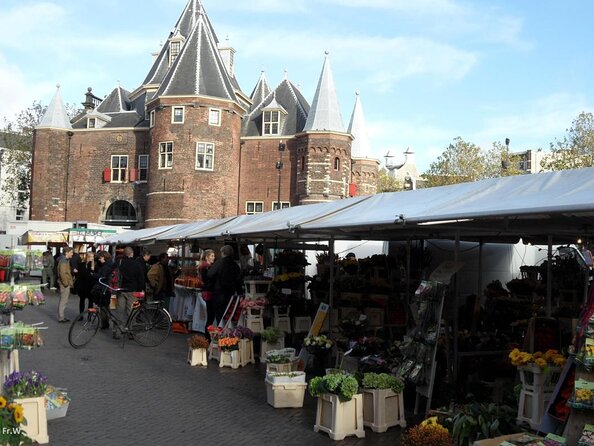
If you want one pocket of calm in central Amsterdam, Begijnhof does the job. It’s tucked right in the middle of busy city movement, which makes it feel like a secret even if you know it’s there.
This stop works well mid-tour because it gives your feet a break, even if you keep walking. It’s quiet, it’s reflective, and it’s a good reset before you head into the civic and modern layers later.
The mayor’s residence: how city governance shows up on the street
Next is Huis met de Kolommen—the mayor’s residence. The name itself is a cue to look closely at the architecture, and you’ll also learn who lives there now: Femke Halsema.
I didn’t expect to care about a mayor’s residence, but this stop matters because it shows that Amsterdam’s official life isn’t hidden behind bureaucracy. It’s part of the streetscape.
Anne Frank House: what you’ll see without entry tickets
Important: this stop does not include entry into the Anne Frank House. You’ll see the house from the outside only.
For planning, this is exactly how you should use your time in Amsterdam. If you haven’t already locked in Anne Frank House tickets (which often need advance booking), the exterior view gives context without the risk of missing out entirely. And it keeps your 3-hour window on track.
Negen Straatjes: designer side streets and small-shop browsing
The tour ends with 9 Little Streets (Negen Straatjes), Amsterdam’s area for specialty artisan shopping. This is where you’ll find shops that feel more personal than big-brand retail.
If you like browsing even when you don’t buy, this is a good closer. It’s also a practical “transition zone” so you can carry the tour energy into your evening plans—grab a snack, pick up a souvenir that’s actually from Amsterdam, or simply keep exploring while you still remember what you saw.
What makes Jan’s guiding style different (beyond the checklist)
A route like this can be generic, but the best part is how Jan brings it to life.
Here are the kinds of guiding strengths that show up again and again:
- Flexibility with your interests: if you want more food stops, shopping, or a museum adjustment, the guide works with it
- Good pacing choices: people with limited mobility have been able to modify the route and still see meaningful highlights
- Smart detours: past tours included snack stops and small shops, and the guide can suggest where to pause for coffee or a sweet treat
- Storytelling that connects places: the tour doesn’t treat each stop like a separate postcard—it links themes like commerce, civic life, and community changes over time
In particular, you may hear about famous local treats during the walk. One repeated favorite is stroopwaffel, including a bakery recommendation tied to long-standing making of the waffle.
Also, there’s a “keep it moving, but don’t rush it” vibe. People describe the pace as just right for absorbing a lot without feeling dragged.
Practical tips to get the most from your 3 hours
Here’s how I’d set yourself up for success.
- Wear comfortable walking shoes. Even with multiple short stops, you’re moving through central Amsterdam.
- Tell Jan your pace needs early. If you can’t walk for miles, say so. The tour can adjust.
- Plan for outside viewing at Anne Frank House. If that specific entry is a must, book those tickets separately well in advance.
- Use the optional time. If lunch or a museum matters, it’s best to add that while you’re with a guide who can shape the route around it.
- Be ready for stops that are short by design. You’ll get highlights and context, not full deep dives into every place.
Should you book this private Amsterdam highlights tour?
I’d book it if you want a first-pass Amsterdam orientation that’s efficient but not impersonal. The best-fit traveler is someone who:
- wants iconic sights plus local calm in a single afternoon
- values hotel pickup and a route that stays friendly to your schedule
- likes asking questions and getting context instead of just following a big group
- understands that Anne Frank House entry is not included, so you’re either okay with exterior viewing or you’ve already booked tickets
If you’re someone who needs lots of time inside museums or wants long, slow wandering with no structured stop rhythm, you might feel squeezed. In that case, use this tour as your “map builder,” then come back on your own later with more time.
FAQ
FAQ
How much does the Amsterdam private guided tour cost?
It costs $240.30 per group (up to 4 people) for about 3 hours.
Is pickup included, and can the tour start and end at my hotel?
Yes. You can get pickup from your hotel, and the tour can be customized to start and end there.
What language is the tour offered in?
The tour is offered in English.
Does the tour include entry to the Anne Frank House?
No. This tour stop includes viewing from the outside only. Entry tickets are not included and need to be booked in advance.
Are tickets for the other stops included?
Admission tickets are listed as free for the other stops. The Anne Frank House stop is not included.
What if I need to cancel?
You can cancel for a full refund up to 24 hours before the experience starts. If you cancel less than 24 hours before, the amount paid is not refunded.