REVIEW · AMSTERDAM
Amsterdam Countryside and Villages Bike Tour
Book on Viator →Operated by Yellow Bike Tours & Rental · Bookable on Viator
That first ride out of central Amsterdam is a mood shift. This small-group bike tour pairs classic sights with quiet Waterland villages, plus a ferry crossing over the IJ. I especially like how it uses the morning to cover real ground fast, and how the guide work makes Dutch culture feel practical, not museum-still.
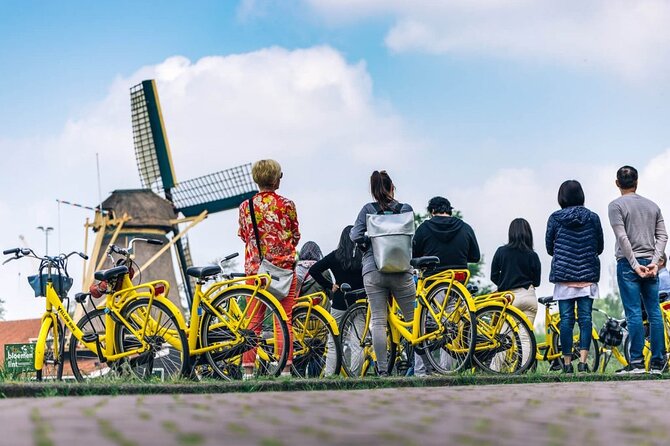
I also like that the pace is designed for getting out of town without turning it into a grind. You’ll stop often enough to reset, take photos like the windmill moment, and get a planned break for lunch around the village. One consideration: it does ask for moderate fitness, and if the weather is windy or rainy, you’ll still be riding.
In This Review
- Key highlights at a glance
- Entering Amsterdam’s Old Core at Nieuwezijds Kolk
- Amsterdam Centraal Station: Neo-Gothic Detail You’ll Actually Notice
- Northbound by Buiksoterweg Ferry: A Real Change of Pace
- The Noord-Hollandskanaal Road and the Windmill Moment
- Polders and Reclaimed Marshland at Buikslotermeerdijk
- Waterland: Villages, Cows, and the Water Story
- Ransdorp and the Village Break for Lunch
- Durgerdam: Fisherman-Village Views Over the Dike
- Bikes, Pace, and Fitness: What Moderate Actually Means
- Price and Value: Why This Costs About $54
- Weather, Timing, and Why Morning Works
- A Quick Word on the Guides
- Should You Book This Amsterdam Countryside Bike Tour?
- FAQ
- How long is the Amsterdam Countryside and Villages Bike Tour?
- What time does the tour start?
- Where do I meet the tour?
- Does the tour end in a different place?
- How much does it cost?
- What language is the tour offered in?
- Is bicycle use included?
- Is lunch included?
- Is there a limit on group size?
- What kind of fitness level do I need?
- What if the weather is bad?
Key highlights at a glance
- Small-group feel with a maximum of 13, so your questions don’t get lost
- Ferry ride over the IJ, a simple thrill that also changes the scenery fast
- Water-management education in polder country, explained in plain terms
- Historic village stops like Ransdorp and Durgerdam, with time to wander
- Photo-friendly Dutch landmarks, including a classic windmill stop
Entering Amsterdam’s Old Core at Nieuwezijds Kolk
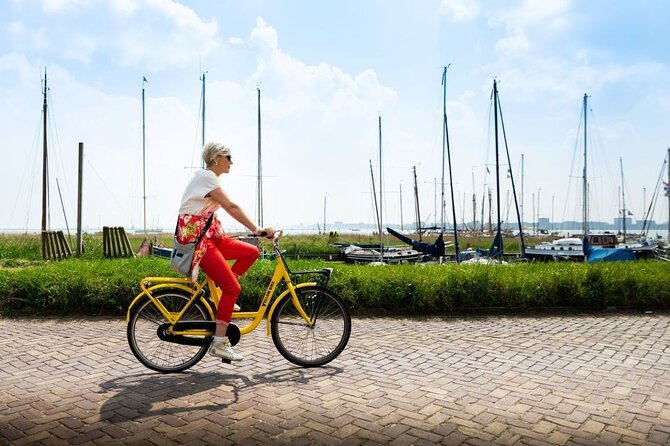
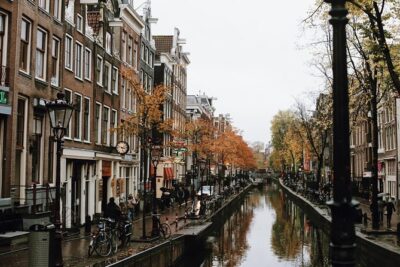
You start at Nieuwezijds Kolk 29 (1012 PV), and that location matters. It’s in the oldest part of Amsterdam, so the tour begins with the feeling that you’re not just commuting through a modern city—you’re moving through layers of it.
From the start, you’ll get a quick orientation to the geography of the center. Nieuwezijds Kolk is the kind of place where the streets feel more like tight threads than wide avenues, so your bike ride quickly turns into a practical way to understand the city layout.
If you want the rest of the trip to click, this is a good first stop. You get “Amsterdam context” before you head north.
You can also read our reviews of more cycling tours in Amsterdam
Amsterdam Centraal Station: Neo-Gothic Detail You’ll Actually Notice
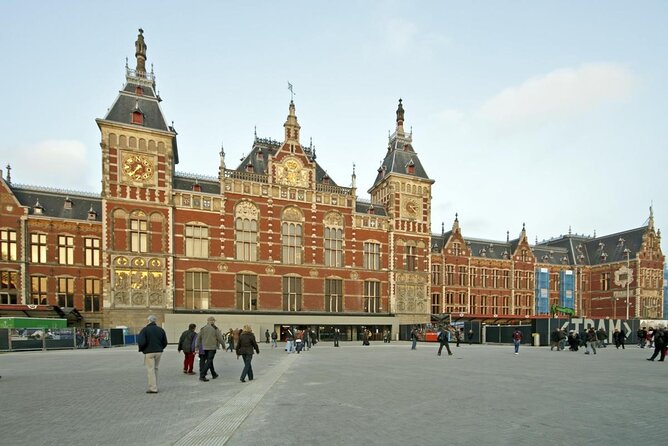
Next comes Centraal Station, built 1881–1889 by P.J.H. Cuypers in a neo-Gothic-Renaissance style. Even if you’ve walked past big stations before, this one is worth looking at closely because of the decorative sculptures and the overall architecture.
Why this stop works on a bike tour: you’re not spending 45 minutes staring at stonework. You’re catching the main features while the group stays moving, so you get the wow-factor without losing momentum.
Also, it’s a familiar landmark that helps your brain map where you are as the route shifts north. And the best part is that you’ll learn what to look for before you ride right past the next big stretch of views.
Northbound by Buiksoterweg Ferry: A Real Change of Pace
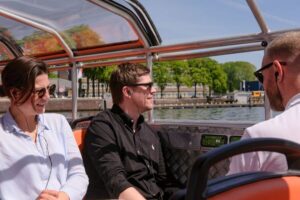
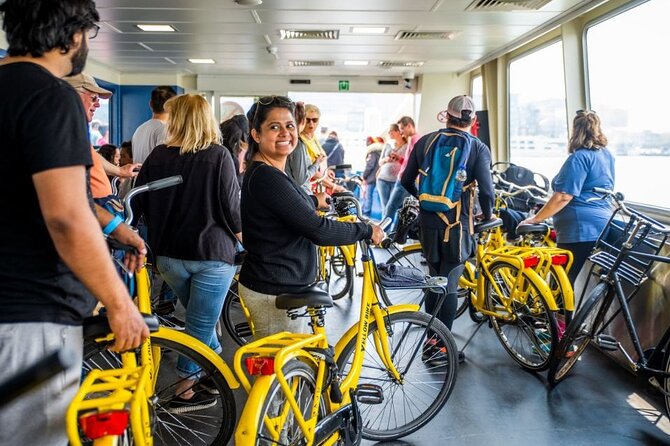
Then you cross the IJ by the Buiksoterweg ferry. This is one of those Amsterdam details that sounds simple until you’re on it. You step onto the ferry with your bike, watch the water and shoreline slide by, and suddenly the city feels less like a destination and more like a backdrop.
This crossing is valuable because it breaks up the ride. You get a natural pause, and the scenery tilt is dramatic. One moment you’re in an urban rhythm; the next you’re heading toward northern Amsterdam and the Waterland area.
If you get even slightly nervous about distance, a ferry break can help you reset your energy.
The Noord-Hollandskanaal Road and the Windmill Moment
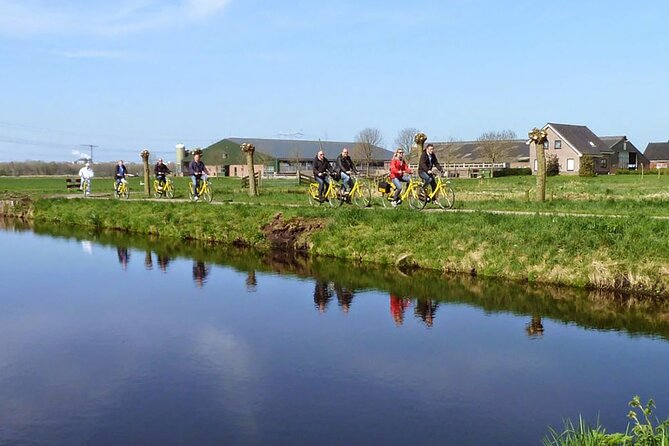
As you pedal along the road by the Noord-Hollandskanaal, you’ll feel the shift from dense city streets to roads with wider views. The canal side is made for slow looking: you can spot the shape of infrastructure and flat terrain, which is basically the Netherlands in a nutshell.
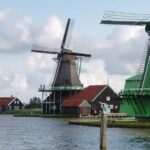
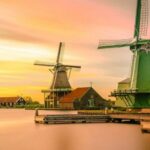
Then comes Krijtmolen d’Admiraal, a classic windmill photo stop. This is a quick “get the picture, learn the point” moment rather than a long museum visit. You’ll understand why it belongs here, not just that it looks good in a photo.
Practical note: windmills in open areas can mean extra wind. Bring a light layer and expect the weather to talk back.
Polders and Reclaimed Marshland at Buikslotermeerdijk
At Buikslotermeerdijk, you’re in reclaimed land—polder country—and that’s where the tour gets genuinely useful. You’ll learn why so many lakes in the Waterland area were pumped dry, and how the Dutch turned wet risk into livable space.
This is the kind of explanation that changes how you see the region. Instead of thinking of flat land as just flat, you start realizing it’s the result of systems, maintenance, and centuries of water management choices.
This is also where your guide’s style really matters. In past rides, guides like William/Willem and David were singled out for encouragement and solid explanations. That matters here because the topic could feel abstract if it weren’t handled in a straightforward way.



Waterland: Villages, Cows, and the Water Story
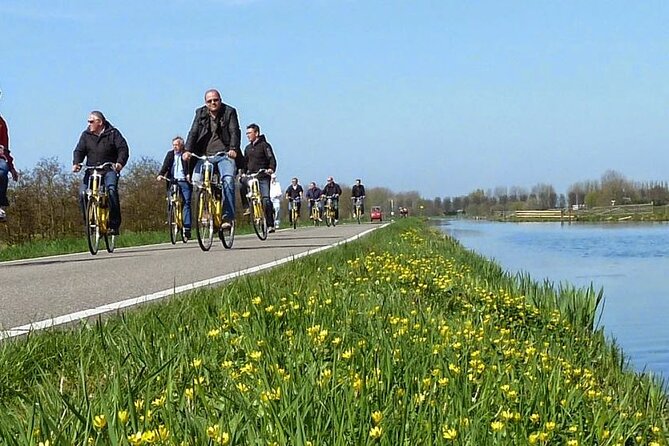
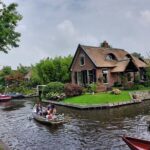
Now you’re in Waterland, where the pace slows on purpose. This is your escape from the bustle of the city center, with villages, open views, and cows in the mix.
The payoff isn’t only the scenery. It’s how the guide ties what you see to how the Dutch manage water over time. You start connecting the dots: low ground needs engineering, water management shapes settlement patterns, and those choices still show up in daily life.
If you love travel that teaches you how places work, this is one of the strongest parts of the day. You’ll feel like you’re seeing a living system, not a postcard.
Ransdorp and the Village Break for Lunch
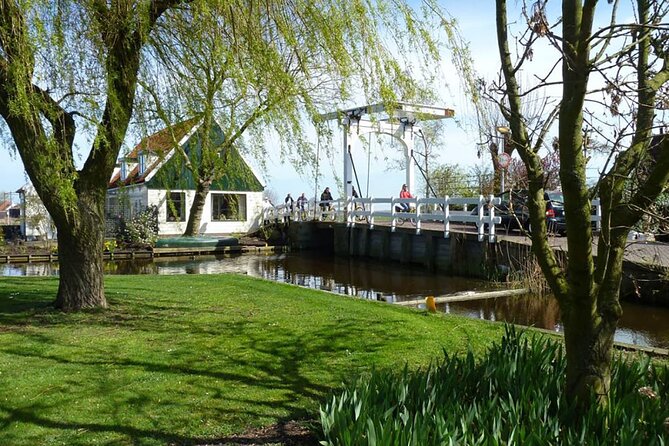
Ransdorp is the big village stop, and it includes a 45-minute break, with lunch options around 30 minutes to 40 minutes at a characteristic lunch café. That break is one of the main reasons this works as a morning tour: you get your food and your rest without eating into an afternoon you could be spending elsewhere.
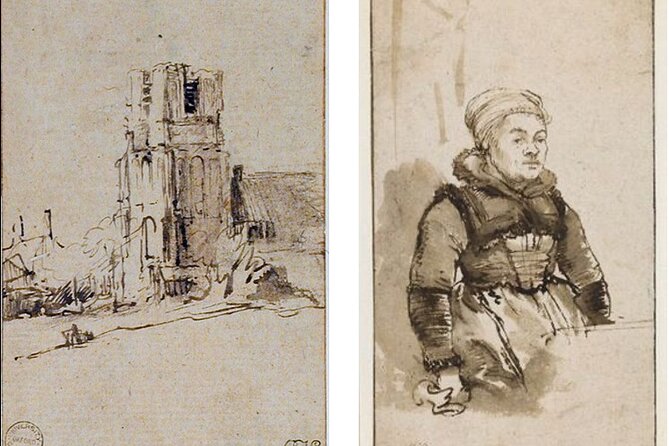
The village itself is historic, and you’ll also see a special church tower that was painted by Rembrandt. That’s one of those Netherlands cultural connections that makes a small place feel important.
A drawback to consider here: the break is built into the plan, but lunch is not included. You’re ordering on your own, so if you have dietary needs, check the café situation during the stop and don’t wait until the last minute.
Durgerdam: Fisherman-Village Views Over the Dike
Next up is Durgerdam, described as an old fisherman’s village. This stop is all about viewpoint. You’ll ride along the water’s edge over the dike, and the scenery is the point—long lines of water, a quieter rhythm, and a sense of the old shoreline life.
This is also where the tour feels like it has breathing room. You’re not just hopping from landmark to landmark. You’re getting little stretches where you can look, take photos, and feel the route.
The Durgerdam section is a good match for people who want “countryside” but don’t want a full day of physical suffering. If the ride feels long, this helps it feel like a day trip with chapters.
Bikes, Pace, and Fitness: What Moderate Actually Means
The tour is about 3 hours 30 minutes total, and it’s a small group capped at 13 travelers. You’ll have use of a bicycle, and in at least one recent ride someone noted using e-bikes, which can make a big difference on longer stretches or in strong wind.
Even with easier bike options, plan on steady riding. One review described the distance as around 25 km, which gives you a realistic sense of scale. If you don’t ride much, this could feel like a workout. If you do ride occasionally, it should feel like a fun effort with regular pauses.
Who this suits best:
- Couples and solo travelers who want a guided route without crowding
- People who like culture explanations while still moving outside the city
- Families with kids who can handle longer bike time (and can benefit from an assist if available)
One more practical thought: the route is better in the morning, but wind matters. If it’s gusty, you’ll feel it more on open stretches.
Price and Value: Why This Costs About $54
At $54.01 per person, this tour is not trying to be the cheapest bike option in Amsterdam. It is, however, a good value when you factor in three things you’re getting:
- A guide for the full morning, not just a quick route transfer
- Time savings versus piecing together canal-bike + ferry + village stops on your own
- Planned stops where admission is listed as free at key points
The “rest of the day free” angle is also part of the value. You’re not burning your whole vacation day to see the countryside. You finish back where you started, so you can pivot immediately to museums, canals, or just wandering.
If you’re only choosing one countryside activity in Amsterdam, this is the kind of option that gives you variety: city architecture, a ferry crossing, windmill scenery, polder context, and village wandering.
Weather, Timing, and Why Morning Works
This tour starts at 10:00 am and is described as weather-dependent. Amsterdam can be fine one hour and wet the next, and the ride is outdoors for a lot of the experience.
Here’s the practical takeaway: wear a windproof layer, bring rain protection you can actually bike in, and don’t treat rain like a disaster. The tour is set up to keep going even if the weather changes, and that morning timing helps because you often get more stable conditions than later in the day.
Also, because it ends back at the meeting point, you’re not dealing with a complicated second leg. That’s good when your afternoon plan is flexible.
A Quick Word on the Guides
Guide quality is a major part of why this tour gets repeat love. In the feedback I’ve seen, guides such as Willem/William are noted for being encouraging and cheerful, while David gets credit for strong information and making the ride feel easy to follow.
Even if you’re not a history buff, a good guide turns the stops into meaning: why a polder is a big deal, what to look for at Centraal Station, and how the countryside route connects to Dutch water management over time.
Should You Book This Amsterdam Countryside Bike Tour?
You should book if you want a half-day way to see real north-of-the-city Amsterdam, not just parks and canals. The mix is balanced: architecture at the start, ferry fun mid-ride, then villages and water-management context as the focus.
Skip it or think twice if:
- You hate cold wind and open stretches, especially if you’re riding without any e-assist
- You need lunch included or guaranteed specific meal options
- You want a very short, low-effort activity
If your goal is countryside flavor with a plan, this is a strong choice. It’s timed so you get the experience and still keep your afternoon open for Amsterdam on your terms.
FAQ
How long is the Amsterdam Countryside and Villages Bike Tour?
It runs for about 3 hours 30 minutes.
What time does the tour start?
The start time is 10:00 am.
Where do I meet the tour?
You meet at Nieuwezijds Kolk 29, 1012 PV Amsterdam.
Does the tour end in a different place?
No. It ends back at the meeting point.
How much does it cost?
The price is $54.01 per person.
What language is the tour offered in?
It’s offered in English.
Is bicycle use included?
Yes. Bicycle use is included.
Is lunch included?
No. Lunch is not included, but there’s a stop at a lunch café for about 30–40 minutes where you can order food.
Is there a limit on group size?
Yes. The tour has a maximum of 13 travelers.
What kind of fitness level do I need?
The tour is for people with moderate physical fitness.
What if the weather is bad?
The experience requires good weather. If it’s canceled due to poor weather, you’ll be offered a different date or a full refund.