REVIEW · AMSTERDAM
Amsterdam Jewish Quarter Private Tour
Book on Viator →Operated by Amsterdam Guías & Tours · Bookable on Viator
One quiet neighborhood can hold a lot of weight. This private Amsterdam Jewish Quarter tour moves at a human pace while you get context for what happened here, from the early Jewish community to WWII deportations and resistance. I love that it’s private (so you can ask questions without feeling rushed), and I also love the mix of places with very different tones, from prayer and ideas to memorials and wartime history. One thing to consider: the subject matter turns heavy, and some stops are brief, so if you want extra time in one place, this format may feel quick.
The route is built around walking, with guided stops that stay focused and efficient. You start at Mr. Visserplein 3 and end near Amstel 1, close to the Spinoza statue, with a total duration of about 2 hours. Most of the tour is in English, and the provider notes professional guidance in ENG or SPA depending on what you book and who you get.
If you’re price-shopping, here’s the honest angle: $228.56 per group (up to 10) can be good value for families or friend groups. But part of the cost math depends on the fact that admission is not included for every stop, so you’ll want to know which tickets to budget for before you go.
In This Review
- Key Points Worth Your Time
- A Private 2-Hour Jewish Quarter Tour That Fits Your Pace
- How the Route Shapes the Story: Synagogue to Deportations
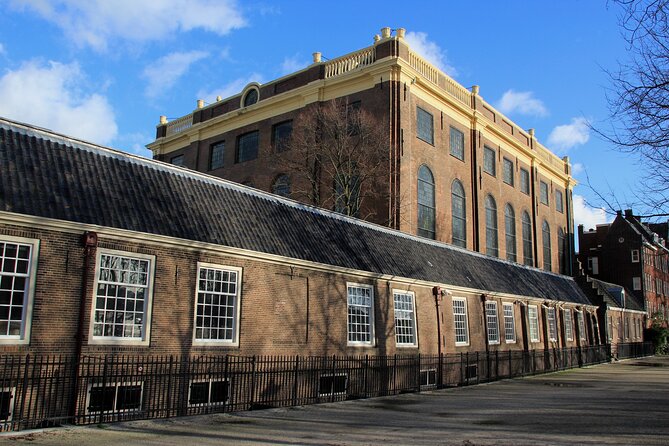
- Portuguese Synagoge: Where Amsterdam’s Jewish Community Took Root
- Auschwitz Monument and Spinoza: Memory and Ideas in One Walk
- Verzetsmuseum WWII Resistance and Hollandsche Schouwburg: Two Faces of the Same Era
- Timing, Meeting Point, and Tickets Without Stress
- Price and Value
- Who This Tour Is Best For (and Who Should Consider Another Plan)
- Should You Book the Amsterdam Jewish Quarter Private Tour?
- FAQ
- How long is the Amsterdam Jewish Quarter Private Tour?
- How large is the group, and is it private?
- What languages are available?
- Where do I meet, and what time does the tour start?
- Where does the tour end?
- Are entrance tickets included for every stop?
- Do I get a mobile ticket?
- Is the tour refundable?
- Is the tour suitable if I use public transportation or need help for access?
Key Points Worth Your Time
- Private group = real Q&A time instead of everyone staring at the guide’s shoes
- Clear WWII storyline connecting memorials, resistance, and deportation sites
- Admission mix: some sites are free, some are included, and some require separate tickets
- Two-hour walking pace with short guided stops and time to look around
- Meeting/end locations are in the same general area so you can keep exploring afterward
- Guides like Talia are noted for being personable and easy to talk to
A Private 2-Hour Jewish Quarter Tour That Fits Your Pace
This is the kind of tour that works best when you want something more than a checklist of buildings. You get a guide who can respond to your questions as you walk, which matters a lot in this neighborhood. Jewish life in Amsterdam is not just one era, and WWII isn’t just one story. With a private group, you can slow down when something sparks a question, then move on when you’re ready.
The time window is about 2 hours, which is long enough to build a timeline without turning the experience into an endurance event. Each stop is roughly 7 minutes, so think “focused orientation” rather than “full museum day.” If your group loves one specific topic, you’ll likely want to plan follow-up time on your own.
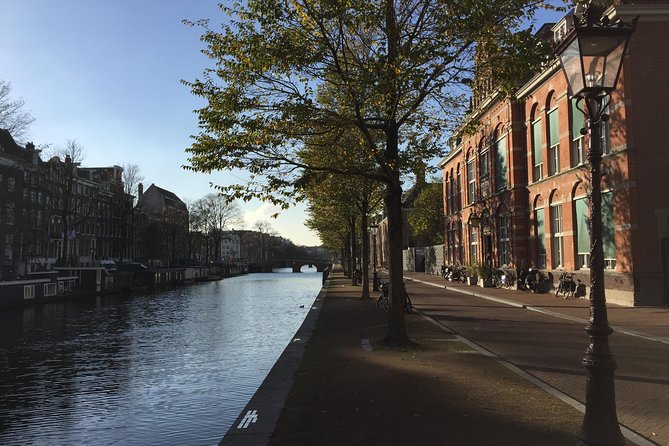
The route also ends right near the Spinoza statue, so you’re not cut off from the neighborhood when the tour wraps. That’s a small practical win. You can keep your bearings and continue wandering afterward without hauling yourself across the city.
You can also read our reviews of more private tours in Amsterdam


How the Route Shapes the Story: Synagogue to Deportations
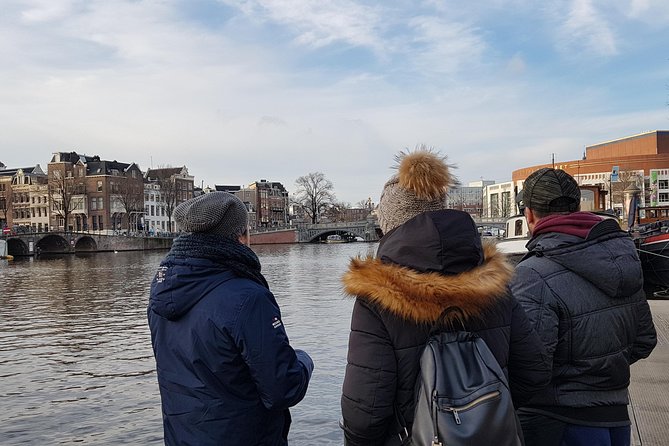
What I like about this route is that it doesn’t just name sites. It’s structured to help you understand how the Jewish community’s presence, culture, and ideas evolved, then how persecution unfolded during WWII.
The tour starts with the Portuguese Synagoge, which sets a foundation. It’s a good opening because it frames Amsterdam not only as a place people fled to, but as a place where a community took root and built institutions. From there, you move toward memorials and wartime sites that focus on deportations and resistance.
Then it shifts into a more “you are standing here” kind of learning: places tied to suffering, survival, and resistance. That change in tone is part of why the walking route feels coherent. You’re not bouncing randomly. You’re moving forward through a story.
A possible drawback is that the guided time at each stop is relatively short. If you’re the type who wants deep time for photos, reading, and personal reflection, you might want to budget extra time for your top one or two stops afterward.
Portuguese Synagoge: Where Amsterdam’s Jewish Community Took Root
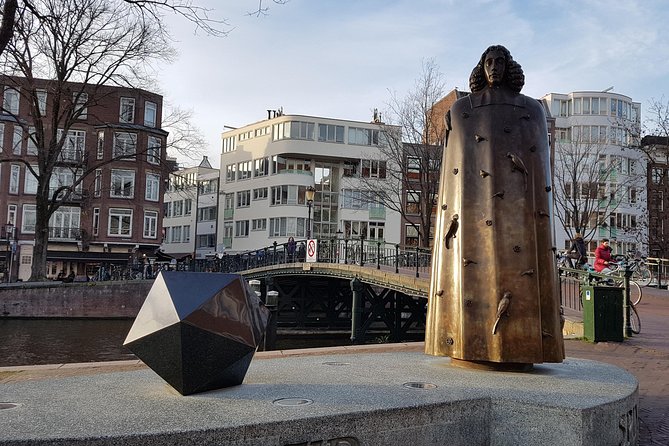
The first stop is the Portuguese Synagoge, and the guide explains the arrival of the Jewish community to Amsterdam. Even if you’ve seen synagogues elsewhere, this one carries a specific local story: it’s connected to how communities established themselves and built religious life in the city.
Plan for this as the “beginning chapter.” The time is short, around 7 minutes, so the guide’s job is to give you the key context quickly—why this community came to Amsterdam, and why the synagogue mattered as more than a building.
Important practical note: admission here is not included. So you’ll want to check whether you need to buy a ticket in advance for your preferred entry time, and then keep your schedule flexible enough to handle that. The upside of the stop being brief is that it keeps momentum, especially since the later WWII-focused sites are emotionally heavier.
Auschwitz Monument and Spinoza: Memory and Ideas in One Walk
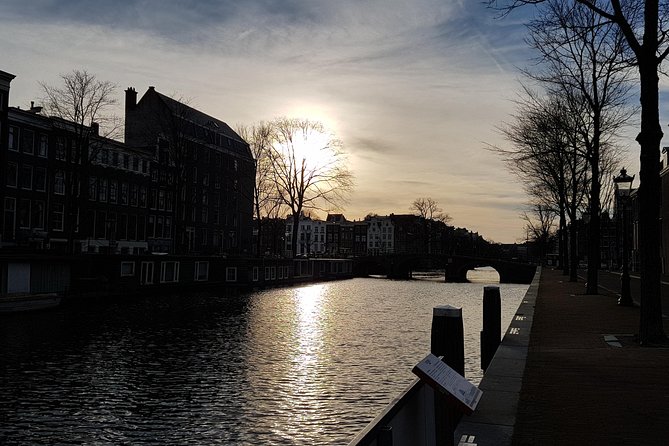
After the opening chapter, the tour heads to the Auschwitz Monument. The focus is Jewish deportation, with the site serving as a stark point of remembrance. This is one of those stops where you don’t need the guide to do all the work. You mainly need clarity, and the guide provides that by connecting the location to what it represents.
Admission is free for this stop, which is a good thing to know for budgeting. You also don’t lose time scanning ticket info on the spot.
Then you finish with the Spinoza Monument, with the guide talking about Spinoza’s life. This is a powerful pairing with the wartime stops. It reminds you that Jewish history here isn’t only about persecution and loss. It’s also about ideas—people who shaped thought and philosophy in Europe.
This ending can feel like a gentle exhale, even if the tour overall is heavy. If you want a more hopeful note to carry with you as you leave, this final context helps.
Both of these stops are relatively short (around 7 minutes each), so aim to bring an open mind rather than expecting a long lecture. If you’re the type who likes to read plaques closely, plan a little extra time on your own after the tour.
Verzetsmuseum WWII Resistance and Hollandsche Schouwburg: Two Faces of the Same Era
The tour includes Verzetsmuseum Amsterdam (Museum of WWII Resistance), focused on resistance. Admission is not included here, which means you’ll likely want to factor in the ticket cost if you plan to go in for the museum part.
Why this matters: resistance museums can sometimes feel abstract. A guided walk helps you connect what you’re seeing to the real human stakes. Resistance isn’t just a concept; it’s actions by people in extremely constrained circumstances. Even with a brief stop, a good guide can point you toward what to look for inside.
Then the tour reaches Hollandsche Schouwburg, tied to deportation camps. Here, the admission ticket is included, which is a practical advantage. You don’t have to handle the ticket purchase for this stop, and it reduces the chance of wasting time once you’re on the ground.
This part of the route is likely the most emotionally intense in the whole tour. The setting and the theme aren’t “light reading.” If your group includes kids, teens, or anyone sensitive to WWII topics, it may be worth discussing expectations in advance so everyone feels comfortable.
Another practical note: since the tour is time-limited, you may get more “orientation” than deep browsing. That’s not a bad thing—especially if you don’t want to spend a full day in museums—but it does mean you should pick one or two places you’d like to revisit more thoroughly.
After the wartime museum stops, the tour also includes time to walk around one of the most beautiful areas of the city and to visit the gardens of the museum. That combination can be surprisingly restorative after the harder content. It gives your brain a moment to reset while still staying in the historical flow of the day.






Timing, Meeting Point, and Tickets Without Stress
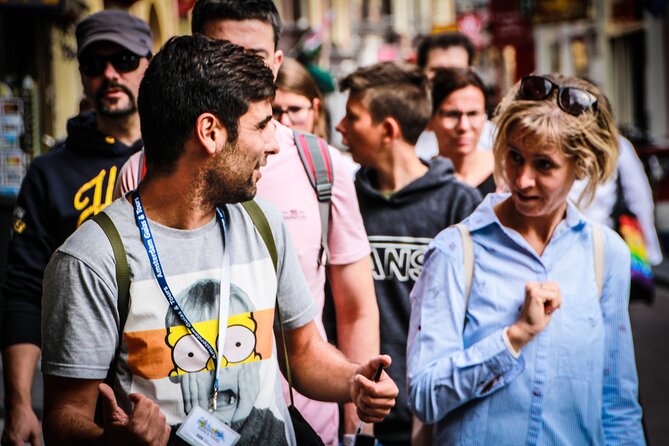
This tour starts at 3:00 pm. You meet at Mr. Visserplein 3, 1011 RD Amsterdam, and you end at Amstel 1, 1011 PN Amsterdam, near the Spinoza statue. Because the end point is close to where the tour’s final stop is centered, you’re not stuck trying to get yourself across town after two hours of walking.
You’ll get a mobile ticket, so plan to have your phone charged. Mobile entry is convenient, but it does mean you should avoid relying on screenshots with shaky Wi-Fi. If your phone battery is low, bring a portable charger or treat your meeting time as a time to conserve power.
Language note: the tour is offered in English per the booking info, and the provider states professional guides in ENG or SPA. If Spanish is your preference, confirm it when booking so you know what you’re getting ahead of time.
Price and Value
The price is $228.56 per group (up to 10) for about 2 hours. If you’re traveling with friends or family, that price can make sense because you’re essentially paying for a guide plus the structure that turns scattered sights into a story.
What affects value for you is admissions. Some key stops include tickets, some are free, and some require separate admission. The tour includes admission at Hollandsche Schouwburg, while Portuguese Synagoge and Verzetsmuseum are not included. Auschwitz Monument and Spinoza Monument are free. If you only care about the free stops, costs are lower. If you want to go inside the synagogue and resistance museum, the total trip cost rises—but you’re also getting a fuller on-site experience.
Who This Tour Is Best For (and Who Should Consider Another Plan)
I think this tour is a strong fit if you want:
- A private guide in the Jewish Quarter without the usual crowds
- A guided timeline that connects Jewish community life, WWII persecution, and resistance
- A format that’s about two hours, not a half-day or whole-day museum grind
- A route that helps you ask questions as you walk
It may be less ideal if:
- You want long, unhurried time inside major sites. With stops around 7 minutes, it’s not built for extended reading.
- Your group is easily overwhelmed by WWII themes. The deportation-related stops are essential parts of the story, so if someone in your party struggles, consider whether this is the right length and format.
If you’re on a tight itinerary, the private structure is also helpful. You don’t lose energy trying to interpret a neighborhood layout yourself. You also get the benefit of an actual professional guiding the flow rather than doing it all as a DIY map-and-museum day.
One more small comfort: the provider notes near public transportation and that most travelers can participate. So even if you’re not planning to “power walk” Amsterdam, the route is designed to be manageable.
Should You Book the Amsterdam Jewish Quarter Private Tour?
Yes, I’d book it if you want a guided, story-driven walk that focuses on the Jewish Quarter’s major landmarks without turning your day into a sprint. The private setup is the big advantage: you get time to ask questions, and the route is organized around meaning, not just locations.
Before you reserve, do two quick checks:
- Decide whether you plan to purchase admission for the stops where tickets are not included (Portuguese Synagoge and Verzetsmuseum).
- Confirm that your group is comfortable with WWII and deportation subject matter, since those stops are central to the tour.
If you like structure, thoughtful context, and the ability to adjust questions in real time, this tour is a very solid use of an afternoon.
FAQ
How long is the Amsterdam Jewish Quarter Private Tour?
It lasts about 2 hours on average.
How large is the group, and is it private?
It’s a private tour/activity, and only your group will participate. The price is listed per group up to 10 people.
What languages are available?
The tour is offered in English, and the guide is listed as professional in ENG or SPA.
Where do I meet, and what time does the tour start?
You start at Mr. Visserplein 3, 1011 RD Amsterdam. The start time is 3:00 pm.
Where does the tour end?
The tour ends at Amstel 1, 1011 PN Amsterdam, close to the Spinoza statue.
Are entrance tickets included for every stop?
No. Admission tickets are not included for the Portuguese Synagoge and Verzetsmuseum Amsterdam. The Auschwitz Monument and Spinoza Monument are free. Admission is included at Hollandsche Schouwburg.
Do I get a mobile ticket?
Yes, it includes a mobile ticket.
Is the tour refundable?
No. The experience is non-refundable and cannot be changed for any reason.
Is the tour suitable if I use public transportation or need help for access?
Service animals are allowed, it’s near public transportation, and most travelers can participate.
If you want, tell me how many people are in your group and whether you plan to enter the Portuguese Synagoge and Verzetsmuseum, and I’ll help you sanity-check the total expected cost for your specific plans.