REVIEW · AMSTERDAM
Amsterdam: Private Guided City Tour by Pedicab
Book on GetYourGuide →Operated by a Pedicab in Amsterdam · Bookable on GetYourGuide
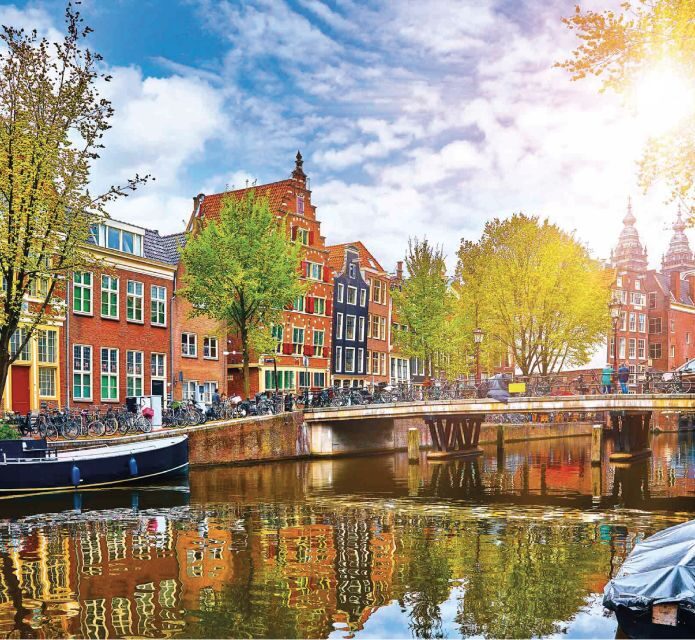
Amsterdam looks good from anywhere.
This private pedicab tour is a fun way to get a real sense of the city fast, with a guide who brings the streets to life as you roll past canals and landmarks. I like that you’re not fighting bikes and traffic yourself, and it feels like you get a front-row seat without the long walk.
My second big win is the mix of photo-friendly stops plus time to actually hear the stories behind what you’re seeing. One drawback to consider: the ride may not be practical in bad weather, and it’s not set up for wheelchair users or people over 243 lbs / 110 kg.
In This Review
- Quick hits before you book
- Why a pedicab is a smart way to start Amsterdam
- The route: from Damrak to the canal belt and beyond
- Historical center and Newmarket: the city’s everyday front door
- Chinatown: a quick change of pace
- IJ bay: water views that make Amsterdam feel bigger
- Damrak and Dam square: the anchor points of the city
- Munttoren: a skyline checkpoint
- Flower market: a colorful stop that also teaches you how Amsterdam works
- Rembrandt Square and Rembrandt House: the art connection
- Old Jewish quarter: quieter, more thoughtful walking points
- Herengracht, Keizergracht, Prinsengracht: the canal belt in full view
- Museum quarter: a useful preview for later
- Jordaan: side-street atmosphere, canal-style
- The guides and the riding: what makes it feel personal
- Photo stops: why they’re built in
- Navigating the bike lanes (without you doing it)
- Price and value: is $118 per group worth it
- You’re paying for three things
- A fair caution
- Weather, pickup, and practical comfort before you roll
- A quick comfort reality check
- Timing tip for first day
- Should you book this Amsterdam pedicab tour?
- FAQ
- How long is the Amsterdam private guided pedicab tour?
- What’s the price for this pedicab tour?
- Is this a private tour?
- What languages are the live guides available in?
- Is hotel pickup included?
- Where does the tour go?
- Is the tour okay in bad weather?
- Is it wheelchair accessible?
- Is there a cancellation policy?
Quick hits before you book

- Car-free backstreets and bridges: You’ll go where cars and big buses can’t.
- A true orientation tour: It’s built to help you understand where things are in the center.
- Stops for listening and pictures: You’re not just passing by at speed.
- Canal-belt views on the Herengracht/Keizergracht/Prinsengracht loop: Great for first-time orientation.
- Guides with real personalities: Names you may meet include Alfonso, Guido, Kristian, Bram, and Bobby.
- Flexible, personal pacing: Several guides are praised for stopping when you want photos and for adjusting within reason.
Why a pedicab is a smart way to start Amsterdam

Amsterdam can be a lot on day one. Bikes whiz by, streets split, and the city asks you to walk and look at the same time. A pedicab turns that into a simpler plan: you sit back, move through the center, and still get the street-level details that big buses miss.
What makes this work well is the format. You’re guided while you travel, so you’re not just collecting landmarks. You’re learning how the city is put together—starting from the historic core and expanding outward to neighborhoods you’ll want to explore later.
I also like that it’s private. For a trip around 1–2 hours, that matters because your guide can set the rhythm. If you’re the type who likes questions, this setup makes it easier to ask and get an answer without feeling rushed.
You can also read our reviews of more guided tours in Amsterdam
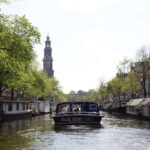


The route: from Damrak to the canal belt and beyond
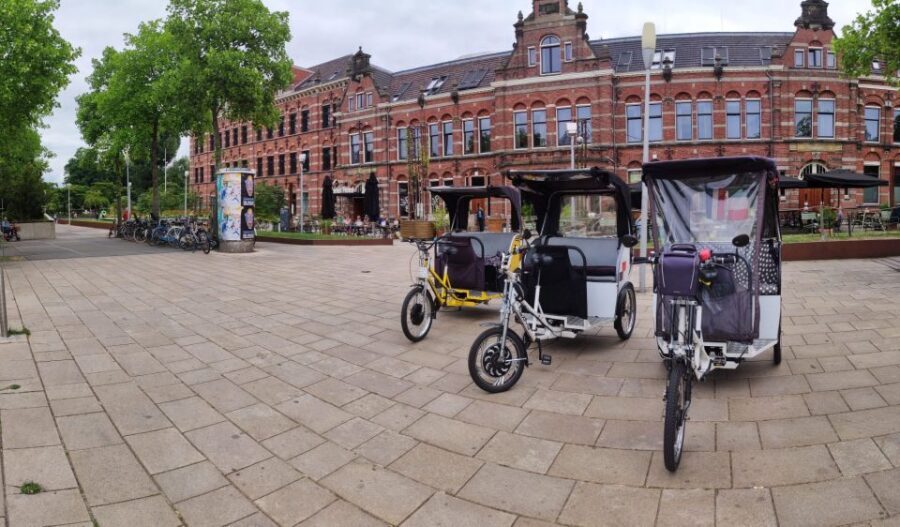
This tour has a clear “best-of” flow, starting where most visitors naturally begin and then widening out. You’ll cover the historical center, then keep moving through classic areas like the canals and the Museum Quarter, finishing with the kind of neighborhood streets that make you want to wander on your own.
Rather than being a checklist, the route is paced to include stops—so the stories land. Your guide will pause along the way to explain what’s significant about areas you’re seeing, and you’ll have time for photos.
Here’s how the stops help you build a mental map.
Historical center and Newmarket: the city’s everyday front door
You start in the historical center, then head toward Newmarket. Newmarket is useful on an orientation tour because it’s the kind of place that helps you understand the layout of the city’s core—how streets connect and how the built-up area feels from street level.
The value here is not that you’re ticking off a “must-see.” It’s that your guide can put context on the city’s street plan while you’re still fresh and not tired from hours of walking.
Chinatown: a quick change of pace
Then comes Chinatown. On a short pedicab tour, this stop gives you variety without the hassle of detours. You get a contrast in atmosphere and street character while still staying in the guided flow.
If you like seeing how different communities shape neighborhoods, this is a good one to enjoy slowly at the stop point—because the real “win” is learning what you’re looking at and why it feels distinct.
IJ bay: water views that make Amsterdam feel bigger
Next is the IJ bay. This matters because Amsterdam’s center is packed with canals and streets, so a water setting instantly changes the feel. It’s also a great chance to look around for orientation: you start to see how the water and the city relate.
A lot of guides are praised for driving smoothly and making the ride comfortable. Even if you’re not looking for anything “special” here, the bay stop can be a reset break for photos and breathing room.
You can also read our reviews of more city tours in Amsterdam



Damrak and Dam square: the anchor points of the city
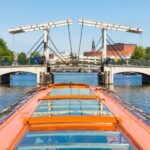
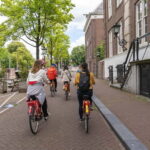
Damrak and Dam square are the obvious heart of the visit. Dam square is the sort of place where it’s easy to feel how Amsterdam organizes its public life around a central focal point. Damrak, as the corridor leading into that area, helps you understand how the city’s flow channels visitors and activity.
On this kind of tour, these stops do two things. First, they give you landmarks you can navigate back to later. Second, they let your guide explain the logic of the city’s name and founding story—something one guide specifically shared, including the idea of a dam on the Amstel River.
Munttoren: a skyline checkpoint
Munttoren shows up as a standout architectural checkpoint. Even if you don’t know every building by name, a tower is a useful reference point. You’ll use it later when you’re trying to orient yourself and figure out which canal side you’re on.
Also, towers and historic structures are easier to enjoy from a pedicab stop than while rushing by. You get to look, listen, and snap photos without sprinting between viewpoints.
Flower market: a colorful stop that also teaches you how Amsterdam works
The Flower market is another high-impact stop. It adds color and street energy, but it also gives you something practical: an idea of how Amsterdam trades and markets feel in the center.
Your guide’s explanation turns it from a pretty photo stop into a “now I get why this is here” moment. And since the tour includes picture time, this is one of those moments where you can really enjoy the setting instead of just passing through.
Rembrandt Square and Rembrandt House: the art connection
Next comes Rembrandt square and the Rembrandt house. These stops connect Amsterdam to its famous cultural identity. Even if you’re not planning museum deep-dives yet, it helps to understand where the city’s art legacy sits physically.
From a pedicab, you can also see how the area fits into the surrounding streets. That matters because it’s one thing to read about the neighborhood. It’s another to understand what’s next door.
Old Jewish quarter: quieter, more thoughtful walking points
The Old Jewish quarter is a more reflective stop on the route. It’s not about speed. It’s about using the pedicab time to slow down at the right moments and hear context for the area you’re viewing.
This is also a good segment if you prefer history explained in plain language. Several guides are praised for being patient and for answering questions, which is exactly what you want here.
Herengracht, Keizergracht, Prinsengracht: the canal belt in full view
Now for the big one: the canal belt loop—Herengracht, Keizergracht, Prinsengracht. This is where Amsterdam stops feeling like “a bunch of pretty streets” and starts feeling like a real system. Your guide can point out how these canals shape movement, where buildings face inward, and why the city’s water network is so central to what you’re seeing.
I also like that this part of the tour is paced with explanation and photo stops. Canals are the kind of sight where if you pass too fast, you miss the visual pattern. The pedicab’s slower, guided pace solves that.
Museum quarter: a useful preview for later
Then you reach the Museum quarter. On a short tour, you’re not trying to do museums in 1–2 hours. You’re using this stop as a preview so you know what’s where before you buy tickets.
If you’re the type who wants to plan the rest of your trip with confidence, this stop helps. You can picture the distance between museum zones and decide which ones you actually want to commit to.
Jordaan: side-street atmosphere, canal-style
Finally, you end up in the Jordaan area. This is the neighborhood most people love for the feel—narrower streets, canal-adjacent wandering energy, and that “I could spend an afternoon here” mood.
A pedicab makes sense for Jordaan because it lets you taste the area without tiring your legs. Then, when the tour ends, you’re in a better position to pick one or two blocks to explore on foot.
The guides and the riding: what makes it feel personal

The biggest consistent praise is simple: the guide is friendly, communicative, and good at making the drive feel safe and smooth. Several guides named in reviews include Alfonso, Guido, Kristian, Bram, and Bobby. That matters because pedicab touring isn’t just sightseeing—it’s also trust in how the route is handled.
One review tip that’s worth taking seriously: if you’re hard of hearing, ask ahead whether there’s a speaker or ear piece available. The tour is live-guided, and clear audio makes a big difference when you’re parked or moving slowly through busy intersections.
Photo stops: why they’re built in
A lot of tours push you forward. This one includes planned stopping points, and guides are praised for being flexible about taking photos. Some guides even help with taking pictures and suggest where to stand for good backgrounds.
For me, that turns the experience from “I saw it” into “I remember it.” In a city like Amsterdam, that can be the difference between a quick glance and a lasting memory.
Navigating the bike lanes (without you doing it)
Amsterdam’s bike network is real life, not a tourist postcard. Reviews mention guides being good at navigating bike lanes and traffic patterns. That’s key on day one: you get the city’s rhythm without the stress of merging, turning, and crossing where bikes dominate.
Price and value: is $118 per group worth it

The price is listed as $118 per group up to 2, for about 1–2 hours. That sounds steep until you compare it to the alternative: spending the same time walking while still paying attention to bikes, lines, and route guessing.
Here’s how I think about value.
You’re paying for three things
- Time savings: You cover more ground in less time than walking.
- Interpretation: The guide isn’t just driving; it’s history and neighborhood context.
- Comfort: Sit back and enjoy the ride while you get orientation.
If your goal is to come away with a solid map of Amsterdam’s layout, the cost can start to make sense. One review even notes that an extra hour was purchased, which suggests the pacing can be expanded if you’re enjoying it.
A fair caution
One review questioned whether the price felt like good value at around 110 euros. That’s your signal to be honest about your priorities: if you mainly want photos and not much explanation, a cheaper walking tour might be fine. If you want guided context plus low-effort touring, the pedicab format earns its keep.
Weather, pickup, and practical comfort before you roll
Amsterdam weather can change fast. The tour notes it might not be practicable during bad weather. So if skies look threatening, plan your day with a backup idea.
Pickup is optional. You can get hotel pickup and drop-off for hotels within the city center limit (listed around Nassauka–Stadhourderskade). If your hotel is outside that area, the tour suggests asking during reservation so they can check your location and confirm what’s possible.
A quick comfort reality check
This experience isn’t suitable for wheelchair users, and there’s a weight limit (over 243 lbs / 110 kg). Also, it’s a pedicab bike ride, not a car, so you’ll want to dress for the ride and the weather.
If you’re traveling with someone who can’t walk much, this kind of low-walking touring is often a lifesaver. Several reviews mention it working well for people with limited mobility or walking challenges, including someone who did the tour with an adult who couldn’t walk long distances.
Timing tip for first day
Many people do this early in the trip to get their bearings. It’s a smart move because the route includes the main anchor areas—Dam square, the canal belt, and museum access points—so you can plan the rest of your days with more confidence.
Should you book this Amsterdam pedicab tour?
Book it if you want a low-effort, high-context introduction to Amsterdam in about 1–2 hours. It’s especially worth it if you’d rather sit and look than navigate bikes, and if you like learning the why behind the where.
Skip it or consider an alternative if you hate the idea of a guided ride in open conditions, if weather is likely to be rough, or if you need wheelchair accessibility or have riders over the stated weight limit.
If you decide to go, do this: ask about audio support if you’re hard of hearing, confirm pickup options for your hotel area, and wear shoes you can stand in if you want to linger at a stop. Then enjoy the part you’re paying for—seeing a lot of Amsterdam without turning it into a long slog.
FAQ
How long is the Amsterdam private guided pedicab tour?
The duration is listed as 1–2 hours, depending on availability and the starting time you book.
What’s the price for this pedicab tour?
The price is listed as $118 per group, up to 2 people.
Is this a private tour?
Yes, it’s a private group experience.
What languages are the live guides available in?
Live tour guides are available in Italian, English, Spanish, and German.
Is hotel pickup included?
Hotel pickup is offered for hotels within the city center limit (Nassauka–Stadhourderskade). Pickup is optional, and you’re encouraged to ask during reservation to confirm your hotel location.
Where does the tour go?
The itinerary includes the historical center, Newmarket, Chinatown, IJ bay, Damrak and Dam square, Munttoren, Flower market, Rembrandt Square, Rembrandt house, the Old Jewish quarter, Herengracht, Keizergracht, Prinsengracht, Museum quarter, and the Jordaan.
Is the tour okay in bad weather?
The tour might not be practicable during bad weather conditions.
Is it wheelchair accessible?
No. It’s not suitable for wheelchair users.
Is there a cancellation policy?
Yes. Free cancellation is available up to 24 hours in advance for a full refund.