REVIEW · AMSTERDAM
Amsterdam: Red Light District Exclusive Night Tour
Book on GetYourGuide →Operated by Trigger Tours · Bookable on GetYourGuide
Amsterdam after dark has a way of changing your pace. This Red Light District night tour turns a famous area into something you can actually read, from canal streets to old landmarks. I especially like the way it connects today’s scene to Amsterdam’s bigger history, including why the city developed its well-known liberal reputation. And I like that the guide keeps it human and local, with humor and practical recommendations you can use right away.
One catch: the streets get loud and crowded, so you may find yourself straining to hear at certain points—especially if you stop for photos too long.
In This Review
- Key things to know before you go
- Amsterdam Red Light District at Night: Why this timing matters
- The route in plain terms: what you’ll do in two hours
- Oude Kerk: the oldest-building stop and why it sets the tone
- Chinatown to Zeedijk: the “this is Amsterdam too” moment
- Grachtengordel canals: reading the city’s geometry at night
- Coffee shops, smart shops, and the history behind the rules
- Leidse Square energy and the practical value of a good guide
- Condomerie and Casa Rosso: watching the branding and the symbolism
- Flower Market and Nieuwmarkt Square: end with classic Amsterdam sights
- Price and value: is $28 worth a 2-hour night tour?
- Who should book this night tour (and who should skip it)
- The bottom line: should you book this Amsterdam Red Light District Exclusive Night Tour?
- FAQ
- How long is the Amsterdam Red Light District Exclusive Night Tour?
- How much does the tour cost?
- What’s included in the ticket?
- Are food and drinks included?
- What languages are the live guides available in?
- Where do I meet the guide?
- Where can the tour end?
- Is the tour suitable for people with mobility impairments?
- Can I cancel for a full refund?
- Can I reserve now and pay later?
Key things to know before you go
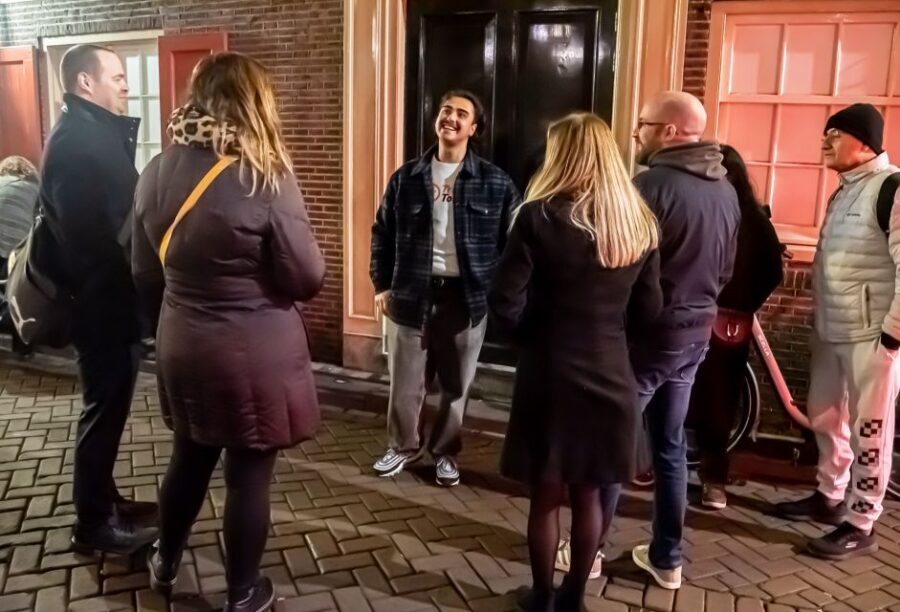
- 2 hours of focused walking through the Red Light District and adjacent Old Town areas
- Local guide in German or English, often mixing facts with laughs (Sofia, Aarri, Pilar, Sandro, David, and Jay come up often)
- You’ll see major stops like Oude Kerk, Grachtengordel, Zeedijk, Leidse Square, Condomerie, and Casa Rosso
- The tour explains coffeeshop and sex work culture in a historical and political context, not just “spot the sights”
- Timing can matter: if you’re there a bit earlier at night, you might not catch everything you expected in the windows
- It’s not suitable for mobility impairments and the streets are, well, Amsterdam-walkable (not stroller-friendly)
Amsterdam Red Light District at Night: Why this timing matters
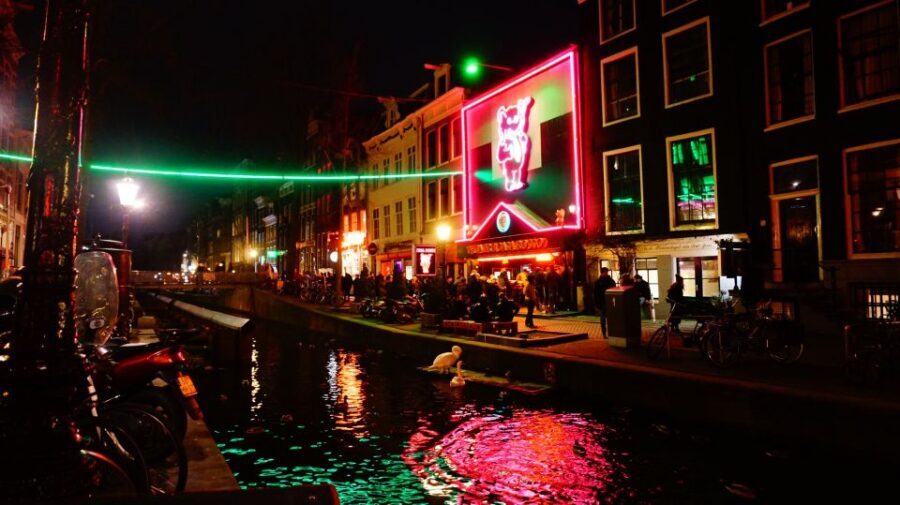
The Red Light District is famous in the day. At night, it becomes something else: tighter, moodier, and easier to understand. The lights, the canal-side streets, and the dense old neighborhood layout all help you see how Amsterdam built this area into its broader city story.
This is a 2-hour walking tour, which is a sweet spot. Long enough to cover multiple neighborhoods and landmarks. Short enough that you’re not walking until your feet start filing complaints. If you’re doing Amsterdam for the first time, I like that you can get your bearings fast—then use what you learn to choose where to eat, drink, and wander next.
You’ll hear about the district’s modern reality and also the older city forces behind it. That includes how the city developed an attitude toward sex and drugs that’s both legal and politically debated. And yes, the coffee shop culture comes up, along with how it’s discussed and regulated in the Netherlands.
You can also read our reviews of more evening experiences in Amsterdam


The route in plain terms: what you’ll do in two hours
Think of the tour as a guided circuit through Old Amsterdam plus the streets tied to the Red Light District. You start from one of three locations: Voyager Hotel Amsterdam, Prins Hendrikkade 46, or the Basilica of Saint Nicholas. From there, you move stop to stop with short walks between them and guided explanations at each highlight.
You can expect a mix of:
- old buildings and churches
- canal-area viewpoints and street geometry (Amsterdam loves its angles and tight spaces)
- nightlife-adjacent shopping streets
- a couple of the area’s most recognizable branded sites
The best part for me is the structure. You’re not just following a person down a street hoping something interesting happens. You’re learning what you’re looking at and why it became what it is. Past guests repeatedly mention guides who keep it lively—Sofia is noted for combining city history with good humor, and Aarri is praised for a clear overview plus depth behind the stories.
Oude Kerk: the oldest-building stop and why it sets the tone
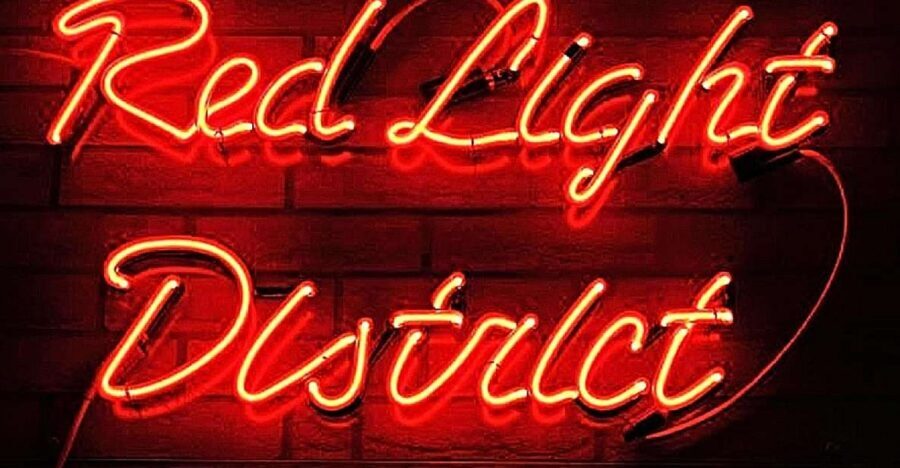
One of the first sights is Oude Kerk. Even if you’re not the type to chase churches, this stop works because it anchors you in time. Amsterdam didn’t start as a nightlife postcard. It grew as a working city with old religious and civic spaces that still frame how you move through the neighborhood.
When you’re walking near the Red Light District at night, it’s easy to forget the area sits inside an older urban fabric. Oude Kerk helps correct that. You see the kind of durability that makes Amsterdam feel like it layers centuries rather than swapping them out.
There’s also a practical effect: it gives you an early mental map. After that, when the streets tighten and the storefronts start clustering, you have a better sense of where you are and what the neighborhood is “made of.”
Chinatown to Zeedijk: the “this is Amsterdam too” moment
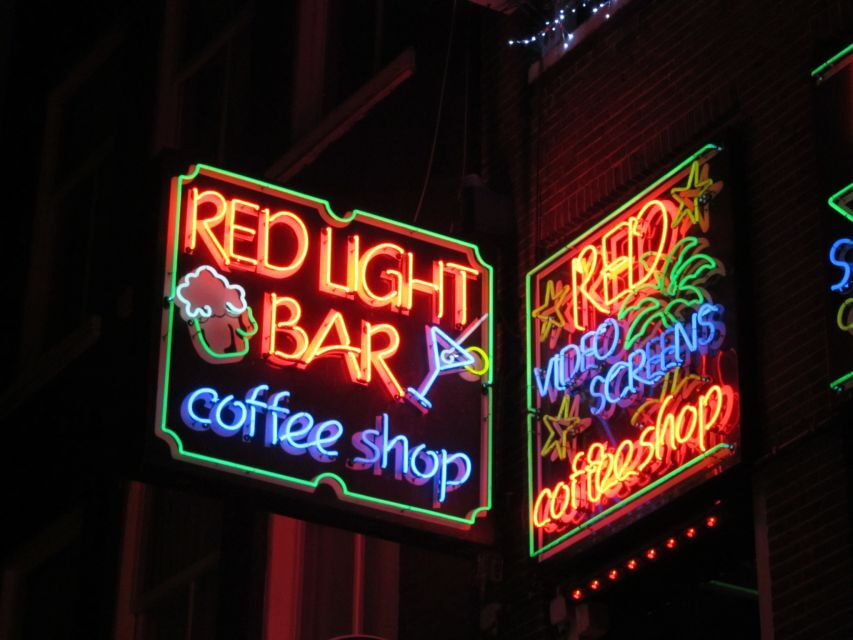
The tour includes a stop in Amsterdam Chinatown, plus Zeedijk Street. This matters more than you might think. A lot of first-time visitors arrive with a single idea of the Red Light District. But Amsterdam is never one thing for long. You’ll see how different communities and commerce sit right beside the nightlife.
Zeedijk Street is one of those places where the city feels like it’s doing several jobs at once. You’ll also hear explanations that connect the Red Light District to the surrounding Old Town area—how it became part of the city’s day-to-day systems, not a separate theme park.
If you’re the type who likes context before you make decisions, this portion will likely help. It gives you a sense of the area as a living neighborhood, not just a nightlife lane.
Grachtengordel canals: reading the city’s geometry at night
You’ll also visit Grachtengordel. The canals are a huge part of Amsterdam’s layout, and seeing them at night changes how you notice the city. Water makes distance feel different. Light makes details stand out. And the narrow street grid becomes easier to follow in your mind.
This is also where the tour’s “educated walk” approach really shows. It’s not only about what you can see—it’s about how Amsterdam’s geography and architecture shaped street-level life. You learn why certain paths became predictable, why certain blocks feel more enclosed, and why the area developed the reputation it has.
Even if you’re not taking tons of photos, this stop is useful. You’ll come away with a better mental model of where things are and why walking here feels the way it does.
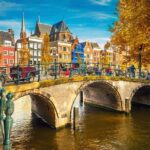




Coffee shops, smart shops, and the history behind the rules
One big theme of the tour is the culture around coffeeshops and also the broader environment of sex work. The tour doesn’t present it as pure scandal or pure celebration. Instead, it ties it to Amsterdam’s evolving policies, political debates, and how legality is part of the story.
You’ll hear about:
- how coffeeshop culture became part of the city’s identity
- the relationship between what’s allowed, what’s tolerated, and what’s regulated
- how the city’s reputation became both an attraction and a point of argument
I like tours that explain the “why.” That’s what keeps this from being only a sightseeing checklist. If you’ve ever wondered whether Amsterdam’s reputation is hype, the tour gives you language to understand the controversy without turning it into a lecture.
There are also references to things like the city’s early coffeeshop history and “smart shops” during the walking route. The aim is to help you interpret storefronts and street references you’d otherwise just glance past.
Leidse Square energy and the practical value of a good guide
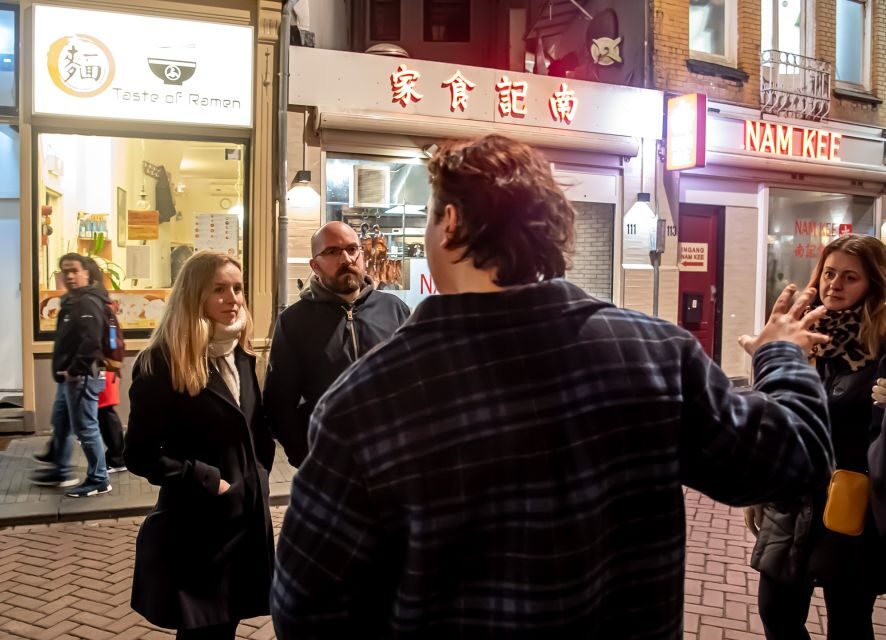
You’ll stop at Leidse Square. This is where the city’s night rhythm feels closer to the tourist core. And that matters, because the Red Light District doesn’t exist in a vacuum. It’s part of the wider nightlife ecosystem.
This is also where guide quality becomes obvious. Multiple past guides are described as funny, friendly, and willing to answer questions. David is repeatedly praised for being charismatic and for giving answers that made the city feel more navigable. Jay gets highlighted for looking after the group and keeping the tour entertaining. Pedro and Aaron show up in notes for thorough answers and historical framing.
If you do this on your first night, it can be especially useful. One of the clearest tips from past guests is to schedule it early so you can copy the guide’s suggestions for where to go next—coffee shops, bars, and places to eat. It’s not just learning the Red Light District. It’s learning the city’s nightlife geography.
Condomerie and Casa Rosso: watching the branding and the symbolism
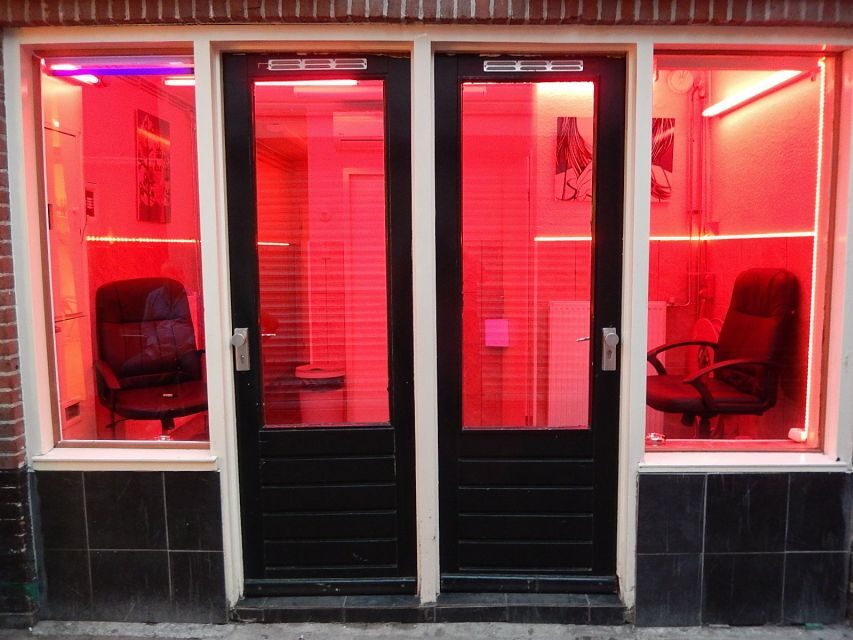
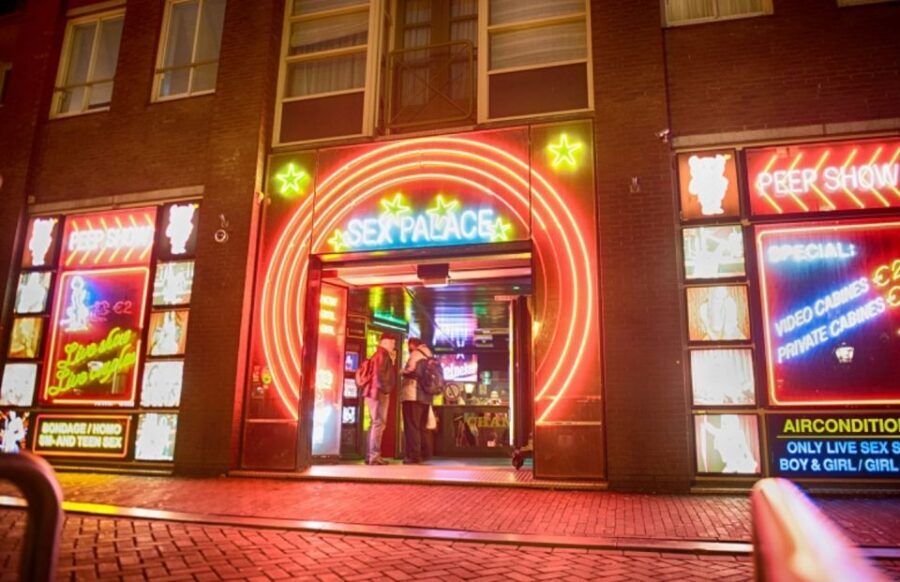
Two of the most recognizable stops are Condomerie and Casa Rosso. Even if you already know the general reputation of the area, these stops land because they show how Amsterdam turns taboo-adjacent subjects into something you can talk about in public.
The tour explains how and why the city developed its reputation, and it uses specific sights to help you understand the cultural tone. You’ll likely hear about how the sex work industry is approached in Amsterdam, including the political and social arguments around legalization and safety.
At night, these sites also feel different than they do during the day. Light, foot traffic, and the density of storefronts create a kind of street-level theater. The tour keeps it on the educational side, so it’s less about sensational curiosity and more about learning what locals debate, tolerate, and regulate.
One more practical point from experience notes: if you go a bit earlier after dark, you might not see everything you expected in the windows. The tour still works, but it helps to adjust expectations about what’s visible at a given hour.
Flower Market and Nieuwmarkt Square: end with classic Amsterdam sights
The tour includes the Amsterdam Flower Market and Nieuwmarkt Square. This is a good way to close. The Red Light District can feel heavy if it’s the only thing you see. By the end, you’re back in the kind of Amsterdam that sells itself for good reason: canal-adjacent charm, old-square energy, and the city’s everyday “here’s another thing to look at” personality.
The Flower Market stop also helps you reset your headspace. It reminds you that this neighborhood sits inside a larger tourism and daily-life flow. Nieuwmarkt Square is a natural final anchor—an open space compared to the tighter lanes you’ll have walked earlier.
By the time you reach the drop-off options (Prins Hendrikkade 46, the Basilica of Saint Nicholas, or Voyager Hotel Amsterdam), you should feel like you can navigate on your own. That’s the goal: not only seeing the district, but understanding the streets around it.
Price and value: is $28 worth a 2-hour night tour?
$28 for a 2-hour guided walking tour is fairly sensible for Amsterdam, especially because you’re paying for interpretation, not just movement. This isn’t a museum where you can read plaques alone. You’re walking through a neighborhood with social and legal complexities that are hard to understand without context.
Value-wise, I think it works because:
- you get a live local guide (included)
- you cover multiple recognizable sights in one loop
- you leave with practical mental tools: how coffeeshop culture is discussed, how the sex work industry is framed, and why Amsterdam’s liberal reputation has critics as well as defenders
Food and drinks are not included, so you should plan to eat on your own before or after. That also means you can choose what fits your comfort level. Want a quick bite before? Do it. Want something afterward to decompress? Perfect.
Who should book this night tour (and who should skip it)
This tour is a strong match if you:
- want a first-night orientation to the Red Light District area
- like history and politics tied to real places, not generic talking points
- want the coffeeshop side explained alongside everything else, with local perspective
It’s less of a match if you:
- have mobility limitations (the tour is not suitable for people with mobility impairments)
- hate walking at night or get overwhelmed by crowds
- struggle with hearing in busy street settings, since some sections can be loud
One small comfort tip: wear shoes you can trust. Even when the pace feels manageable because of frequent stops, the route covers enough ground that uncomfortable footwear will start affecting your attention.
The bottom line: should you book this Amsterdam Red Light District Exclusive Night Tour?
If you’re in Amsterdam for the first time and you want context fast, I think this tour is a good use of one evening. The combination of Old Town landmarks like Oude Kerk, key neighborhood streets, and branded sights like Condomerie and Casa Rosso gives you a real sense of place. And when guides like Sofia, Aarri, Pilar, Sandro, David, or Pedro are at the front, the tour tends to feel funny, organized, and focused on answering questions.
I’d book it early in your trip so you can use the recommendations immediately. I’d also go in with the understanding that this is an educational walk through a complex district. You’ll see a lot, but the tour is at its best when you’re curious about how a city makes room for controversial topics while still arguing about them.
FAQ
How long is the Amsterdam Red Light District Exclusive Night Tour?
It lasts 2 hours.
How much does the tour cost?
The price is $28 per person.
What’s included in the ticket?
You get a local guide and a guided tour.
Are food and drinks included?
No. Food and drinks are not included.
What languages are the live guides available in?
The live tour guide speaks German and English.
Where do I meet the guide?
The meeting point may vary depending on the option booked.
Where can the tour end?
Drop-off is available at Prins Hendrikkade 46, the Basilica of Saint Nicholas, or Voyager Hotel Amsterdam.
Is the tour suitable for people with mobility impairments?
No. The tour is not suitable for people with mobility impairments.
Can I cancel for a full refund?
Yes. You can cancel up to 24 hours in advance for a full refund.
Can I reserve now and pay later?
Yes. You can reserve now & pay later, keeping travel plans flexible.