REVIEW · AMSTERDAM
Amsterdam: Red Light Tour Exclusive + Peep Show
Book on GetYourGuide →Operated by Amsterdamliebe · Bookable on GetYourGuide
See the Red Light District up close, without the chaos. This 1.5-hour small-group tour focuses on what’s happening in the streets and why the neighborhood is run the way it is.
I especially like the privacy-focused route through the heart of the district with a guide who can keep things orderly and respectful. And I really like that you finish with a live 70s peep-show stop at Sex Palace, so you get the feel of a moment people rarely experience anymore. Guides like Noemi, Ginevra, Lili, and Joschka come up again and again in how people describe the tone: friendly, funny when it fits, and careful with sensitive topics.
One possible drawback: it’s not a casual stroll if you want to take photos—cameras aren’t allowed, and you also can’t photograph the sex workers. Add that the peep-show has a separate entry fee, and you’ll want to go in knowing what costs extra and what won’t be possible.
In This Review
- Key things to know before you go
- A different way to experience Amsterdam’s Red Light District
- Starting at Dam Square: where the story begins
- Condomerie and Oude Kerk: the neighborhood’s layers you can feel
- Warmoesstraat and the “narrow alley” detail (plus photo stops)
- The Brass Plate Moment: Borstplaat in brons
- The Bulldog The First Coffeeshop: policy and contradiction in one stop
- Sex Palace and the live peep show: what to expect
- Price and value for a 1.5-hour exclusive walk
- Timing tips: when the streets get louder
- Rules that shape the vibe (and help keep it respectful)
- Language choice: German or English, not both
- Who should book this tour
- Should you book the Amsterdam Red Light District Exclusive + Peep Show?
- FAQ
- Where do I meet the guide?
- How long is the tour?
- Are the group sizes small?
- Which languages are available?
- Is the peep show included in the price?
- Can I take photos or videos?
- Is this tour suitable for children?
Key things to know before you go
- Up to 4 people: a group size that makes questions possible even on crowded streets
- History plus policy: you’re not just seeing windows, you’re learning how Amsterdam handles the system
- Coffeeshop context: you pass by key places and hear the socio-political story, not a sales pitch
- 70s live peep-show: one of the last live options, with a short 2-minute experience
- Weather-proof plan: the tour runs in any weather, and it’s a walking-focused format
- No cameras: you’ll enjoy it more if you’re there to listen and look, not post
A different way to experience Amsterdam’s Red Light District
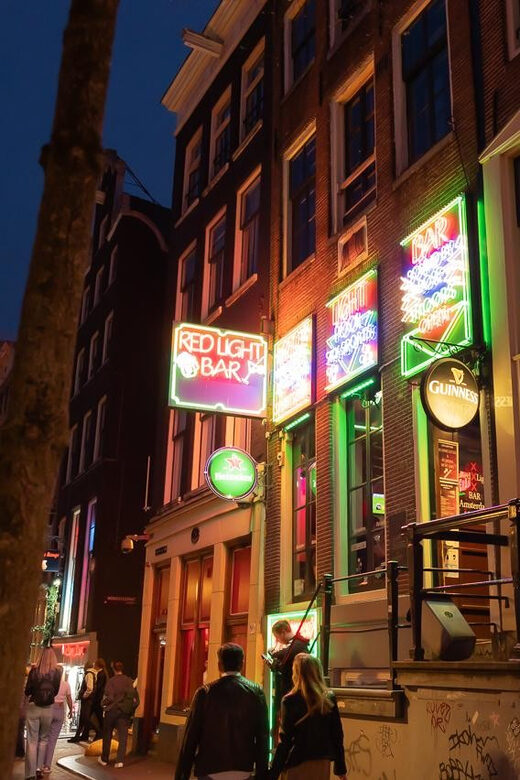
Amsterdam’s Red Light District can be a sensory overload fast. This tour is designed to slow you down—literally and mentally—so you understand what you’re seeing instead of just reacting to it.
You walk right through the core area, but the format is built for control and comfort. The tour is offered as an exclusive small group (up to 4 people), and that matters because Amsterdam’s newer tourist rules restrict larger groups from moving straight through the district. Translation: you’re more likely to get a guided path that feels intentional, with less awkward bumping and less “tour bus energy.”
You can also read our reviews of more tours and experiences in Amsterdam



Starting at Dam Square: where the story begins
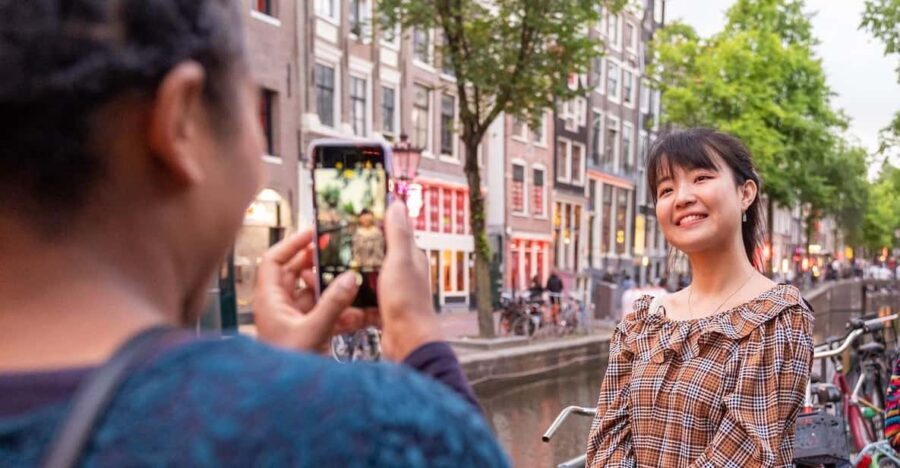
You meet at the steps of the National Monument, the white obelisk at Dam Square. It’s easy to find, and your guide will have a red name tag so you can spot them quickly.
From there, you start with Dam Square itself for a short orientation. Even before you reach the sex-worker windows and the side alleys, you get the framing: why this neighborhood is so tightly watched, why it has rules, and why public debate in Amsterdam has shaped the district’s reputation over time. It’s the kind of setup that helps the rest of the walk make sense.
Condomerie and Oude Kerk: the neighborhood’s layers you can feel
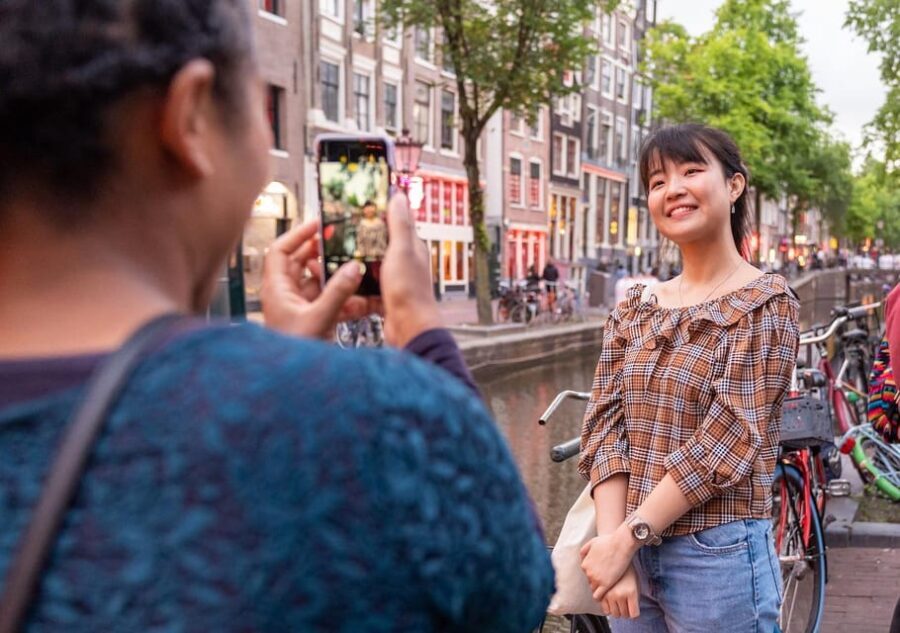
Next you spend time at Condomerie. It sounds like a quirky stop, but it’s actually useful: it points to how Amsterdam has commercialized and normalized parts of sexuality in public life, while still keeping the area politically complicated.
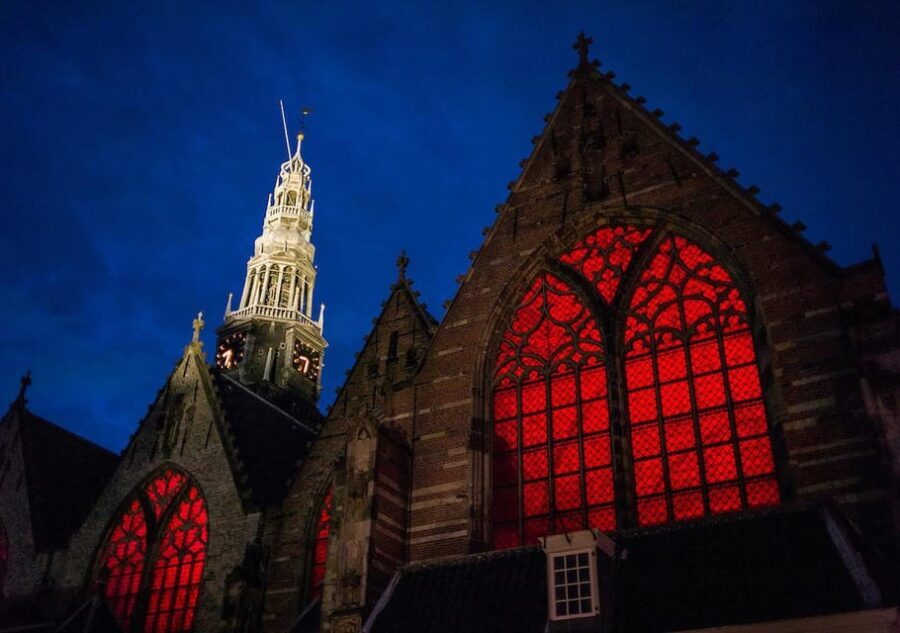
Then you head to Oude Kerk, one of the older landmarks in the city. This stop matters because the Red Light District isn’t a sealed-off modern theme park. You’re walking a neighborhood with roots in the city’s long timeline, and the guide uses that to connect past urban development and public attitudes to today’s rules and tensions.
A good sign during this stretch: the tour doesn’t treat everything as shock value. Instead, it treats the district like a living system—one with history, politics, and real economic consequences for the people working there.
Warmoesstraat and the “narrow alley” detail (plus photo stops)
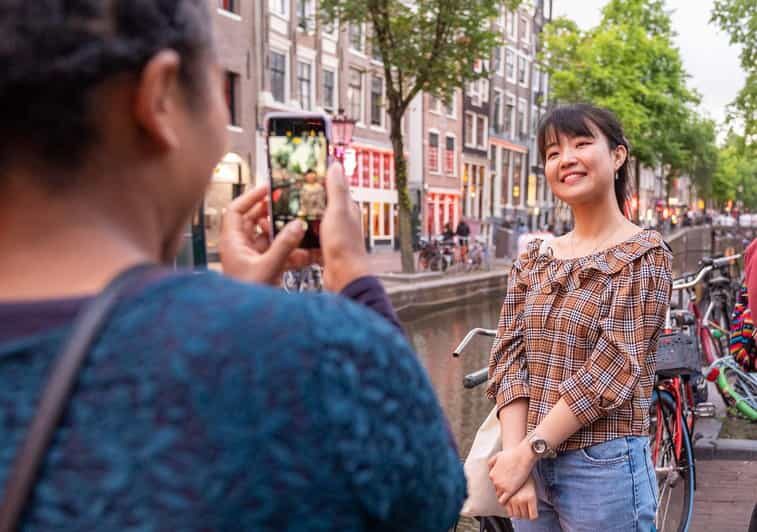
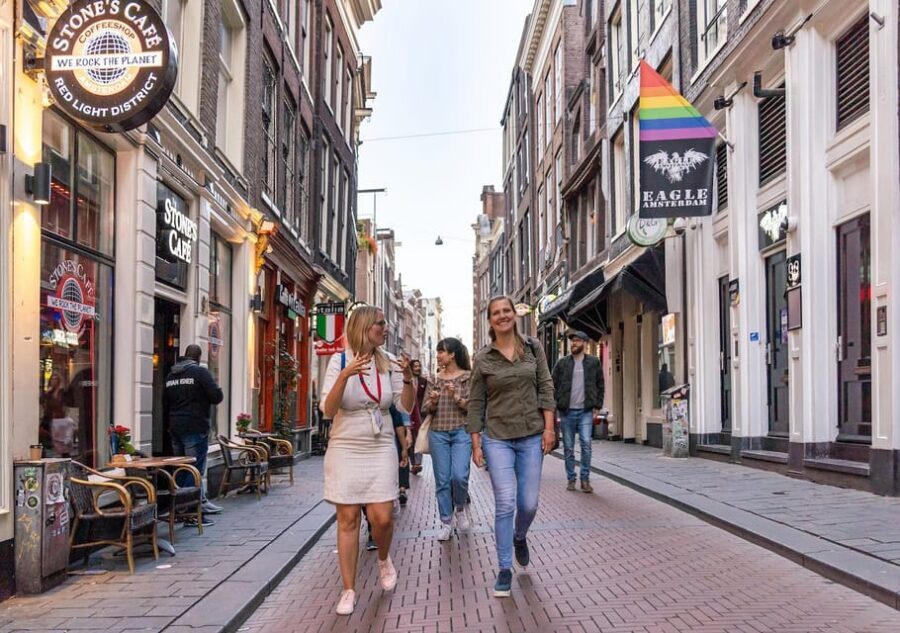
On Warmoesstraat, you’ll have a photo stop and guidance around what’s around you. This is also where you start to hear the “small streets, big meaning” kind of details—like the guide pointing out the narrowest alley in Amsterdam and explaining why it became known as the hottest spot in the district.
You’ll also stop for photos around the area of the Dancing Houses. That’s a classic Amsterdam sight, but in this context it’s more than a photo op. It helps you keep your bearings in a district where streets can feel confusing if you’re only looking for windows.
One practical note: cameras aren’t allowed on the tour, so those photo stops are likely for your guide’s positioning and not for filming or posting. If you love taking street photos, plan to do that before or after, but not during the guided portion.
The Brass Plate Moment: Borstplaat in brons
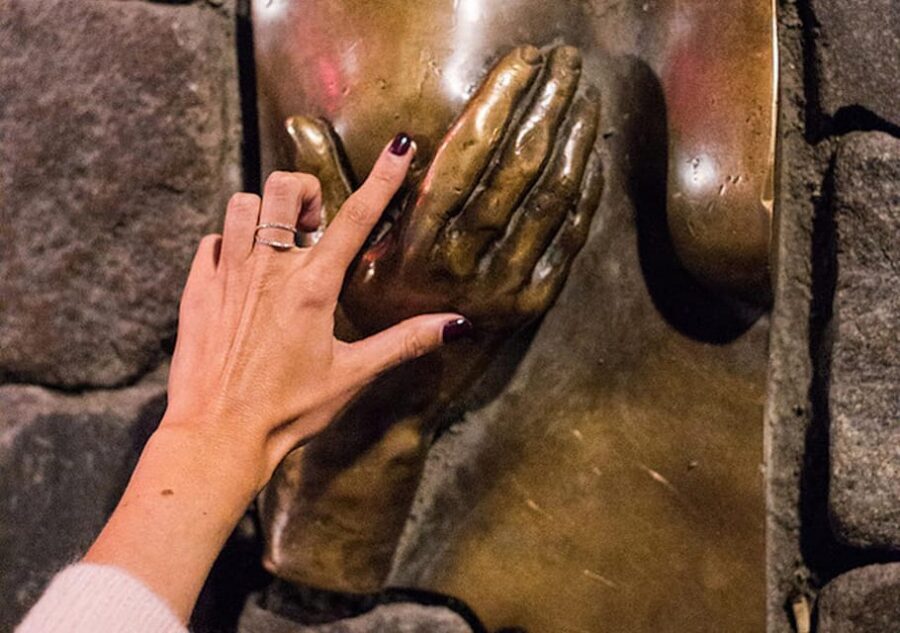
A short stop brings you to Borstplaat in brons. This kind of landmark pause is quick, but it’s a smart way to remind you that this district has specific people, specific stories, and specific commemorations in public space—not just stereotypes.
You only get a few minutes here, but if you pay attention, it helps you switch modes from “tourist looking” to “visitor learning what the city decided to mark.”
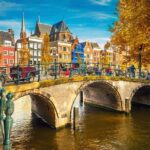





The Bulldog The First Coffeeshop: policy and contradiction in one stop
You’ll then visit The Bulldog The First Coffeeshop. You don’t go inside for a coffeeshop tour experience, but you do get a guided stop with context.
This is where the tour earns its keep, because it connects the coffeeshop world to broader socio-political history in Amsterdam. The guide talks about how the system works and why it’s regulated. You’re not just passing by a recognizable storefront—you’re understanding why the city draws lines where it does, and how those lines shape daily life for locals and visitors.
Also, coffeeshops are one of those Amsterdam topics where it’s easy to treat everything like a fun cultural quirk. Here, you get the bigger picture: the history, the politics, and the role of regulation in turning controversial behavior into managed policy.
Sex Palace and the live peep show: what to expect
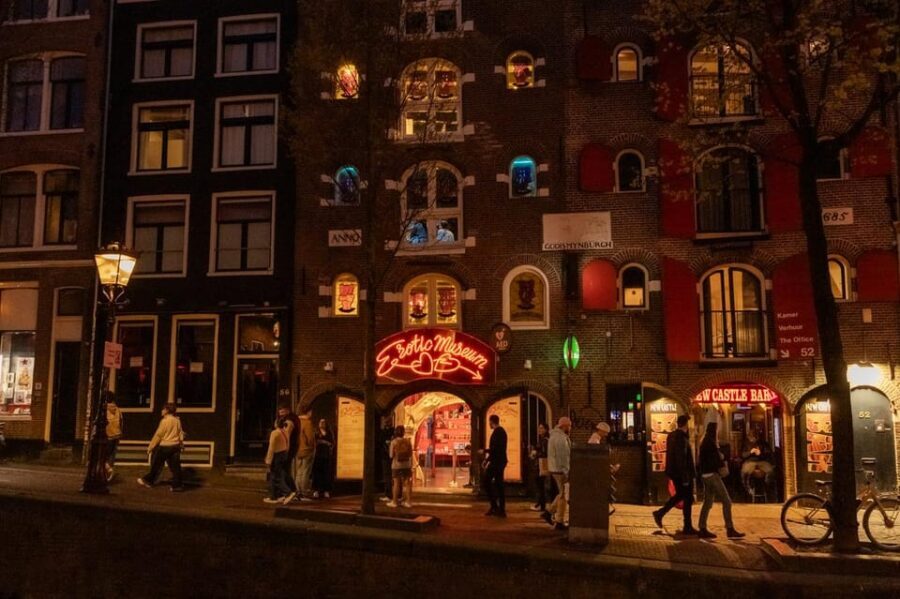
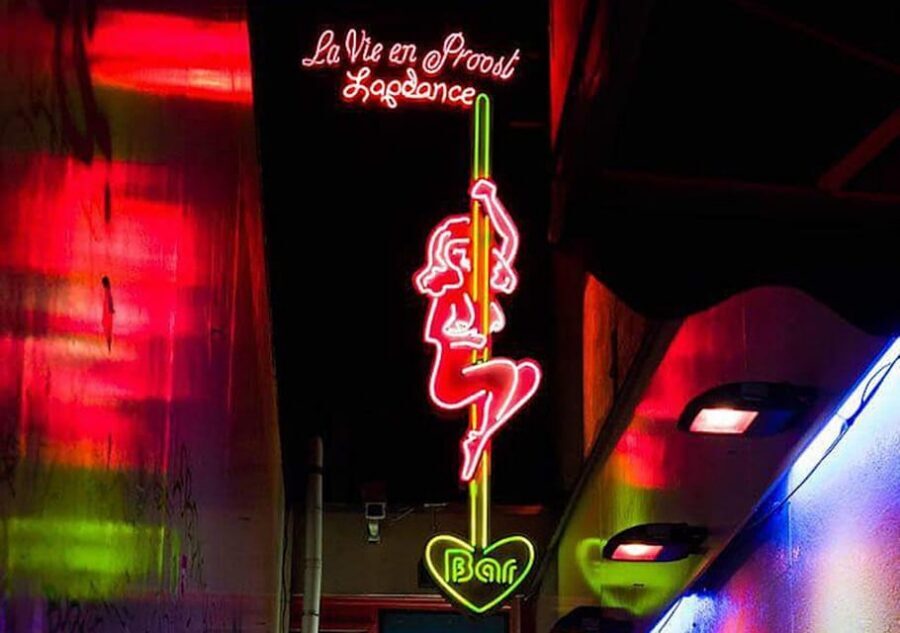
The tour’s finale is the Sex Palace live peep show area. This is billed as a visit that includes a dance show moment, and it’s designed to be short. The peep-show itself is described as a fun 2-minute experience with no physical interaction with another person.
There’s also an entry fee of 2€ for the peep-show, which is not included in the tour price. So if you’re budgeting, plan for the add-on. The upside is that this stop is one of the last live peep-show experiences in the world—exactly the kind of “you’ll never see this again elsewhere” moment.
Important attitude check: this isn’t about treating sex work as entertainment. The tour keeps a critical perspective on how sex work works in Amsterdam—how the system functions and what it means socially and economically. The peep-show is then presented as a cultural artifact of how the district has been consumed and regulated over time.
From guides and group pacing: the experience tends to feel respectful and tasteful, with the overall tone aiming to inform first. People who enjoyed the tour also liked that guides such as Noemi and Ginevra kept it humorous when appropriate, without turning it into gross-out comedy.
Price and value for a 1.5-hour exclusive walk
At $61 per person for 1.5 hours, this sits in the “worth it if you care about context” category—not a bargain, not a splurge either. The value comes from three things:
First, the group size. Up to 4 people means you’re not shouting over strangers, and your guide can actually guide the conversation. That’s why many people highlighted the ability to ask questions and hear the full story even when streets got busy.
Second, you get a mix of stops, not just windows. You pass historical anchors like Oude Kerk, you touch policy-adjacent topics via coffeeshop context, and you end with a live peep-show. If you only wanted the peep show, you’d still be missing a lot of “why.”
Third, the tour includes the 1.50€ city tax per person. That’s a small line item, but it reduces surprises.
What might feel expensive is the fact you’re paying for a walking and storytelling format, not for entrances across multiple sites. If you’re expecting several included paid attractions beyond the main peep-show, you may feel underwhelmed.
Also note: the peep-show fee is separate (2€). One person mentioned ending the experience without the peep-show being offered, which is unusual given how the experience is positioned. If the peep-show matters to you, it’s smart to ask your guide right at the start how it will work for your group timing and what’s optional.
Timing tips: when the streets get louder
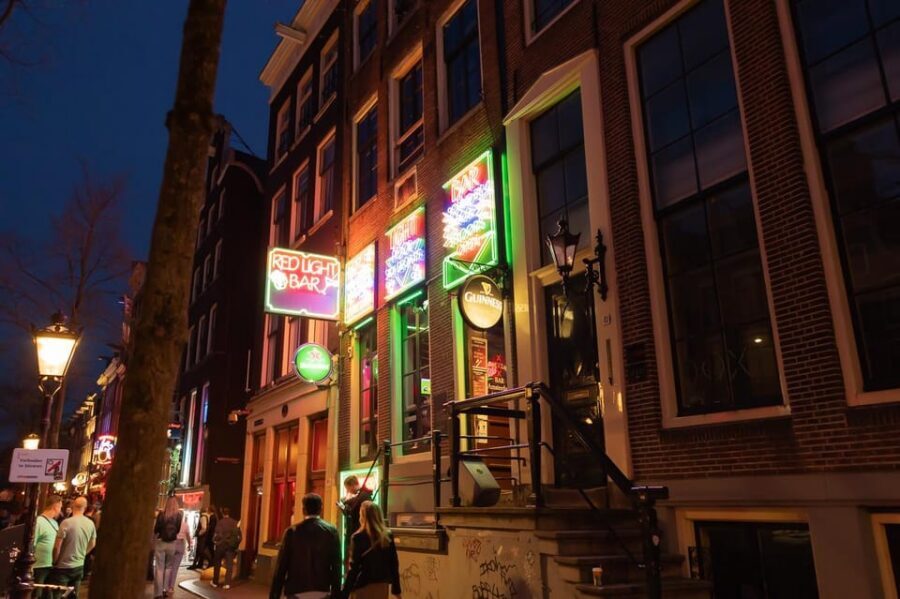
This district changes by day. On Fridays and Saturdays, you’ll encounter a lot more tourists in the Red Light District. If you prefer a quieter feeling, choose another day of the week.
Weather is not an excuse here. The tour runs in any weather, so pack an umbrella if rain is likely. You’ll walk roughly 1.8 km at a comfortable pace.
Since the route is only about 1.5 hours, you don’t want to lose time to forgetting essentials. If you’re prone to getting cold or wet, bring a light layer—your main “comfort variable” will be the walk duration, not any long indoor stops.
Rules that shape the vibe (and help keep it respectful)
This tour has clear boundaries, and they actually help the experience stay controlled.
You can’t bring cameras, and you’re also not allowed to take photos of the sex workers. Intoxication, alcohol and drugs, littering, and unaccompanied minors are also not allowed. The guide is there to protect the space and the people in it, and the rules keep the tour from becoming disrespectful spectacle.
Age rules matter too. The tour isn’t suitable for children under 16. For ages 16–18, the data says you need a parent or guardian accompaniment. If you’re traveling with younger kids, the info indicates participation is only possible via a private tour, and the private tour can be adjusted depending on the child’s age.
Language choice: German or English, not both
The tour is offered in either German or English, not bilingual. So make your choice carefully.
People who liked the tour often described guides as friendly and personable, but this matters most when you want to ask questions. If you’re not fully comfortable in the language option, you’ll enjoy the history and policy content much more if you select the guide language you can follow in real time.
Who should book this tour
Book this tour if you want a structured walk through the heart of the district with a small group, clear guidance, and an adult, respectful tone. It’s ideal if you care about how Amsterdam’s approach to prostitution and nightlife grew from political decisions, economic pressures, and public debate.
It’s also a good match if you want more than a photo hunt. This tour gives you story-based context at each stop—Condomerie, Oude Kerk, Warmoesstraat, Dancing Houses, Borstplaat in brons, The Bulldog The First coffeeshop, and the Sex Palace peep-show.
Skip it if you want a casual, camera-friendly stroll. And if you’re the type who needs alcohol or constant stimulation to enjoy tours, the rules around intoxication and alcohol/drugs will likely feel restrictive.
Should you book the Amsterdam Red Light District Exclusive + Peep Show?
If you’re deciding between a standard walking tour and this exclusive format, I’d lean toward booking if your goal is understanding. The small-group setup, the policy and history framing, and the short live peep-show option create a better “full picture” visit than most generic tours.
If the peep-show is a big part of your plan, confirm with the guide at the start how the 2-minute experience will be handled for your group. If you’re camera-ready, this tour won’t let you take photos during the walk—so plan to satisfy that urge outside the tour.
Overall: this is one of those Amsterdam experiences that feels more meaningful when you treat it as a guided lesson, not a nightlife scavenger hunt. If that sounds like your style, it’s an easy yes.
FAQ
Where do I meet the guide?
You meet on the steps of the National Monument (the white obelisk) at Dam Square. Your guide will be recognizable by a red name tag.
How long is the tour?
The tour lasts about 1.5 hours, with stops spread across the Red Light District area.
Are the group sizes small?
Yes. The tour is designed as a private or small-group experience, with groups capped at up to 4 people.
Which languages are available?
The tour is offered in either German or English. It is not bilingual, so you’ll need to pick the language you prefer.
Is the peep show included in the price?
The peep-show entry fee is not included. The tour information lists a 2€ entry fee for the peep-show.
Can I take photos or videos?
No. Cameras aren’t allowed on the tour, and you’re forbidden to take photos of the sex workers.
Is this tour suitable for children?
It is not suitable for children under 16. Participants aged 16–18 must be accompanied by a parent or guardian, and younger than 16 can only participate via a private tour.