REVIEW · AMSTERDAM
Amsterdam 2 Hour History Walking Tour
Book on Viator →Operated by Hit the Bricks · Bookable on Viator
Two hours, and Amsterdam makes sense. This small-group history walk uses humor and real context to explain how the Dutch think, not just what they built. I like that it moves at a relaxed pace while still hitting major landmarks you’d otherwise breeze past.
What I really like is the smart mix of canals, faith, and trade (you get the why behind the sights), and the photo-friendly moments, including a classic stop at the Monet bridge. One thing to consider: the route includes areas where the atmosphere can be sensitive or busy, so it helps to know what kind of sights you’re comfortable with before you go.
In This Review
- Key takeaways before you walk
- A 2-hour history hit that stays human
- The small-group setup and where it ends up
- Canal Ring (Grachtengordel): the water that runs the city
- De Wallen and the story behind Amsterdam’s most famous neighborhood
- Dam Square: the water-fight myth that became real culture
- South Church and the move from Catholic to Protestant
- Jodenbreestraat and the human weight of Amsterdam’s wartime history
- Begijnhof: a quiet courtyard and the beguine sisters
- Bushuis and Oost-Indisch Huis: how a small country reached for global trade
- Stopera Pier: modern Amsterdam in an awkward building
- Royal Palace Amsterdam and the quick lesson in Dutch symbols
- Groenburgwal: the Monet bridge photo moment that actually works
- Price and value: what $30.04 buys you (and what it doesn’t)
- Who should book this walk, and who might skip it
- A quick note on hiccups (and what to do if they happen)
- Should you book this Amsterdam History Walking Tour?
- FAQ
- How long is the Amsterdam 2 Hour History Walking Tour?
- What time does the tour start, and where does it meet?
- Where does the tour end?
- Is the tour in English?
- What’s included in the price?
- What isn’t included, and should I bring anything?
- Are there any weather or cancellation considerations?
Key takeaways before you walk
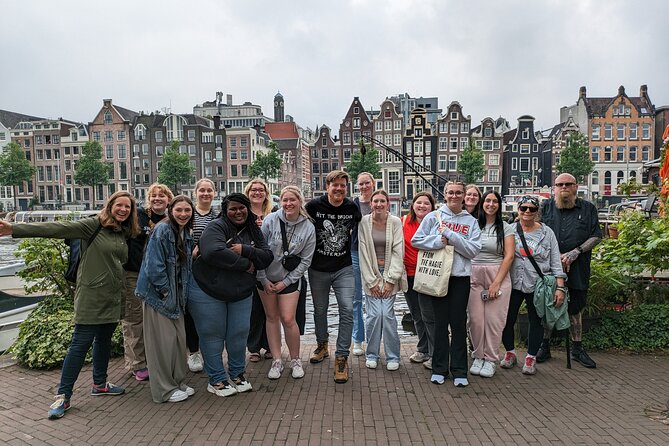
- Small-group pace (max 10) keeps things personal and question-friendly.
- English guide plus history told with humor means it stays fun, not a lecture.
- Lots of free outdoor stops make the tour good value even if you skip the one paid site.
- Monet bridge photo stop is quick, but it’s timed for easy snapshots.
- Practical tips throughout help you plan the rest of your Amsterdam day.
- Bring a refillable water bottle since there are places to top up along the way.
A 2-hour history hit that stays human
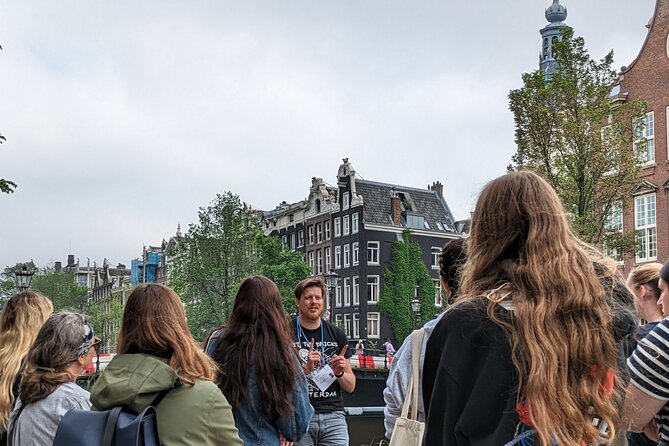
Amsterdam can feel like a postcard city until someone connects the dots. This tour does that in a compact time frame. You walk, you stop, you listen, and you get little stories that make the city’s buildings and street corners feel like clues rather than scenery.
The pacing is intentionally relaxed, which matters in Amsterdam. Even with key sights on the list, the guide keeps the group moving without rushing you from one moment to the next. If you’re jet-lagged or just want to get oriented without stress, this is a strong way to start.
The history also comes with humor. Not jokes for jokes’ sake, but light, human touches that keep the story memorable. Guides like Axel and Mark have been singled out for being funny, engaging, and easy to talk with, which is a big deal when you’re in a group setting.
You can also read our reviews of more walking tours in Amsterdam



The small-group setup and where it ends up
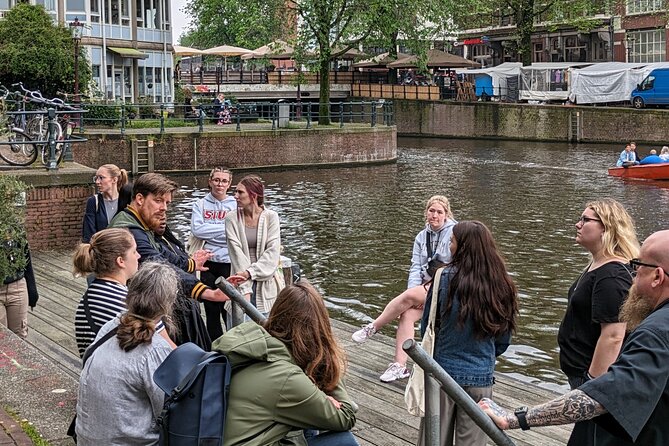
The tour runs about two hours and keeps the group size to 10 travelers or fewer. That’s a sweet spot: small enough to ask questions, big enough that you’re not walking alone with a guide.
You start at Hit the Bricks Walking Tours at Prinsenstraat 13, and you finish at Dam Square. That end point is practical. From there, you can hop on public transport, grab lunch, or keep exploring without having to backtrack.
There’s also a mobile ticket, and the tour is in English. If you like the simple stuff—scan, go, and follow along—this format is easy.
Canal Ring (Grachtengordel): the water that runs the city
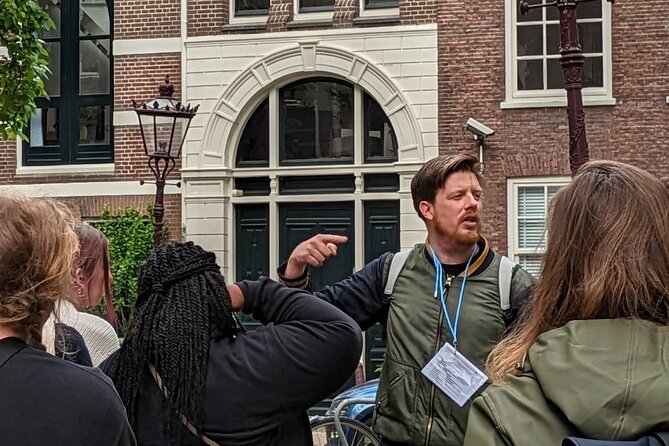
The walk begins in the canal belt, Amsterdam’s signature ring of canals. This is where the guide frames the whole city mindset: the Dutch had to coexist with water, and that shaped more than engineering—it shaped culture and values.
You’ll see why the canals feel both calm and strategic. The canal belt isn’t just pretty; it’s a story about managing risk, building with intention, and using waterways as infrastructure. It’s also one of the quickest ways to understand why Amsterdam looks the way it does when you zoom out.
Potential drawback: this area is popular, so you’ll be around other pedestrians. The upside is that it’s easy to take in the atmosphere while you learn the context.
De Wallen and the story behind Amsterdam’s most famous neighborhood
Next comes De Wallen, the Red Light District. The tour doesn’t treat it like a spectacle. Instead, it focuses on history—why it exists, how it works, and how the Dutch view it.
This stop is good if you want to understand how a society makes space for something that can look shocking from the outside. It’s also a reminder that Amsterdam’s identity isn’t built only on canals and bikes. There’s a social history here, too.
Consideration: the area can be busy and the subject matter can feel uncomfortable for some people. If you’d rather avoid it, you might still find the historical framing useful, but it’s smart to go in knowing what you’re walking into.
Dam Square: the water-fight myth that became real culture
Then you head to Dam Square, Amsterdam’s central hub. Here, the guide connects the dots again: the Dutch fight against the water and how it shaped ways of thinking.
Dam Square works as a reset point. It’s open, easy to orient in, and it helps you absorb the big theme without having to decode smaller streets. If you came to Amsterdam for photos and atmosphere, this is where you also get the meaning behind what you’re seeing.
If you prefer quieter moments, this stop can feel lively. But it’s brief, and it sets up what comes next.
You can also read our reviews of more historical tours in Amsterdam





South Church and the move from Catholic to Protestant
At South Church, the focus shifts to faith and how the Dutch changed over time. You learn why the country moved from Catholic to Protestant, and you get a look at the serene inner courtyard next to the church.
Courtyards like this are a practical travel lesson: Amsterdam can be loud at street level, but there’s often another world a few steps in. Even if you’re not a church-history person, this stop shows how power, religion, and daily life interacted.
The courtyard aspect is also a nice break from the busier streets. You’ll get a moment to slow down and take in the calm without needing to schedule museum time.
Jodenbreestraat and the human weight of Amsterdam’s wartime history
At Jodenbreestraat, the tour enters heavier territory. This is the start of Amsterdam’s Jewish Quarter, and you’ll hear about the tragic fate of the Jewish people who lived in Amsterdam before and during the war, including the hungerwinter.
This stop isn’t built for quick, casual sightseeing. It’s a short walk-and-listen moment that asks you to pay attention. You should treat it with care and expect the mood to feel more serious than the earlier canal stories.
If you’re looking for a gentle first-day overview only, you might not want heavy history right away. If you can handle it, though, this stop gives the tour real backbone. It connects Amsterdam’s beauty to the people who lived through its darkest chapters.
Begijnhof: a quiet courtyard and the beguine sisters
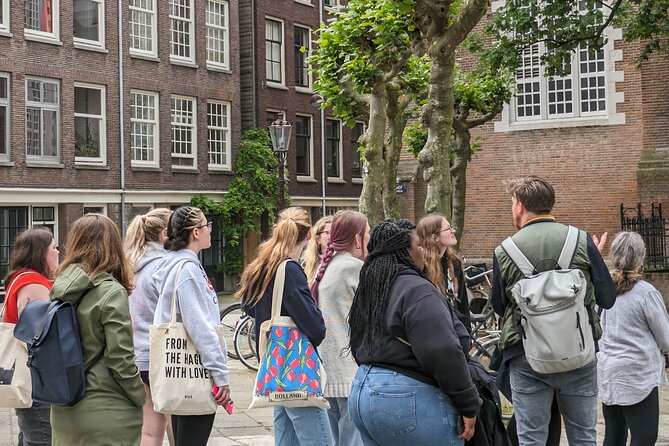
After that, the tone turns calmer again at Begijnhof, a kind of hidden-in-plain-sight garden courtyard. Here you learn about the beguine sisters and how the place was built in the middle of the city.
Begijnhof is one of those stops that makes Amsterdam feel layered. You step from street life into a more protected pocket, and the story helps you understand why the city holds these tiny islands of peace.
This is a strong “reset” stop—especially if you’ve been hit with too much city noise or too many crowds. It’s short, but it gives you a mental photo you’ll remember longer than some major landmarks.
Bushuis and Oost-Indisch Huis: how a small country reached for global trade
Next is the Bushuis and Oost-Indisch Huis, the former headquarters of the Dutch East India company. The guide explains how this small country grew into a vast empire and cornered world trade in spices—while also fighting for its independence.
This is where Amsterdam stops being only local and becomes global. You start to see the logic behind the wealth that powered canals, buildings, and institutions. Trade also becomes more than a word; it’s the engine behind centuries of money, ships, and conflict.
Potential drawback: depending on your interests, you might wish there was a bit more time here. The stop is brief, but it gives you a clear starting point if you want to learn more later on your own.
Stopera Pier: modern Amsterdam in an awkward building
On the banks of the Amstel river, you reach Stopera Pier and Amsterdam’s modern city hall. The guide explains why locals call it Stopera and why—despite the building being known for its looks—it’s still a place of pride for Amsterdam locals.
This stop is a nice contrast to the older parts of the city. You get to see how Amsterdam builds today, and you get a sense that local identity isn’t only about heritage. People take ownership of their city, even the parts they joke about.
If you like photo breaks, this riverfront moment helps. The walk keeps moving, but you get a breather with good views over the water.
Royal Palace Amsterdam and the quick lesson in Dutch symbols
Then comes Royal Palace Amsterdam. Admission here is not included, but you’ll learn about the Dutch royal family, connections to France, and how Dutch national color choices work—orange as a national color, while the flag is red, white, and blue.
Even if you don’t go inside, these facts help you connect what you see around the city. Orange appears constantly, and now you’ll understand why it shows up so often. The flag breakdown also makes it easier to spot meaning in small details you might otherwise ignore.
Consideration: if you were hoping for a full palace visit, you may feel this stop is more of a viewpoint and explanation. But the payoff is that you still get the story without paying extra for entry.
Groenburgwal: the Monet bridge photo moment that actually works
Finally, you’ll hit Groenburgwal, where the guide takes the group to see the famous Monet bridge. The stop is short, and the goal is simple: get your photo so everyone back home feels a little jealous.
This is one of the more practical parts of the tour. You don’t spend ten minutes trying to find the best angle. You get the stop, take your shot, and move on.
It’s also a nice way to end strong. After history and heavier topics, the bridge feels light and visual, almost like you’re closing the loop between stories and scenery.
Price and value: what $30.04 buys you (and what it doesn’t)
The tour costs about $30.04 per person for roughly two hours. On paper, that sounds like a “pay for a guide” expense, but the value is more specific than that.
You get an expert local guide, and you also get tips and tricks to get the most out of your Amsterdam trip. That can be worth real money if it helps you avoid wasting time. You also get discount codes for other tours if you ask, which can lower your costs later.
You’ll notice something else when you look at the route: most stops are free to enter. That means your money is mostly paying for interpretation and timing rather than ticket fees. The one notable exception is the Royal Palace, where admission is not included. If you decide to add the palace later, you’ll know it ahead of time.
What I’d plan for: bring a refillable water bottle. Bottled water isn’t included, and the tour description notes there are several spots where you can fill up during the walk.
Who should book this walk, and who might skip it
This tour is a great fit if you’re:
- New to Amsterdam and want your bearings fast
- Interested in how Dutch culture ties to canals, faith changes, and trade
- The type of traveler who likes short, story-heavy stops rather than museum hours
- Hoping for good photos without turning the day into a checklist
You might skip it if you:
- Want only light, nonstop fun and hate any heavier wartime content early in the day
- Strongly dislike De Wallen and would rather not even hear the historical explanation
- Prefer long time at one or two major sites instead of many quick stops
Also, if you enjoy a social vibe, the group size helps. In some recent tours, guides like Axel and Mark have been praised for being funny and making people feel comfortable, which is exactly what you want from a first history walk.
A quick note on hiccups (and what to do if they happen)
Like any ticketed activity, sometimes things can go wrong. There was at least one reported situation where the operator didn’t have the walking guide ready when it should have started, despite the booking details. In that case, the operator substituted a 90-minute canal tour, which the group still enjoyed.
That tells you something useful: if anything feels off at the meeting point, speak up early. Bring your voucher and confirm the plan before you assume it’s delayed. Most issues are fixable when you address them right away.
Should you book this Amsterdam History Walking Tour?
If you want a smart, time-saving first taste of Amsterdam, I’d book it. The strongest reasons are practical: short duration, small group size, and history that connects to daily life—from water management to religion to trade. You also get photo value at the Monet bridge without turning it into a photo marathon.
I’d especially recommend it to first-timers who want a mix of iconic sights and real context, with a guide who can keep it lively. And if you like learning with a sense of humor, this is built for you.
If you’re sensitive to the Red Light District area or you don’t want wartime history in the first half of the day, then consider whether the themes fit your comfort level. Either way, you’ll walk away with a clearer picture of why Amsterdam looks the way it does and how Dutch decisions shaped the city.
FAQ
How long is the Amsterdam 2 Hour History Walking Tour?
The tour runs about 2 hours.
What time does the tour start, and where does it meet?
It starts at 11:00 am at Hit the Bricks Walking Tours, Prinsenstraat 13, 1015 DA Amsterdam.
Where does the tour end?
It ends at Dam Square, near transportation.
Is the tour in English?
Yes, it’s offered in English.
What’s included in the price?
Included: an expert local guide, tips and tricks for getting the most out of your trip, and discount codes for other tours (upon request). The tour also uses a mobile ticket.
What isn’t included, and should I bring anything?
Admission for Royal Palace Amsterdam is not included. Bottled water isn’t included, but there are several stops where you can fill a refillable water bottle.
Are there any weather or cancellation considerations?
The experience requires good weather. You can cancel for a full refund up to 24 hours before the experience’s start time.