REVIEW · AMSTERDAM
Amsterdam Sightseeing Canal Cruise with Audio Guide
Book on Viator →Operated by Tours & Tickets · Bookable on Viator
Amsterdam canals are the fastest way to understand the city.
This 1-hour cruise glides past major landmarks on UNESCO-listed waterways, with a recorded audio guide that keeps you oriented without asking you to read a map every 30 seconds. You can also pick from four departure points so the start fits your day.
I like how the boat gives you a steady view of bridges and canal houses without the constant stopping and starting of walking. And I also like the value: for about $16.74 you get an easy overview of Amsterdam’s canal belt, plus a bunch of recognizable sights in a short loop. The main drawback is visibility: the boat is covered with glass overhead, so photos and sightlines can be a little limited (especially if it is windy, raining, or crowded).
In This Review
- Key Takeaways Before You Go
- A 1-Hour Canal Reset for Your First Amsterdam Day
- Glass-Roof Boats and the Visibility Trade-Off
- How the Audio Guide Works on the Water (and What to Do About Headsets)
- Picking Your Departure Point: Start Near What You Care About
- From Centraal to the Skinny Bridge: What You’ll See on the Water
- The Canal Belt Loop: Keizersgracht, Herengracht, and Prinsengracht
- Landmarks Along the Route: Westerkerk, De 9 Straatjes, and More
- Het IJ and the Maritime Side of Amsterdam
- Price and Seating Value: Is $16.74 a Good Deal?
- Comfort, Crowds, and the Night-Time Factor
- Should You Book This Amsterdam Canal Cruise?
- FAQ
- How long is the Amsterdam Sightseeing Canal Cruise?
- What’s the price per person?
- Is the audio guide available in English?
- Where does the cruise depart from?
- Where do I check in before boarding?
- Is hotel pickup or drop-off included?
- Are food and drinks included?
- How many people are on the tour at maximum?
- Can I cancel for a full refund?
Key Takeaways Before You Go
- 4 departure points let you start near your must-see spots: Central Station, Anne Frank House, Rijksmuseum, or Leidse Square
- Glass-roof boat comfort helps when the weather turns, but overhead windows can reduce photo angles
- Audio works best when it is quiet; noise on board can make the headset harder to hear
- Aim for good seats by arriving early, since capacity is capped at 60 travelers
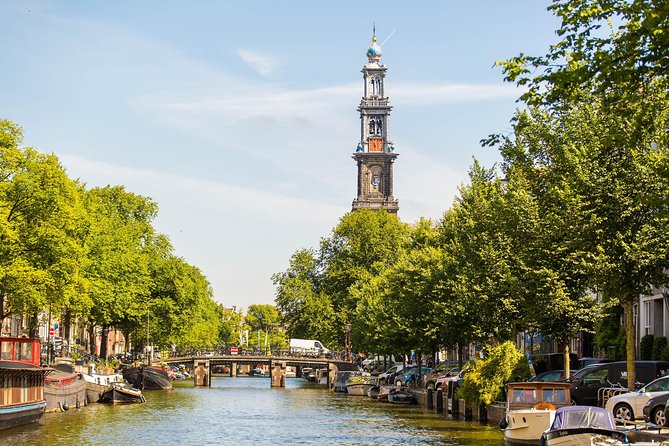
- Route highlights often include Magere Brug, the canal belt (Keizersgracht/Herengracht/Prinsengracht), and the Westerkerk area
A 1-Hour Canal Reset for Your First Amsterdam Day
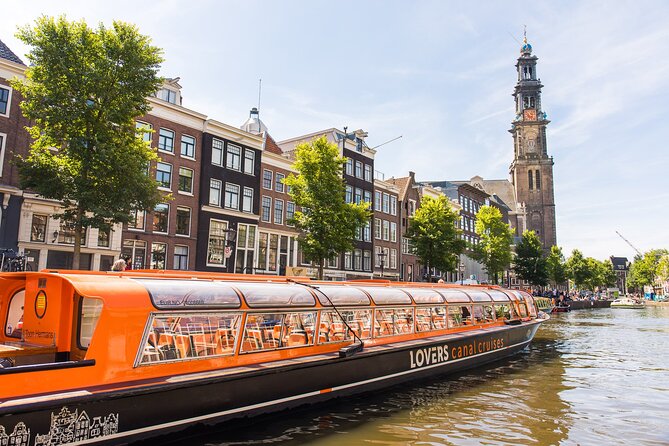
If you only have a limited window in Amsterdam, this cruise is a practical shortcut. You get out on the water fast, then sit back while the city slides by. No tickets to coordinate with museums. No route-finding stress. Just canals, bridges, and architecture.
The timing is also friendly. At roughly one hour, it works as an early-day orientation or a calm reset after you’ve been walking all morning. I find that the audio helps you start noticing details on land right away: canal-house shapes, bridge styles, and the way Amsterdam grew around water.
The big upside is that the cruise is built for a broad mix of visitors. You don’t need any special background to enjoy it. The audio guide is there to connect the dots, and the route passes by plenty of landmarks that are easy to recognize even if you’ve never read a guidebook.
You can also read our reviews of more boat tours in Amsterdam


Glass-Roof Boats and the Visibility Trade-Off
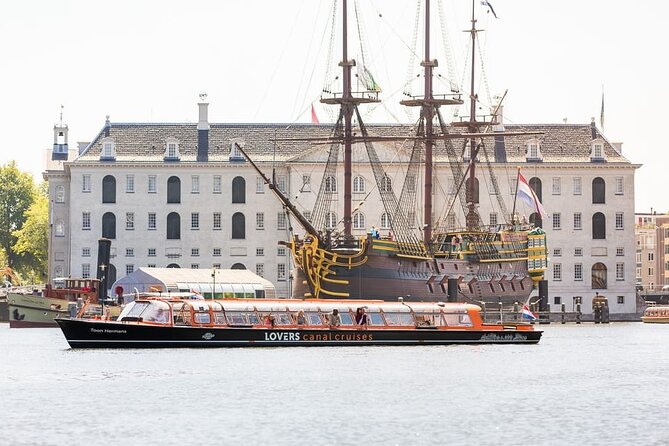
This is a glass-topped canal boat. That’s great for comfort because it protects you from wind and light rain. In cold months, being enclosed is a real plus. One review even called it warm and cozy in winter, with the option to open a window.
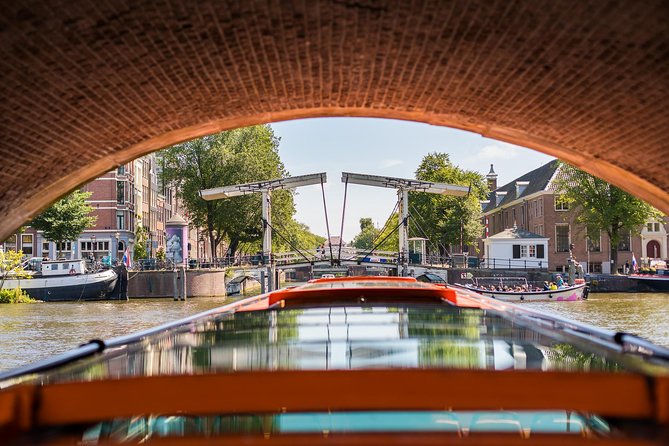
But here’s the trade-off: the roof and framework can limit your view upward and forward. If your goal is photos, expect less-perfect angles than you’d get from an open-top boat. Even when the cruise passes a landmark, you may have to lean or rotate to get the shot.
My practical tip: if photography matters, arrive early and choose a seat that lines up with the sides and front you’ll want. The boat can feel packed, and once you are settled, shifting for a better photo opportunity is harder.
How the Audio Guide Works on the Water (and What to Do About Headsets)
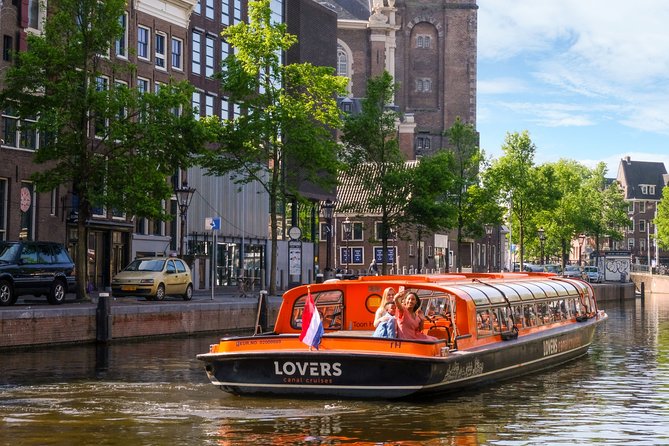
The cruise includes a recorded audio guide in multiple languages, including English. You plug in to a headset system on board, and the narration connects you to what you’re seeing—canal belt names, bridge facts, and city landmarks along the way.
In an ideal world, you hear the commentary clearly the whole time. In real life, audio can be inconsistent. Some people reported headset problems or missing segments, while others said the headset became harder to follow when there was a lot of noise or extra announcements from the boat.
So here’s what I’d do: test your headset early. If something feels off, ask staff right away while the boat is still loading, not after the cruise is halfway done. If you’re sensitive to sound and expect a quiet ride, know that crowds can turn the experience into more of a social atmosphere.
Picking Your Departure Point: Start Near What You Care About
One of the smartest parts of this tour is the choice of four departure points. Your options are: Central Station, Anne Frank House, Rijksmuseum, and Leidse Square.
- If you want the most convenient start and you’re not trying to target one landmark above all, go from Central Station. It’s easy to reach and usually makes the day feel simpler.
- If Anne Frank House is high on your list, choose the Anne Frank House departure point so you’re already in the area and you get a better chance of a satisfying view from the canal.
- If your day is built around art, pick Rijksmuseum to reduce walking and keep the morning flow smooth.
- If you’re staying closer to restaurants and nightlife, Leidse Square is a natural match.
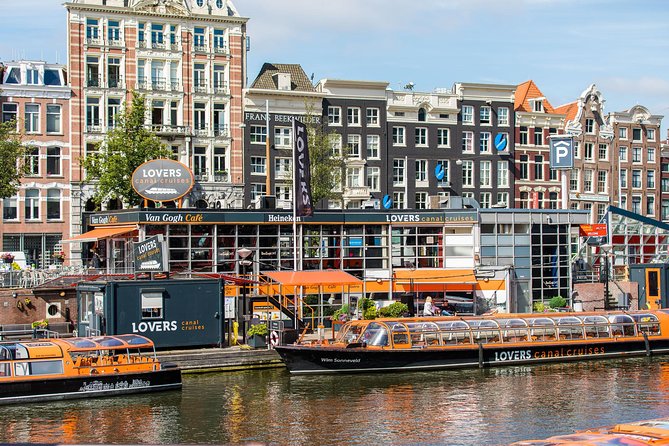
I also like the fact that the operator uses the Lovers meeting point area for check-in. Plan to be there about 10 minutes before your reserved time.
From Centraal to the Skinny Bridge: What You’ll See on the Water
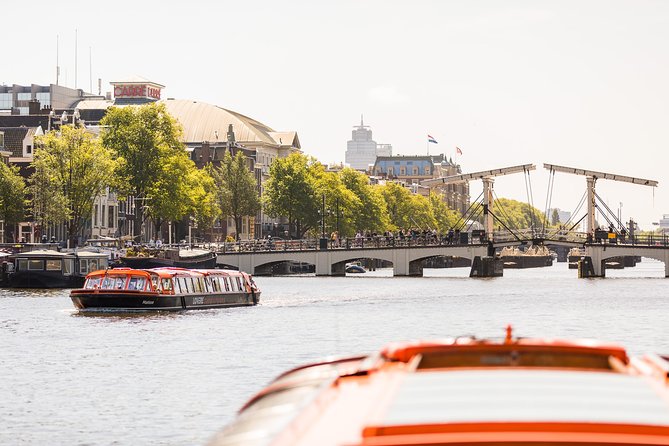
The route is designed around Amsterdam’s most photographed canal moments. One key stop is Magere Brug, also called the Skinny Bridge. It is a historic wooden drawbridge over the Amstel River, originally built in 1691 and rebuilt in 1934 in a similar traditional style. At night, it is known for its illumination, which is why evening cruises can feel extra special.
You’ll also pass under the kind of bridges that make Amsterdam feel like a postcard factory. Between them, you’ll glide past 17th-century merchant houses and the canal architecture that gives the city its distinctive look.
And yes, you can expect to spot major names from the water. The cruise description includes big-ticket sights like the Anne Frank House area, Westerkerk (Western Church), De 9 Straatjes (Nine Streets), Van Gogh Museum, and Rijksmuseum. In practice, the exact viewing angle depends on where you sit and how crowded your departure time is, so think of this as seeing the landmarks from the canal perspective—not getting a perfect close-up.
You can also read our reviews of more guided tours in Amsterdam



The Canal Belt Loop: Keizersgracht, Herengracht, and Prinsengracht
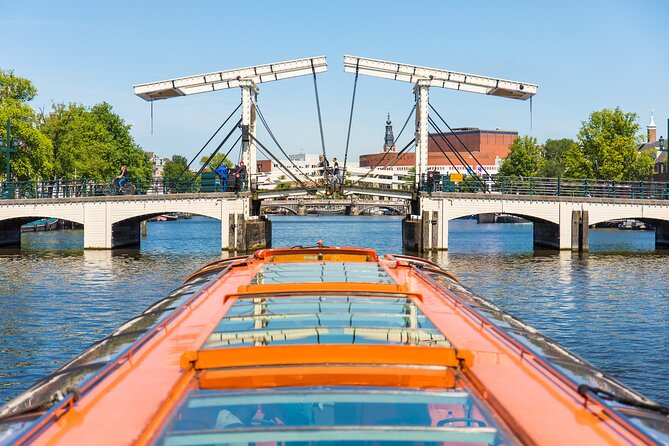
This is where the cruise earns its keep. Amsterdam’s main canal belt has layers, and the audio names help you understand what you’re looking at.
You typically move along three major canals:
- Keizersgracht (built in 1612) is named after Emperor Maximilian I and is known as the widest of the main canals in Amsterdam’s canal belt.
- Herengracht (also begun 1612) was the most prestigious stretch, home to Amsterdam’s elite. The canal houses here are famous for the Golden Bend feel—stately and grand.
- Prinsengracht was dug in the early 17th century during the big expansion period. It’s named for the Prince of Orange, and the canal houses line up with a mix of elegant residences and cultural stops nearby.
The payoff for you: once you hear the canal names and purpose, the city stops feeling like a bunch of pretty waterways. You start to notice how wealth and planning shaped the look of each stretch.
Landmarks Along the Route: Westerkerk, De 9 Straatjes, and More
Two landmarks show up often in the “wait, I know this” category.
First, Westerkerk (Westertoren). This Renaissance-style church was completed in 1631 and is known for its tall ornate tower, the Westertoren. It also sits near the Anne Frank House area, so it works as a visual anchor for understanding where you are geographically.
Second, De 9 Straatjes (Nine Streets). This area is made up of nine narrow streets in the canal belt, famous for small boutiques, vintage shops, and cozy cafés. From the boat, you don’t shop the streets, but you do get the feel of why this neighborhood is popular: tight lanes, canal-side charm, and a layout that pulls you toward the water.
Other sights you may pass by along the way include:
- The Red Light District, locally called De Wallen, described as the city’s oldest neighborhood dating back to the 14th century when it served as a harbor area, now a regulated zone with legalized sex work and a mix of tourism and nightlife.
- The Nieuwmarkt, with its Waag building—a structure that originated as a city gate and later became a guildhall.
- The Bloemenmarkt, the world’s only floating flower market, set on houseboats along the Singel canal, created in 1862 to supply flowers by boat.
I’ll add a small reality check: a canal cruise can show you a lot, but it won’t replace the experience of walking those areas. If you care about street-level details, plan to pair this with a stroll afterward.
Het IJ and the Maritime Side of Amsterdam
Not every cruise focuses on Amsterdam’s water beyond the classic canal belt. This one can connect you with the wider waterways around Het IJ, a former bay area that links the city to the North Sea.
Along that stretch, you may pass by:
- Scheepvaartmuseum (the Maritime Museum), located in a historic 17th-century warehouse and featuring collections of ships, maps, and nautical artifacts. It was renovated in 2011.
- NEMO Science Museum, with its distinctive green ship-like design by architect Renzo Piano, opened in 1997. It’s an interactive science and technology museum, especially popular with families.
For you, this matters because it shows a side of Amsterdam beyond canals as a scenic backdrop. The water was also trade, transport, and industry. From the boat, it clicks that Amsterdam is both historic and practical—pretty, yes, but built on movement.
Price and Seating Value: Is $16.74 a Good Deal?
At $16.74 per person for an about 1-hour cruise with an English audio guide, this is solid value for most first-time visitors. The key is what you get for that money: comfort, a timed loop that covers multiple landmarks, and enough narration to make the sights feel connected.
Where you’ll get the most value is if you use it strategically:
- Go early in your trip to learn what names to look for later.
- Use it when rain or wind is messing with your walking plans.
- Choose a departure point that puts you close to the places you want to revisit on foot.
Where the value can feel weaker is if you are expecting a close-up, photo-perfect tour of specific icons. One review complaint noted that the tour wasn’t as interesting as expected for someone looking for more than canal-house scenery. Another issue: some people felt the experience was impersonal compared to smaller-boat options.
Bottom line: if you want a relaxed overview and you like the idea of seeing Amsterdam from the water, the price makes sense. If you want intimate guiding with lots of time to stop, look, and talk, you might prefer a smaller group format.
Comfort, Crowds, and the Night-Time Factor
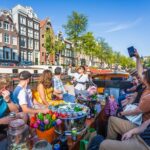
The cruise duration is short, but the on-board experience can vary based on your departure time. The boat can get hot and crowded, and visibility can be affected by both weather and window placement. Still, it’s usually manageable because the trip ends quickly.
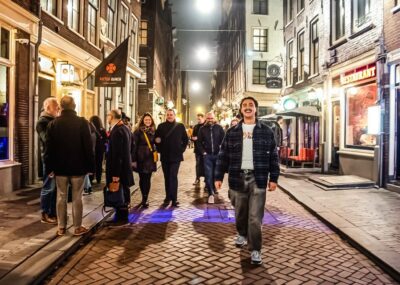
Night cruises are where this type of tour can feel extra worthwhile. People have shared that evening rides can look magical due to canal lighting. If you’re in Amsterdam after sunset, Magere Brug illumination and bridge reflections are the kind of details that make a one-hour canal loop feel longer—in a good way.
Should You Book This Amsterdam Canal Cruise?
I’d book it if you want a simple, affordable way to get your bearings fast. Start with this if it’s your first visit, if weather is unreliable, or if your schedule is tight and you still want to see major landmarks like Magere Brug and the Rijksmuseum area from the water.
I’d think twice if you’re a photographer who hates window framing, or if quiet audio is a non-negotiable. Also consider that some passengers have reported problems with noise levels affecting the audio, and a few complained about headset issues.
If you do book, my best advice is practical: arrive early for better seating, test your headset right away, and pick your departure point based on what you most want to see again on foot afterward.
FAQ
How long is the Amsterdam Sightseeing Canal Cruise?
The cruise is listed at about 1 hour.
What’s the price per person?
The price is $16.74 per person.
Is the audio guide available in English?
Yes. The audio guide is offered in English, along with several other languages.
Where does the cruise depart from?
You can depart from one of four locations: Central Station, Anne Frank House, Rijksmuseum, or Leidse Square.
Where do I check in before boarding?
Check in at Lovers about 10 minutes before your reserved time.
Is hotel pickup or drop-off included?
No, hotel pickup and drop-off are not included.
Are food and drinks included?
No, food and drinks are not included.
How many people are on the tour at maximum?
The tour has a maximum of 60 travelers.
Can I cancel for a full refund?
Yes. Free cancellation is available up to 24 hours in advance for a full refund.