Amsterdam rewards slow attention. This smart small-group sightseeing walk mixes big “first-time” sights with genuinely oddball stops, so you leave with stories, photos, and local food tips. I especially liked the chance to grab panoramic views over the Amstel and the way the guide keeps the pace friendly enough for real questions.
You also get two included tastings—Dutch cheese and stroopwafels—plus a bonus PDF plan for how to shape the rest of your day. The only thing to keep in mind: this is a short-stop walking tour (about 2.5 hours), so if you’re hoping for long museum time, you’ll need to pair it with a separate outing.
In This Review
- Key highlights to look forward to
- A first-timer-friendly route that still feels personal
- Rembrandtplein: your easy starting point and the tour tone
- Blauwbrug and the Amstel: the kind of view you’ll thank yourself for
- Pathe Tuschinski: cinema architecture that steals the show
- Bloemenmarkt and Munttoren: floating flowers plus money-history trivia
- The Mouse Mansion: why this tiny place works so well
- Kalverpassage: a modern shopping passage with a past life
- Spui and the optional herring: taste local or skip without guilt
- Begijnhof: the quiet courtyard that changes the pace
- Damrak: the food moment—cheese and stroopwafels included
- National Monument and the Royal Palace area: memory, monarchy, and art spaces
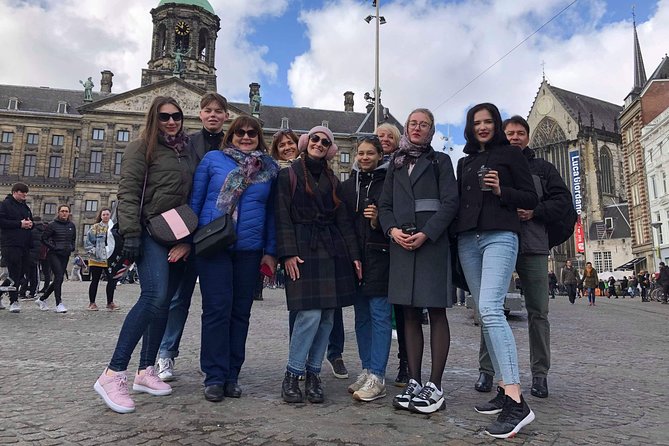
- Dam Square ending: layered city center in short form
- Price and value: what $287.58 buys you (and what it doesn’t)
- The bonus PDF plan: how to use it without overplanning
- Who this tour fits best
- Should you book this Amsterdam sightseeing tour?
- FAQ
- How long is the Amsterdam sightseeing tour?
- What time does the tour start and where does it end?
- What tastings are included?
- Is Dutch herring included?
- Is the tour in English?
- Are any attractions or stops paid separately?
Key highlights to look forward to
- Amstel photo stops at Blauwbrug with city-and-water context you’ll actually remember
- Pathe Tuschinski: Art Deco meets Amsterdam School in a cinema building with serious personality
- Floating flower market at Bloemenmarkt, plus Munttoren history nearby
- Tiny-world contrast at The Mouse Mansion, tucked behind a major shopping stretch
- Prison-to-passages story at Kalverpassage right next to the modern shopping scene
- Included tastings at Damrak: Dutch cheese and stroopwafels
A first-timer-friendly route that still feels personal
If Amsterdam is new to you, this kind of tour helps fast. You start in a classic hub near Rembrandtplein and gradually work toward Dam Square, so the city stops feeling like a map full of lines and starts feeling like a place with a logic. The route is designed for a 2 hours 30 minutes walking rhythm, with multiple short stops that keep energy up.
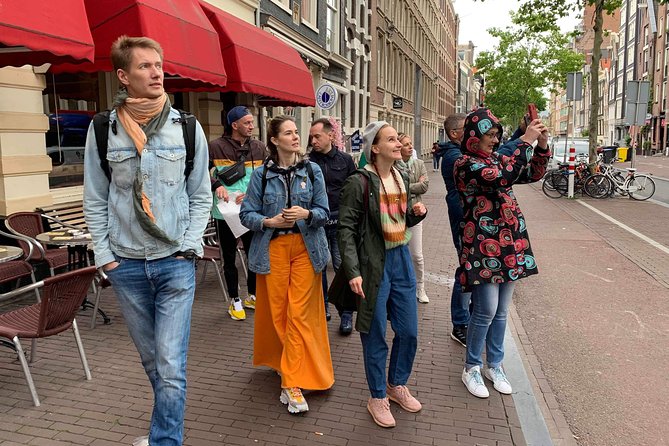
The “small group” angle matters. It’s not just about fewer people—it’s about more back-and-forth. On English departures, guides such as Ana and Sasha have been known to explain clearly and answer questions on the spot, which is exactly how you get more out of places like Begijnhof (quiet, easy to miss) or Kalverpassage (easy to walk through without realizing what you’re seeing).
And because it’s a private tour/activity, you’re only sharing with your group, not a big crowd wandering past your guide mid-sentence. That feels better on narrow sidewalks and makes photo stops more workable.
You can also read our reviews of more guided tours in Amsterdam


Rembrandtplein: your easy starting point and the tour tone
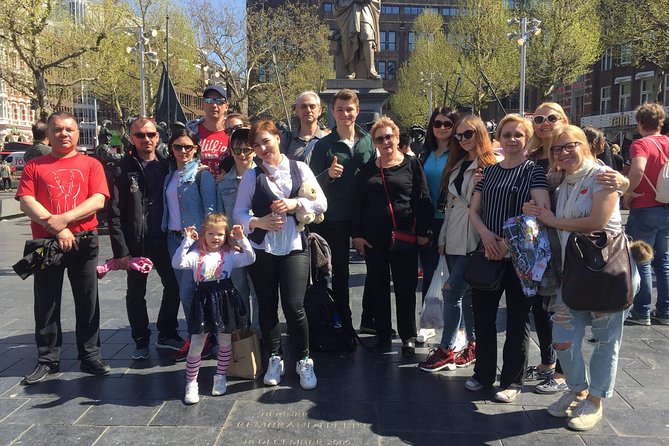
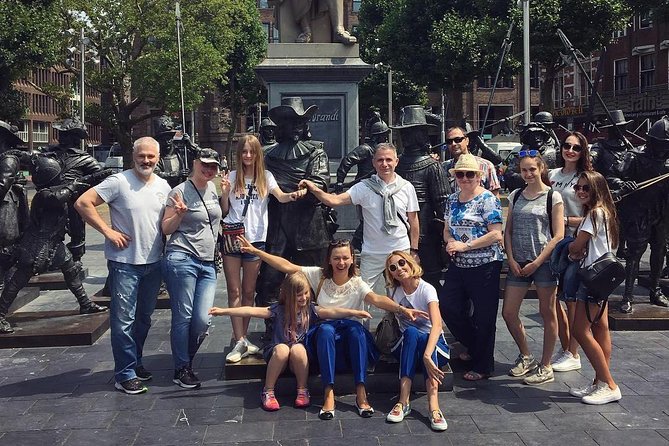
You meet at Rembrandtplein, by the statue of Rembrandt. This is a good first anchor because the square is lively and obvious, so you’re not stuck searching side streets right away. You’ll get a quick orientation and context before the walk really starts.
It’s also a helpful moment to reset expectations: you’re not doing a “see everything” sprint. Instead, you’re collecting a handful of locations that explain Amsterdam—its relationship with water, trade, religion, and even the way it uses old buildings for new life.
Practical note: wear shoes you’re comfortable in for stop-and-go city walking. The pace is active, even if each stop is brief.
Blauwbrug and the Amstel: the kind of view you’ll thank yourself for
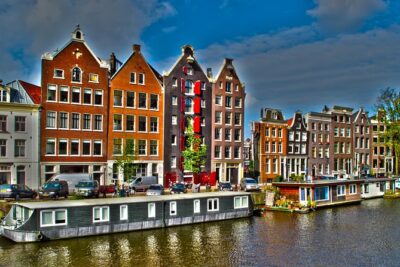
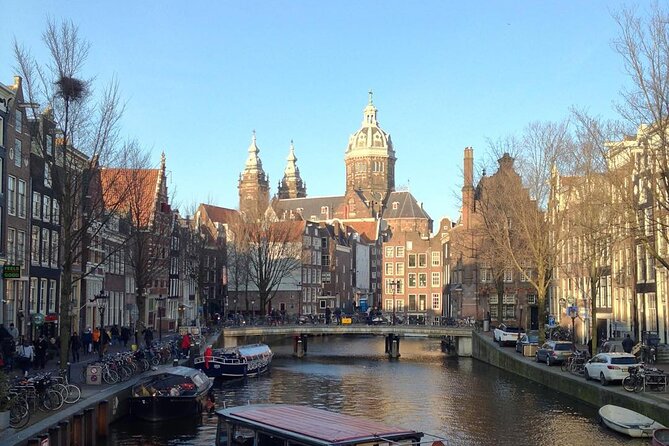
Next comes Blauwbrug, famous for its iconic view over the Amstel River. This is one of those spots where your camera suddenly makes sense. The guide ties the scenery to the city’s origins—Amsterdam’s relationship with water is the thread—and that turns a postcard moment into something you can explain to someone later.
Why this stop is worth it: if you’ve only seen Amsterdam from canals and bridges without context, you tend to remember the photo and forget the reason. Here, you connect the river to the city’s growth and identity. It’s a small time investment that pays off.
Pathe Tuschinski: cinema architecture that steals the show
At Pathe Tuschinski, you get the chance to look at a building that’s basically a history lesson in style. You’ll hear how the theater blends Art Deco with Amsterdam School influences, and you’ll learn the story behind its creator.
If you’re into design, this stop scratches that itch. If you’re not, you’ll still get something: a reminder that Amsterdam is not just about canals and bikes. It’s also about what people built for entertainment, and how architecture can become part of everyday culture.
Tip for photos: stand where you can capture the façade details without blocking other people. This is a popular area, and part of “getting good photos” is timing and patience.
Bloemenmarkt and Munttoren: floating flowers plus money-history trivia
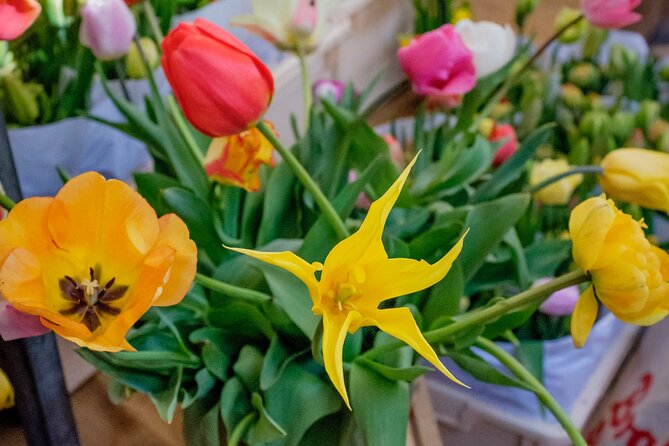
The Bloemenmarkt stop is pure sensory Amsterdam—color, scent, and the visual shock of flowers floating on water. You’ll also learn how flowers became tied to Dutch national identity, which is useful context when you see tulip-season hype later.
Right nearby, you’ll hear about Munttoren and its unexpected role in Dutch financial and social history. This is one of the reasons I like tours like this: they don’t just point at scenery. They connect it to the way the Netherlands functions—trade, institutions, and the stories people built around them.
Small caution: the market can be crowded depending on the day. The guide’s short timing helps, but you’ll still want to move with the group.





The Mouse Mansion: why this tiny place works so well
The Mouse Mansion is the kind of stop you might otherwise miss—especially because it’s tucked behind one of the busiest shopping streets. Inside, it’s a whimsical miniature world with tiny handmade rooms and charming details, created by a Dutch artist and her daughter.
Why I love this kind of detour: Amsterdam can feel famous and serious all the time, and then suddenly you get something playful and intimate. It’s quiet compared to the big street energy around it, and it gives your brain a rest.
Also, it’s a great “contrast stop.” After architecture and markets, this is small-scale wonder. If you like oddball experiences, this is one of the strongest moments on the walk.
Kalverpassage: a modern shopping passage with a past life
Kalverpassage is a hidden-inplain-sight corridor where art and building history overlap. You’ll see a modern installation connected to artist Maarten Baas, then hear about the building’s little-known past—once a prison, now transformed for modern use.
This stop is valuable because it explains how Amsterdam reuses space. That’s a big theme in the city, and it’s easier to understand when you see one example up close rather than learning it in theory.
Practical angle: passages can feel warmer and more enclosed than street level. If it’s a chilly day, you’ll appreciate having that brief interior change before heading back out.
Spui and the optional herring: taste local or skip without guilt
At Spui Square, you’ll stop by a traditional herring stand. You can try traditional Dutch herring if you want, but it’s not included—it’s your own expense.
This is one of those “you control the experience” moments. If you love trying local foods, this is your green light. If you’d rather keep it simple, you can observe and keep walking without missing the tour’s main included tastings.
If you do try it, listen to the guide’s tips on how to eat it like an Amsterdammer. That small advice can turn a confusing first bite into something you actually enjoy.
Begijnhof: the quiet courtyard that changes the pace
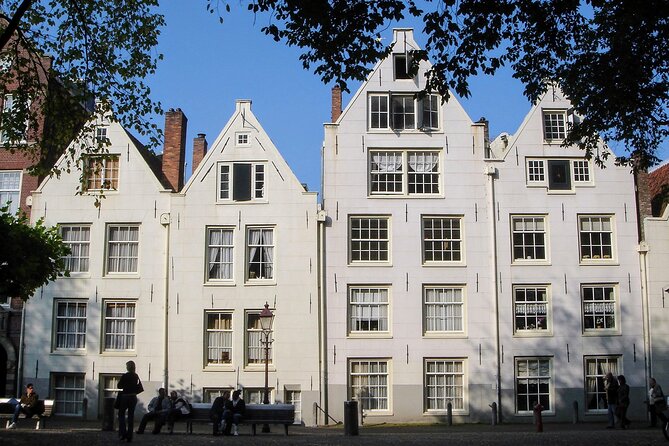
Begijnhof is where the tour slows down emotionally, even if you’re still walking. You’ll hear the story of this cozy yard, learn its original purpose, visit a hidden church, and get context tied to the 80 Years’ War.
Why this stop hits: Begijnhof is a reminder that Amsterdam has spaces built for protection and community, not just commerce. The courtyard design helps you understand why people wanted enclosed calm in a city shaped by waterways and trade.
This is also one of the best spots for photos that feel different from canal selfies. Look for angles that show the courtyard feel rather than just the doorway.
Damrak: the food moment—cheese and stroopwafels included
Damrak is your included tasting stop. You’ll indulge in Dutch cheese and stroopwafels. While you eat, you’ll hear facts about Dutch food culture, how cheese-making works, and how the famous syrup waffle became a national treat.
This is one of the tour features that feels like real value. At $287.58 per person, the cost can look steep on paper—until you remember you’re paying for a local guide plus included tastings plus short stops that otherwise would take you longer to piece together alone. Two included food items don’t sound huge, but they’re also a doorway to context. You’re not just eating; you’re learning what you’re tasting.
Quick practical thought: stroopwafels are sweet, and cheese can be strong. You’ll likely want water afterward, so keep a bottle handy.
National Monument and the Royal Palace area: memory, monarchy, and art spaces
You’ll stop at the National Monument, which is more than a memorial. The guide frames it as a symbol of reflection, freedom, and even quiet protest. Even if monuments aren’t your thing, it’s worth hearing how locals read these spaces—Amsterdam isn’t only about charm, it also contains reminders of the hard parts of European history.
Then you’ll admire the Royal Palace from the outside and learn how the building evolved from city hall into a royal residence. Immediately next door is the Nieuwe Kerk, a former church used for exhibitions and royal ceremonies. You’ll hear how religion, monarchy, and art intersect in this still-active cultural space.
Even when you’re not going inside, this cluster of stops works. You get civic symbolism, royal storytelling, and cultural programming in one area—so you understand why this corner of Amsterdam feels official and ceremonial.
Dam Square ending: layered city center in short form
You wrap up in Dam Square, which the guide presents as the heart of Amsterdam with layered history. This is the practical ending you want: a central, well-connected spot where you can hop to museums, canals, or your next meal without a long transfer.
I like ending here because Dam Square is also where Amsterdam’s “big moments” happen—so your day plan clicks into place. It’s easy to transition from tour mode to explore mode.
Price and value: what $287.58 buys you (and what it doesn’t)
At $287.58 per person, you’re not buying a bargain. You’re buying time with a passionate local guide, a tight route with multiple curated stops, and included tastings (Dutch cheese and stroopwafels). Many stops are free to access, so you’re mostly paying for guidance and interpretation rather than stacking entrance fees.
What you don’t get: long, ticketed museum time during this walk. If you want to go deep into the Royal Palace, Nieuwe Kerk exhibitions, or any indoor attractions on your own, you’ll add that separately. Think of this as a strong orientation and context-builder, not a complete “do-it-all” Amsterdam day.
When it makes the most sense financially: if it’s your first visit, or if you only have a limited window and want a fast path to “I understand this city.” It’s also a good pick if you’d rather spend your time eating well and photographing well than figuring out where to go next.
The bonus PDF plan: how to use it without overplanning
The included bonus PDF guide is Your One Day Plan in Amsterdam. This is helpful because it gives you a ready-made way to turn the tour into a full day instead of leaving you staring at your phone asking where to go after.
My advice: skim it after the walk, not before. That way, the tour stops become your anchors, and the PDF helps you plug in what you missed—rather than forcing you into a rigid schedule from the start.
It’s also useful if you’re traveling with different interests. One person can head toward food or canals; another can chase architecture or quieter courtyards. The PDF can help you split decisions without losing the day’s momentum.
Who this tour fits best
This works really well if you want:
- A 2.5-hour introduction route with a local guide and clear explanations
- Food context you can taste (cheese and stroopwafels are included)
- A mix of famous stops and smaller, more surprising places like The Mouse Mansion
You might choose something else if:
- You’re only interested in full-length museum visits
- You want a heavy canal-boat focus (this is a walking route with photo and street-level context)
If you like architecture, city storytelling, and a few memorable oddities, you’ll probably find this hits the right notes.
Should you book this Amsterdam sightseeing tour?
I’d book it if you’re aiming to get oriented fast and still feel like you had a “local conversation” built into your day. The Amstel photo stop, Pathe Tuschinski, Begijnhof, and the Damrak tastings create a balanced mix of sight, story, and flavor—and the included PDF helps you keep moving after the walk ends.
Skip it (or pair it differently) if you want long indoor time or a food tour that centers only on eating. This one is more like a guided sampler of what Amsterdam means—then it hands you the tools to plan the rest.
FAQ
How long is the Amsterdam sightseeing tour?
It lasts about 2 hours 30 minutes.
What time does the tour start and where does it end?
It starts at 10:00 am at Rembrandtplein (1017 CV Amsterdam) and ends at Dam Square (1012 Amsterdam).
What tastings are included?
The tour includes tastings of Dutch cheese and stroopwafels.
Is Dutch herring included?
No, herring is optional and not included. You would pay your own cost if you choose to try it.
Is the tour in English?
Yes, it is offered in English.
Are any attractions or stops paid separately?
The stops listed have free admission, except for the optional Dutch herring tasting, which is not included.