REVIEW · AMSTERDAM
Exclusive small-group Amsterdam Red Light District tour
Book on Viator →Operated by Trigger Tours · Bookable on Viator
De Wallen tells stories on wet cobblestones. In this exclusive Amsterdam Red Light District walking tour, you connect adult street culture with the older Old Town landmarks that shaped the city long before the myths. It’s short, local-led, and built for people who want clarity fast.
I love the way the guide balances human stories with real-world context—how the area got to where it is today. I also love the stop choices: wooden foundations, the surviving wood-built pub, and the Waag and guild history keep the walk from feeling like a one-note spectacle. One drawback to consider: the subject matter is adult by nature, so keep your comfort level in mind and use the question time if you want plain answers.
In This Review
- Key highlights you’ll actually feel on the walk
- Two Hours in De Wallen: What This Tour Does Differently
- The Small-Group Setup and Why It’s Worth Paying for
- Meeting at Geldersekade and Keeping Your Day Plan Simple
- Old Town First: How De Wallen Fits Into Amsterdam’s Core
- City Built on Trees: The Wooden Poles Under Your Feet
- Pub The Ape (Int Aepjen): A Wooden Building That Survived
- Waag and the Gatehouse Story: Guilds, Crafts, and Power
- The Smallest House and the VOC Connection
- Condoms Since 1987: Adult Life Discussed Like a Real Topic
- Ask Better Questions: Guides Like Adam and Aarre
- What to Watch For While You Walk De Wallen
- Price and Value: Is $63.67 a Good Deal?
- Who This Tour Fits Best (and Who Should Skip It)
- Should You Book This Amsterdam Red Light District Tour?
- FAQ
- How long is the Amsterdam Red Light District walking tour?
- What is the price per person?
- Where do I meet for the tour?
- Is the tour a small-group experience?
- Are there multiple start times available?
- What ticket format is used?
- What does the tour cover?
- Is it suitable for travelers with limited mobility?
- Are service animals allowed?
- What is the cancellation policy?
- When will I receive confirmation?
Key highlights you’ll actually feel on the walk
- Small-group feel with a cap of 32, so you’re not lost in a crowd
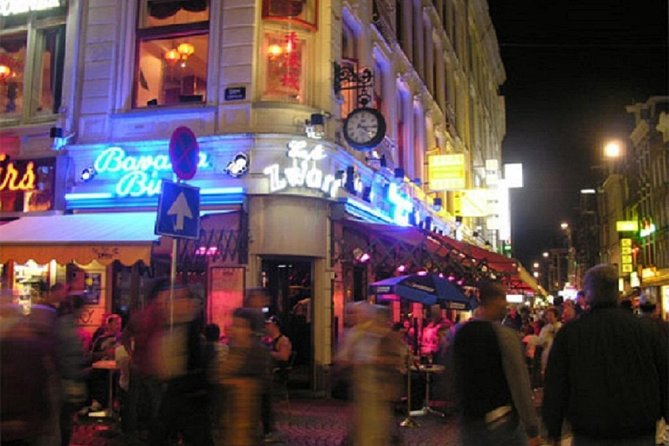
- Local perspective on De Wallen’s origins, plus coffeeshop culture and the sex work industry
- Amsterdam-on-wood history: you’ll learn why buildings stand on deep wooden poles in the clay
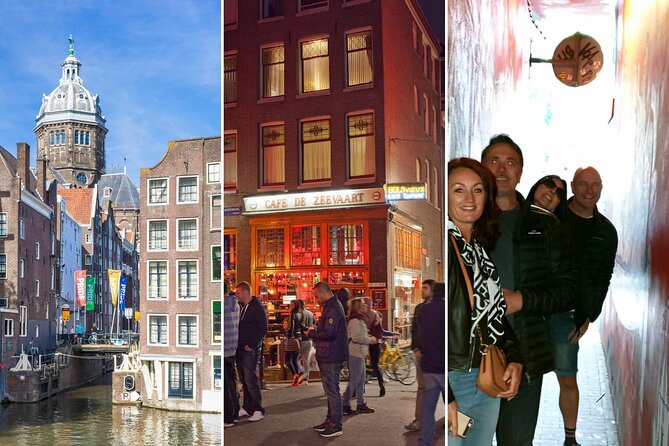
- Old buildings you can see with your own eyes, including Pub The Ape (Int Aepjen), the Waag, and the tiny house linked to VOC storage
- Modern, factual stop at a condom shop that has been operating since 1987, where you can even choose sizes
Two Hours in De Wallen: What This Tour Does Differently
Most Red Light District experiences give you either shock value or a vague history lesson. This one aims for something more useful: quick orientation plus straight context.
The format matters. In about two hours, you cover the famous streets without turning it into an all-day slog. You’re walking on foot, so you can actually notice the narrow lanes, the way buildings line up, and the details that help you understand why this area developed the way it did. When a tour moves that slowly and points out specifics, you leave with bearings, not just photos.
You can also read our reviews of more tours and experiences in Amsterdam.



The Small-Group Setup and Why It’s Worth Paying for
This is an exclusive small-group tour, and the practical cap is up to 32 travelers. That number won’t magically make you invisible, but it usually means you can hear the guide, ask questions, and follow the story without constant shuffling.
You’ll also see the value in the structure. The tour includes a mobile ticket, so you’re not dealing with printouts. There are multiple start times, which is a big deal in Amsterdam, where your best plan often depends on what time you can realistically fit this into your day.
One more helpful reality check: the tour is relatively popular, with an average booking window of about 37 days in advance. If you’re traveling in peak season or on a tight itinerary, book early so you’re not hunting for an opening.
Meeting at Geldersekade and Keeping Your Day Plan Simple
You meet at Geldersekade 2HS, 1012 BH Amsterdam, and the tour ends back at the same point. That means less stress about train lines, tram connections, or figuring out where you’ll end up when the walk finishes.
It also helps if you’re pairing this with other Old Town wandering. Since the area is compact and the walk is timed at about two hours, you can do this as a morning or early afternoon activity and still have enough day left for museums, canals, or just plain getting lost the fun way.
If you’re trying to decide between start times, pick one that gives you breathing room after. De Wallen is not a museum exhibit—your senses stay on. You’ll get more out of it if you don’t immediately rush into the next appointment.
Old Town First: How De Wallen Fits Into Amsterdam’s Core
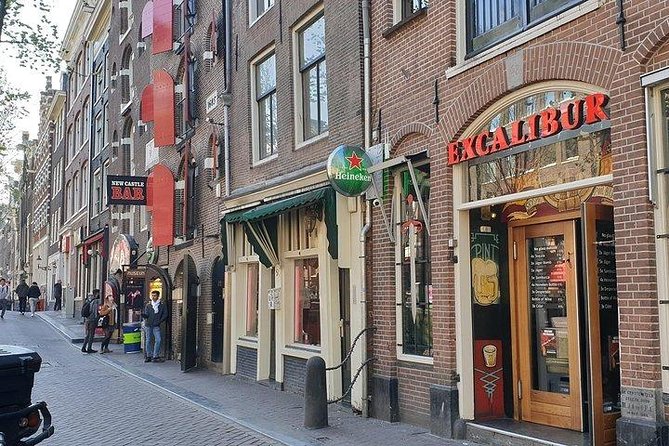
A big reason this tour works is the order of the story. You start by getting oriented in Amsterdam’s Old Town context, then you move into the Red Light District area as part of that older urban fabric.
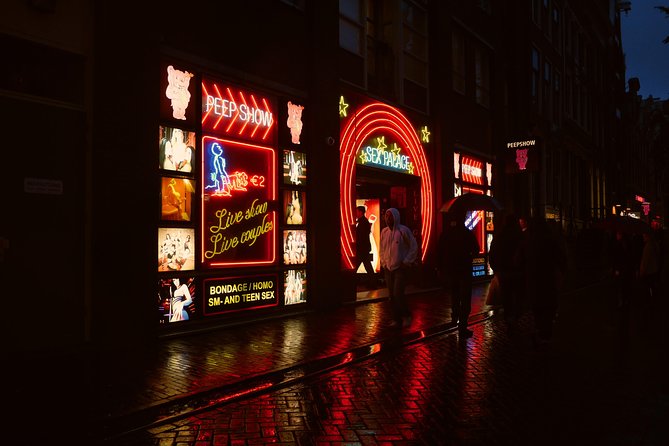
You’ll walk narrow streets and hear how the district became known for things you’ve probably heard about already. What makes the tour more satisfying is that the talk doesn’t stay on surface myths. It connects the district to the city around it and explains how Amsterdam’s sex work industry and coffeeshop culture fit into the wider social landscape.
There’s also a strong sense of age here. This part of the city is tied to the oldest Old Town area, so the guide can point out why you’re seeing so many buildings and street features that feel ancient compared with the Netherlands’ modern image.
If you care about understanding a place rather than just watching it, this approach pays off.
City Built on Trees: The Wooden Poles Under Your Feet
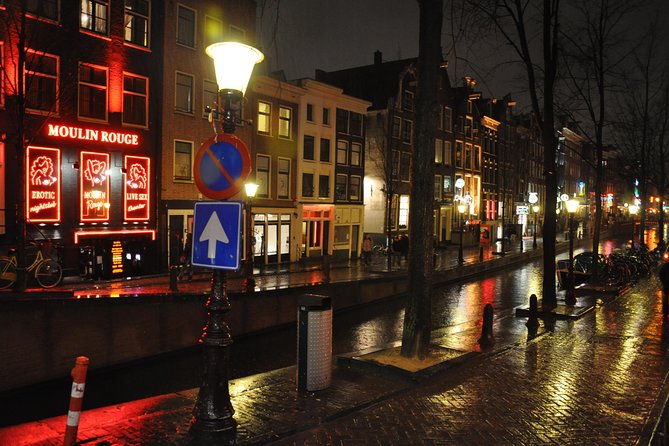
One of my favorite moments in this kind of walk is when the guide stops you and talks about the ground itself. Amsterdam is famous for canals, but the real “why” is underfoot.
Here, you’ll learn the logic behind the phrase Amsterdam as a city built on trees: the soil is thick with fen and clay, and buildings need support deep down. In older times, houses were built on wooden foundation piles driven through clay, peat, and water until they reached a first solid layer of sand—about 11 meters deep.
This is not trivia for trivia’s sake. It’s a way to understand why Amsterdam looks and feels the way it does. When you realize how much engineering had to go into simply building safely, you start seeing the city as intentional, not accidental.
On a Red Light District walk, this kind of context also shifts your perspective. You’re not just standing in an adult neighborhood—you’re standing in a place that has always been shaped by practical problems and clever solutions.



Pub The Ape (Int Aepjen): A Wooden Building That Survived
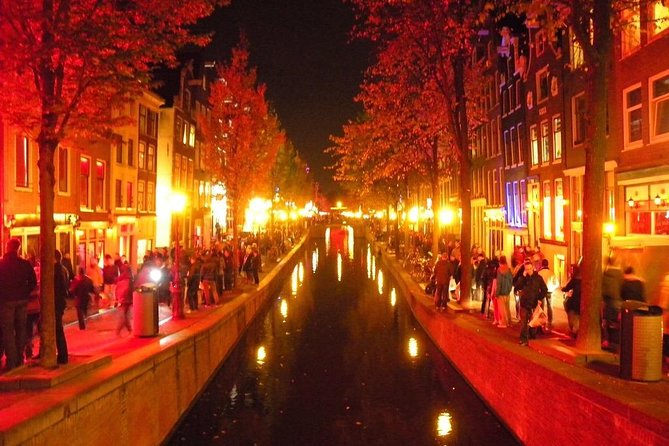
At Pub The Ape, also called Int Aepjen, you get one of those stop points that makes a quick tour feel surprisingly specific.
The pub is built around 1540 and is known as one of only two remaining wooden buildings in Amsterdam. The guide ties that to a major turning point in the city: a large fire in 1452, after which authorities pushed for brick facades.
That detail changes the stop from a photo opportunity into a mini history lesson. You start to see the city’s safety decisions in the architecture itself. If you’ve ever wondered why Amsterdam has so many brick-and-canal-street looks, this is one reason why.
And since it’s a pub, the stop naturally feels human. You’re not just studying stone. You’re seeing how everyday life and survival history overlap in one building.
Waag and the Gatehouse Story: Guilds, Crafts, and Power
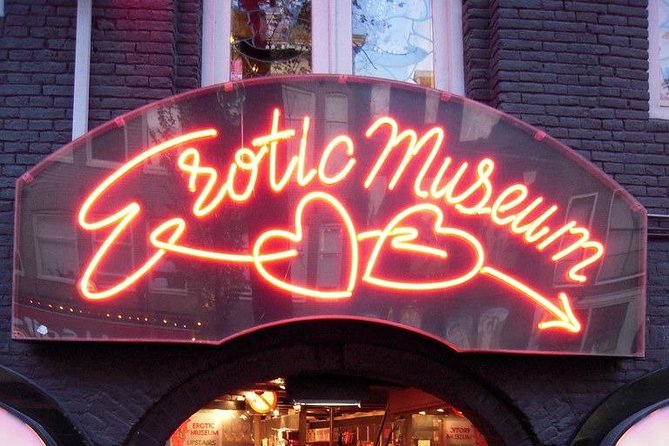
Next comes the Waag, which used to be a city gate as part of Amsterdam’s defensive wall. It was built around the 1400s, and the guide frames it as the second oldest building in Amsterdam.
Then the story evolves. The Waag wasn’t just a wall and gate. It later became tied to the city’s guilds—craftsman organizations—and you’ll hear how those groups worked in and around the square area.
This stop is a smart choice for two reasons. First, it helps you understand the city’s economic history without forcing a full museum detour. Second, it keeps the tour from being only about adult nightlife themes. Even on De Wallen streets, you’re still learning how Amsterdam organized work, authority, and commerce.
If you like architecture mixed with social history, you’ll appreciate this segment.
The Smallest House and the VOC Connection
You’ll also see the smallest house of Amsterdam, built around the 1700s. What makes it interesting is its first function: it started as storage for the VOC trading company and later became a place where people lived for a very long time.
That shift—from storage space tied to global trade to long-term housing—helps you understand how buildings in the city can change roles over centuries. Amsterdam’s growth wasn’t a straight line, and neither are its structures.
This stop works well on a Red Light District tour because it shows a different kind of “street-level” reality: commerce, daily life, and housing decisions happening in close proximity. Amsterdam isn’t one single storyline. It’s layers.
Condoms Since 1987: Adult Life Discussed Like a Real Topic
Yes, you’ll end up at a condom shop that has been operating since 1987. It’s billed as the world’s first condom shop special for condoms, and it’s part of the area’s practical adult-business ecosystem.
What’s valuable here isn’t the shock factor. It’s the plainness. You’ll hear and see how Amsterdam’s adult industries treat their products and customers as part of everyday life—organized, specific, and not just rumor.
The shop also offers details you can literally choose in person, including size-customized condoms and different special types. For some visitors, that makes the whole topic feel more grounded than they expected.
Keep your own comfort level in mind, of course. This is a tour that acknowledges the adult side of De Wallen instead of acting like it doesn’t exist.
Ask Better Questions: Guides Like Adam and Aarre
The reviews point to one consistent strength: the guides bring both clarity and personality.
Two names come up with high praise: Adam and Aarre. Both were described as entertaining and very strong on answering questions. One review notes that the guide gave plenty of opportunities to ask questions. Another praises Aarre as accommodating and very informative, including the ability to customize the tour on request to fit needs.
Even if you don’t request customization, you can plan to ask questions. A Red Light District topic isn’t just about what you see; it’s about how you interpret it. If you want to understand how Amsterdam’s rules, attitudes, and history shaped this district, ask. The better your questions, the better your takeaways.
And yes, expect humor. One review mentions a story about prostitute twins with a punchy comparison meant to make a point about volume and numbers. You don’t need to love that kind of storytelling to appreciate the underlying goal: turning gossip into an understandable picture.
What to Watch For While You Walk De Wallen
This is where you can set yourself up for a better experience.
First, keep expectations realistic. A short walking tour can’t cover every angle, and the guide won’t treat it like a sensational show. It’s more like orientation plus context: you’ll learn why the district became famous, how it connects to the Old Town, and how some landmarks tell the city’s broader story.
Second, keep your behavior respectful. You’ll pass spaces tied to sex work, and you’ll likely see things meant for adults. Don’t stare longer than necessary, don’t block doorways, and keep your phone use low.
Third, if you’re sensitive to adult subject matter, know that this tour is not for avoiding that topic. The good news is that the tour style is explained and contextualized. The better news is you can ask questions in real time, and the guide can often frame what you’re seeing in clearer terms.
Price and Value: Is $63.67 a Good Deal?
At $63.67 per person, the price isn’t “cheap,” but it also isn’t trying to be museum-expensive. For two hours with a licensed guide and a focus on a complicated, often-misunderstood area, you’re paying for two things: interpretation and time saved.
Here’s where the value is real for practical travelers:
- The tour links De Wallen to Old Town landmarks like the Waag, Pub The Ape, and the smallest house, so you’re not doing a random photo walk.
- You get a local perspective on the origins and context, which helps you avoid learning everything from half-true stories online.
- The group size cap (up to 32) and the short duration make it easier to fit into a crowded Amsterdam schedule.
If you’re the type who likes to know what you’re looking at—rather than just taking in sights—this price makes sense.
If you mainly want street photos and don’t care about context, you might feel it’s more than you need. But for most visitors who want understanding, it’s a solid use of time.
Who This Tour Fits Best (and Who Should Skip It)
This tour is a good match if you want:
- a time-efficient introduction to De Wallen
- a guided walk that connects adult street culture to broader Amsterdam history
- strong storytelling with room for questions
- a short list of specific landmarks you can remember
It may be a bad fit if:
- you have limited mobility (it’s not recommended for travelers with that limitation)
- you strongly prefer avoiding adult subjects altogether
- you’re expecting a theme park style experience with big attractions at each corner
Also note: service animals are allowed, and the meeting point is near public transportation, which is helpful if you’re stitching it into a bigger day.
Should You Book This Amsterdam Red Light District Tour?
I’d book it if you want a guided, adult-aware walk through De Wallen that also teaches you why Amsterdam’s streets and buildings look the way they do. The combination of historical stops (wooden foundations, Waag, Int Aepjen) with modern, practical realism (the condom shop since 1987) makes the tour feel more grounded than most.
I’d skip it if adult content will make you uncomfortable and you’re not interested in context or questions. In that case, your time is probably better spent elsewhere in Amsterdam.
If you do book, pick a start time that gives you breathing room afterward, and go in ready to ask questions. That’s where the tour seems to shine.
FAQ
How long is the Amsterdam Red Light District walking tour?
The tour runs for about 2 hours.
What is the price per person?
The price is $63.67 per person.
Where do I meet for the tour?
You meet at Geldersekade 2HS, 1012 BH Amsterdam, Netherlands.
Is the tour a small-group experience?
Yes. The tour has a maximum of 32 travelers.
Are there multiple start times available?
Yes, you can choose from multiple start times to match your schedule.
What ticket format is used?
You’ll receive a mobile ticket.
What does the tour cover?
You’ll walk through the Red Light District and Old Town area, hear about coffeeshop culture and the sex work industry of Amsterdam, and visit key landmarks including Pub The Ape (Int Aepjen), the Waag, the smallest house, and a condom shop that has been in place since 1987.
Is it suitable for travelers with limited mobility?
No, it’s not recommended for travelers with limited mobility.
Are service animals allowed?
Yes, service animals are allowed.
What is the cancellation policy?
You can cancel for free up to 24 hours in advance for a full refund.
When will I receive confirmation?
Confirmation is received at the time of booking.