REVIEW · AMSTERDAM
Van Gogh Museum Amsterdam Small Group Guided Tour
Book on Viator →Operated by 360 Amsterdam Tours · Bookable on Viator
Van Gogh hits different with a good guide. This small-group tour uses a wireless headphone setup so you can follow the story in a busy museum, with admission built in. You also get to choose a morning or afternoon slot, which helps if your Amsterdam days are tightly planned.
I love how the tour is organized like a timeline, with Paris, Arles, and the final Southern years treated as clear chapters instead of random rooms. I also like the human factor: many guides, including Martina S and Clare, connect paintings to the moments in Van Gogh’s life that likely shaped the choices you see on the canvas.
One thing to consider: the pace is structured. Each main stop is only around 15–20 minutes, so if you want to linger forever over one painting, you’ll probably need extra time on your own after the tour. Also, this one is adults-only (18+), and it focuses on the permanent collection, not special exhibitions.
In This Review
- Key things I’d focus on before you book
- Where You Meet and What the 2-Hour Loop Really Feels Like
- Wireless Headsets That Actually Improve the Visit
- How the Museum Timeline Gets Told in Six Stops
- Early Van Gogh: Self-Portraits and Peasant Subjects Up Close
- Paris, 1886–1888: Absinthe, Cafés, and Social Scenes
- Arles and the South of France: Sunflowers, The Bedroom, and the Yellow House
- Saint-Rémy and Auvers Rooms: The Final Themes, Made Understandable
- Price and Value: Paying $77.43 for Admission Plus Expert Focus
- What You’ll Get From the Best Guides (and How to Choose)
- Who This Tour Is Best For (and Who Might Skip It)
- Should You Book This Van Gogh Museum Guided Tour?
- FAQ
- How long is the Van Gogh Museum Small Group Guided Tour?
- Is museum admission included?
- Are special exhibitions included?
- What language is the tour offered in?
- How big is the group?
- Does the tour use a headphone system?
- Where does the tour start and end?
- Can I stay in the museum after the guided portion?
- Who can join the tour?
- What is the cancellation policy?
Key things I’d focus on before you book
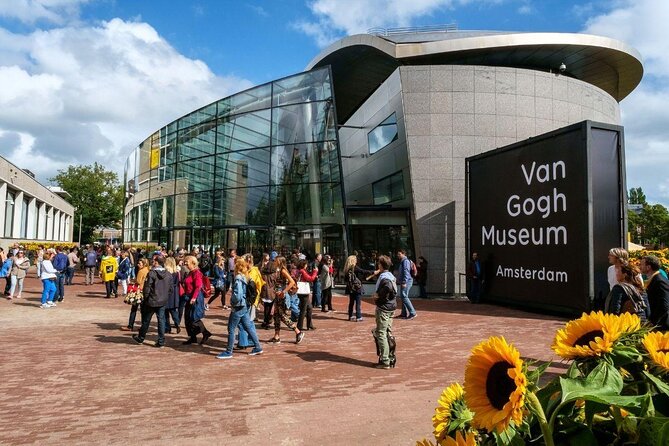
- Small group (max 14), which usually means you can actually hear and ask questions without shouting over strangers
- Wireless whisper system so the guide stays clear even in crowded galleries
- Admission ticket included for the permanent-collection visit inside the tour route
- Time-and-place storytelling (Paris → Arles → Saint-Rémy → Auvers) to make the art feel less like memorization
- You can stay after the tour inside the museum to see what you want at your own speed
Where You Meet and What the 2-Hour Loop Really Feels Like
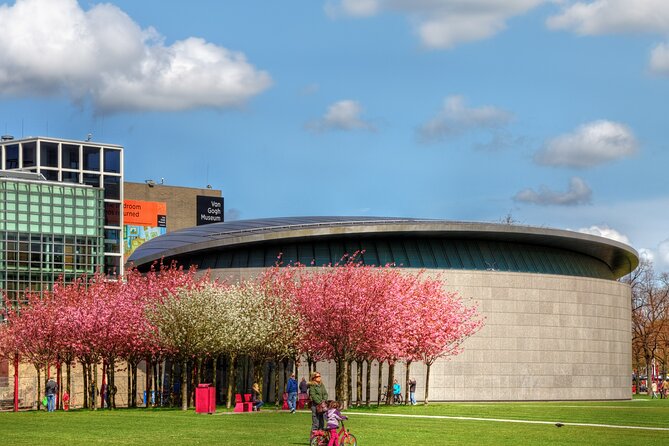
You start at Cobra Café, Hobbemastraat 18 (near public transportation). Then you end inside the Van Gogh Museum, with the option to keep going until closing time. That last part matters more than it sounds. A timed guided tour can only “touch” a fraction of the museum. The smart move is to use the guide to understand what you’re looking at, then slow down afterward.
This tour runs about two hours, with a steady rhythm through six themed stops. The group stays small, with a maximum of 14 people. In practice, that size helps the guide manage the room, and it makes it easier to cluster for key details—especially when the galleries feel packed.
You’ll hear the tour in English, and it’s designed for adults 18+. If you’re planning a museum day, this is also a good option because it fits neatly into an Amsterdam schedule. Build in a little buffer so you can exit feeling satisfied instead of sprinting to your next reservation.
You can also read our reviews of more guided tours in Amsterdam


Wireless Headsets That Actually Improve the Visit
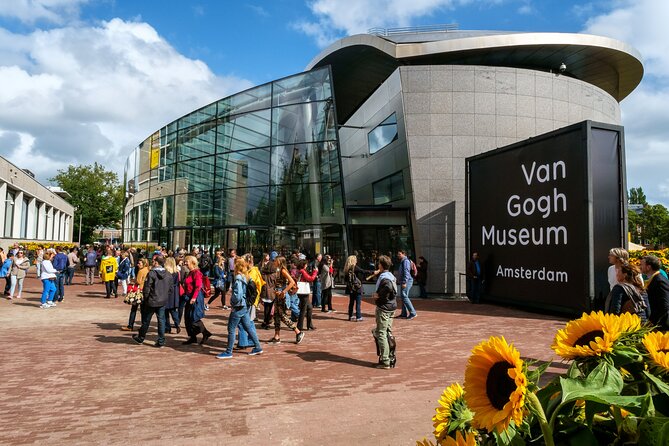
Van Gogh museums are not quiet libraries. They’re busy spaces, and it’s easy to lose the thread of a talk when the crowd shifts, kids point, and other visitors move right as you’re trying to focus.
That’s why the included wireless whisper system is such a practical win. Instead of trying to hear over a guide at the front, you get the narration directly in your headset. One review specifically mentioned the headsets worked well even with hearing aids, which is a nice reality check: it’s not just for people with perfect hearing.
If you’re the type who usually thinks museum tours are a bit muffled, this setup can change the whole experience. You don’t have to lean in, crane your neck, or give up on the explanation because the room is loud.
How the Museum Timeline Gets Told in Six Stops
Think of the tour as six short chapters of Van Gogh’s development. Each stop has an explicit focus, and each one lasts around 15–20 minutes. The idea isn’t to read every label. It’s to train your eye to spot what changes across his life: subject matter, composition, color choices, and even the mood he’s chasing.
Admission tickets for the featured route are included, which is a value plus. You’re not managing ticket logistics mid-visit. You’re simply in the museum with a plan.
Here’s what the route does for you: it stops the common problem of seeing famous paintings but missing the why. Instead of asking yourself what you’re supposed to notice, the guide points you to things you can actually look for—brushwork, line, and the emotional tone behind the scene.
Now let’s walk through each stop and what you should pay attention to.
Early Van Gogh: Self-Portraits and Peasant Subjects Up Close
Your first stop focuses on Van Gogh’s self portraits. That’s a smart opening. His self-portraits aren’t just about face value. They’re a way to see how he’s thinking about identity, mood, and his role as an artist as time passes.
Then the tour moves to the first-floor foyer and the surrounding works: paintings associated with Millet and Jules Breton, plus works like Woman Lifting Potatoes and The Potato Eaters, alongside a wall of portraits including Head of a Peasant Woman. This section gives you a grounded entry point into Van Gogh’s early interests in realism and everyday life.
Why this matters: these early paintings help you understand that Van Gogh didn’t start with sunflowers and dramatic skies. He moved toward that later. In these peasant-focused scenes, pay attention to the weight of the figures and the way the work treats labor and character as serious subjects.
Possible drawback: one negative note flagged that spending too much time on self-portraits can feel uneven if that’s not your main passion. If you already know you love his later color work more than early self-studies, keep your eyes open for how your guide transitions from introspection toward influence and style.
Paris, 1886–1888: Absinthe, Cafés, and Social Scenes
Next comes the Paris chapter (1886–1888). Here you’ll see and discuss Self Portrait with Felt Hat, Still Life with Absinthe, In the Café: Agostina Segatori in Le Tambourin, and Garden with Courting Couples.
This is where Van Gogh starts looking outward more confidently while still working through his own inner life. The subjects feel more social and modern—still life and café scenes, then a more intimate outdoor moment with courting couples.
A useful way to view this stop: don’t treat it like a checklist of paintings. Use it to compare how Paris changes his “camera.” In the café, for example, focus on how the composition organizes attention. In Still Life with Absinthe, notice how objects are arranged like part of a mood, not just a record.
Many guides are strong at tying context to what you see. Reviews mention approaches like explaining technique and the choices behind style evolution. If you get a guide who uses visual aids (one review mentioned iPad support), you may find this section clicks faster because you’re not only hearing it—you’re also seeing references that make the paintings easier to place.
You can also read our reviews of more museum experiences in Amsterdam





Arles and the South of France: Sunflowers, The Bedroom, and the Yellow House
Then the tour shifts to Arles (1888) and the South of France. Expect Sunflowers, Almond Blossoms, The Bedroom, Japanese Paintings (copies from prints), and The Yellow House.
This part is often the emotional peak for many people—because the work starts to feel more like a statement than a study. Sunflowers bring color and repetition. Almond Blossoms and the surrounding nature scenes give you rhythm and seasonal symbolism. The Bedroom is personal. It’s a room, but it also feels like a mindset.
Then there are the Japanese paintings, noted in the tour route as copies from prints. This is more than trivia. It points you to a major reason Van Gogh’s style could change so visibly: he absorbed ideas circulating in Europe and reworked them into his own language.
If you want a practical tip: slow down mentally at The Bedroom. The point of that stop is to notice how he builds intimacy through framing and color choices. You’re looking at a place that stands for something more than furniture.
Also, don’t forget the Yellow House. Even though you’re touring for a limited time, this stop helps you connect Van Gogh’s settings to his artistic goals. He wasn’t just making art. He was trying to build an environment for living and creating.
Saint-Rémy and Auvers Rooms: The Final Themes, Made Understandable
Level 3 covers Saint-Rémy-de-Provence, then you move to the Auvers Room at Level 3 for the last works. This is where the tour stops compressing his life into a story arc and starts letting you feel the tone shift.
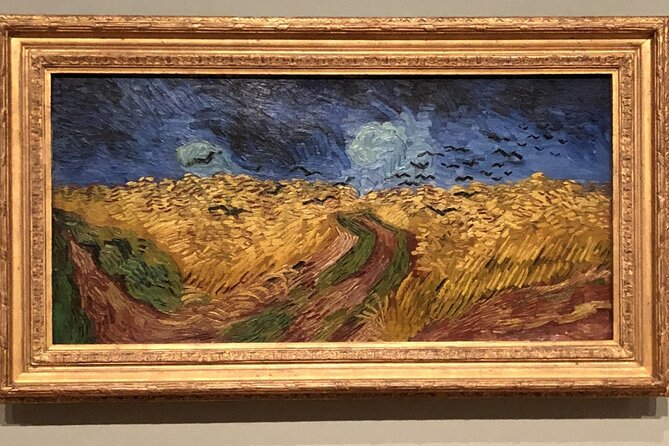
In Saint-Rémy-de-Provence, you’ll look at Almond Blossoms, Wheatfield with a Reaper, Iris, Pieta (After Delacroix). In the Auvers Room, the route includes Tree Roots and Wheatfield with Crows.
Here’s what to watch for in your own head as the guide speaks:
- Almond Blossoms again: it’s not just repetition; it helps you see themes and how they return with different emotional weight.
- Wheatfield with a Reaper: look for the sense of movement and time. The scene feels like an event.
- Iris: treat it like a “focus painting.” This is about clarity and shape, and it helps explain how Van Gogh could make an image feel sharp even when the story behind it was heavy.
- Pieta (After Delacroix): this is your cue that he also worked through art history and borrowed structure to express new meaning.
The Auvers pieces end the tour with urgency. Tree Roots and Wheatfield with Crows are visual in a way that feels like the ground is alive. If your brain is tired by the last stop, that’s normal. Give yourself the chance to stand still for 30 seconds when you’re guided here. Those paintings reward stillness.
There’s also a single negative note about pacing (spending too long on early favorites). If you feel that yourself during the self-portrait section, remember you’ll still have time afterward inside the museum. Use the guide to get the big picture first, then return to your preferred rooms once the tour ends.
Price and Value: Paying $77.43 for Admission Plus Expert Focus
At $77.43 per person for about two hours, this isn’t the cheapest way into the museum. But it includes admission as part of the tour route. That matters for value, because you’re not only buying a guide—you’re also saving the effort of figuring out admission on top.
You’re also paying for the structure. Without a guide, it’s easy to bounce from famous painting to famous painting and still leave thinking you saw a lot but learned little. With this tour, the guide turns the museum into a narrative. The headset system helps you actually follow that narrative, even when the room is crowded.
One review called it great value and highlighted technique explanations—paint types, methods, and how the feeling of a subject is created. Another review stressed that the pace was “perfect amount of time,” and that the guide was patient and answered questions. That’s what you want for the money: not just facts, but clarity and timing.
Possible consideration: if you’re already an advanced Van Gogh researcher and you don’t need help deciding where to look, the fixed route can feel limiting. This tour is a smart introduction and a strong way to see progression. It’s less ideal if you plan to treat the museum like a self-paced academic seminar.
What You’ll Get From the Best Guides (and How to Choose)
You can’t pick your guide in this description, but you can make a good expectation.
The reviews mention a pattern: guides who are articulate, who tie life experiences to paintings, and who push you to look closer. Names show up repeatedly—Martina S, Clare, Holly, Kawika, Sylvia, Roland, Marlene, and Claire W. Many of them also focus on technique and brushwork details, which is one reason people leave feeling they learned more than they expected.
One helpful detail from a review: a guide went beyond the stop time, meaning the group ran slightly long rather than being cut off right at the edge of the schedule. Another review mentioned a guide using an iPad to show facts and photos, which can make the context stick.
So, if you’re the type who enjoys being gently guided into close looking, this tour is likely to feel worth it.
Who This Tour Is Best For (and Who Might Skip It)
This experience is a great fit if:
- You love Van Gogh and want the story arc from early work through later years.
- You’re in Amsterdam for a short window and want a high-success visit.
- You like learning technique and not just background trivia.
- You prefer a small group (max 14) so you’re not stuck behind a wall of people.
It may not be the best fit if:
- You want to wander slowly at your own pace and you hate time limits.
- You only care about a few signature works and dislike structured routes (there’s at least one review that felt a self-portrait-heavy portion was too much).
- You’re hoping the tour includes special exhibitions. This guided portion is for the permanent collection. Special exhibitions are something you can tackle on your own after.
If you’re visiting with someone who isn’t obsessed with art, don’t panic. Reviews include stories of non-art lovers having a good time when the guide tied paintings to life and made the explanations clear.
Should You Book This Van Gogh Museum Guided Tour?
Yes, if you want the museum to make sense fast. This is one of those tours that works as a foundation. You get the timeline, the key paintings, and the kind of explanation that helps you see why the work changes instead of just recognizing titles.
I’d especially book it if:
- You’re likely to get overwhelmed by famous paintings and need a plan.
- You appreciate hearing guidance clearly via a wireless headset.
- You’re okay with a structured pace and you’ll plan to explore on your own afterward.
My only “wait” case is if you know you want a slow, label-by-label museum day and you already have your own reading list. Otherwise, the combination of small group + whisper system + admission included + strong guide storytelling is a very solid value for a first or second visit.
FAQ
How long is the Van Gogh Museum Small Group Guided Tour?
It runs for about 2 hours.
Is museum admission included?
Yes. Admission tickets are included for the tour’s permanent-collection route.
Are special exhibitions included?
No. Special exhibitions are available after the tour at your own pace.
What language is the tour offered in?
The tour is offered in English.
How big is the group?
The tour has a maximum of 14 travelers.
Does the tour use a headphone system?
Yes. A wireless headphone setup (whisper system) is included.
Where does the tour start and end?
It starts at Cobra Café, Hobbemastraat 18, 1071 ZB Amsterdam, and ends inside the Van Gogh Museum.
Can I stay in the museum after the guided portion?
Yes. The tour ends inside the museum, and you can stay until closing time to see more on your own.
Who can join the tour?
This tour is for adults only, 18 years or older.
What is the cancellation policy?
You can cancel for a full refund up to 24 hours before the experience start time. If you cancel within 24 hours of the start time, the amount paid is not refunded.