REVIEW · AMSTERDAM
MUST DO: Amsterdam’s Red Light District tour with a local
Book on Viator →Operated by Trigger Tours · Bookable on Viator
Streetlights, stories, and real Amsterdam. This 2-hour evening walk is a local-led way to understand the Red Light District’s past and present, without reducing it to tabloid headlines.
I especially love how the guide connects what you’re seeing on the narrow streets to the city’s deeper “built-on-wood” story around Amsterdam’s Old Town. And I like that you get more than one angle: adult-industry reality plus classic landmarks like the Waag and the tiny historic houses nearby.
One caution: you’ll be walking at night on city sidewalks, and it’s not a laid-back indoor tour. If you have limited mobility or you’re sensitive to the subject matter, plan carefully and wear shoes you trust.
In This Review
- Key points worth knowing
- What it’s really like: a Red Light District walk with context
- Price and value: is $31.32 worth it?
- Where you start and how the 2 hours flow
- Red Light District streets: seeing the current situation without the noise
- The Dam area and Amsterdam’s “city built on trees” idea
- Pub The Ape (Int Aepjen): the wooden survivor from 1540
- Waag: from city gate to guild headquarters
- The smallest house: VOC storage to long-term living
- The condom shop since 1987: modern commerce with a historical framing
- Cannabis shop stop: only if your guide’s route includes it
- Guides and the difference they make
- Practical tips so the night goes smoothly
- Who this tour fits best (and who should skip it)
- Should you book it?
- FAQ
- How long is the Amsterdam Red Light District tour?
- What is the price per person?
- What language is the tour offered in?
- Is there an admission fee included for sights?
- What’s included in the tour?
- Where does the tour start and end?
- Is the tour ticket mobile?
- Can I get a full refund if I cancel?
Key points worth knowing
- Small group (max 20) keeps the pace conversational, not rushed.
- English-language local guides explain both history and how things work today.
- Major Old Town stops are folded into the same evening walk, not just Red Light window-viewing.
- Iconic wooden heritage details show up in places like Pub The Ape.
- A modern stop at a condom shop (since 1987) adds context about the area’s commercialization.
- Evening timing means atmosphere in the streets, but also colder or slick conditions when weather turns.
What it’s really like: a Red Light District walk with context
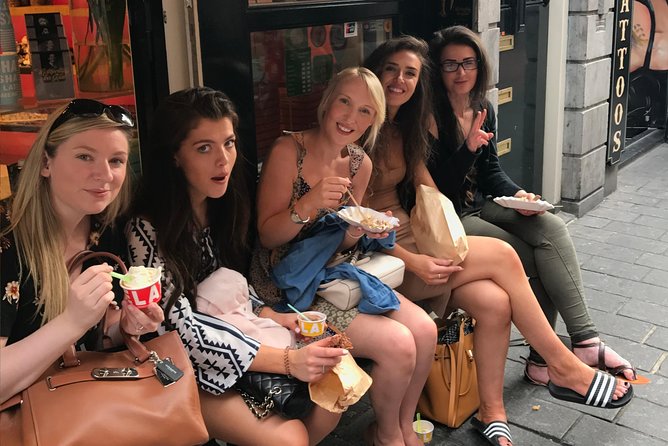
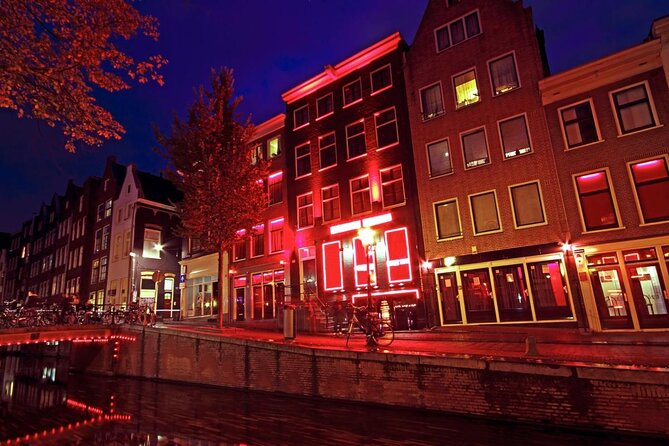
Amsterdam’s Red Light District can be a sensory overload when you wander solo. Bright windows. Quick glances. Groups flowing in both directions. It’s easy to miss the “why” behind it all.
This tour gives you a frame. Instead of treating the area like a theme park, you walk through the narrow streets and learn how the district developed, what life looks like now, and how Amsterdam tries to manage it. The best part is that the guide doesn’t just recite facts. They help you connect the dots between the red-light streets and the older, less-famous architecture and history that sit right beside them.
That mix is why I think this works so well: you’re in the place people talk about, but you’re also in the city Amsterdam actually is—old, practical, and full of long-term planning.
You can also read our reviews of more tours and experiences in Amsterdam.


Price and value: is $31.32 worth it?
At $31.32 per person for about two hours, this isn’t one of those “you’re paying for a view” tours. You’re paying for something more useful: a local guide who can explain what you’re looking at and what it means.
Because the walk is on foot and kept to a small max of 20 people, your money buys something direct—clarity, route confidence, and interpretive context. Also, there’s no mention of paid attractions draining the budget mid-tour, and the tour lists admission as free, so you’re not stacking extra costs onto the experience.
One note for your decision-making: this is an adult-theme area tour. If that subject makes you uneasy, you may feel the value is weaker because the learning is tied to reality on the ground. If you’re curious and want to understand the culture, the $31.32 price feels fair.
Where you start and how the 2 hours flow
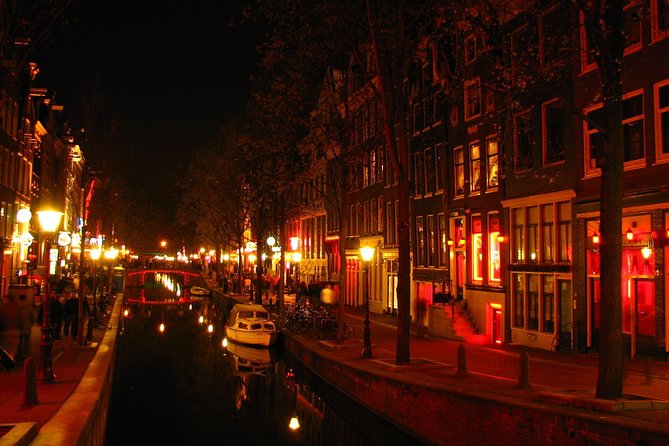
You meet at Geldersekade 2 (1012 BH), and the tour ends back there. Plan to arrive a few minutes early so your guide can start on time—there’s no “wait all night” vibe built into a tight walking schedule.
The pacing is built for evening walking. You’re moving through compact streets, stopping to look, listen, and ask questions when your guide invites it. Expect it to feel like a guided neighborhood stroll with commentary, not a lecture you barely hear.
Language is English, and the tour uses a mobile ticket, which is handy because you’re not fumbling with printouts while walking.
Red Light District streets: seeing the current situation without the noise
The heart of the evening is the Red Light District itself. You walk the narrow lanes where the area is known for its windows and adult services, and you also learn about the district’s history and today’s reality.
What I like about this approach is that it helps you watch what’s in front of you with fewer stereotypes. Your guide’s job is to explain how this area fits into the wider city story, and how it functions now—socially, economically, and historically.
At the same time, it’s still a real neighborhood. You should expect to feel that edge. If you go in thinking it’s only about spectacle, you’ll miss the point. If you go in wanting understanding, it lands better.
The Dam area and Amsterdam’s “city built on trees” idea
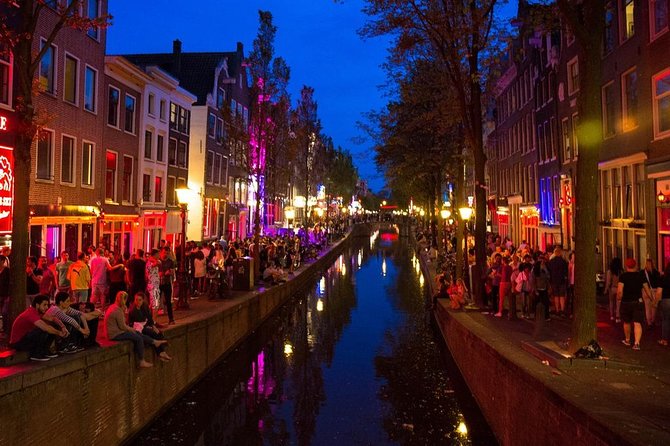
After you’ve taken in the Red Light streets, you shift into something more architectural and very Amsterdam: the city built on wooden foundations.
Your guide explains how Amsterdam’s ground is layered with peat and clay, so buildings were traditionally supported by wooden piles driven down until they reached more solid sand below—an engineering solution that shaped everything from housing stability to the character of the old streets. You’ll hear why this matters: the city didn’t just grow randomly. It was built with a mindset suited to its watery soil.
This kind of stop works because it changes how you see the area. Even if you’re not an architecture nerd, it gives you a cause-and-effect story: why Amsterdam looks the way it looks, and why the city has that permanent “built-in” relationship with water and foundation engineering.



Pub The Ape (Int Aepjen): the wooden survivor from 1540
One of the most memorable stops is Pub The Ape, also known as Int Aepjen. This place dates back around 1540, and it’s one of only two remaining wooden buildings in Amsterdam.
The story matters. In 1452, a major fire changed building expectations. After that, the government pushed for brick facades, which is part of why wooden structures became scarce. Seeing (and hearing about) a survivor like this gives you a quick lesson in how policy and disaster shape a city’s look over centuries.
It’s also a nice emotional pause during the walk. You’re moving from adult-street context into a calmer “here’s why this building is still here” moment.
Waag: from city gate to guild headquarters
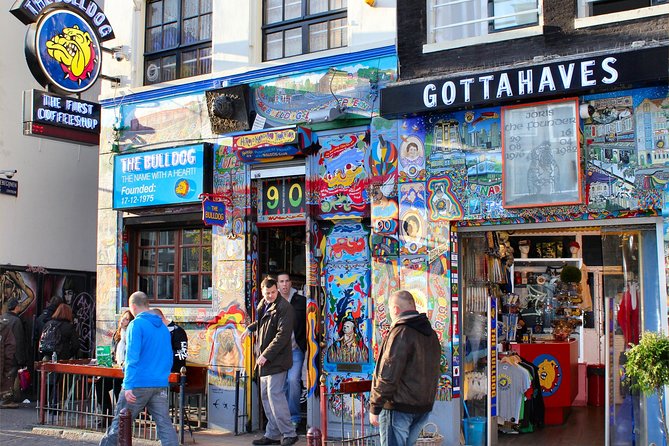
Another highlight is the Waag, built around the 1400s. This structure used to be one of Amsterdam’s city gates and a defensive wall element. Later, it became a place for guilds—craftsman organizations—and that’s why you hear so many references to trade and skilled work when you stand around here.
Why it’s worth your time: it’s not just a pretty old building. It’s a reminder that Amsterdam was never only about commerce—it was about regulated commerce, craftsmanship, and systems that helped goods and people move through the city.
For me, stops like this are what make a Red Light District tour feel more complete. You get the adult-industry context, but you also get the civic and economic backbone that made Amsterdam Amsterdam.
The smallest house: VOC storage to long-term living
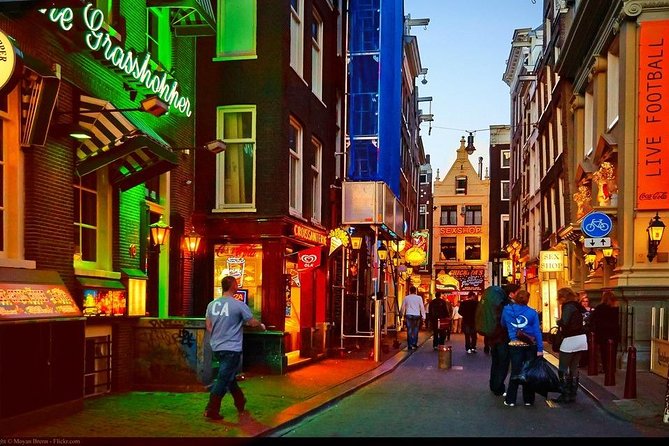
You’ll also hear about the smallest house of Amsterdam, built around the 1700s. It first served as storage linked to the VOC trading company, and later people lived there for a very long time.
This stop is surprisingly meaningful because it’s a human-scale contrast. The Red Light District tells one story about modern trade and services. The smallest house tells another: how business needs created space that people later turned into home.
It’s also the kind of stop that sticks in your brain. You don’t just hear a name. You learn that Amsterdam’s past includes weird, tight, practical solutions—because cities always do.
The condom shop since 1987: modern commerce with a historical framing
A stop at a condom shop is part of this walk, positioned as the world’s first dedicated condom shop (and it’s been in place since 1987). The shop also offers customized sizes and various special condoms.
This detail is more than random trivia. It underscores something your guide will likely connect for you: the area isn’t only “older than modern times.” It’s also shaped by ongoing consumer demand and public health realities.
I found this to be one of the clearest examples of what the tour does best: it treats the area as part of a system, not a rumor.
Cannabis shop stop: only if your guide’s route includes it
One recent experience shared that the group also visited a cannabis shop during the tour. That’s not guaranteed in the basic stop list you’re given, but it’s a real possibility depending on how your guide structures the walk.
If that matters to you, ask your guide at the start where they plan to route the last stretch—so you don’t feel blindsided.
Guides and the difference they make
This tour stands or falls on the guide. The best guides keep the pace lively and the facts clear, and they also add local tips so you can keep exploring after the tour ends.
In recent groups, guides named Ben, Robin, Sander, and Max were called out for being informative, funny, and easy to follow. I’d take that as a sign this tour can be great when the guide clicks with your group.
But the same set of experiences includes a few red flags worth respecting: hearing issues in one case (guide hard to hear), and an uncomfortable or rude tone in another. That’s rare, but it’s enough to suggest this simple rule: if you feel uncomfortable or can’t hear properly, speak up early. A good guide adjusts.
Practical tips so the night goes smoothly
- Wear comfortable shoes. You’re walking narrow streets after dark.
- Dress for temperature swings. Even in mild seasons, evening can feel cooler than you expect.
- Keep your expectations balanced: you’re learning about adult industry context, not watching a clean museum-style reenactment.
- If you’re with friends, stay close. Group tours move as a unit on tight sidewalks.
- If you’re not comfortable with adult subject matter, it’s okay to skip this one and choose a different Amsterdam evening walk.
Who this tour fits best (and who should skip it)
This tour is a solid fit if you want:
- a guided way to understand the Red Light District’s history plus current situation
- a night walk with real city landmarks nearby (Waag, old wooden heritage, and historic houses)
- an English-speaking local guide with story-driven explanations
It may not be the best match if:
- you have limited mobility (the tour is not recommended for that)
- you’re very sensitive to adult themes and want a lighter Amsterdam experience
- you expect a purely sightseeing tour with minimal discussion of the area’s real-world nature
Should you book it?
If your goal is to understand Amsterdam’s Red Light District instead of just photographing it, I’d book this. The value is in the “why” behind the streets, and the added Old Town stops help you see the district as part of a much bigger city story.
Skip it only if adult-theme context would ruin the experience for you, or if night walking on uneven streets is a dealbreaker. Otherwise, this is the kind of evening tour that makes the rest of your Amsterdam time easier—because you’ll walk away with a mental map and explanations that keep working long after the tour ends.
FAQ
How long is the Amsterdam Red Light District tour?
It lasts about 2 hours.
What is the price per person?
The price is $31.32 per person.
What language is the tour offered in?
The tour is offered in English.
Is there an admission fee included for sights?
Admission is listed as free.
What’s included in the tour?
It includes a 2-hour walking tour.
Where does the tour start and end?
It starts at Geldersekade 2, 1012 BH Amsterdam, and it ends back at the meeting point.
Is the tour ticket mobile?
Yes, it uses a mobile ticket.
Can I get a full refund if I cancel?
Yes. You can cancel up to 24 hours in advance for a full refund.