REVIEW · AMSTERDAM
Private Amsterdam Red Light District tour including sex museum
Book on Viator →Operated by Trigger Tours · Bookable on Viator
Sex and history walk the same streets here. In about two hours, you get a private guide through the Red Light District’s narrow lanes and their story, plus Sexmuseum admission included so the visit has context, not just shock value. You can also shape the pacing to what you care about, from street history to the way the city runs today.
I like that this tour is built for personal attention—the guide isn’t just counting you down to the next stop. Guides like Robin, Kathryn, Andrea, Ari/Aarre, Catherine, Kevin, and Agapios come through in the same way: clear English, a practical sense of humor, and lots of historical detail tied to real buildings and real rules. One drawback to consider: the Sexmuseum is not subtle, and the walking happens in a crowded nightlife area, so it’s worth setting expectations up front.
In This Review
- Key things you should know before you go
- Why This Private Red Light Walk Feels Different
- Red Light District Stop: What You’ll Actually See and Understand
- Sexmuseum Amsterdam Venustempel: The Included Admission and the Mood Check
- Old Town Stops Along the Way: Buildings, Fires, and Amsterdam on Wooden Piles
- Pub The Ape (Int Aepjen)
- Waag (Weigh House)
- The Smallest House and VOC Storage
- The World’s First Condom Shop
- The Guides: Humor, Respect, and Tailored Pacing
- Price and Value: Is $102.09 Fair for Two Hours?
- What to Expect on Timing and How to Prep
- Who This Tour Suits Best (and Who Might Skip)
- Should You Book This Tour?
- FAQ
- How long is the tour?
- Is this a private tour?
- What language is the tour offered in?
- Is the Sexmuseum ticket included?
- Do I get a mobile ticket?
- Where does the tour start?
- Does the tour end at the same place?
- Can I cancel for a full refund?
- Are service animals allowed?
Key things you should know before you go
- Private, just your group: you won’t be merged into a crowd mid-story.
- Sexmuseum ticket included: you finish with an actual exhibit visit, not a quick photo stop.
- History tied to specific streets and buildings: you’re shown why places exist, not just what you’re seeing.
- Guides often focus on respect and safety: many accounts highlight a non-seedy tone and clear guidance.
- Some sights can be physically demanding: the museum visit can involve stairs, so plan for that.
Why This Private Red Light Walk Feels Different
The Red Light District can feel like a blur if you wander on your own. Lights, storefronts, side streets, and signs all compete for your attention. With a guide, you get a simple thing that matters: a storyline you can follow while you’re inside the maze.
This tour also tends to hit a sweet spot for mixed groups. One account described a family of seven with ages ranging up to the 50+ crowd, and the guide adjusted when stairs at the museum became an issue—finding a café option while the rest visited. Another group of five appreciated the pace and the balance between street scenes and city history. That’s the kind of control you don’t get when you’re just walking and hoping you’re looking at the right detail.
You can also read our reviews of more private tours in Amsterdam


Red Light District Stop: What You’ll Actually See and Understand
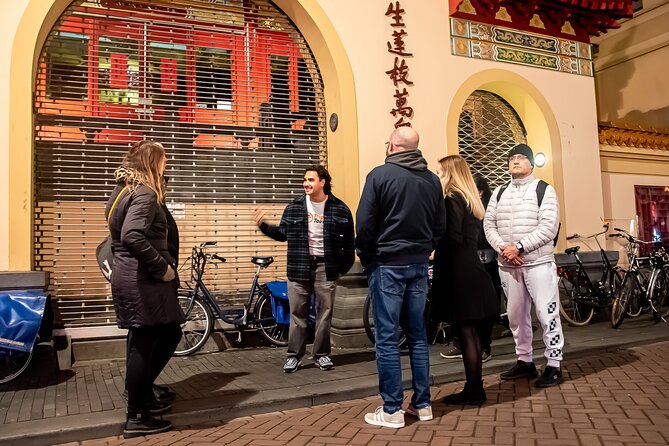
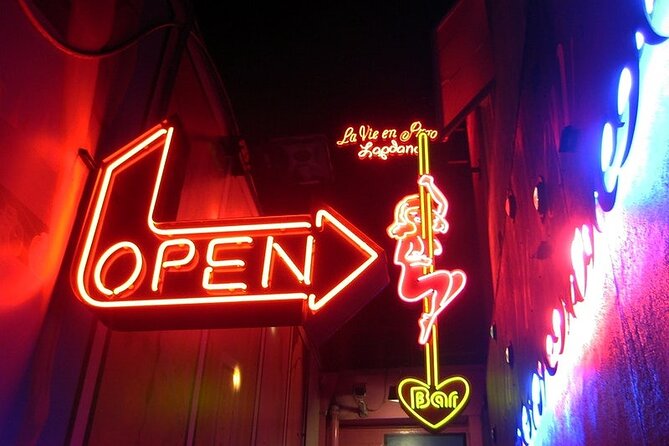
This is the core of the walk: narrow streets, tight corners, and the visible signs of Amsterdam’s oldest and most talked-about industry. Expect your guide to explain what’s been changing over time—and what has stayed the same. You’ll likely cover the modern reality as well as the history behind why the area developed where it did.
What I like here is the way the guide frames the scene. Instead of treating the district like a theme park, the tour aims for context: building locations, how the city’s layout shaped the area, and how people interact with the streets day to day. Many accounts highlight that the tone stays respectful toward the workers and the neighborhood, not judgemental and not sensational for its own sake.
You’ll also get guidance on what to do and what not to do while you’re there. You’ll hear the kind of street-level advice that keeps your visit smoother—like moving at a normal pace, keeping your distance, and understanding that this is a working area with real people around it.
Sexmuseum Amsterdam Venustempel: The Included Admission and the Mood Check

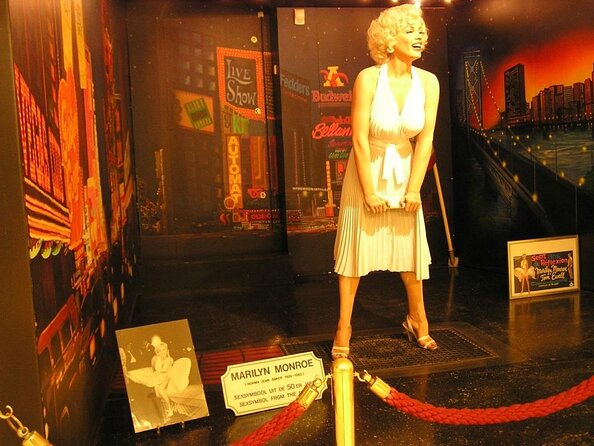
Your second act is the Sexmuseum Amsterdam Venustempel. The plan is a stop lasting about 30 minutes, and the admission ticket is included. The exhibits are described as covering erotica through the ages, which means you’re not just seeing modern novelty—you’re seeing how sexual culture has been depicted and packaged across time.
Here’s the practical reality: people come to Amsterdam wanting “the story,” not just the street view. That’s why this museum stop can feel like a reset. You walk from the street’s present-day reality into a space that turns the topic into artifacts, design, and historical commentary.
Still, the big consideration is comfort. The tour doesn’t pretend the museum content is mild. If you’re sensitive to explicit imagery, or if your group is easily embarrassed, you should treat this as an adult attraction and decide together. One review even mentioned that the museum was the only letdown for them—so it’s smart to match the museum to your expectations. If you’re mainly interested in architecture and local history, you might still enjoy the streets more than the exhibit time.
Old Town Stops Along the Way: Buildings, Fires, and Amsterdam on Wooden Piles
Even though the tour centers on the Red Light District, you don’t get trapped in one narrow topic. You’ll pass by several Old Town landmarks that explain how Amsterdam was built and how its citizens responded to disaster and practical problems.
One standout explanation you’ll hear ties directly to the city’s soil. Amsterdam sits on a thick layer of fen and clay, so buildings rely on wooden piles driven down roughly 11 meters into sand. This isn’t trivia for the sake of trivia—it’s how the city stays standing in its watery geography. When you understand the piles, you start to notice how Amsterdam’s buildings feel distinct: narrow structures, closely packed streets, and that unmistakable sense that the city is “engineered into” the ground.
You may also be shown the Dam area as part of the broader Old Town context. Again, the point isn’t just location—it’s age. This is the part of the city where you’re more likely to hear stories about how Amsterdam grew, then how it rebuilt after major events.
Pub The Ape (Int Aepjen)
You can stop near Pub The Ape, also known in Dutch as Int Aepjen. It’s described as built around 1540 and as one of only two remaining wooden buildings in Amsterdam. After a major fire in 1452, authorities pushed for brick facades—so a surviving wooden structure like this becomes a living reminder of what changed after the disaster.
You can also read our reviews of more museum experiences in Amsterdam






Waag (Weigh House)
Another building you may see is the Waag, built around the 1400s and described as the second oldest building in Amsterdam. Historically, it served as part of the city’s defensive system as a gate of the wall. Later, guilds and craftspeople set up within and around the square. It’s a great example of how Amsterdam used its architecture for defense, then for commerce and skilled work.
The Smallest House and VOC Storage
You may also hear about the smallest house in Amsterdam, built around the 1700s. It started as storage for the VOC trading company before people lived there long-term. If you like your city history with details you can picture, this kind of stop helps. You’re not just learning dates; you’re seeing how trade and housing squeezed into small spaces.
The World’s First Condom Shop
One more practical, modern detail you might encounter: a condom shop described as the world’s first of its kind, in place since 1987, where you can get size-customized condoms and special varieties. It’s a reminder that the district’s story isn’t only about old controversies—it’s also about services, consumer culture, and how Amsterdam adapts.
The Guides: Humor, Respect, and Tailored Pacing
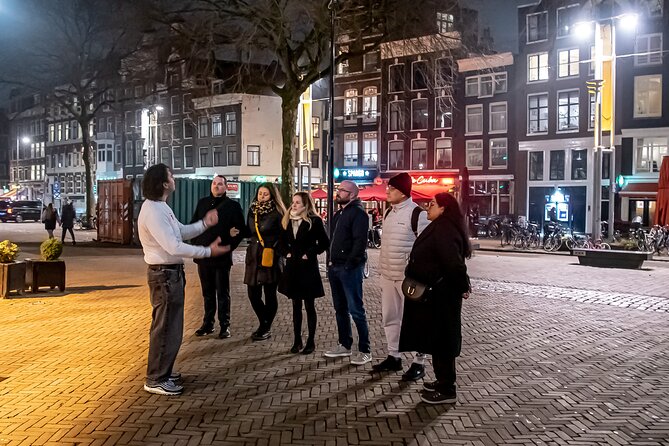
A private tour lives or dies on the guide. The most praised pattern in the accounts you can rely on is that the tour stays respectful and clear, with humor used to loosen tension—not to turn the area into a joke.
You’ll see names repeated with the same theme: Robin, Kathryn, Andrea, Arri, Catherine, Aarre/Ari, Kevin, and Agapios. Across those different guide styles, the common thread is how they handle questions. People appreciated guides who answered directly without judging, and who offered context about both the history and the current situation.
The other big win is adaptability. When a group included mobility limits, a guide found a café option so someone didn’t have to push through difficult stairs. When someone wanted more historical highlights, the walk adjusted. That’s what “private” should mean in Amsterdam: not just exclusivity, but real flexibility.
Price and Value: Is $102.09 Fair for Two Hours?
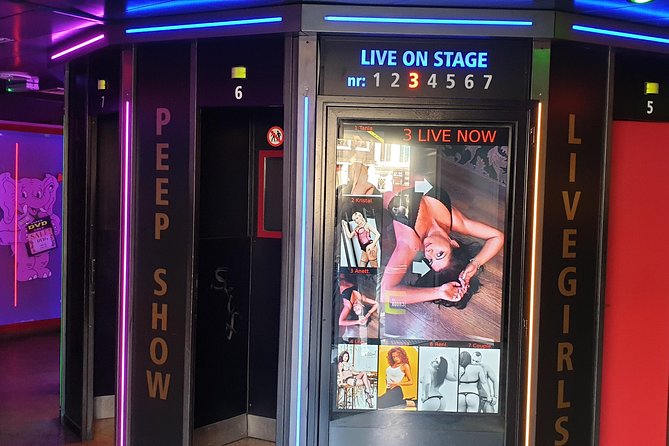
At $102.09 per person for roughly two hours, you should treat this as a specialty tour. You’re paying for three things at once: a private walking guide, access to the Sexmuseum, and a guided explanation of a dense, fast-changing neighborhood.
If you’d otherwise spend money separately—guide time plus a museum ticket—the value can start to make sense. Plus, the tour includes time you’d probably waste on your own trying to figure out what’s important in the district. A guide helps you see more accurately with less effort.
That said, a private tour only feels like a good deal if the guide keeps your group engaged. One account complained the walk spent too long on mundane sights and didn’t hit enough highlights. So if your group is the type that wants maximum landmark intensity, you’ll want to set that expectation early with the guide so the pacing doesn’t drift.
What to Expect on Timing and How to Prep
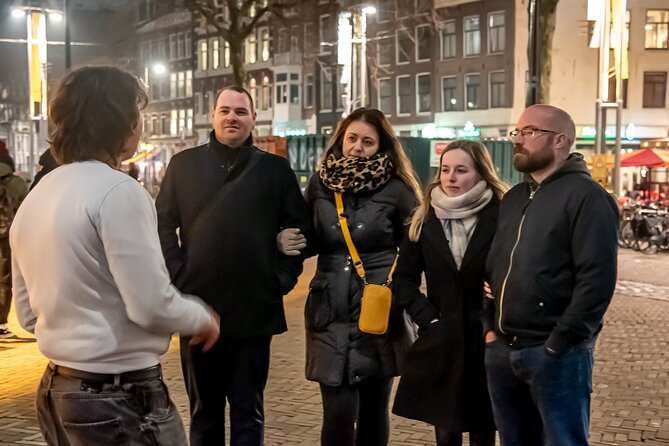
The structure is simple: walk the district, then go to the Sexmuseum. The district portion takes about two hours in the provided plan, while the Sexmuseum is described as a 30-minute visit. In real life, your total time can feel a bit different depending on your guide’s pacing, questions, and how quickly your group moves through the museum space and stairs.
I suggest you show up with two mental goals:
- Learn the history and the city logic behind the district.
- Understand what’s appropriate to do (and what to avoid) in a working neighborhood.
If you’re traveling with a mix of ages or comfort levels, agree ahead of time on how graphic you want the museum content to be discussed. One guide approach that got praised was making people feel safe and comfortable with the topic, so you can likely ask for a tone adjustment without killing the experience.
Who This Tour Suits Best (and Who Might Skip)
This is a great fit if you want Amsterdam’s realism, not just postcard canals. You’ll enjoy it most if you like street history, architecture cues, and explanations that connect a neighborhood to the city’s bigger story.
It’s also a strong choice for couples and small groups who want privacy in a place that’s often loud and chaotic. One group of five appreciated the personal attention, and a larger mixed-age group appreciated that the tour didn’t bulldoze anyone who needed to pause or take a break.
If your group hates adult content, or if you don’t want museum time with explicit imagery, you might be happier with a purely historical Old Town walk and skip the Sexmuseum component. If you want maximum “wow factor” from landmarks only, you may find the museum the part that matters least.
Should You Book This Tour?
Book it if you want a guided, respectful Red Light District walk with context, plus a museum stop that turns the topic into something you can process with history. The strongest selling points are the private attention, the guide-led respect/safety tone, and the way the route connects the district to Amsterdam’s building logic—from wooden piles to surviving historic structures like Pub The Ape and the Waag.
Hold off (or ask for adjustments) if your group is easily uncomfortable with explicit adult exhibits, or if you strongly prefer long lists of major monuments over neighborhood storytelling. And when you book, if you know your priorities, message your guide or make it clear on the day what you want most: history, buildings, or the contemporary reality of the district.
FAQ
How long is the tour?
The tour is about 2 hours in total, and the Sexmuseum stop is listed as about 30 minutes.
Is this a private tour?
Yes. It’s private, and only your group participates.
What language is the tour offered in?
The tour is offered in English.
Is the Sexmuseum ticket included?
Yes. Admission to Sexmuseum Amsterdam Venustempel is included.
Do I get a mobile ticket?
Yes. The tour includes a mobile ticket.
Where does the tour start?
The start point is ParkBee Parking NH Collection Amsterdam Barbizon Palace, Prins Hendrikkade 59, 1012 AD Amsterdam, Netherlands.
Does the tour end at the same place?
Yes. It ends back at the meeting point.
Can I cancel for a full refund?
Yes. You can cancel up to 24 hours in advance for a full refund.
Are service animals allowed?
Yes, service animals are allowed.