REVIEW · AMSTERDAM
Red Light District private tour with a local
Book on Viator →Operated by Guidance Travel · Bookable on Viator
Amsterdam has a story behind every street. This private Red Light District walk with local guide Manouk focuses on why De Wallen became what it is, and how the Netherlands approaches prostitution and drug policy. You’ll also get a more grounded, day-to-day view of the neighborhood’s reality—without trying to force your way into places that aren’t open to guided tours.
I like that it stays practical: you’re not just hearing facts, you’re getting anecdotes and real context to help you make sense of what you see. I also like the pace. In about 90 minutes you cover key nearby streets—then you leave with a map so you can continue at your own speed. The only real drawback is that if you want to go inside the Red Light District itself, you won’t; tours inside have been prohibited since 2020, so this one walks the outskirts instead.
In This Review
- Key highlights you’ll feel on this walk
- Why the Red Light District outskirts tour still feels meaningful
- What you’re really buying with a private 90-minute walk
- De Wallen first: the history of why sex work concentrated here
- Dam Square: where the coffee shop idea began
- Warmoesstraat and the Old Church: an older street now used for entertainment
- Zeedijk: Chinatown’s history, danger, and transformation
- Nieuwmarkt: legalization, and the problems people still face
- Kloveniersburgwal and coffeeshops: what’s legal and why it’s cultural
- Paulusbroederssluis: your map and how to explore the final stretch
- Price and value: why $231.72 can work out
- What to expect: a walk, not a show
- Where the tour’s boundaries matter (and how to plan for them)
- Who should book this, and who might skip it
- Should you book this Red Light District private tour?
- FAQ
- Where does the tour start and end?
- How long is the Red Light District private tour?
- Is this tour private?
- Will we be allowed inside the Red Light District?
- What’s included in the tour price?
- Do we get a ticket on our phone?
- Is free cancellation available?
Key highlights you’ll feel on this walk
- A local guide with personal anecdotes from the neighborhood, shared in a calm, human way
- Outskirts route that respects current rules, so you still see the area’s shape and streets
- Clear explanations of legalization and daily realities, not just myths and headlines
- A short hit list of famous nearby stops, including Dam Square and Nieuwmarkt
- Take-home map plus a small gift, so the tour keeps working after you leave
Why the Red Light District outskirts tour still feels meaningful
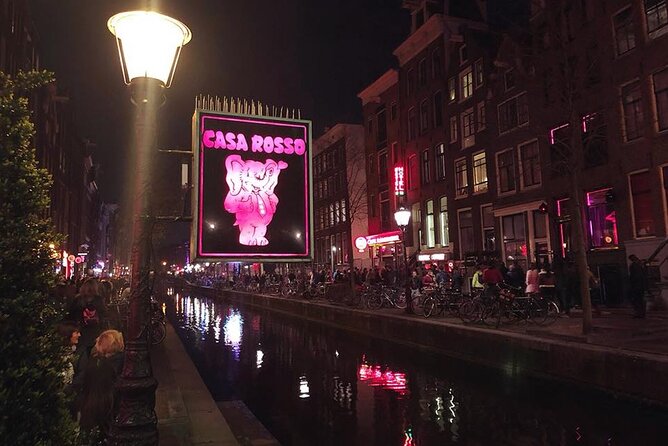
The biggest reason this tour works is also the reason it doesn’t feel like a gimmick: you’re not trying to sell you entry into restricted areas. Since guided tours inside the Red Light District have been prohibited since 2020, the experience shifts to what you can do well—walking the edges and learning how the district developed and how it functions today.
That change matters, because it turns the focus from spectacle to understanding. You’re not chasing a photo or looking for shock value. You’re learning why sex work became concentrated here in Amsterdam, and how the city’s famously tolerant approach formed around that reality.
And there’s another bonus: you get an actual neighborhood orientation. After 1.5 hours, you’ll know what streets lead where, what the area’s different corners feel like, and what you might want to look at again later.
You can also read our reviews of more private tours in Amsterdam


What you’re really buying with a private 90-minute walk
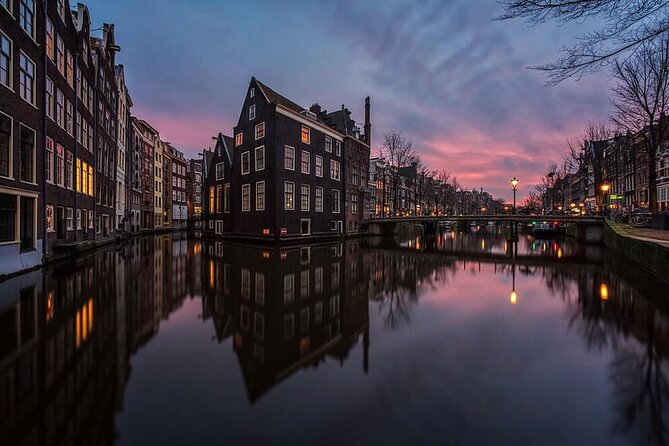
This is a private tour for up to 15 people, which changes the whole vibe. You can ask questions, and your guide can adjust the pace to your group. In the rain, that flexibility counts. One review mentioned still having a great time despite the weather, with lots of listening and Q&A about both history and more practical aspects of the neighborhood.
The tour runs about 1 hour 30 minutes, starting and ending back at Beursplein (1012 Amsterdam). It’s a walking format with short stops, and between highlights you’re moving on foot while your guide connects what you’re seeing to broader city stories.
You’ll also use a mobile ticket, which is handy on a day when you’re crossing the city by tram or walking between stops.
De Wallen first: the history of why sex work concentrated here
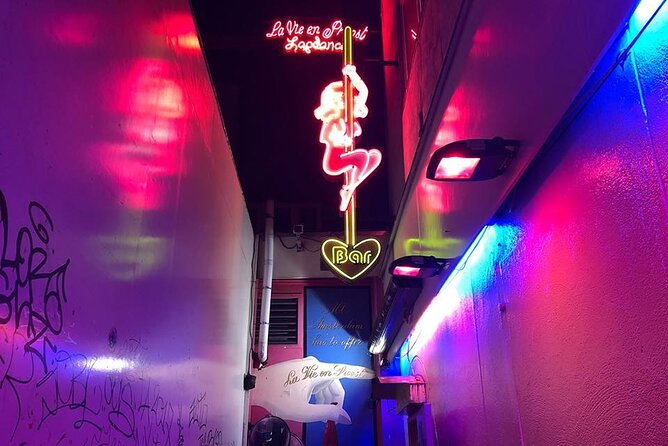
You start at De Wallen, the Red Light District area itself. Even though you’re not going inside, it’s still the natural starting point because it sets the theme and tone for everything that follows.
What makes this first stop useful is the explanation behind the location. You’ll learn the “why here” story—why sex workers chose to settle in this sacred, long-established part of Amsterdam, and how the city’s reputation for a liberal attitude towards sex took shape. You also get context on how Amsterdam’s tolerance fits into a larger national approach, including drug policy.
This is where the tour earns its keep. If you’ve only seen the district through headlines or stereotypes, the guide helps you replace guesses with a clearer picture.
Dam Square: where the coffee shop idea began
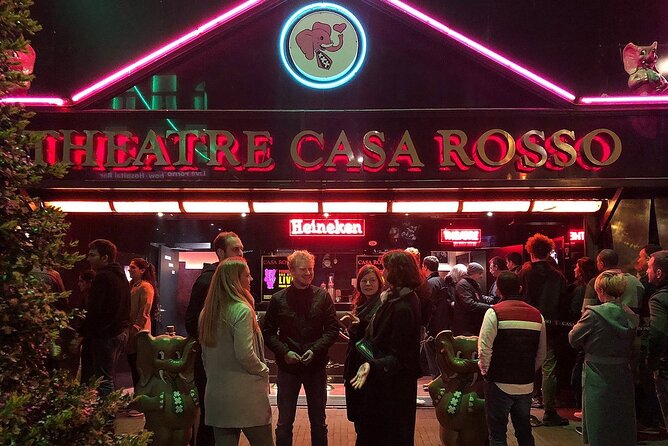
Next you head to Dam Square. Here the tour gets more specific and surprisingly local: you’ll hear about how the concept of the coffee shop originated there, and how Dam Square once sat at the center of Amsterdam’s tolerance and freedom.
That might sound like trivia, but it’s more important than it first appears. When people talk about Amsterdam’s relaxed stance, they often treat it like a single attitude. This stop shows it as something that evolved in particular places—places where the city’s social life, tourism, and public debate all intersected.
It’s also a good break in the walking rhythm. Dam Square gives you open space, and it helps you shift from the charged feeling of the district to a broader city view.
Warmoesstraat and the Old Church: an older street now used for entertainment
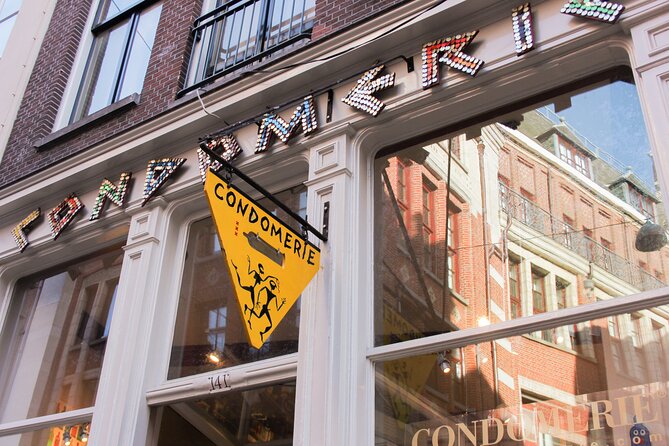
Then you walk to Warmoesstraat, one of Amsterdam’s older streets. The tour frames it as an example of how older infrastructure gets reused by newer urban life—these days, it serves as an entertainment center, and you can also catch a glimpse of the Old Church.
This stop is valuable if you care about how cities change without fully erasing their past. Amsterdam doesn’t just “move on.” It layers. You see the older bones of a street, then you watch what fills those bones later.
If you’re the type who likes to understand how a neighborhood got to its current mood, Warmoesstraat is a strong stop because it’s both historical and practical: the street is still a street, just with a different role.
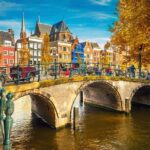





Zeedijk: Chinatown’s history, danger, and transformation
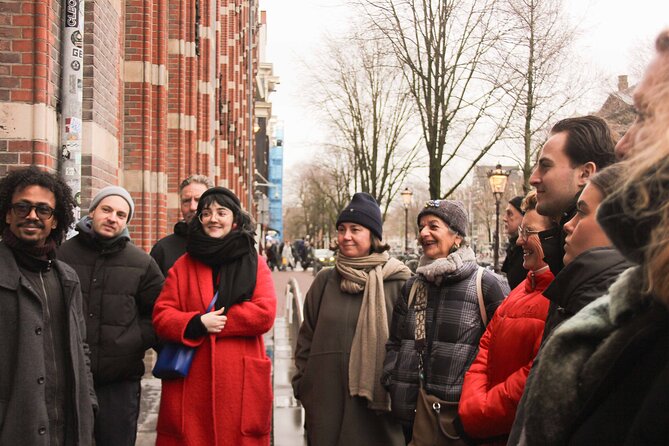
At Zeedijk, the tour turns to Chinatown and how this area used to be described as extremely dangerous in the 1970s. You’ll learn how that reputation shifted, and how the street transformed into a favorite spot for many Amsterdammers.
This is where the walk stops being only about the Red Light District and becomes about Amsterdam’s street-level evolution. It’s easy to treat the city like a set of separate attractions. This stop nudges you to see how one street can change meaning over time, based on safety, community, and culture.
It also helps you avoid a common trap: thinking you’re only visiting “a red zone.” You’re really visiting a neighborhood system—different communities, different histories, and different reasons people come back.
Nieuwmarkt: legalization, and the problems people still face
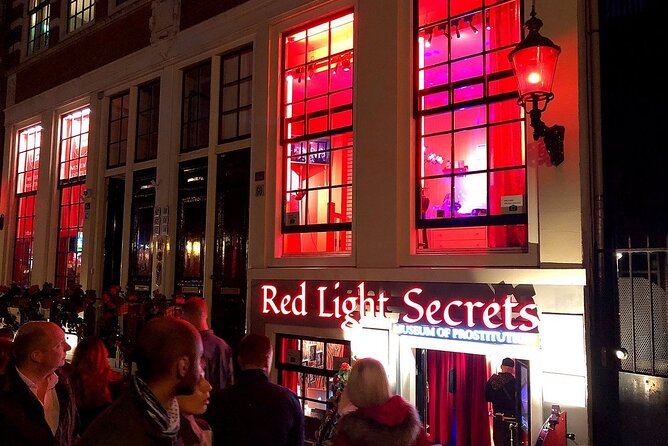
At Nieuwmarkt, you’ll hear about the legalization of prostitution and the challenges sex workers face today. That matters because legalization doesn’t magically erase hardship. The tour keeps it grounded and avoids making the topic feel like a clean political story.
If you’ve never heard the legal angle explained in everyday terms, this stop gives you language and framing. It helps you understand why debates in Amsterdam have had longevity here: policy choices collide with real human situations.
You also get a sense of why the neighborhood is often misunderstood. The guide’s job is not to lecture. It’s to connect policy and daily life so the district makes more sense when you see it.
Kloveniersburgwal and coffeeshops: what’s legal and why it’s cultural
Then you reach Kloveniersburgwal, where the tour focuses on coffeeshops and their cultural significance—plus the legal status of coffeeshops.
This stop is a good reminder that Amsterdam’s tolerance isn’t a cartoon. It has rules. The guide helps you understand that coffeeshops exist in a specific legal framework, and that they’re part of how people socialize in certain areas.
It’s also a helpful counterweight. If your interest is mainly curiosity about the Red Light District, the coffeeshop topic may widen your view. You start seeing Amsterdam’s approach as something with multiple threads—sex policy, drugs policy, and the social spaces shaped around them.
Paulusbroederssluis: your map and how to explore the final stretch
You finish at Paulusbroederssluis. This is where you receive the map with information for the area, plus the tour’s small gift that’s meant to bring a smile.
The map part is more than a souvenir. After 90 minutes, your brain is full of names and street patterns. A good map helps you keep from getting lost in the wrong way—so you can “continue intelligently,” not randomly.
And since the tour ends back at the meeting point (Beursplein), you can also plan your next move without guessing how to retrace your steps.
Price and value: why $231.72 can work out
The price is $231.72 per group (up to 15), and it’s typically booked about 98 days in advance. That group pricing is the key value play here.
For a private walking tour, cost is usually painful when it’s charged per person. Here it’s grouped. If you’re traveling with friends or family, or you want a small group that can ask questions without crowd pressure, the math can look much better.
The other value angle is time. You’re getting a structured route around major nearby stops in about 1.5 hours, plus a map and gift. You’re also getting a local’s interpretation of current realities, not just old facts.
So the real question becomes: do you want someone to explain what you’re seeing, and do you care about context? If yes, the price is easier to justify.
What to expect: a walk, not a show
This isn’t a sit-and-listen museum tour. It’s a walking tour with several short stops—around 10 to 15 minutes each—and discussion while you move.
That means you’ll want comfortable shoes and a layer you can handle in Amsterdam weather. One review mentioned enjoying the tour even in rain, which suggests the guide keeps going and keeps the explanations going too, rather than turning it into a stop-and-wait experience.
The tone is also important. The guide’s style, as shown in the feedback, blends history with personal anecdotes and practical aspects. You’re not being sent into sensational detail. You’re being helped to understand the neighborhood as a lived place.
Where the tour’s boundaries matter (and how to plan for them)
Since this tour stays on the outskirts, it’s not designed to meet the expectation some people have of entering the most famous parts of the district. If that’s what you’re after, you’ll feel that limit.
But the workaround is exactly why the tour includes the map: the guide gives you enough orientation to explore on your own for the parts you’re allowed to see. You’ll also have street names and context, which makes your self-guided time more productive.
Another practical boundary: you’re dealing with a neighborhood that attracts attention. So keep your group respectful, stay aware of people passing by, and don’t treat it like a photo scavenger hunt. A tour like this works best when you treat it like learning on the ground.
Who should book this, and who might skip it
This tour is a strong fit if you want:
- Local perspective tied to real street-level life
- A context-first approach to a neighborhood that gets misunderstood
- A manageable commitment: about 1.5 hours, with multiple key nearby stops
It might be less ideal if you want:
- Access that includes guided entry inside the Red Light District (not offered)
- A long, slow walking day with minimal topic density
If your travel style is “I want a guide to explain what I’m seeing,” this is right in your wheelhouse.
Should you book this Red Light District private tour?
I’d book it if you’re curious about Amsterdam’s tolerance and you don’t want to rely on myths. The combination of a private local guide, a route that respects current rules, and the take-home map is a smart way to learn without turning the topic into a circus.
If you’re mainly chasing the photo spots and don’t care about context, you might find it too explanatory. But if you want to leave with a cleaner mental map of how De Wallen, nearby streets, legalization, and coffeeshop culture connect, this tour gives you that—fast, focused, and organized.
And if you’re going with a group, the group pricing can be a big win.
FAQ
Where does the tour start and end?
The tour starts at Beursplein, 1012 Amsterdam and ends back at the same meeting point.
How long is the Red Light District private tour?
It runs for about 1 hour 30 minutes.
Is this tour private?
Yes. It’s a private tour/activity, and only your group participates.
Will we be allowed inside the Red Light District?
Tours in the Red Light District have been prohibited since 2020, so this tour goes to the outskirts instead.
What’s included in the tour price?
It includes a 1.5-hour walking tour, a map with information for the last stretch, and a small gift. The tour is free of admission tickets at each stop (as listed).
Do we get a ticket on our phone?
Yes. This experience uses a mobile ticket.
Is free cancellation available?
Yes. You can cancel up to 24 hours in advance for a full refund, and any changes within 24 hours aren’t accepted.