REVIEW · AMSTERDAM
Red Light District tour in Amsterdam
Book on Viator →Operated by Guidance Travel · Bookable on Viator
Amsterdam’s most controversial blocks have stories.
This Red Light District tour is a practical way to understand why De Wallen became the city’s signature spot for sex work and the wider culture around it. I like how it stays focused and grounded, with stops like Dam Square and Warmoesstraat that connect the area to the rest of Amsterdam. The tone also comes through from guides such as Carlos and Nadav: friendly, funny, and ready for questions.
Here’s the key thing to know up front: city rules mean you do not enter the Red Light District during the tour. You’ll walk the perimeter and learn what’s going on from the outside, then you get a map to go last-mile on your own if you want. If you’re expecting a front-row look, this won’t be that kind of experience, but if you want context without chaos, it can be a great fit.
In This Review
- Key highlights worth your time
- Entering Amsterdam’s debate: why this tour is different
- Price and value for a 90-minute walking tour
- Meeting point and how the walk actually flows
- Stop-by-stop: what you’ll learn from De Wallen to Nieuwmarkt
- De Wallen (Red Light District): the starting point for the whole story
- Dam Square: where the coffee shop concept starts
- Warmoesstraat: old street, modern nightlife
- Zeedijk: Chinatown’s shift from danger to favorite hangout
- Nieuwmarkt: legalization and today’s challenges
- Kloveniersburgwal: coffeeshops and how they’re treated
- Paulusbroederssluis: your map to finish the walk on your terms
- The biggest reality check: you won’t go inside De Wallen
- Guides, pace, and what the 15-person limit changes
- Small details that affect your comfort (and photos)
- Should you book the Red Light District perimeter tour?
- FAQ
- Do you enter the Red Light District during the tour?
- How long is the walk?
- Is the tour offered in English?
- Where does the tour start and end?
- What’s included at the end of the tour?
- What is the price?
Key highlights worth your time
- Small group pace (max 15): better chances to ask questions and actually hear the guide.
- Outskirts only, map included: you learn the story and then choose how you want to explore.
- Coffee house origins explained: Dam Square and Kloveniersburgwal connect policy, culture, and daily life.
- Stop-by-stop context: De Wallen, Warmoesstraat, Zeedijk, Nieuwmarkt, and more each carry a different chapter.
- Local-flavored storytelling: guides like Manouk, David, Valeria, Carlos, and Nadav were praised for personality and clarity.
- A small funny gift: it’s part of the wrap-up, and some people even got cheeky gummies.
Entering Amsterdam’s debate: why this tour is different
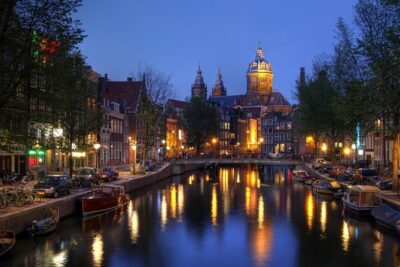
Amsterdam has a talent for turning arguments into policy. This tour takes you straight into the neighborhood where sex work, tolerance, and the city’s reputation all collide. The angle isn’t gossip. It’s explanation—how Amsterdam got here, why it formed the way it did, and what that means today for the people living and working around De Wallen.
What makes this work well is the “build-up” structure. You don’t start with the most intense images or scenes. You start with the geography and the logic of the place, then you move outward through streets that help you understand Amsterdam beyond the headlines. That’s why a lot of people use this as a first step: it gives your brain a framework so you can walk around afterward with less confusion.
You also get a guide who can handle questions with humor and respect. The reviews reflect this again and again—guides like Carlos and Nadav were singled out for being funny, patient, and responsive. That matters, because this topic can feel awkward fast if the tour is run like a lecture. Here, the tone tends to stay human and conversational, even when the subject gets serious.
One more practical point: the walking is laid back. Amsterdam is famously flat, and the tour is designed as a steady stroll. If you’re traveling in winter or bad weather, it’s still manageable—people specifically mentioned that the guide adjusted pace when conditions were tricky.
You can also read our reviews of more tours and experiences in Amsterdam.


Price and value for a 90-minute walking tour
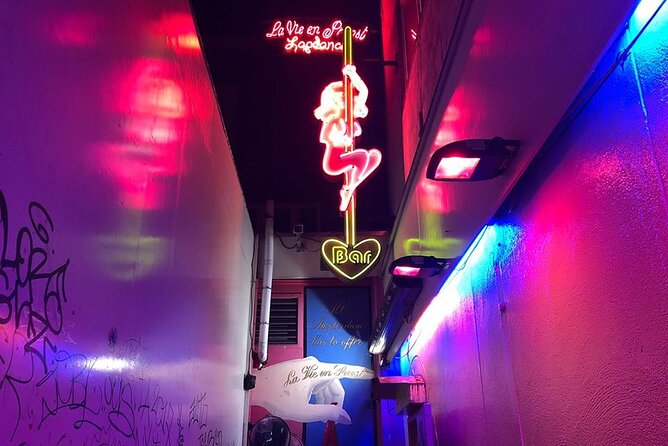
At $31.44 per person for about 1.5 hours, this isn’t an expensive add-on. What makes it feel fair is what’s bundled into that time: you get a guided walk with focused context, plus a map for the last stretch after the group finishes. You’re also getting a guided explanation of how Amsterdam’s tolerance played out in real space—streets, squares, and neighboring districts.
There’s also an added value in the “shape” of the tour. A lot of city walking tours skim past this area as a quick stop. This one is built around it, with repeated references to how the neighborhood is tied to the city’s culture—especially around coffee houses. And because the group size caps at 15 travelers, you usually don’t feel like you’re shouting over the crowd just to ask what you came to understand.
The only value-mismatch I’d watch for is expectation. If you want to enter the Red Light District itself during the tour, city regulations prevent that. So if you’re buying tickets hoping for access into the middle of the action, you may feel shorted. If you’re buying for context and a solid orientation, this price makes more sense.
Meeting point and how the walk actually flows
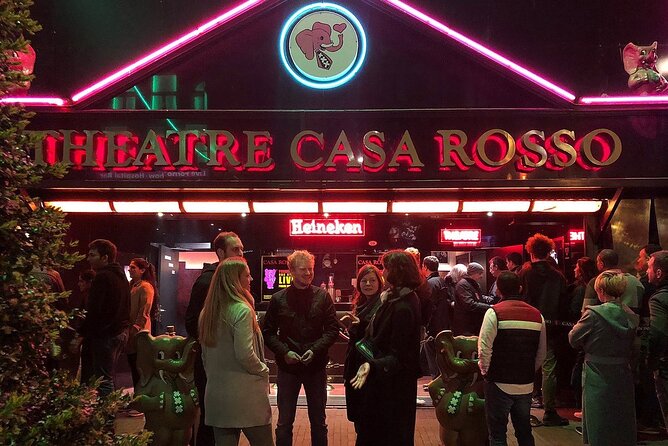
You meet at Bistro Berlage, Beursplein 1 (1012 JW Amsterdam). The tour ends back at the same spot, so it’s easy to plan the rest of your evening. The total time is listed as about 1.5 hours, but the real-world experience can shift a bit depending on pacing and how many questions come up.
I’d recommend arriving a little early. One review flagged that finding the exact meeting location can be tricky, even if you’re in the right area. Early arrival is the simplest fix.
During the walk, you’ll cover multiple short stops rather than one long monologue at each location. In between, you’re moving through Amsterdam streets while the guide explains what you’re looking at and why it matters. That keeps the tour from dragging—and it helps the facts stick.
Also note the group limit: up to 15 people. That’s large enough to meet others, but small enough that you’ll likely hear the guide without playing audio ping-pong. Service animals are allowed, and the walking level is described as moderate physical fitness.
Stop-by-stop: what you’ll learn from De Wallen to Nieuwmarkt
This tour is built like a route through key points that explain the neighborhood without turning it into a free-for-all. Here’s what each stop is for, and why it’s worth being there even if you’d rather keep walking.
De Wallen (Red Light District): the starting point for the whole story
You begin at De Wallen, and the guide sets the stage with the district’s role in Amsterdam’s reputation for openness. You’ll learn why sex workers chose to settle in this specific area and what made the location “work” historically—socially, practically, and politically. The focus is on understanding the neighborhood as a place that developed, not just a place that exists.
This is the best stop for first-timers. Even if you’ve read about Amsterdam tolerance, hearing how the story connects to street layout and neighborhood function helps you make sense of what you’ll see later around the perimeter.



Dam Square: where the coffee shop concept starts
Next up is Dam Square. You’ll hear about the place where the idea behind coffee shops is traced back, and how this square once sat at the center of Amsterdam’s tolerance and freedom. It’s a smart pivot because Amsterdam’s reputation isn’t one-topic—it’s the city’s broader attitude toward rules, enforcement, and everyday life.
If coffee houses are part of your reason for coming to the area, this stop gives you context before you go wandering.
Warmoesstraat: old street, modern nightlife
At Warmoesstraat, you’ll get a mix of age and energy: one of the city’s oldest streets, now functioning as an entertainment zone. You’ll also catch sight of the Old Church, which helps you remember that this part of Amsterdam wasn’t built from scratch as a nightlife circuit. Layers matter here.
This stop is a good example of the tour’s strength: it doesn’t treat the Red Light District as a sealed container. It connects it to the broader urban fabric.
Zeedijk: Chinatown’s shift from danger to favorite hangout
Then you head to Zeedijk, where the tour touches Chinatown. The story here is the opposite of romance: this area was once considered very dangerous in the 1970s, then later shifted into something more settled and popular for locals. It’s a reminder that neighborhoods can change fast—sometimes because of policy, sometimes because of people, and sometimes because both move together.
This is also one of the stops that can surprise people. If you’re only expecting sex-and-coffee-house history, the Chinatown element may not be what you pictured. But if you want to understand how Amsterdam neighborhoods evolve, it fits perfectly.
Nieuwmarkt: legalization and today’s challenges
At Nieuwmarkt, you’ll learn about the legalization of prostitution and the real challenges sex workers face today. This is where the tour moves from “how it started” to “what the system creates now.” It’s the stop that helps the topic feel less abstract.
The goal is respectful clarity: you get the legal and social picture, without turning it into shock value.
Kloveniersburgwal: coffeeshops and how they’re treated
At Kloveniersburgwal, the guide explains the coffeeshops and their cultural significance. You’ll also hear about their legal status, which is important because people often talk about coffee shops like they’re a single thing. This stop connects the dots so you understand why Amsterdam has a distinctive rules-based approach instead of an all-or-nothing one.
Paulusbroederssluis: your map to finish the walk on your terms
Finally, at Paulusbroederssluis, you receive a map with information so you can finish the last bit on your own. This is the part that makes the tour practical. You’re not forced into any kind of awkward “follow-the-leader” ending. You can choose what to look at—or not look at—based on your comfort level.
And because you’re getting the map at the end, you can use the context from the guide while you’re still in the neighborhood.
The biggest reality check: you won’t go inside De Wallen
Since 2020, guided groups aren’t allowed to enter the Red Light District itself. That’s why the tour stays around the outskirts and focuses on learning from the outside.
This is the main consideration I’d weigh before booking. If you want a guided walkthrough through the center area, this won’t deliver that.
On the other hand, the perimeter model can be better for a lot of people:
- You get the history and cultural context without the crowd pressure.
- You can keep your own pace as you decide what’s comfortable to see.
- You still get a map if you want to continue at your own speed.
The best way to think about it: this tour is about understanding the neighborhood first, then choosing your own next steps.
Guides, pace, and what the 15-person limit changes
One reason this tour scores extremely well is guide quality and how they manage the room. In feedback, guides like Manouk and David were praised for being funny, patient, and good at answering questions. Carlos and Nadav were highlighted for friendliness and good storytelling, not just facts.
The pace tends to be manageable. People described it as an easy walk that’s still paced for learning. If weather hits—rain or snow—it can be adjusted. One person mentioned the guide being careful with snow on the ground, which tells you the tour isn’t rigid.
That said, there are a couple things to be aware of based on real experiences:
- Some tours may run a bit faster than the full 1.5 hours, depending on questions and group flow.
- Sometimes the format can feel more like a street-side lecture than a roaming conversation, especially if the group asks fewer questions.
If you like to ask lots of “why” questions, you’ll likely enjoy it more. If you prefer a very visual, meandering tour with minimal talking, you may want to set your expectations accordingly.
Small details that affect your comfort (and photos)
This is an evening topic for many people, so dress for walking. Even though it’s flat, you’ll still cover enough distance to feel it after. Comfortable shoes help.
Also, plan for the neighborhood to be active. You’re dealing with real people and real street life. The tour’s tone is meant to stay respectful and safe, but that doesn’t mean the area will feel quiet. If you’re easily thrown by public displays, this might affect your comfort level.
One extra note: the tour includes a small gift guaranteed. People reported cheeky items, like gummies shaped like genitalia. It’s playful, not gross, and it’s one of those small moments that makes the end feel fun instead of abrupt.
Should you book the Red Light District perimeter tour?
Book it if:
- You want context and a coherent explanation of why De Wallen became what it is.
- Coffee shops matter to your interest, and you want the cultural and legal side tied in.
- You like guided walking tours with time for questions and a small group.
Skip it (or choose carefully) if:
- You’re expecting to enter the Red Light District during the tour. The perimeter-only rule is real.
- You mainly want sightseeing shots and not much talking. This experience is more about explanation than scenery.
- You’re uncomfortable with a candid discussion of topics related to prostitution, even when handled respectfully.
If you’re torn, here’s my practical advice: treat this as your orientation tour. Get the history and the framework, then decide afterward how you want to continue around the area—at your own pace, with a map in hand.
FAQ
Do you enter the Red Light District during the tour?
No. City regulations mean guided groups are not allowed to enter the Red Light District. This tour walks around the outskirts and provides a map for you to explore the area yourself afterward.
How long is the walk?
The tour lasts about 1.5 hours.
Is the tour offered in English?
Yes, the tour is offered in English.
Where does the tour start and end?
It starts at Bistro Berlage, Beursplein 1, 1012 JW Amsterdam, and it ends back at the same meeting point.
What’s included at the end of the tour?
You’ll receive a map with information for the last stretch, plus a small gift guaranteed to bring a smile.
What is the price?
The price is $31.44 per person.